
After Being Told She Was ‘Too Young’ for a Mammogram, a 32-Year-Old Breast Cancer Survivor Is Running the NYC Marathon Completely Topless to Expose Her Scars and Save Lives

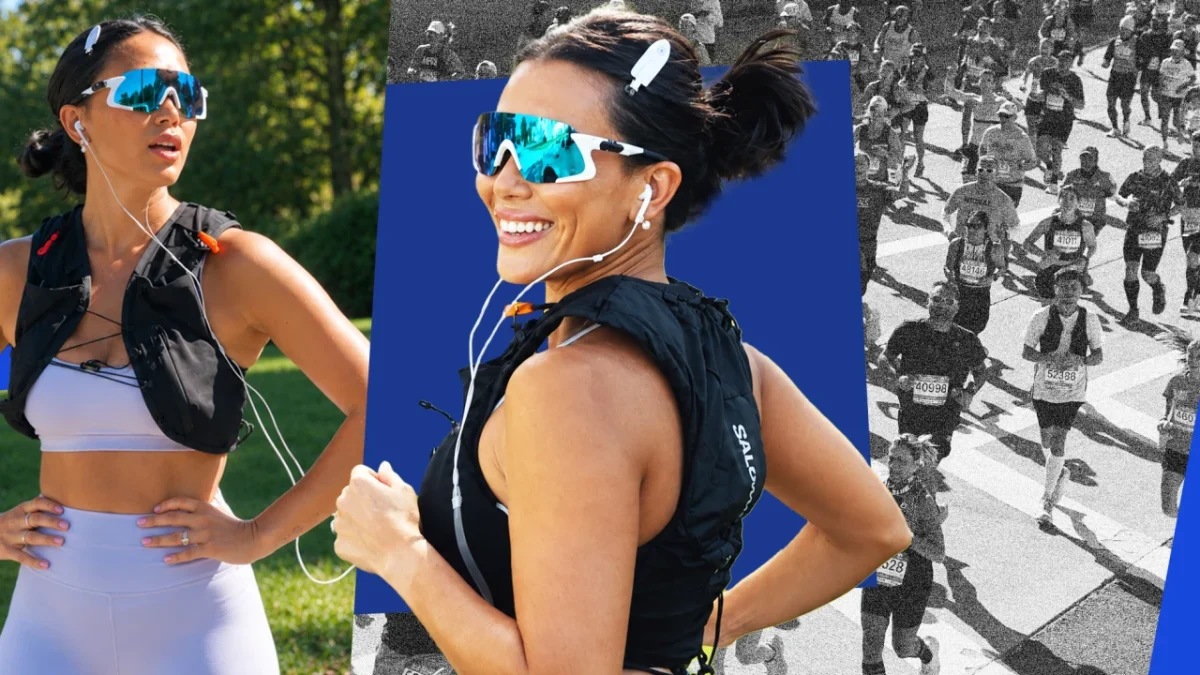
A 32-year-old mother who was dismissed by doctors before receiving a dual breast cancer diagnosis is taking on the grueling 26.2-mile NYC Marathon completely topless. Her goal is simple yet radical: strip away the shame surrounding post-mastectomy bodies and push women across America to advocate relentlessly for their own health.
Running without a shirt or sports bra, she plans to rely solely on specialized body tape to prevent friction across her reconstruction scars. For her, running through the streets of New York bare-chested is not an act of defiance against public decency, but a direct stand against medical dismissal and body shame.
The journey to the starting line began with a terrifying roadblock that almost cost her life.
Dismissed at 32: The Danger of the “Too Young” Myth
Six months after stepping away from her role as an associate in wealth management at Merrill Lynch to raise her infant son, she noticed an unusual lump. Her initial visit to an OB-GYN yielded a dismissive verdict: she was told she was simply too young for a mammogram.
A follow-up ultrasound delivered another false sense of security when it came back classified as benign. Trusting her gut, she demanded a third opinion from a specialized breast surgeon, who immediately scheduled a mammogram, an MRI, and a tissue biopsy.
The urgent phone call arrived on an ordinary Thursday afternoon just as she stepped out of the gym. The biopsy confirmed an aggressive reality: she had cancer in both breasts simultaneously, accompanied by a high-risk BRCA genetic mutation.
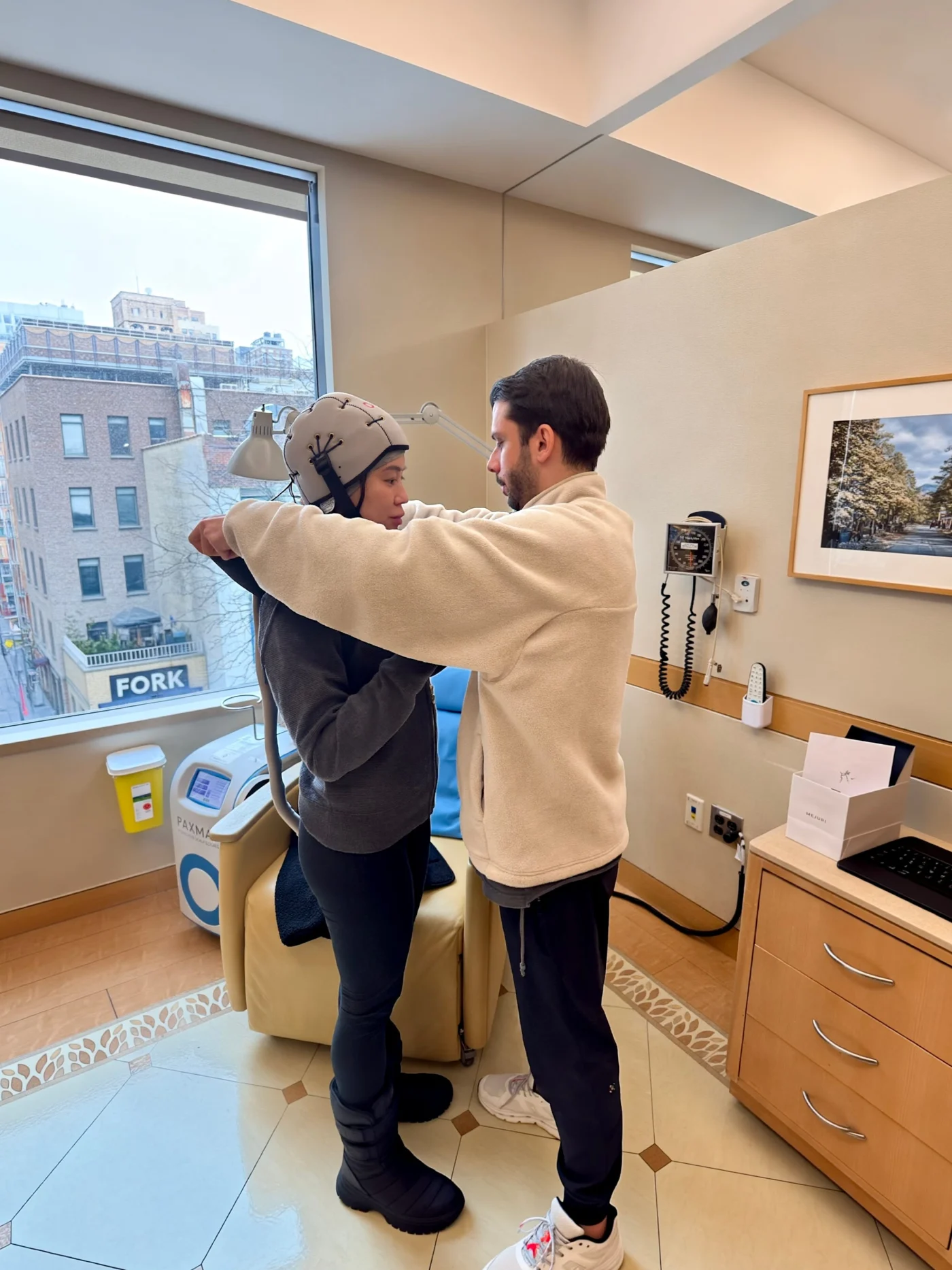
A man and woman stand close together in a medical setting, both looking focused and engaged.
A Tale of Two Tumors
Her diagnosis was medically complex because each breast harbored a completely different variety of malignancy. While one side presented a fast-moving, aggressive profile, the other side carried hormone-driven disease.
| Breast Location | Pathology & Stage |
|---|---|
| Left Breast | Stage 2 Triple-Negative Breast Cancer |
| Right Breast | Stage 1 ER/PR-Positive Breast Cancer |
Facing a double diagnosis with a one-year-old child at home, she joined forces with oncologists at Memorial Sloan Kettering Cancer Center to build an intensive treatment regimen combining chemotherapy, targeted immunotherapy, and extensive reconstructive surgeries.
“I was leaving the gym on an ordinary Thursday when the call came. I had breast cancer in both breasts… How had the first two appointments missed this?”
The Reality Check: Busting the Young-Age Screening Myth
A persistent public misconception suggests that breast cancer is exclusively an older person’s disease, leading younger patients to overlook symptoms or accept early medical brush-offs. Approximately one in eight women in the United States will receive a breast cancer diagnosis in their lifetime.
Relying on standard screening ages leaves thousands of young adults vulnerable if an aggressive tumor develops before baseline mammography begins. While risk calculation tools help patients estimate inherited hazards, they cannot replace immediate diagnostic follow-ups when physical changes occur.
Her experience highlights four vital self-advocacy steps every individual must take when a physical anomaly arises:
- Track physical changes: Note shifts in density, texture, or pain independent of monthly hormonal cycles.
- Refuse age-based dismissals: Insist on comprehensive diagnostic imaging if an initial ultrasound leaves clinical doubts.
- Request specialized consultation: Seek out board-certified breast specialists rather than relying entirely on general screenings.
- Investigate family genetics: Review family histories and inquire about formal testing for high-risk variants like BRCA mutations.
From the Chemotherapy Chair to 26.2 Miles
Coping with physical changes proved to be an emotional mountain. After her bilateral mastectomy, surgical scars altered the relationship she had maintained with her body, her femininity, and her self-image.
The turning point arrived when her two-year-old caught a glimpse of her chest, innocently asking about her injuries. The encounter sparked a resolve: rather than hiding behind shame or fear in gym locker rooms, she decided to reframe her surgical scars as proof of survival.
She signed up for a half marathon shortly after surgery to anchor her mental recovery. When extended oral chemotherapy pushed back her final reconstructive timeline, she raised the bar, committing to run the full distance of the NYC Marathon completely uncovered.
“My scars are evidence that I lived. They stand for tenacity, resilience, and bravery—traits I want my son to have and how I want him to remember me.”
To prepare for running bare-chested over five boroughs, she secured adhesive styling tape donated by NOOD to prevent friction while maintaining structural support during long-distance pavement pounding.

Athletic woman wearing sunglasses and headphones, posing outdoors on a sunny day.
Turning 26.2 Miles into a Movement for Women’s Health
While runner Louise Butcher famously ran the London Marathon topless in 2024 featuring flat closure scars, this run marks the first time an implant-reconstructed survivor tackles the New York City course completely bare-chested. She rejects any notion that post-mastectomy implants make the decision sexualized or improper.
Partnering with Fred’s Team, the official charity arm of Memorial Sloan Kettering Cancer Center, she established Team Laklak—named after the science-based makeup brand she created while sitting through hospital infusions. To date, her team has generated over $45,000 to fund hospital research and cancer patient support.
Running through the finish line in Central Park brings her back to the exact location where training anxiety once whispered that she should quit. By laying bare the physical cost of survival, she hopes every spectator questions their own medical risks and refuses to let clinical doubt drown out their inner voice.
💬 Her journey proves that self-advocacy can genuinely rewrite the outcome of a life-threatening diagnosis.
✨ Showing up without hiding the marks of survival offers a roadmap for anyone navigating personal trauma and recovery.
📱 Have you or someone you love had to push through medical dismissals to get answers? Let us know in the comments below! 👇
 1
 2
 3
 4
