
Before ‘Mary Poppins’: Rare Early Photos and the Untold Grind of Julie Andrews’ Rise to Stardom

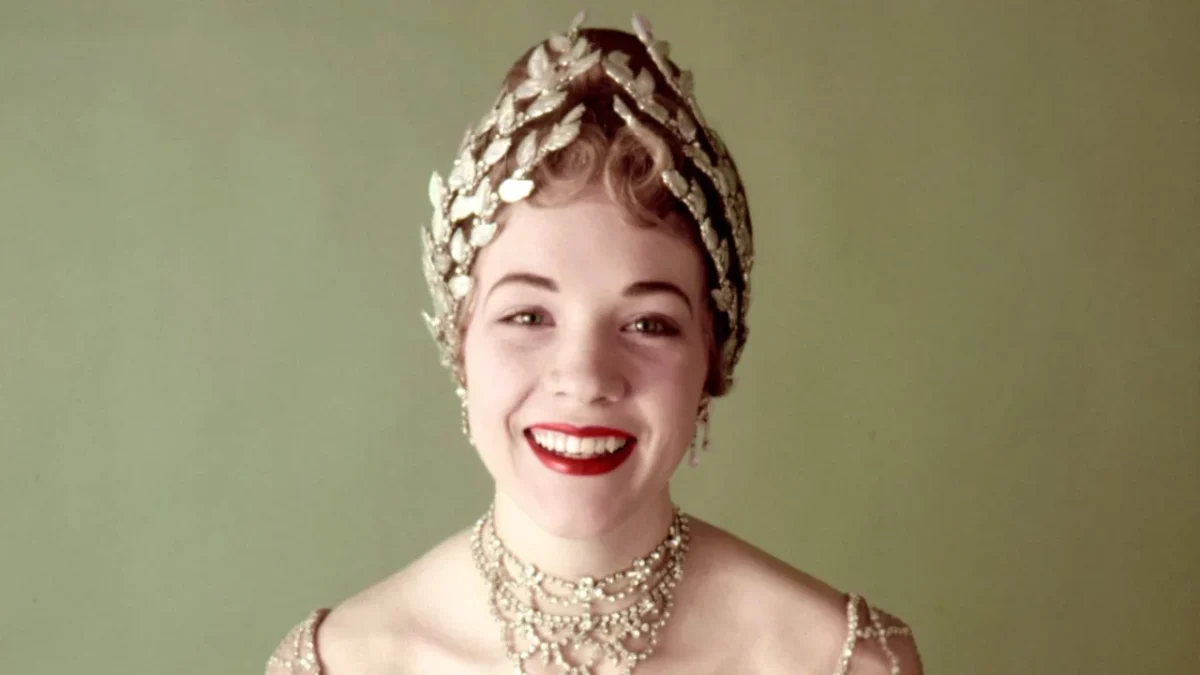
Long before winning an Oscar for Mary Poppins, Julie Andrews had already logged over a decade of relentless stage work, beginning her professional theater journey as a 12-year-old child performer in post-war London. Her path to becoming a global icon was not an overnight Hollywood fairytale, but an exhausting masterclass in early discipline across radio, Vaudeville stages, and Broadway.
Born on October 1, 1935, in Surrey, England, Andrews grew up immersed in performance through her mother and stepfather, both Vaudeville entertainers. By her teens, her four-octave range and discipline pushed her into royal showcases and landmark theatrical productions long before cameras captured her signature screen roles.
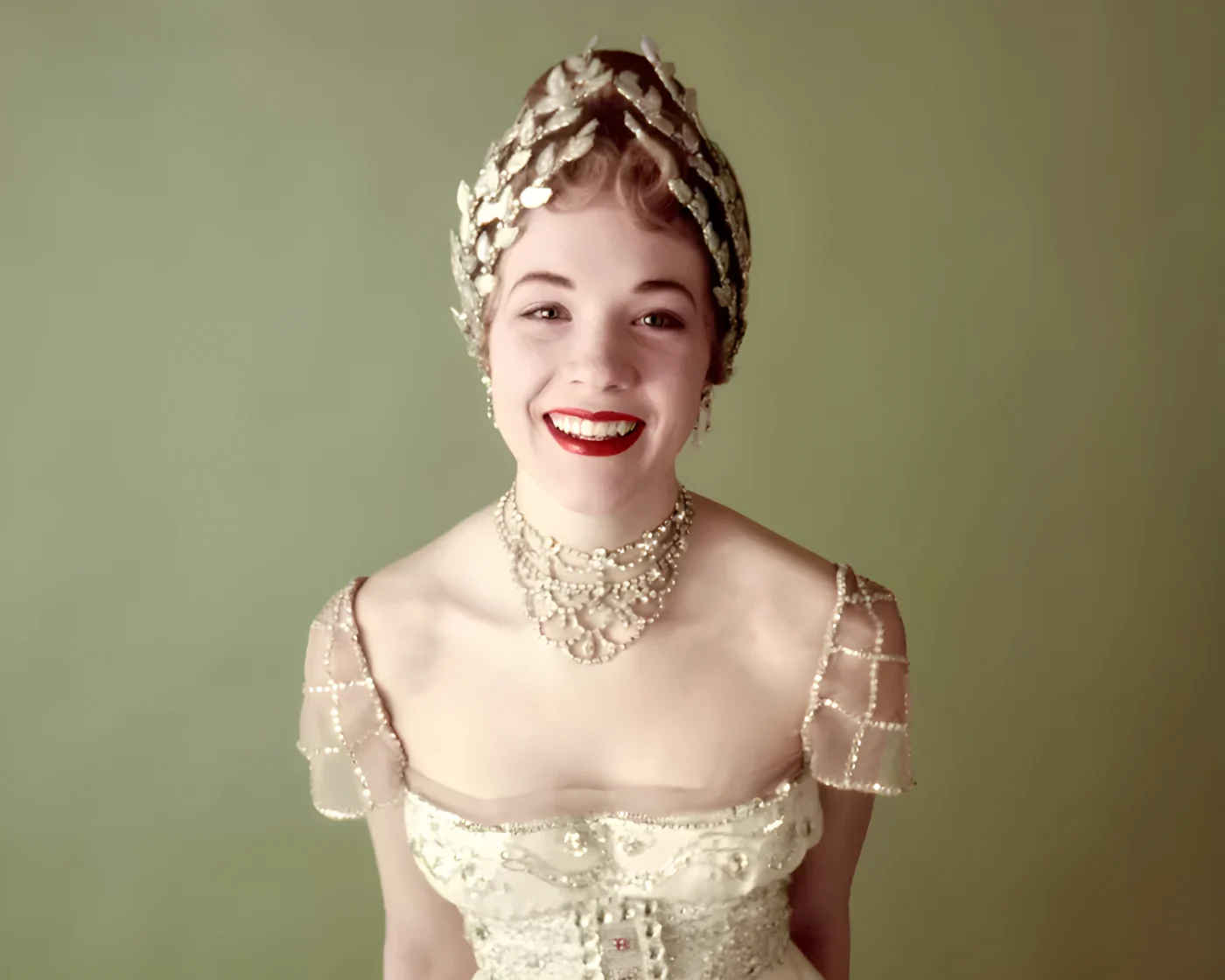
Julie Andrews while filming.
The Royal Prodigy: West End Debuts and Royal Commands
Andrews secured her West End debut in 1948 at just 12 years old, performing in the musical revue Starlight Roof at the London Hippodrome. The production proved so successful that it ran for over a year, instantly distinguishing her from other young performers of her era.
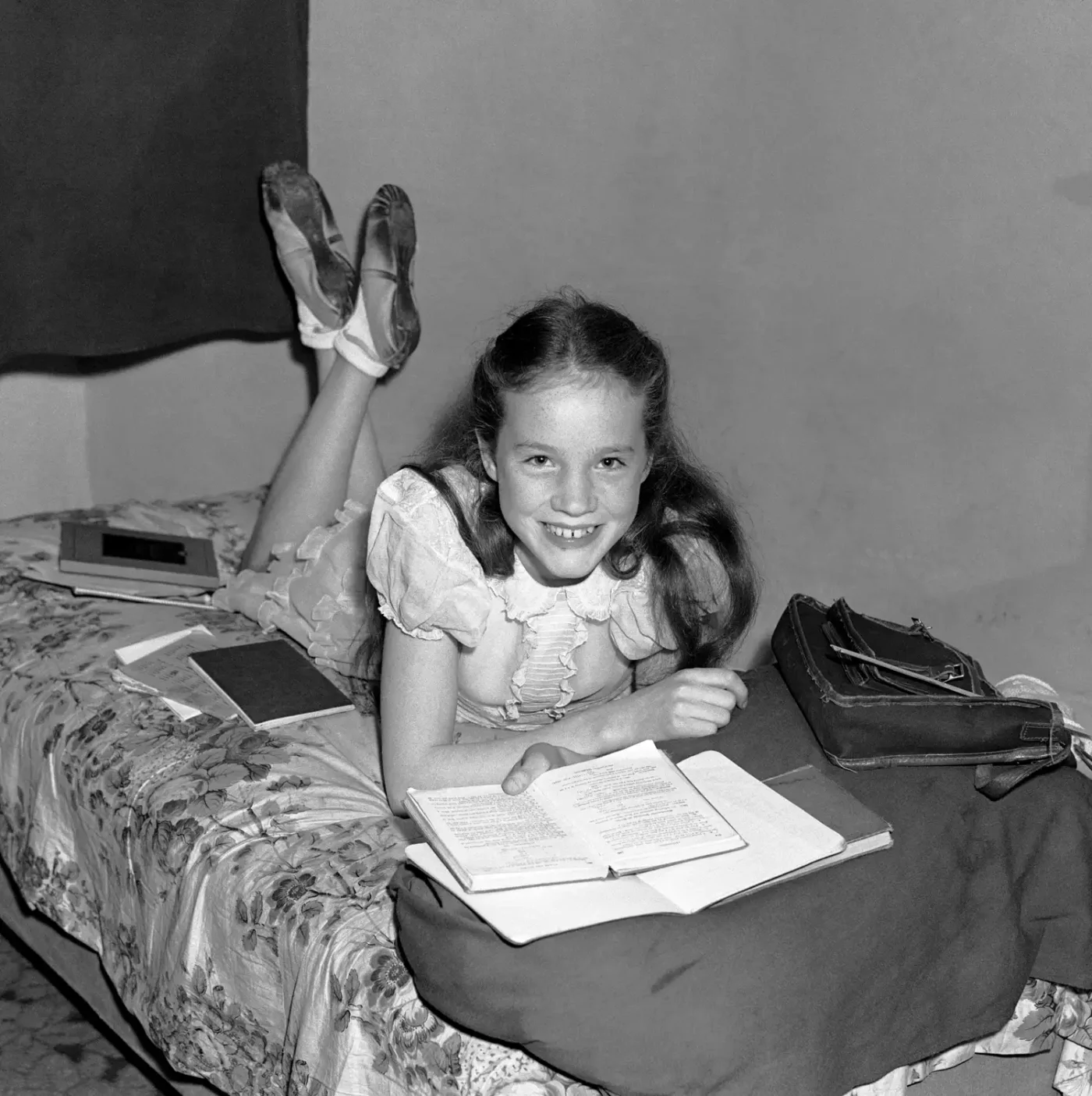
A 13-year-old Julie Andrews in her room.
At age 13, she achieved a historic milestone at the London Palladium as the youngest solo artist ever booked for the Royal Variety Performance. Performing as a coloratura soprano before King George VI and Queen Elizabeth, she delivered a solo number and led the choir through the British national anthem.
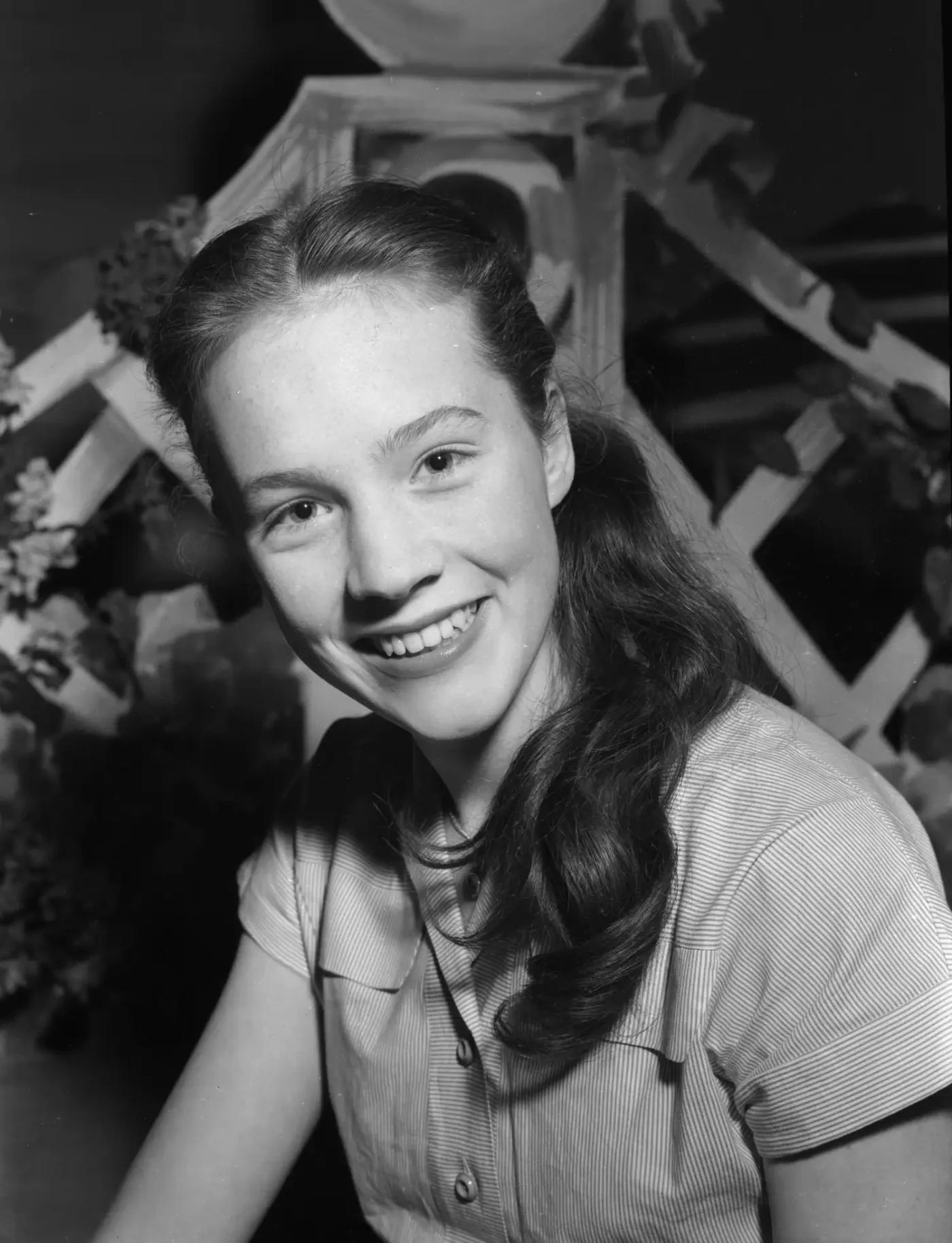
A 1951 portrait of Julie Andrews.
Her stage momentum expanded into broadcasting throughout the early 1950s. Andrews became a recurring guest star on the BBC radio program Educating Archie, having initially made her radio broadcast debut back in 1946 singing alongside Ted Andrews.
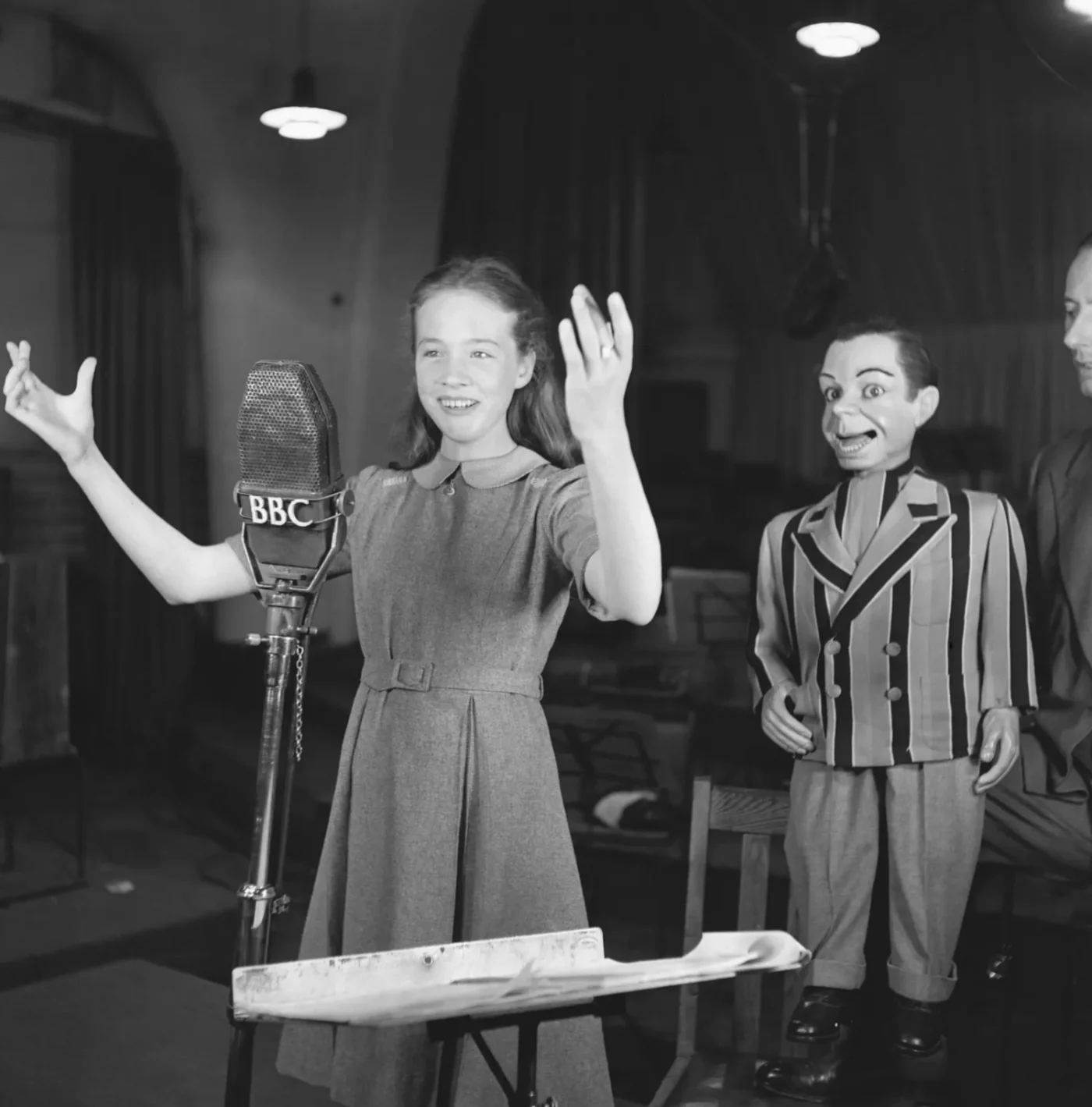
Julie Andrews alongside the Archie Andrews radio ventriloquist figure.
From Holiday Pantomimes to Broadway Acclaim
During the early 1950s, Andrews spent each winter season fronting traditional British holiday pantomimes. She headlined productions as Little Red Riding Hood, played principal roles in Aladdin and Jack and the Beanstalk, and portrayed Cinderella in 1953.
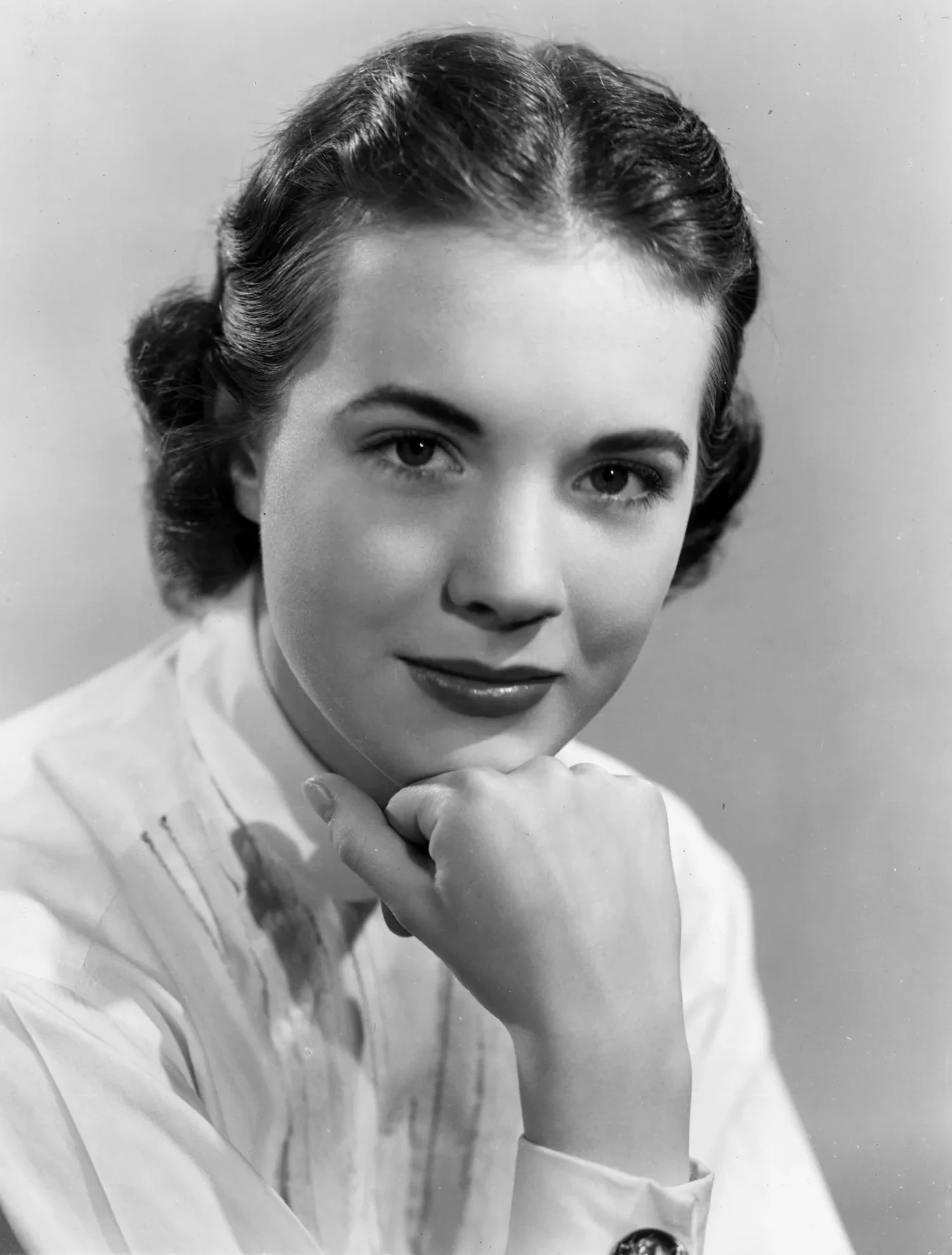
Julie Andrews in a 1955 studio portrait.
Her 1953 turn in Cinderella altered the course of her career. American producer Cy Feuer and songwriter Sandy Wilson noticed her performance and offered the 18-year-old the starring lead in the Broadway transfer of The Boy Friend.
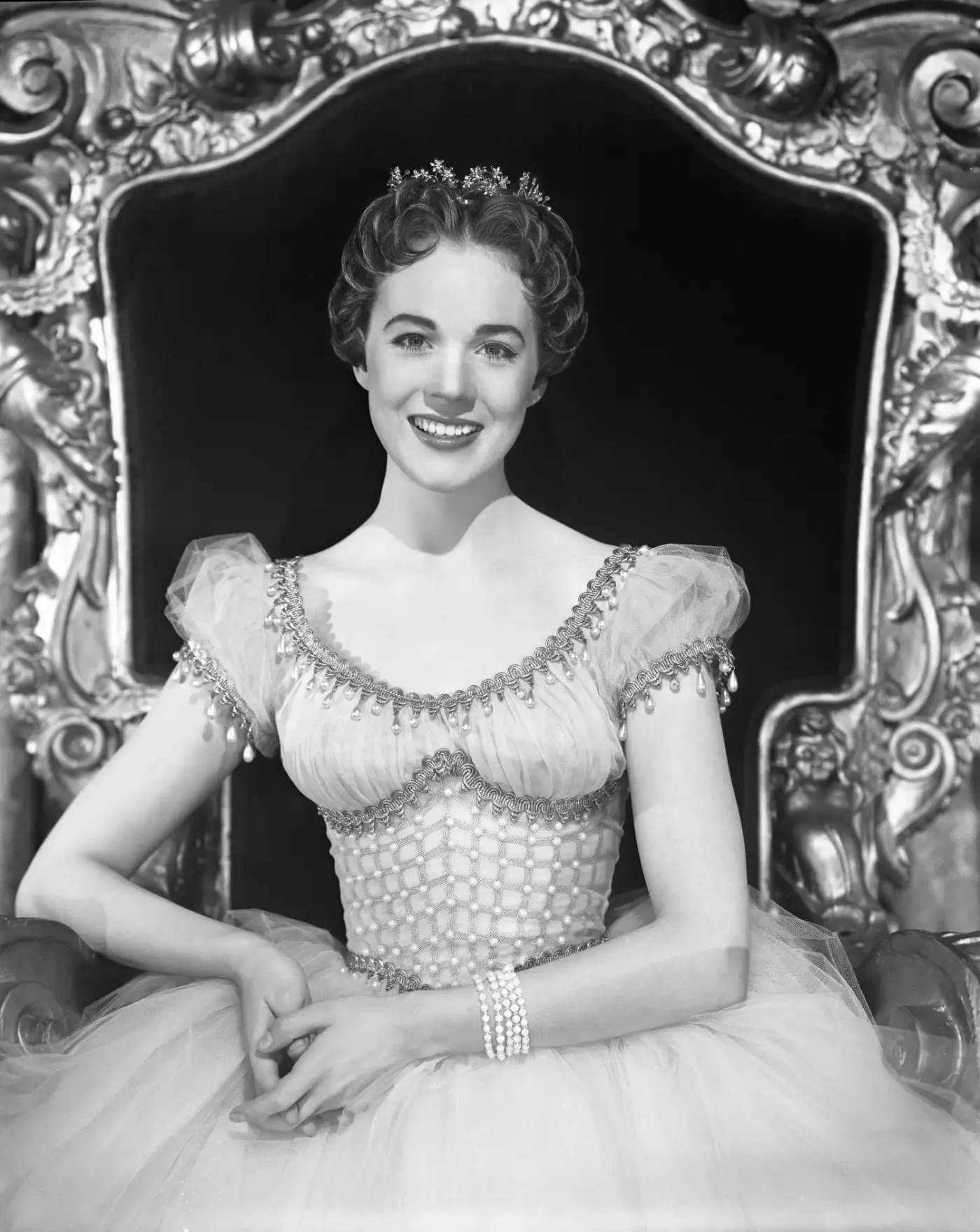
Julie Andrews as Cinderella in 1953.
Andrews hesitated to move across the Atlantic away from her family. She ultimately signed a one-year agreement, anchoring a hit run of 485 performances on Broadway and winning a Theatre World Award for her debut.
Myth vs. Reality: The “Overnight Star” Fallacy
A frequent misconception in pop culture history paints Julie Andrews as an overnight discovery plucked straight from obscurity for Hollywood blockbusters. In reality, she spent over a decade working rigorous eight-show-a-week performance schedules before ever stepping onto a major film set.
“The biggest thing I wanted to convey is that Hollywood isn’t about the glamour and the jewels and swanning on the red carpet and things. It’s an enormous amount of very hard and interesting work,” Andrews reflected in Vanity Fair. “I’m thrilled that I was asked to do so much of it, but it is an effort. The rest is just icing on the cake, so to speak.”
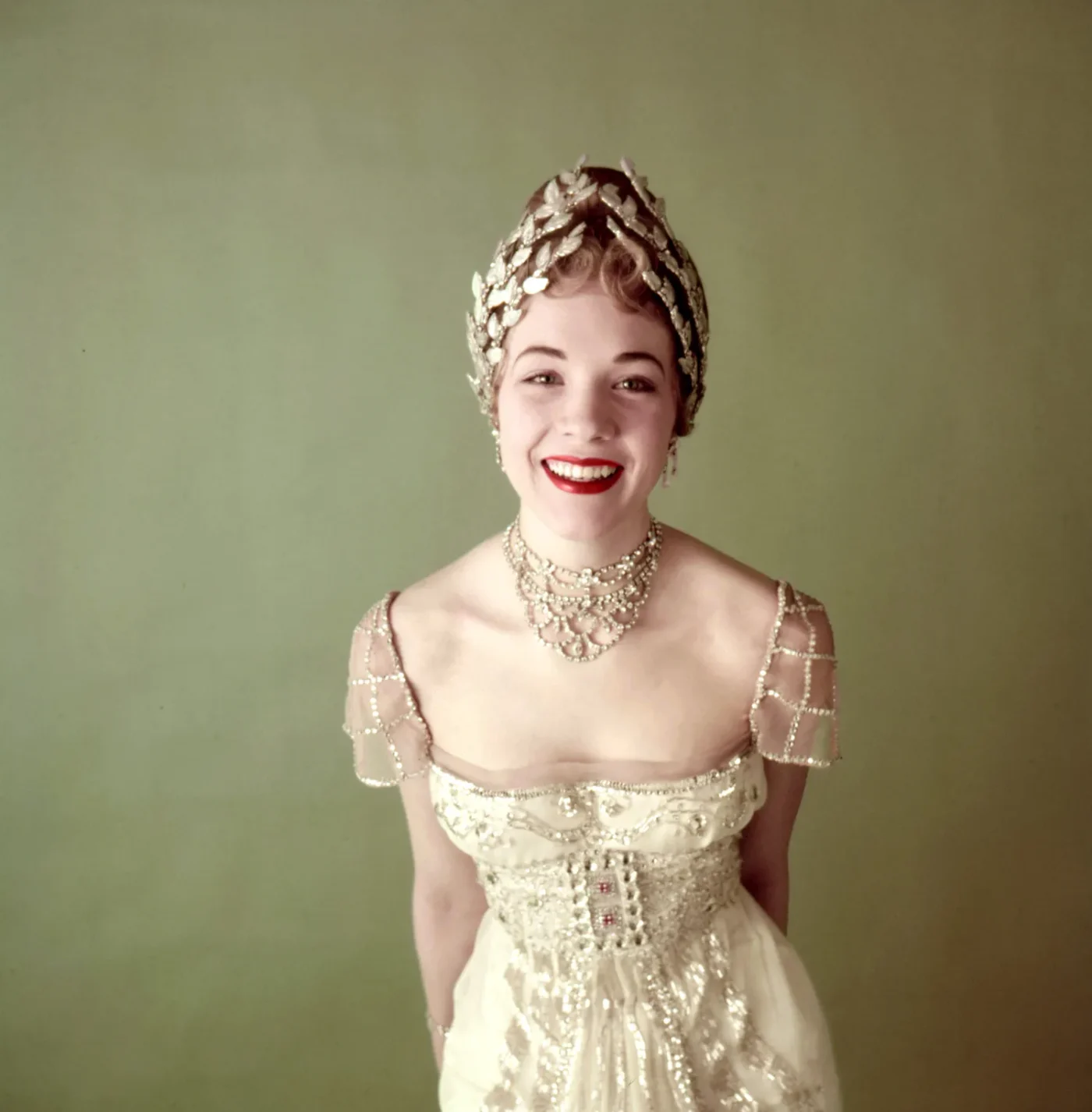
Julie Andrews starring in My Fair Lady.
Defining Broadway Legacies: Eliza Doolittle and Queen Guinevere
Just as The Boy Friend concluded and Andrews packed to return home to England, producers casting a musical based on George Bernard Shaw’s Pygmalion came calling. Andrews landed the lead role of Eliza Doolittle in My Fair Lady.
Opening on Broadway on March 15, 1956, My Fair Lady became a theatrical phenomenon. Andrews collected a Tony Award nomination and secured the New York Drama Critics’ Circle Award for Best Actress in a Musical.
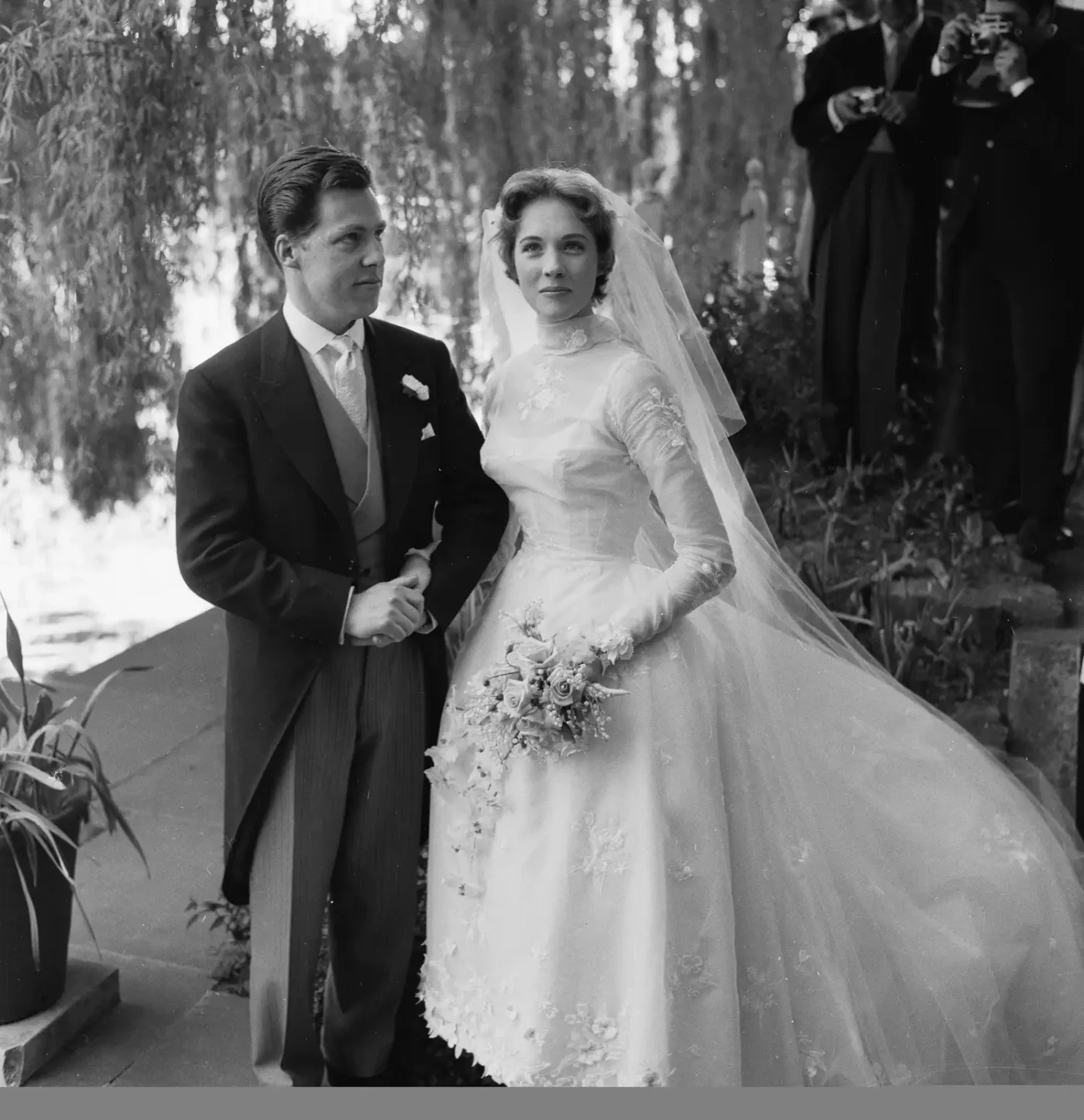
Julie Andrews and Tony Walton on their wedding day in 1959.
Her personal life evolved alongside her professional surge. On May 10, 1959, she married designer Tony Walton at St Mary Oatlands Church in Surrey, having first met him in theater circles as children. In 1962, they had their daughter, Emma Walton Hamilton, before divorcing in 1969. Later that year, Andrews married director Blake Edwards, a partnership lasting 41 years until his passing in 2010.
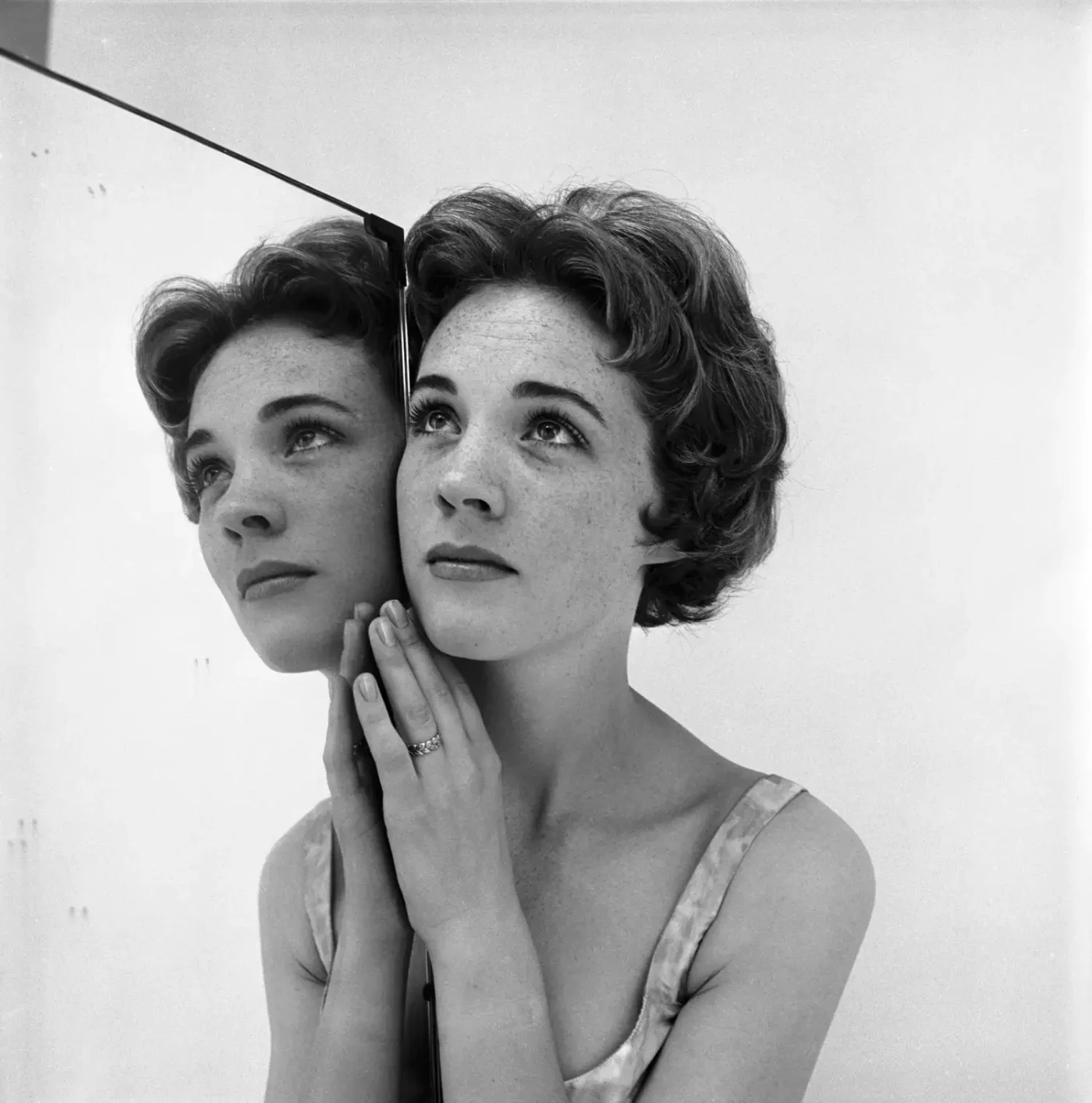
A 1959 portrait of Julie Andrews.
By 1960, she took on Queen Guinevere in Camelot opposite Richard Burton, yielding her second Tony nomination and directly catching the attention of Walt Disney.
| Milestone Production | Historical Impact |
|---|---|
| Starlight Roof (1948) | Professional West End debut at age 12 |
| Royal Variety Performance (1948) | Youngest solo performer at the London Palladium |
| The Boy Friend (1954) | 485-performance run; Theatre World Award winner |
| My Fair Lady (1956) | Tony nominee; NY Drama Critics’ Circle Award winner |
| Camelot (1960) | Second Tony nomination; caught Walt Disney’s attention |
| Mary Poppins (1964) | Film debut; Academy Award for Best Actress |
When Andrews made her screen debut in August 1964 as Mary Poppins alongside Dick Van Dyke, the production garnered 13 Academy Award nominations. Andrews walked away with the Oscar for Best Actress, alongside Golden Globe and BAFTA honors, capping one of the most rigorously earned rises in entertainment history.
✨ From young Vaudeville stages to Hollywood history, Andrews built her legendary career on pure tenacity.
📱 Decades later, her early catalog of stage performances remains a benchmark for theatrical excellence.
💬 Which classic Julie Andrews performance is your absolute favorite? Drop your thoughts in the comments below!
 1
 2
 3
 4