
How a Routine Traffic Stop Finally Solved the Brutal UNC Chapel Hill Murder of Faith Hedgepeth


The horrifying 2012 murder of 19-year-old University of North Carolina at Chapel Hill junior Faith Hedgepeth baffled investigators for nearly a decade until a random drunk driving stop cracked the cold case wide open. After leaving his genetic material across the crime scene, Miguel Enrique Salguero-Olivares was convicted of first-degree murder, rape, and burglary, receiving a sentence of life in prison without parole.
For years, investigators chased dead ends while the Hedgepeth family pleaded for answers. The breakthrough did not come from an informant or a confession, but from an unexpected DNA match following a local traffic stop that permanently altered the course of justice.

Faith Hedgepeth
Who Was Faith Hedgepeth Before the Tragedy?
Raised in Warren County, North Carolina, Faith was a proud member of the Haliwa-Saponi Native American tribe. Before arriving in Chapel Hill, she excelled as a high school honor student and varsity cheerleader, carrying boundless ambition into her college years.
At UNC, Faith explored careers ranging from pediatric medicine to classroom teaching. Her mother, Connie Hedgepeth, remembered her daughter’s vibrant personality, describing her as silly, affectionate, and deeply caring toward everyone around her.
“She was always thinking of other people,” her father, Roland Hedgepeth, shared. “She was beautiful on the outside, of course, but she also had this beauty on the inside. She always made me feel like I was the most special person in the world.”
Heading into her junior year, Faith had built a rich campus life alongside close friends, completely unaware of the violent encounter waiting just weeks into the semester.

The off-campus apartment where Faith Hedgepeth lived in Chapel Hill.
What Happened on September 7, 2012?
On the evening of Sept. 6, 2012, Faith attended an Alpha Pi Omega sorority rush event before heading to the campus library to study with her roommate, Karena Rosario. Around midnight, the pair returned to their second-floor, off-campus apartment before going out to a popular undergraduate nightclub.
Surveillance footage tracked the roommates leaving the venue around 2 a.m., and a neighbor heard movement in their apartment around 3 a.m. Rosario left about an hour later to visit an acquaintance, leaving the front door unlocked while believing Faith was asleep in bed.
The Chilling Discovery Inside the Bedroom
When Rosario returned around 11 a.m. the following morning with a friend, Faith did not respond to calls. Inside the bedroom, they uncovered a horrific crime scene that prompted a frantic 911 call reporting blood everywhere.
Faith was found partially nude with severe head trauma. An autopsy documented extensive skull fractures, defensive wounds on her arms and legs, and lacerations across her face and scalp.
- The murder weapon: An empty, unbroken bottle of rum covered in blood and tissue fragments.
- The note: A fast-food bag left on the bed featuring a handwritten message: “IM NOT STUPID. BITCH.”
- Forensic evidence: Semen collected via a sexual assault kit, alongside male DNA on the bottle and fast-food bag.
The ferocity of the assault left the Chapel Hill community stunned, launching one of the most intensive homicide investigations in the town’s history.
The DNA Myth: Why Finding Evidence Didn’t Solve the Crime Immediately
A widespread misconception in modern true crime is that having pristine DNA automatically cracks a case within days. Television crime dramas often portray forensic databases as instant search engines that identify any perpetrator in seconds.
The reality was far more agonizing. Although Chapel Hill detectives isolated a distinct male genetic profile from the scene, the killer had no matching sample entered into federal or state criminal databases at the time.
Police systematically interviewed approximately 2,000 people and conducted DNA testing on more than 100 individuals by 2020. Chief Chris Blue repeatedly insisted that solving the case was a matter of when, not if, but years passed without a viable suspect.
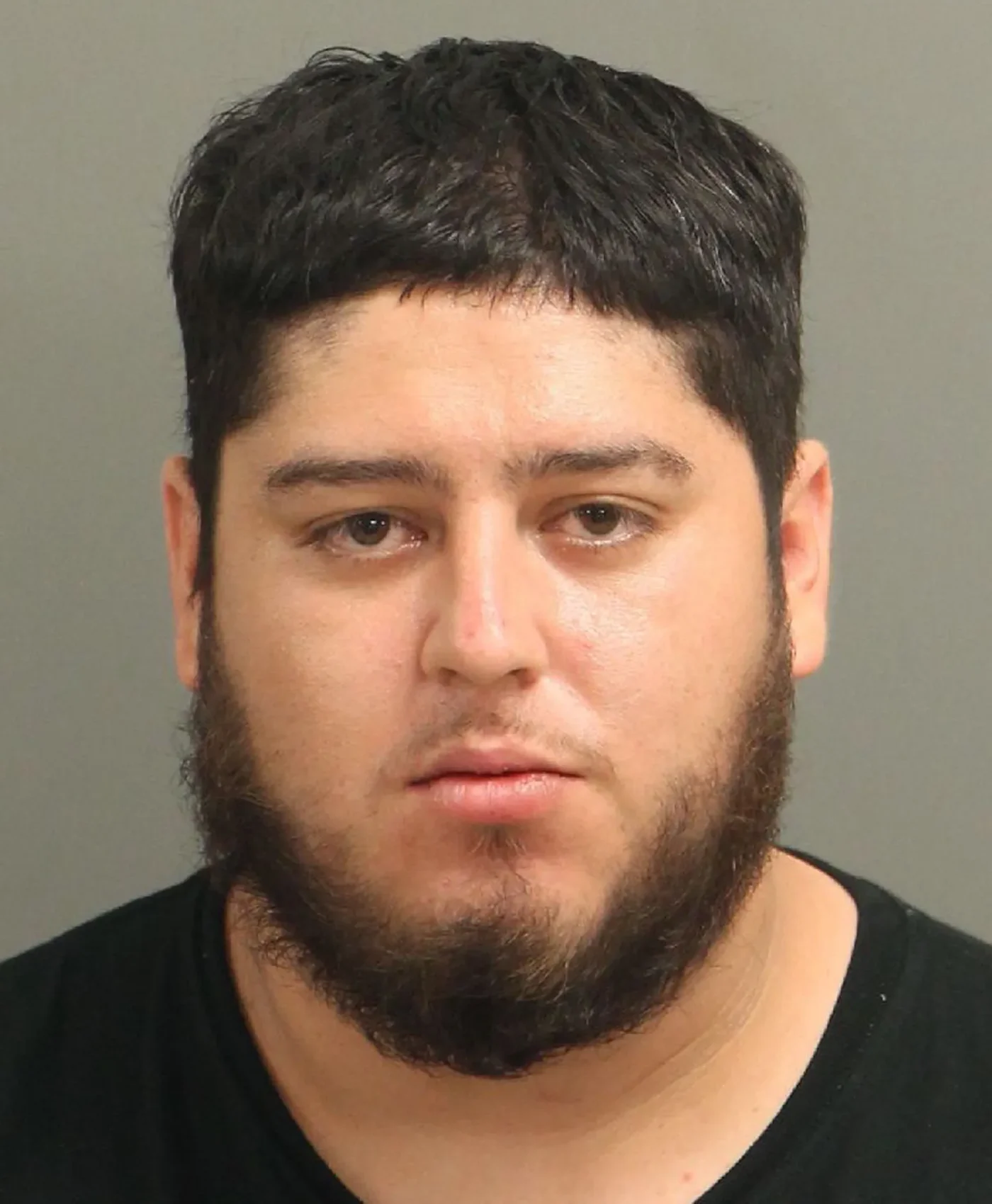
Miguel Enrique Salguero-Olivares.
How a Routine Traffic Stop Broke the 9-Year Impasse
The turning point arrived unexpectedly in September 2021. Patrol officers pulled over Miguel Enrique Salguero-Olivares on suspicion of driving while intoxicated.
During the arrest process, Salguero-Olivares provided a DNA sample. When technicians ran the profile through law enforcement systems, it produced an indisputable match to the genetic material preserved from Faith’s bedroom nearly a decade earlier.
| Investigation Phase | Case Developments |
|---|---|
| September 2012 | Homicide committed; male DNA and an unbroken rum bottle recovered at the scene. |
| 2012–2020 | Over 2,000 individuals questioned; more than 100 targeted DNA swabs tested with no hit. |
| September 2021 | Salguero-Olivares arrested for driving while intoxicated; DNA matched to the crime scene. |
| October Trial | Convicted of murder, rape, sexual offense, and burglary; sentenced to life without parole. |
The Trial and Verdict: Justice Delivered
During the trial, prosecutors laid out an overwhelming forensic case against Salguero-Olivares. One prosecutor noted that the defendant had left his DNA scattered like confetti across the bedroom, linking him directly to the victim’s body, the rum bottle, and the handwritten bag.
“It didn’t matter who done it, I knew that I had to forgive, and I do forgive, but my heart aches for his family,” Connie Hedgepeth told the court. “It was just such a senseless and cruel act, but we have to go on, and we just have to trust God and go on with our lives.”
A jury convicted Salguero-Olivares on four major counts: first-degree murder, first-degree rape, first-degree sexual offense, and first-degree burglary. The judge handed down a sentence of life in prison without parole for the murder conviction, adding an additional 45 to 65 years for the accompanying offenses.
Both of Faith’s parents openly expressed forgiveness in court, choosing grace over hatred after enduring more than a decade of heartbreak.
💬 Faith Hedgepeth’s tragic story stands as a testament to the relentless power of forensic evidence and parental love.
✨ After nearly a decade of silence, her family finally found legal closure and accountability.
📱 Did you follow Faith Hedgepeth’s case through the years? Share your thoughts in the comments below and pass this story along to keep her memory alive.
👇 Keep the conversation going with your perspective on this long-awaited verdict.
 1
 2
 3
 4
