
How Ranked Choice Voting Actually Works: Why Your Second Pick Could Decide the Next High-Stakes Senate Race

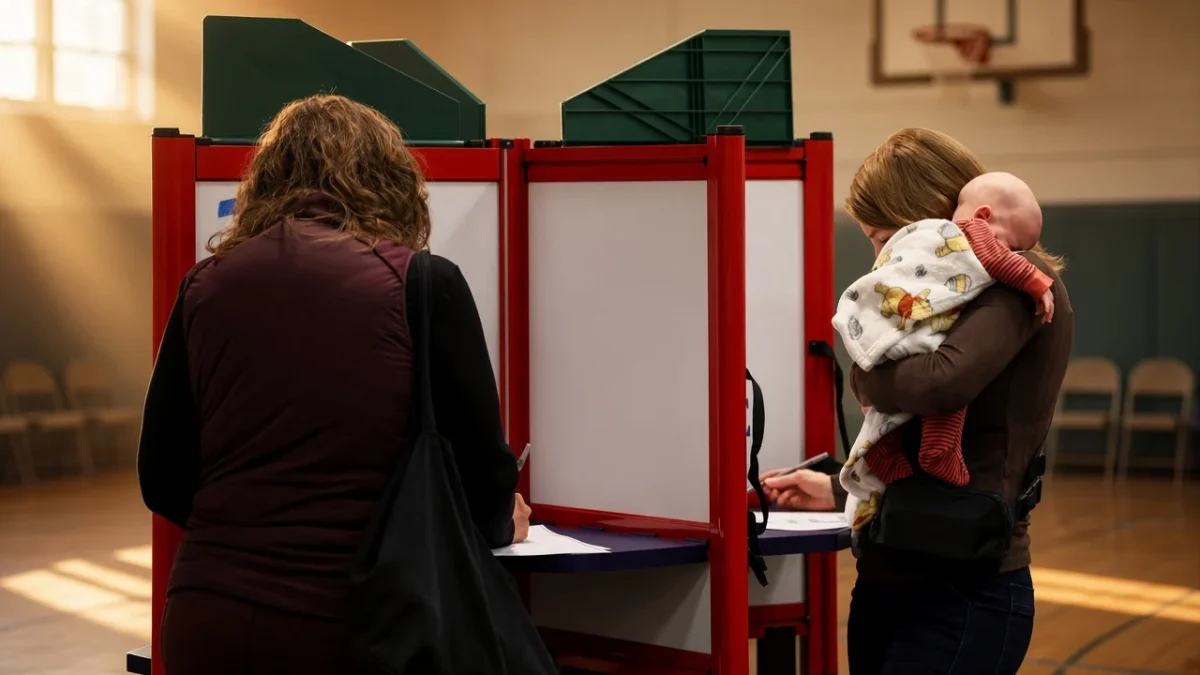
Under a ranked choice voting system, you do not just check one box—you rank contenders in order of preference, and if nobody clears 50% in the first count, an automatic runoff kicks in. The candidate with the fewest votes gets eliminated, and those ballots immediately transfer to each voter’s next pick until someone crosses the majority threshold.
This process completely changes the math in crowded elections. Instead of a polarizing candidate slipping through with a 35% plurality in a divided field, the system forces candidates to appeal broadly enough to win over their rivals’ second-choice endorsements.
From statewide congressional showdowns in Alaska and Maine to local ballots in Washington, D.C., and dozens of U.S. municipalities, this method is reshaping how Americans cast their votes.
How Does the Ballot Count Work Step by Step?
A standard election ballot treats your vote as an all-or-nothing wager. Ranked choice voting treats your ballot as a succession plan.
When you sit down with a ranked choice ballot, you see an orderly grid. Candidates are listed down the side, while numbered columns run across the top representing your first choice, second choice, third choice, and so on.
- The First-Choice Tally: Election workers count everyone’s number-one pick. If a single candidate secures more than 50% of those votes, the race is over and that candidate wins instantly.
- The Bottom-Tier Elimination: If no one hits 50%, the contender with the lowest first-choice total is dropped from contention.
- Instant Vote Redistribution: Ballots cast for that eliminated candidate do not disappear; they instantly slide to whoever those voters ranked as their second choice.
- Sequential Rounds: Officials repeat this round-by-round elimination and redistribution cycle until one candidate secures a clean majority of active ballots.
“Ranked choice voting has a few different goals. One is to ensure that the ultimate winner reflects majority support, and two is to allow voters to support more candidates without worrying that their vote is going to be wasted.”
That observation from Derek Tisler, an elections expert at the Brennan Center for Justice, captures why the model continues to gain traction across American voting districts.
Ranked Choice Voting vs. Traditional Plurality Voting
The traditional “first-past-the-post” system has dominated American elections for centuries, but it often produces winners disliked by the majority of the electorate.
| Election Feature | Ranked Choice Voting Reality |
|---|---|
| Winning Threshold | Mandatory majority (over 50%) after reallocations |
| Third-Party Support | Eliminates the “wasted vote” dilemma entirely |
| Runoff Timing | Instant recalculation without a costly second election |
| Voter Strategy | Express genuine preferences across several candidates |
Wren Orey, managing director of the Bipartisan Policy Center’s Elections Project, noted that this voting method mitigates the risk that the ultimate winner “received a higher share of votes than any other candidate, but isn’t actually preferred by the majority of voters.”
The “Spoiler” Candidate Shield
In traditional voting, supporting a minor candidate frequently acts as a spoiler, inadvertently handing victory to the front-runner you oppose the most. Under ranked choice mechanics, that tactical fear vanishes.
If your favorite fringe or independent candidate finishes last, your vote simply activates for your backup choice. You get to register your authentic ideological pick without surrendering your say in the final outcome.
This dynamic plays out prominently in high-stakes races like Alaska’s four-way Senate contest featuring Sen. Dan S. Sullivan, former Democratic Rep. Mary Peltola, Gerald Heikes, and nonpartisan Dan J. Sullivan. In Maine, voters navigate similar preferences alongside official write-in options.
Myth vs. Reality: Does the Count Take Weeks Because of the System?
A widespread misconception is that ranked choice voting fundamentally delays election outcomes. Skeptics often blame the algorithm itself whenever projections take extra days to materialize.
The reality comes down to margin thresholds rather than computer lag. News networks and major projection desks need more raw, certified tabulations before making mathematical calls in tight multi-round races.
Official election certification routinely takes weeks under any system as mail-in, military, and provisional ballots arrive. The instant runoff calculation itself takes only seconds on election computers once all eligible paper ballots are scanned.
💬 Understanding how your ballot functions is the fastest way to make your vote count.
✨ Have you voted on a ranked choice ballot yet, or do you prefer traditional single-pick voting? Drop your thoughts in the comments below.
📱 Share this guide with friends who want to demystify election night results!
 1
 2
 3
 4
