
Inside King Charles and Queen Camilla’s Historic Caribbean Visit: Royal Couple Confronts British Colonial History and Slavery Relics in Antigua

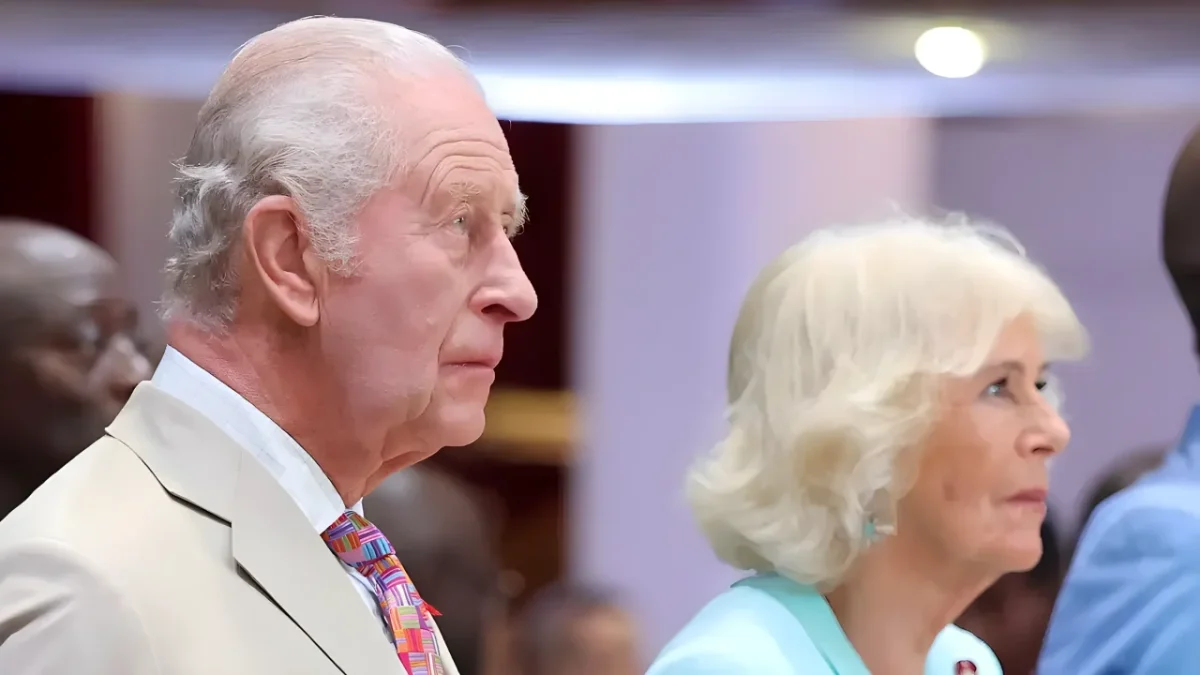
King Charles and Queen Camilla directly addressed Britain’s colonial legacy during their royal tour of Antigua and Barbuda, confronting historical artifacts from the transatlantic slave trade inside the Government House Museum. The visit marked a solemn and deliberate moment on their Caribbean itinerary as the British monarch examined the unvarnished realities of imperial history.
Walking through the newly restored exhibition spaces, the royal couple viewed physical remnants of colonial rule, including original slave shackles, a conch shell used to summon enslaved laborers to plantation fields, and an 1834 Declaration of Emancipation. Buckingham Palace previously emphasized that the King would not shy away from the darkest periods of British history.
The engagement put the ongoing evolution of the British monarchy’s diplomatic role in sharp relief across the Commonwealth.
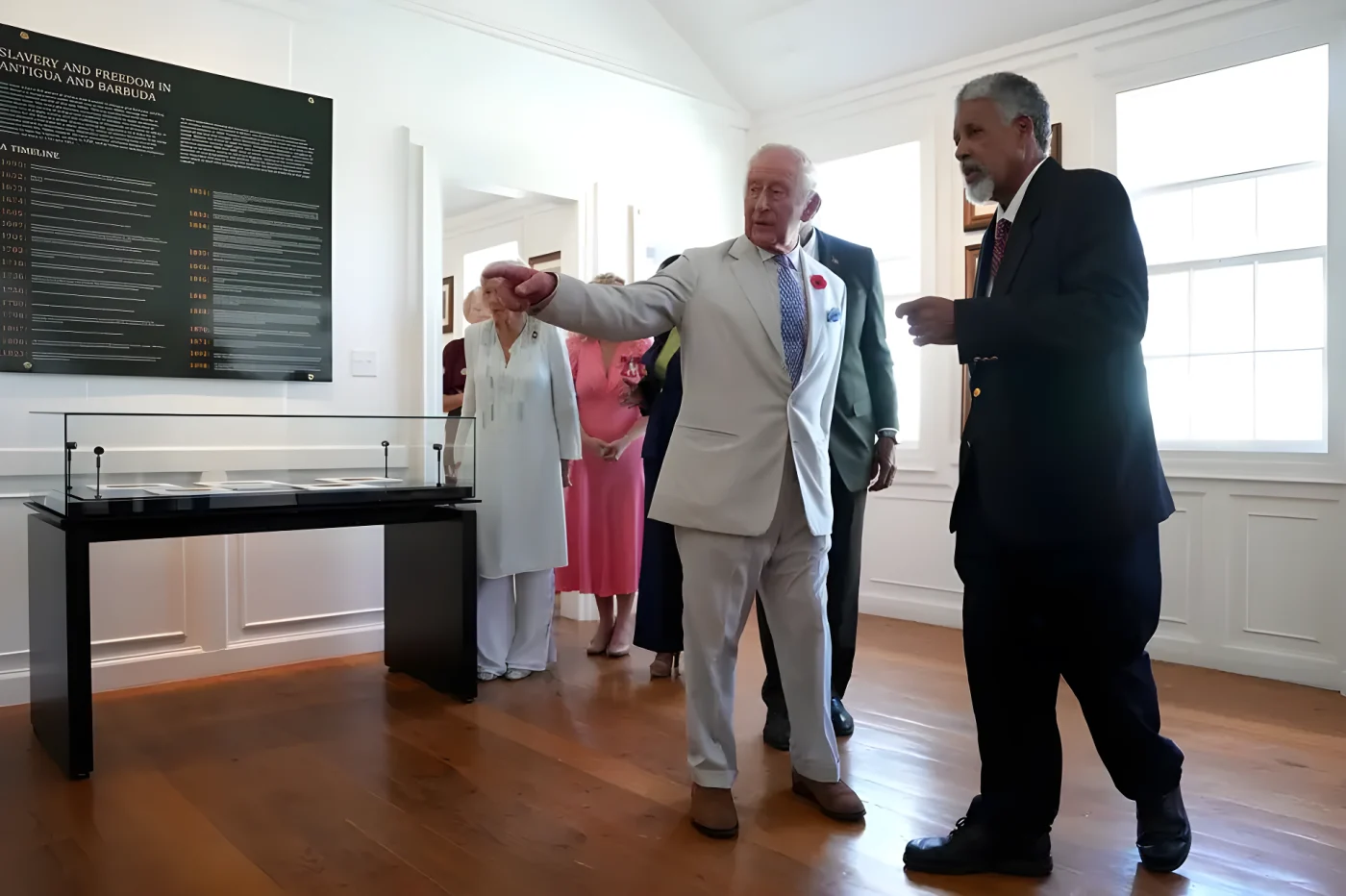
King Charles visiting a museum about slavery during a visit at the Government House.
Facing Slavery Artifacts and the Realities of the Sugar Era
Inside the Government House Museum, curator Dr. Gabriella Howell and UNESCO Antigua and Barbuda Secretary General Dr. Reg Murphy guided the royals through exhibits detailing human exploitation on Caribbean sugar plantations. Displays highlighted the brutal daily mechanisms of the era under banners reading “Sugar and Slavery,” “Emancipation,” and “March Towards Freedom.”
Charles stopped before a display case containing abolition-era Wedgwood ceramic medallions alongside plantation equipment. Observing a parasol placed near heavy iron restraints, the monarch paused to inquire about the everyday objects preserved from the period.
The monarch also inspected a detailed cross-section diagram of a transatlantic slave vessel, visualizing how human beings were transported from Africa to Caribbean shores under horrific conditions.
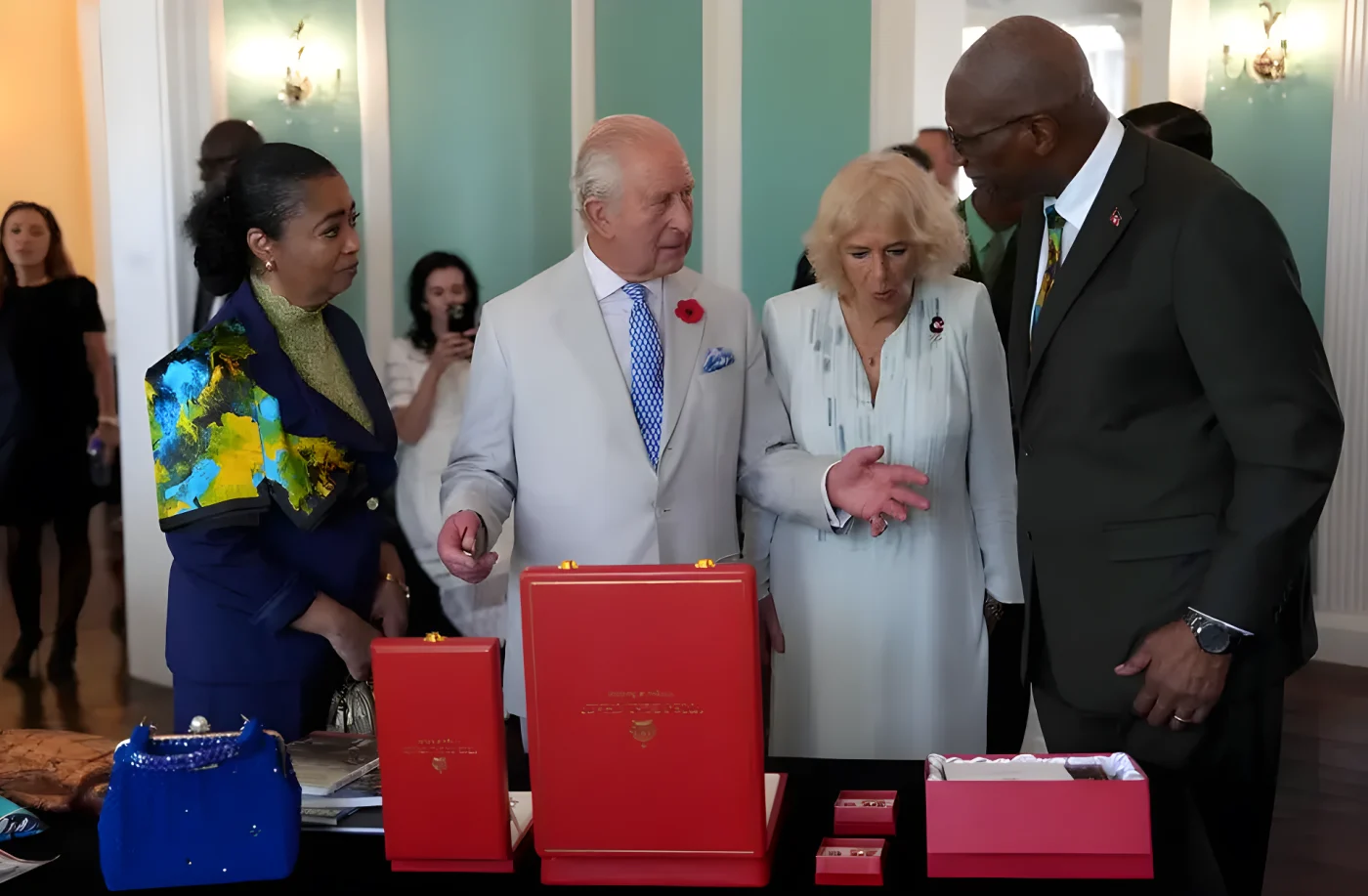
The King and Queen during a visit at the Government House.
Local Art and Shared Perspectives on Past Struggles
The tour featured contemporary works created by local Antiguan artists who trained under instructors from the Royal Drawing School. Cuthbert Forbes, senior assistant to Dame Sandra Williams, walked the royal couple through a dramatic triptych depicting enslaved people plotting an escape before facing capture.
Forbes emphasized that presenting these harsh realities is about preserving identity during the nation’s 45th anniversary of independence, rather than creating diplomatic hostility.
“It’s not about confronting them with slavery. But by including that we have a bit of our history that remains with us, where we are coming from. It’s our 45th anniversary of independence. Telling that story for us as Black Caribbean people this story of how far we have come and battles we have fought.”
Following the museum walk, the King and Queen passed historical quarters on the grounds where emancipated workers lived, recognized among the oldest preserved structures of their type across the Eastern Caribbean.
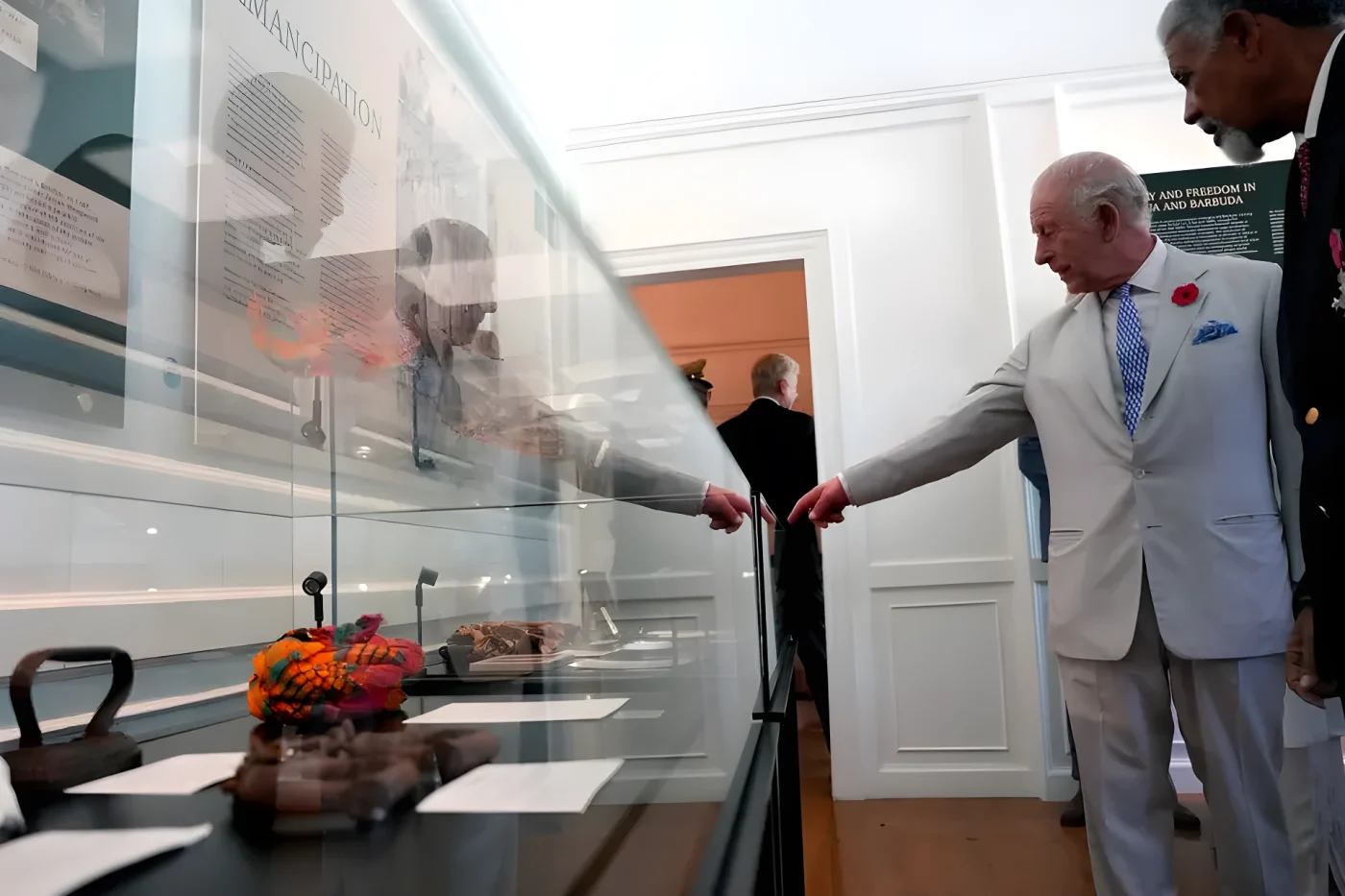
Charles and the president of the Historical and Archaeological Society Dr. Reg Murphy look at a cabinet displaying slavery shackles.
Public Perception vs. Historical Presentation
A frequent misconception surrounding royal tours is that visits to colonial-era sites serve solely as symbolic political stages for financial negotiations. However, local historians highlighted a different priority focused on historical education and self-determination.
“I want them to take away that this is a new developing country, it’s a forward looking nation, and we shouldn’t be dragging the anchors of our past. We have one history and one past. It is all about moving forwards.”
Dr. Murphy voiced skepticism toward political rhetoric surrounding reparations, describing it as an issue driven largely by politicians rather than cultural preservationists working on the ground.
| Exhibition Feature | Historical Significance |
|---|---|
| Iron Shackles & Conch Shell | Original tools of control and plantation communication recovered from colonial estates. |
| Wedgwood Ceramic Medallions | Historical artifacts created in Britain to build public support for the abolitionist movement. |
| 1834 Declaration of Emancipation | Official documentation recording the legal end of chattel slavery in Antigua and Barbuda. |
| Slave Ship Cross-Section | Diagram illustrating the transatlantic transport routes from Africa to the West Indies. |
Community Celebrations and Youth Initiatives
Outside the museum walls, the atmosphere shifted to celebrate modern Antiguan culture, youth leadership, and local civic organizations during a community reception hosted by Governor-General Sir Rodney Williams and Dame Sandra Williams.
The royal visit highlighted several key community engagements across the Government House grounds:
- Culinary Traditions: Chef Nigel Joseph provided a live demonstration preparing classic Antiguan fungee and pepper pot.
- Centuries-Old Board Games: Camilla met with 70-year-old Warri Grandmaster Trevor Simon to observe the strategic African mathematical game preserved across generations.
- Disability Advocacy: The royals greeted representatives from Friends of the Care Project and ten-year-old attendee Aiden Parks-Reed.
- Literacy and Youth: Local Girl Guides and Brownies demonstrated creative arts and film workshop projects.
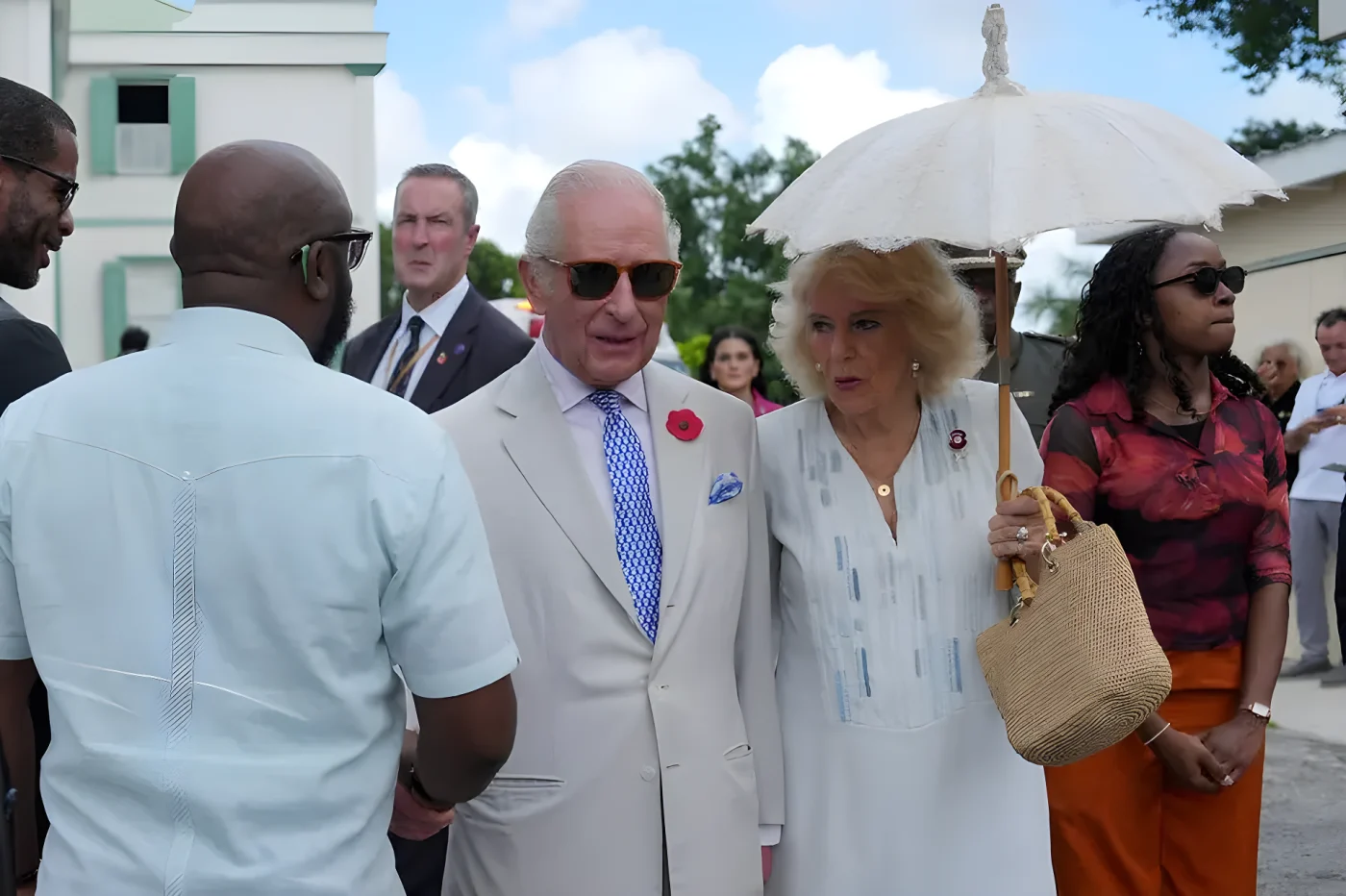
Charles and Camilla greet locals during their visit to the Government House.
Sustainable Building Crafts and Restoration Milestones
The visit concluded with the unveiling of an official plaque commemorating the completed restoration of Government House, a major preservation initiative underway since 2017. The project placed traditional Caribbean construction techniques front and center.
At an open-air reception pavilion, King Charles met with graduates of The King’s Foundation building craft program who completed eight weeks of intensive heritage training in Scotland at Dumfries House and Highgrove.
Participant Kyla Weaver detailed how the cohort applied those heritage techniques by constructing the visitor pavilion entirely out of sustainably sourced Greenheart timber imported from Guyana, demonstrating an alternative to modern concrete building trends.
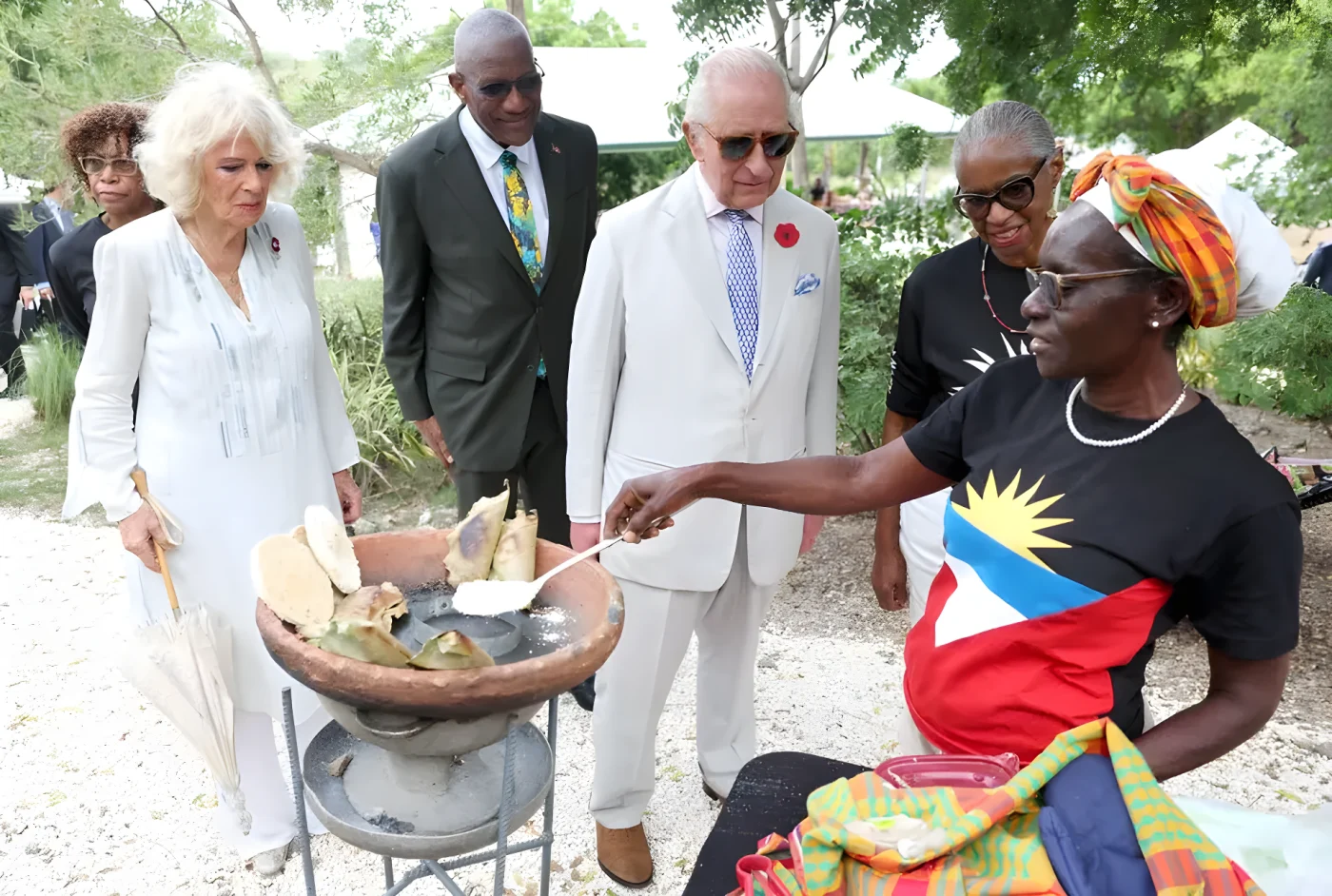
Charles and Camilla.
💬 As Commonwealth nations continue navigating their historical ties to the British Crown, public conversations surrounding heritage and royal accountability remain front and center.
✨ From preserving centuries-old artifacts to training young artisans in sustainable timber framing, Antigua and Barbuda demonstrated how a modern sovereign nation balances historical remembrance with practical progress.
📱 How should global leaders and institutions address complex colonial legacies today? Drop your thoughts in the comments below.
👇 Share this story with fellow history enthusiasts and keep the conversation going.
 1
 2
 3
 4
