
King Charles Faces High-Stakes Caribbean Test: Warm Crowds, Protests, and the Unresolved Reparations Debate

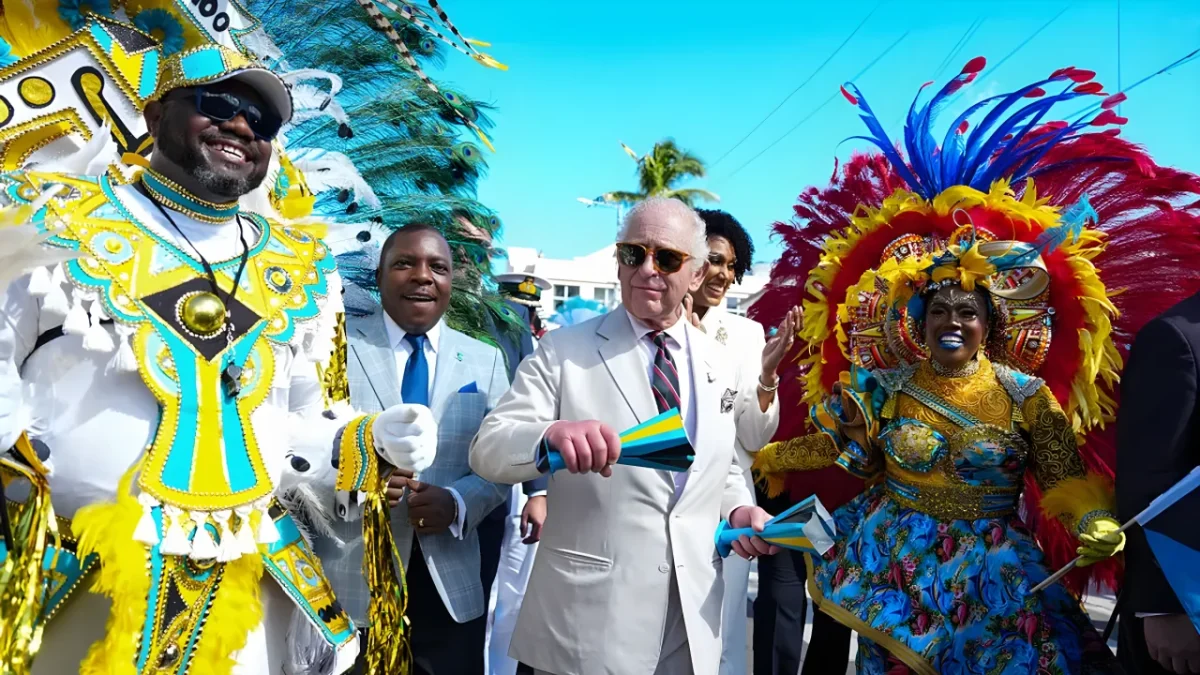
King Charles is walking a delicate diplomatic tightrope on his high-stakes Caribbean tour, balancing warm public receptions with intensifying demands for accountability over Britain’s colonial past. Billed by royal observers as the most sensitive overseas assignment of his reign, the nine-day itinerary across the Bahamas, Guyana, and Antigua and Barbuda puts the modern role of the Crown directly under the microscope.
The monarch leaned heavily into soft-power diplomacy from his first hours in Nassau. Between joining dancers in a vibrant Junkanoo parade, greeting local youth boxers, and trying his hand at local dialect, Charles worked actively to show an approachable, relaxed public face.
Yet behind the festive street scenes lies an unavoidable political reality. Small but visible demonstrations, including protesters displaying signs calling for slavery reparations at Parliament Square, underscored that personal charm alone cannot erase centuries of complex history.
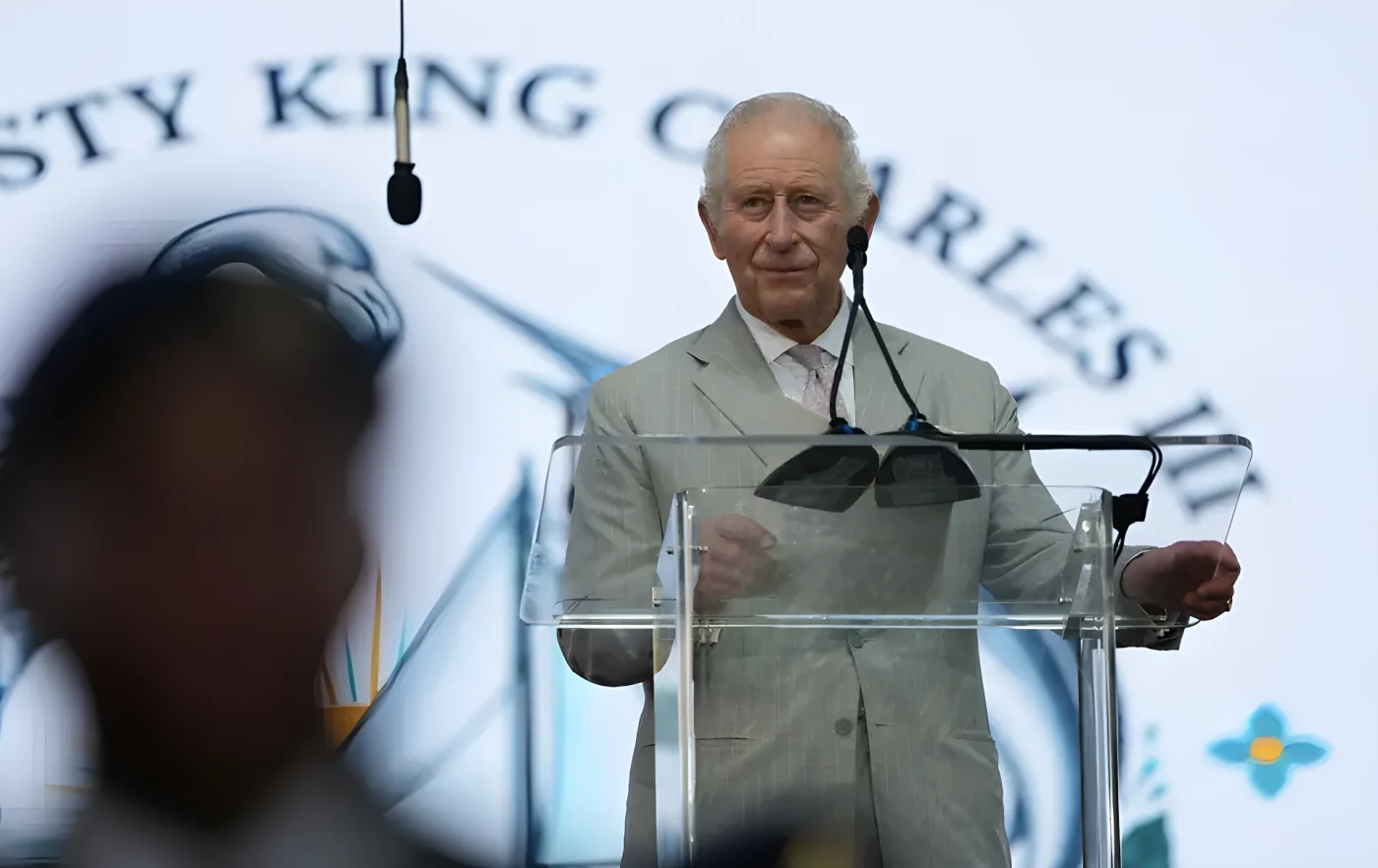
King Charles speaking during an official engagement in the Bahamas.
Soft Diplomacy on the Ground in Nassau
The British monarch remains head of state in the Bahamas, though regional debates surrounding constitutional transitions toward republics continue to simmer. Charles countered formality with humor and accessibility throughout his early stops.
During an appearance at The Bahamas Boxing Academy in Nassau, 12-year-old Sanai Miller and coach Jermaine Gibson presented him with a novelty graphic T-shirt picturing the King in boxing shorts, gloves, and a crown. Rather than deflecting, Charles laughed and engaged directly with the young athletes.
He carried that casual tone into environmental stops, planting a mangrove tree as part of his long-running conservation work while quipping about whether he would still be around in two decades. For crowds gathered along the route, the unscripted moments created an unexpectedly personal impression.
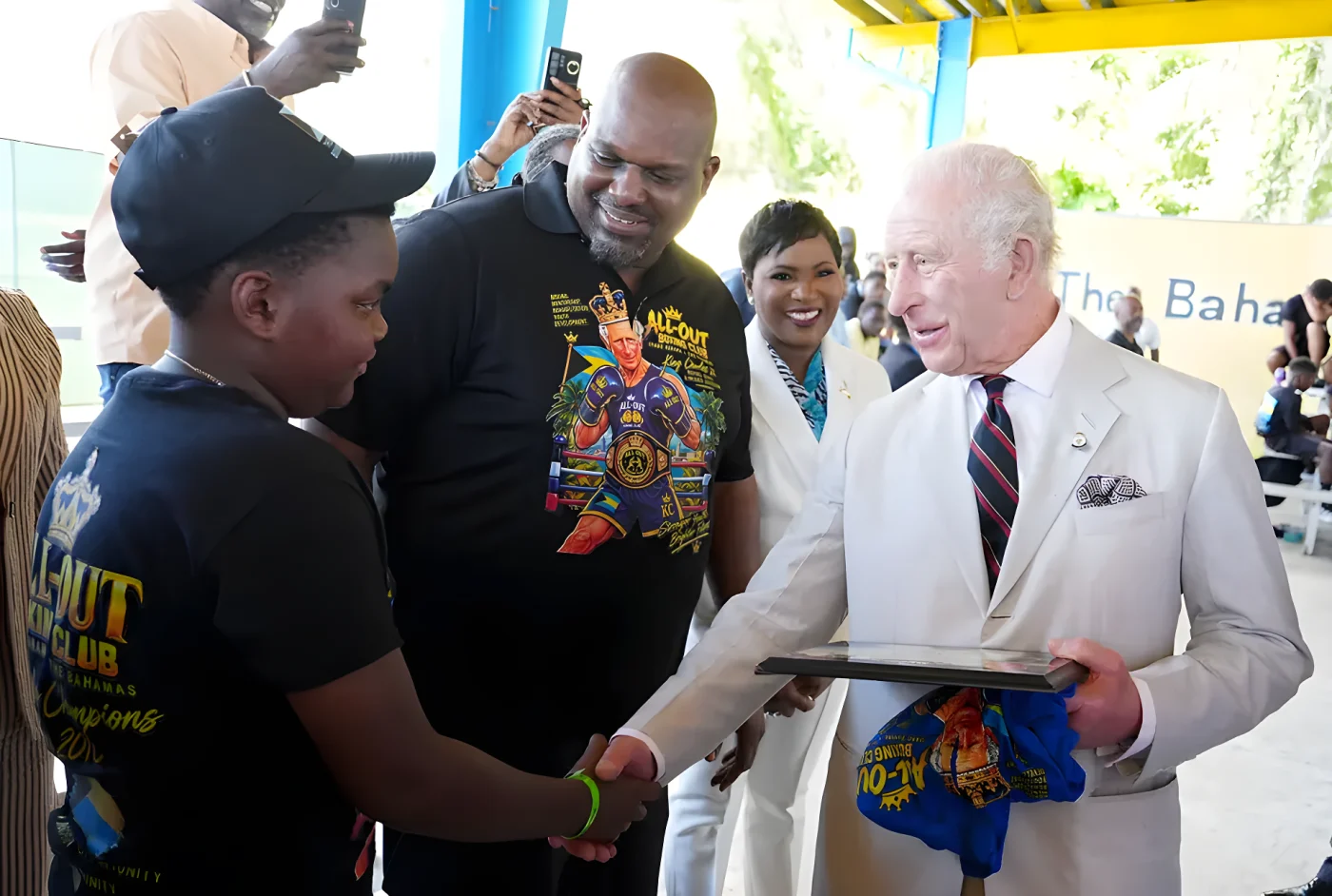
King Charles visits The Bahamas Boxing Academy alongside coach Jermaine Gibson and 12-year-old boxer Sanai Miller in Nassau.
The Boundary Between Royal Words and Government Policy
Public interaction is only half the equation on any official overseas tour. The monarch addressed the “suffering of the past” during his opening public address, signaling that the palace is not ignoring historical trauma.
However, an essential constitutional rule shapes every word uttered on tour.
The Public Misconception: Many assume the British monarch has independent authority to issue formal apologies or negotiate financial reparations on behalf of the state.
The Constitutional Fact: As a constitutional monarch, King Charles travels and speaks strictly under the guidance of British government policy. Because current official policy excludes formal state apologies or financial reparations, the King cannot cross that line, regardless of personal sentiment.
The King is well aware of this and knows that his speeches and engagements will not settle centuries of historical injustice.
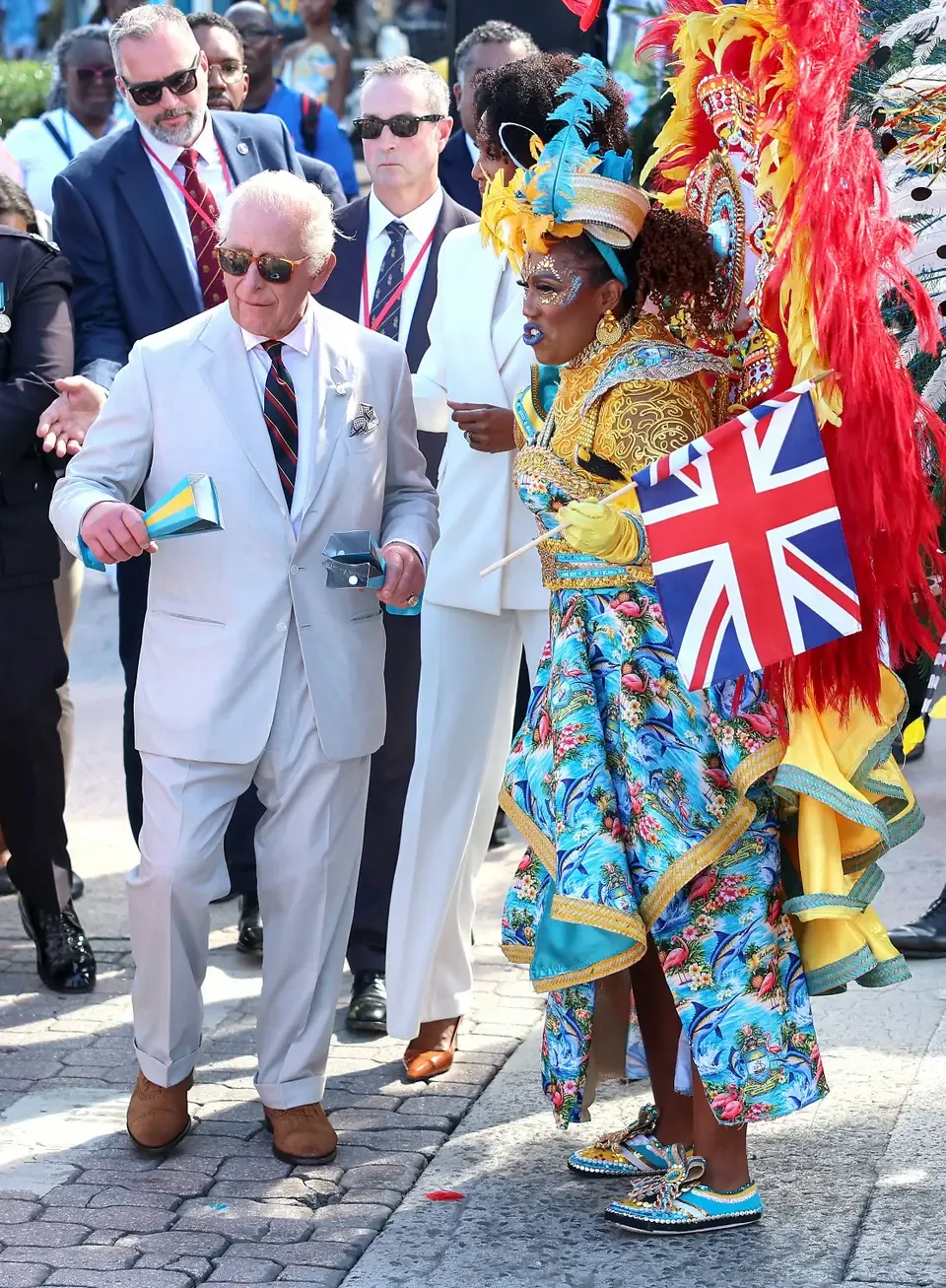
King Charles participates in street festivities during a traditional parade in the Bahamas.
Tour Map: Key Stops and Central Flashpoints
The nine-day journey shifts from cultural events in the Bahamas toward heavier multilateral politics as the itinerary unfolds across three sovereign nations.
| Tour Destination | Strategic Agenda & Diplomatic Context |
|---|---|
| The Bahamas | Community outreach, youth sports initiatives, environmental resilience, and public parade appearances. |
| Guyana | High-level state discussions where President Irfaan Ali has consistently advocated for a reparations framework. |
| Antigua and Barbuda | Hosting regional leaders at the Commonwealth Heads of Government Meeting to debate historic justice and future partnerships. |
Upcoming Pressures in Guyana and Antigua
The second leg of the trip in Guyana will push sensitive policy matters to the forefront. President Irfaan Ali has repeatedly urged the establishment of a formal framework for reparatory justice, ensuring that regional leaders will keep the debate active during diplomatic meetings.
The final stop in Antigua and Barbuda brings together heads of state for the Commonwealth Heads of Government Meeting. There, leaders from across the Caribbean will address trade, climate resilience, and legacy disputes side by side, ensuring the conversation extends well beyond symbolic ceremonies.
💬 Soft-power diplomacy can change public tone, but it cannot rewrite state policy overnight.
✨ As regional leaders continue to push for tangible action on historical justice, Charles must balance ceremonial duties with constitutional limits.
📱 How do you view the future of the Crown’s role across independent Caribbean nations? Join the conversation and leave your thoughts below.
 1
 2
 3
 4