
King Charles Reflects on His Future During Bahamas Tour: ‘If I’m Still Alive’ Quip Highlights Wetland Restoration Stop

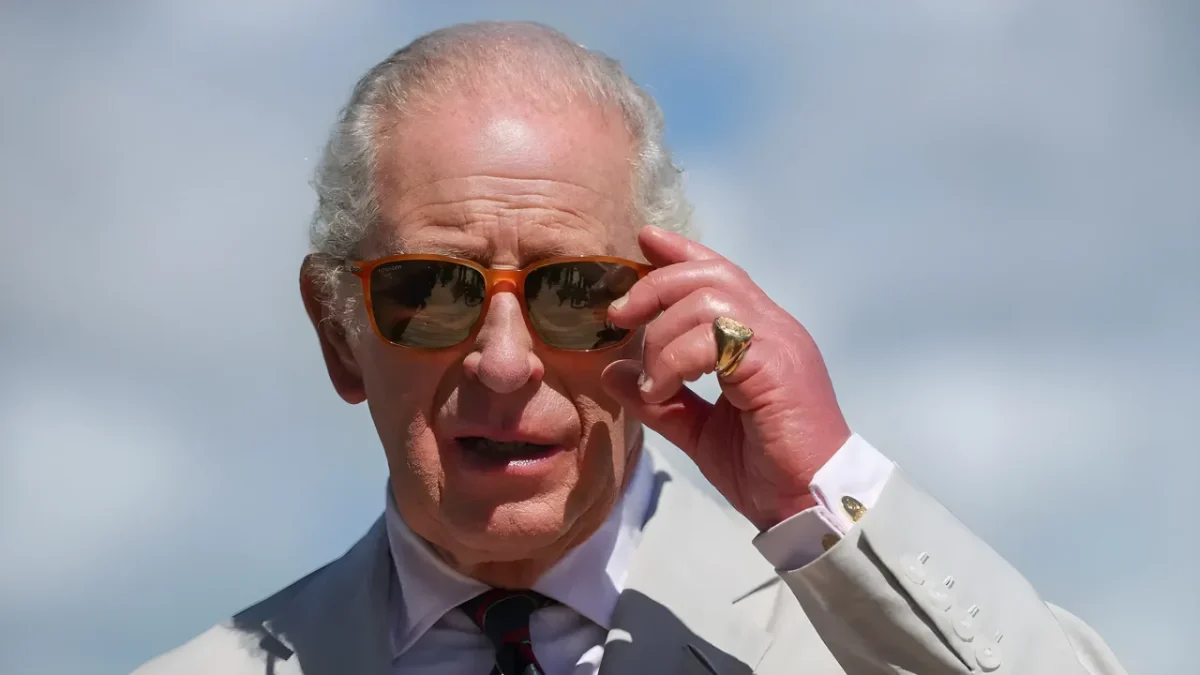
King Charles offered a rare, candid quip about his own longevity while touring Bonefish Pond National Park in the Bahamas. After learning that a freshly planted native tree would take two decades to reach maturity, the British monarch smiled and noted, “If I’m still alive I hope to see it grow into something bigger.”
The monarch’s unvarnished remark came during a hands-on conservation tour highlighting Caribbean climate resilience. Walking along elevated wooden boardwalks, the King inspected critical coastal restoration projects designed to shield local islands from intensifying tropical storms.
His visit brought royal focus to an ambitious local effort that flipped a former community dumping ground into an ecological sanctuary spanning hundreds of acres.
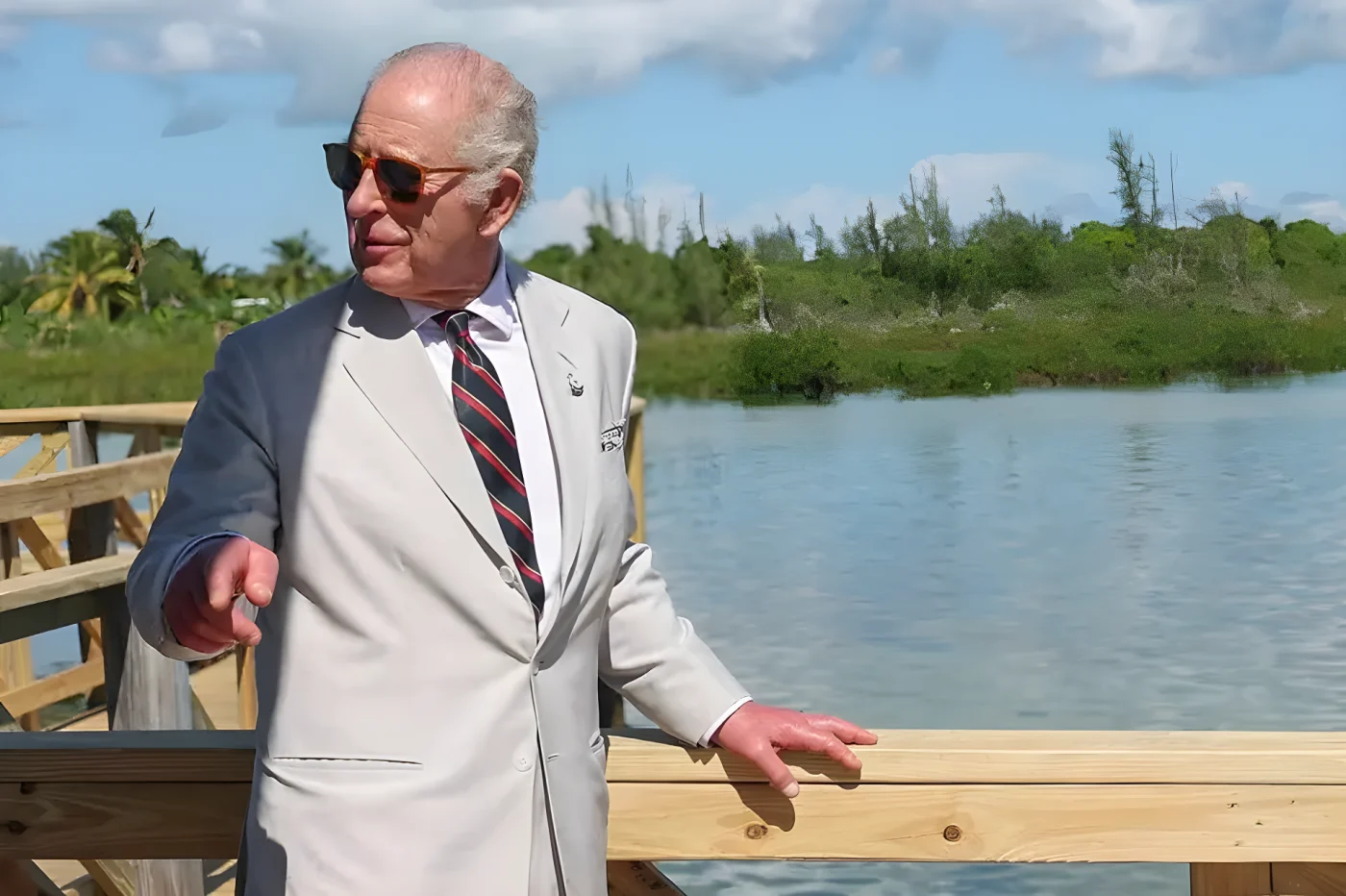
King Charles stands by a wooden dock during his visit to Bonefish Pond National Park.
A Candid Reaction to a 20-Year Timeline
The King’s lighthearted reflection on time happened during a ceremonial tree-planting ceremony along the Bahamian coast. Staff handed Charles a shovel to bed in a native silver buttonwood, an indigenous coastal plant commonly called the silver mangrove.
After shoveling soil over the root base, Charles gently shook the branches by hand to “wish it luck.” When park guides explained that the young buttonwood would reach its full height in roughly 20 years, the monarch responded with dry honesty.
“If I’m still alive I hope to see it grow into something bigger.”
Before concluding the outdoor walkthrough, staff presented the King with a commemorative colored pencil print depicting a native red mangrove.
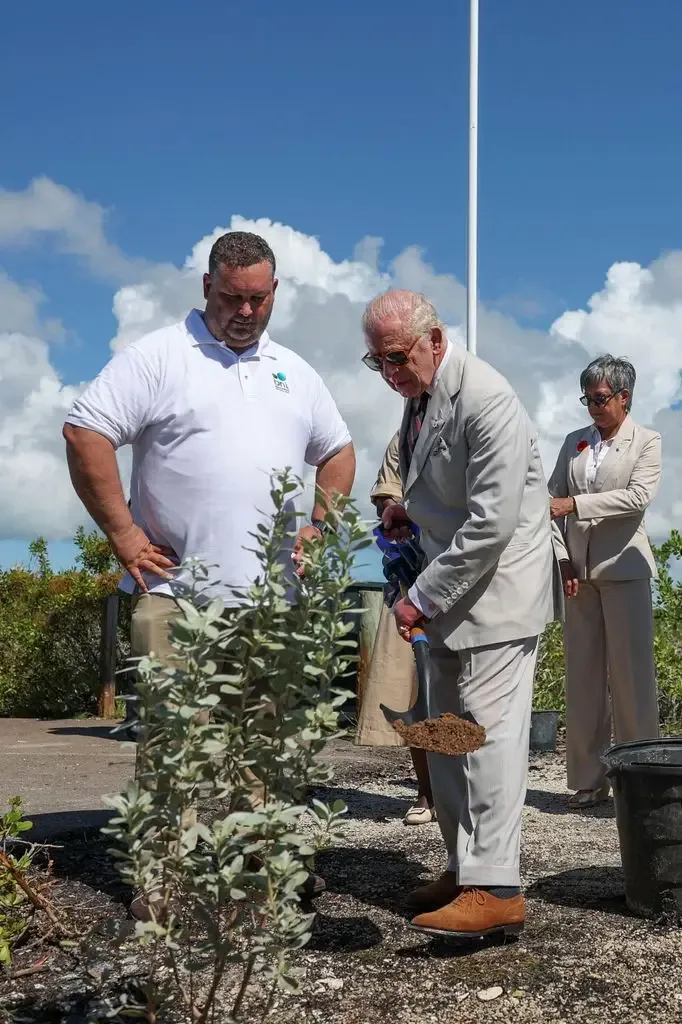
King Charles shovels soil to plant a silver buttonwood tree in the Bahamas.
From Landfill to Coastal Defense: The Bonefish Pond Revival
The setting for the royal stopover carries deep environmental significance for the Caribbean. Bonefish Pond National Park is one of 33 protected spaces overseen across the archipelago by the Bahamas National Trust.
The reserve was not always a pristine habitat. Conservationists successfully reclaimed and restored 1,235 acres of mangrove forest, seagrass beds, and tidal waterways that had previously been used as an open trash dump.
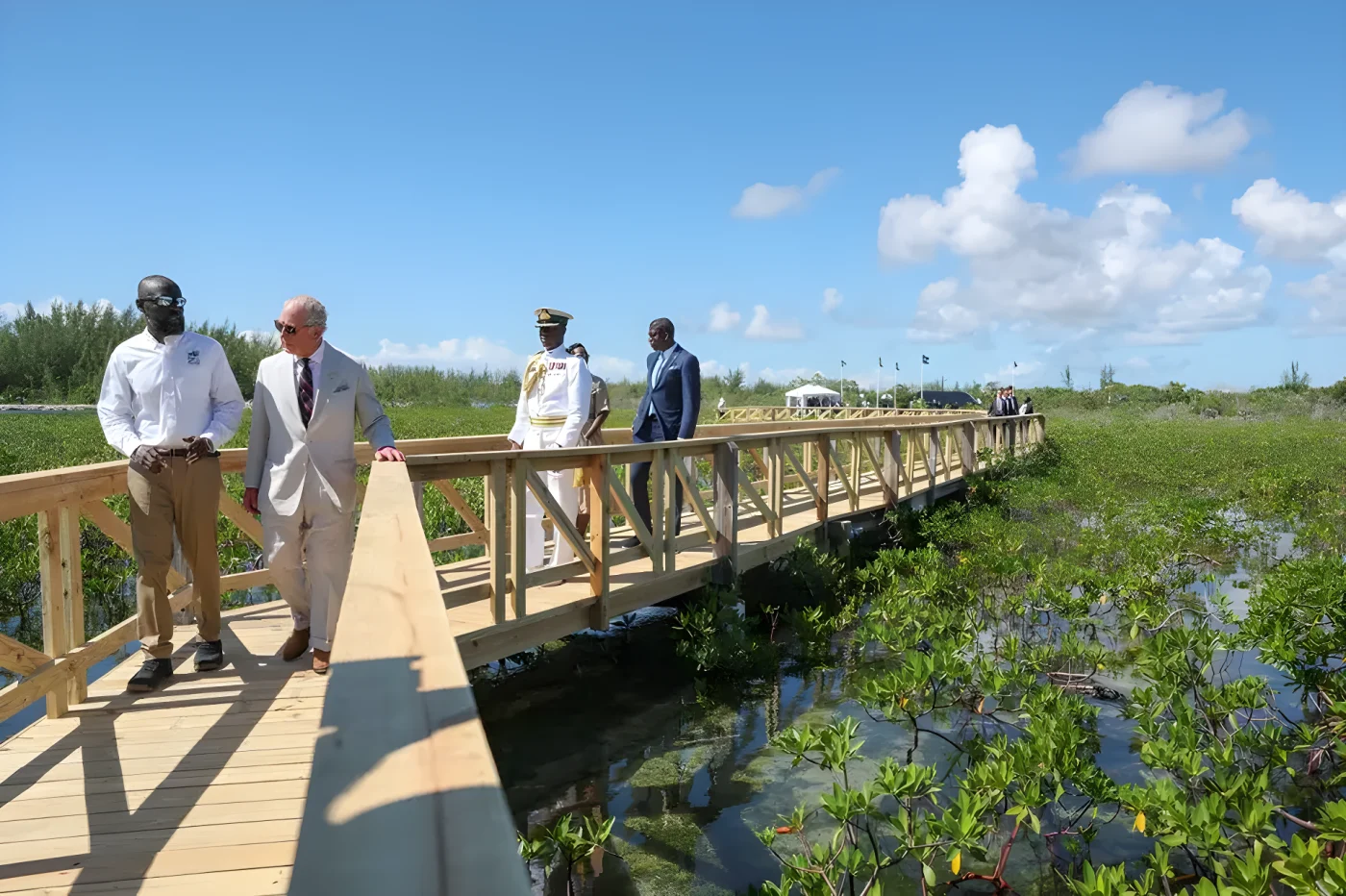
King Charles and park representatives tour the restored mangrove reserve across wooden footpaths.
The Ecological Defense Line
Coastal wetlands do far more than provide scenic shorelines. The intricate root systems of coastal mangroves serve vital infrastructure roles that protect small island nations from rising seas.
- Surge Reduction: Dense root mats act as a natural physical barrier, blunting the destructive energy of storm surges.
- Carbon Sequestration: Mangrove wetlands actively capture and store carbon, locking it securely into coastal sediments.
- Marine Nurseries: The shallow waters provide vital shelter for juvenile fish before they head out to open ocean reefs.
The King inherited the role of Patron of the Bahamas National Trust in 2024. The appointment followed in the footsteps of his late father, Prince Philip, who served as patron of the conservation trust from 1959 until stepping back from public duties in 2017.
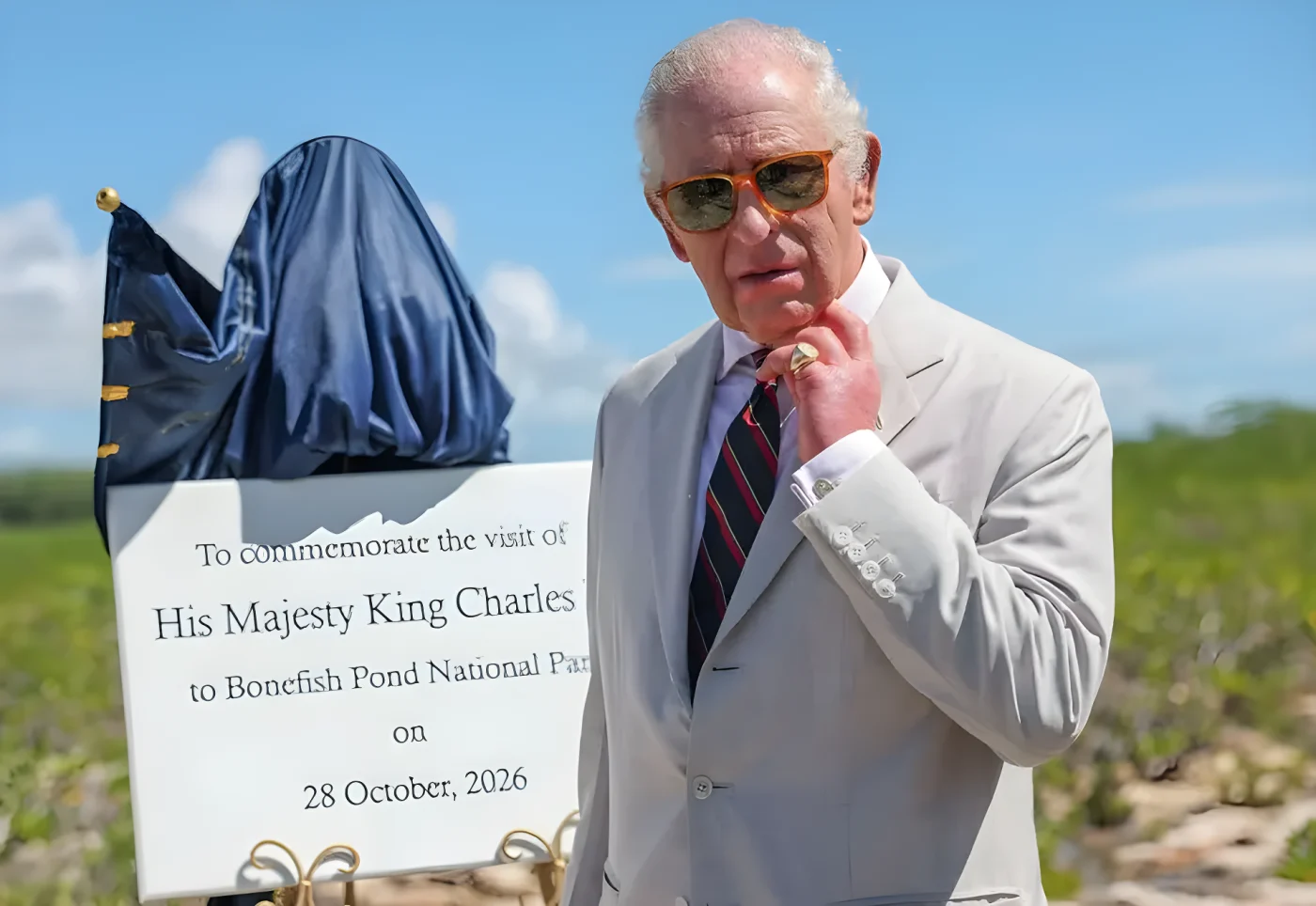
King Charles stands next to a commemorative plaque unveiled during the park visit.
Hands-On Science and Nostalgic Memories
During his walk along the wetlands, the King met local students participating in outdoor biology programs. He watched youth inspect a submerged horsehair air-conditioning filter repurposed as an artificial reef, teeming with tiny shrimp and a blue crab.
Charles also spoke with Tenaj Thompson, head boy at The Bahamas Academy. When informed that the 12th-grade student was currently juggling nine academic subjects, the King quipped, “A genius in the making!”
“It’s difficult to understand why they matter, if you’re not told. That can make a big difference, to unlock that interest. To get them out, out of school, so they are not always in the classroom. It’s easier to learn it out here.”
The visit stirred personal memories for the King, who frequented the Bahamian island of Eleuthera during the 1970s. Decades earlier, Charles spent part of his 1981 honeymoon alongside Diana, Princess of Wales, on Windermere Island off the Eleuthera coast.
Watching nearby schoolchildren paddle through the marsh canals, Charles recalled his own trials on the water. “I remember when I had to learn to roll,” he remarked of kayaking. “You can put the paddle on the bottom, that’s the great thing.”
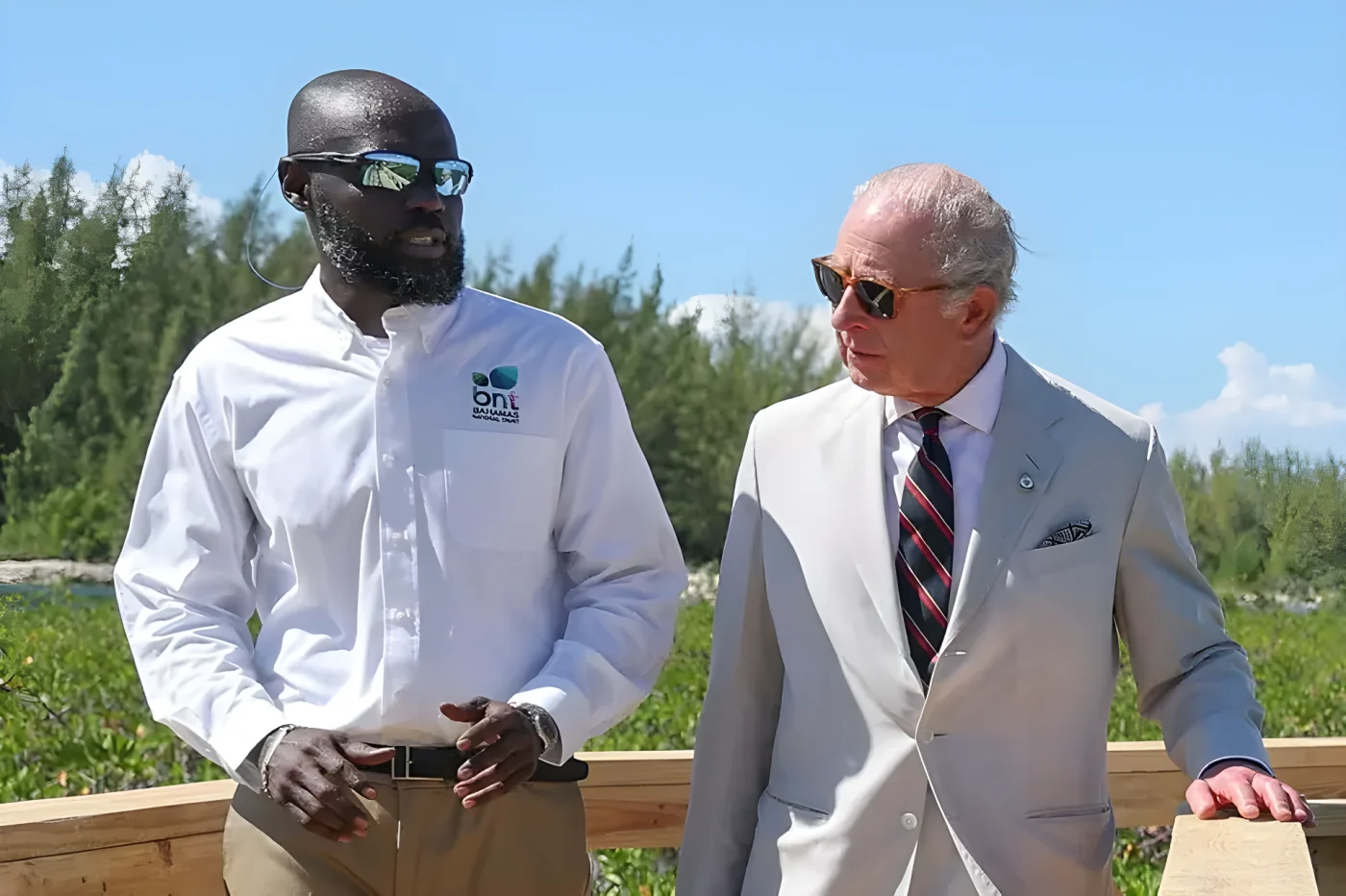
King Charles converses with conservation staff during his Bahamian wetland tour.
Ecosystem Realities: Transforming Coastal Wastelands
A widespread public misconception treats coastal mangrove flats as murky, unusable wastelands suitable only for development or waste disposal. The operational turnaround at Bonefish Pond proves the exact opposite.
| Wetland Condition | Environmental Impact |
|---|---|
| Historical Rubbish Dump | Severely degraded tidal creeks, blocked marine passages, and accumulated coastal debris. |
| Restored 1,235-Acre Park | Thriving nursery for bonefish, grouper, and snapper with verified storm surge protection. |
When welcoming the King to the park pavilion, one educator cheered, “You reach, Your Majesty!”
“It’s a miracle!” Charles answered with a laugh. “That’s the only problem that it’s taken me so long to come back here.”
✨ The King’s stop in the Bahamas brought international attention to grassroots marine biology and wetland restoration.
💬 Seeing historic vacation spots turn into modern conservation havens shows how environmental priorities have evolved over decades.
👇 What do you think of King Charles’s candid comment on the future? Drop your thoughts in the comments below!
 1
 2
 3
 4