
WORLD NEWS ENVideo
Lindsay Clancy Fights Murder Charges on Double Jeopardy Grounds as Defense Reveals She Remains on Suicide Watch

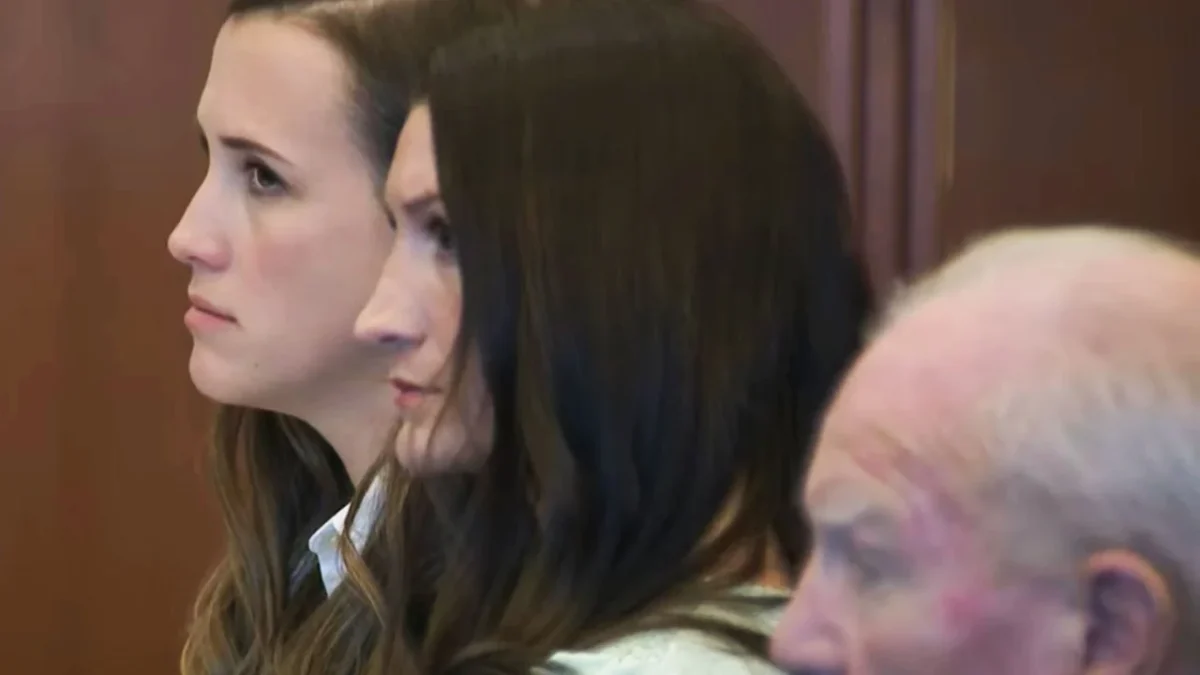
Lindsay Clancy is fighting to have her triple murder case dismissed on double jeopardy grounds after her high-profile trial ended in a hung jury. Defense attorneys returned to court to argue that the state should not be allowed to retry the Massachusetts mother, even as her legal team disclosed that she remains hospitalized on strict suicide watch.
Clancy faces three counts of murder in the January 2023 deaths of her five-year-old daughter Cora, three-year-old son Dawson, and eight-month-old son Callan. Her initial criminal trial reached an impasse when jurors deadlocked 11-1 in favor of finding her not guilty by lack of criminal responsibility.
Following that mistrial, her defense team launched a constitutional challenge to stop the state from mounting a second prosecution. Plymouth County Superior Court Judge William Sullivan took the defense motion to dismiss under advisement after hearing extensive arguments from both sides.
The Battle Over Double Jeopardy and Juror Records
Clancy appeared in court alongside defense attorneys Kevin Reddington and Martin Weinberg to contest the prosecution’s push for a potential retrial. Weinberg, a prominent constitutional defense attorney who previously worked on the high-profile Karen Read case, took the lead on the constitutional motions.
The defense argued that constitutional protections against double jeopardy bar the Commonwealth from trying Clancy a second time after the jury split heavily in her favor. Defense lawyers and prosecutors also traded sharp arguments concerning records connected to the single holdout juror who prevented a unanimous verdict.
Prosecutors pushed back vigorously against the dismissal, maintaining that the state has the legal right to retry defendants when a jury cannot reach a unanimous conclusion. It remains unsettled whether the Commonwealth will formally seat a second jury if the judge denies the dismissal motion.
Inside Clancy’s Mental Health and Hospital Custody
While constitutional arguments played out in the courtroom, defense attorney Rosemary Scapicchio shed light on Clancy’s present physical and psychological condition. Clancy remains in custody at Tewksbury Hospital, where medical staff have kept her under continuous suicide observation.
“She doesn’t want to be here,” Scapicchio told CBS News. “She wants to be with her children.”
Scapicchio noted that Clancy suffers from persistent, severe nightmares surrounding the tragedy. Following the fatal strangulation of the three children inside their Duxbury home, Clancy cut her wrists and leaped from a second-story window in an attempt to end her own life.
The Defense Strategy: Lack of Criminal Responsibility
Clancy has never denied causing the deaths of her three young children. Instead, the entire defense centers on her acute mental state at the time of the incident.
- Medical history: The defense contends Clancy was experiencing severe postpartum psychosis.
- Medication regimen: Attorneys argued she was heavily overmedicated with psychiatric prescriptions prior to the tragedy.
- Legal threshold: Under Massachusetts law, a defendant can be found not guilty if they lacked substantial capacity to appreciate the criminality of their conduct or conform their behavior to the law.
Legal Misconception vs. Courtroom Reality
A widespread public misconception surrounding criminal mistrials is that a hung jury automatically guarantees an immediate second trial without friction. In reality, defense teams can assert constitutional challenges, arguing that prosecutorial actions or specific trial outcomes trigger double jeopardy protections.
Another common myth is that an 11-1 split functions similarly to a typical disagreement. When 11 out of 12 jurors formally lean toward finding a defendant not guilty by reason of mental defect, defense teams frequently challenge whether the state met its burden to warrant another trial.
| Legal Question | Current Case Status |
|---|---|
| First Trial Outcome | Mistrial declared due to an 11-1 hung jury in favor of not guilty |
| Defense Motion | Request for full case dismissal based on double jeopardy protections |
| Holdout Juror Issue | Attorneys actively litigating access to records regarding the sole juror |
| Defendant Location | Remains in state custody under suicide watch at Tewksbury Hospital |
| Judicial Decision | Taken under advisement by Judge William Sullivan |
The legal team’s division of responsibilities remains firmly split as the judge reviews the filings. While Reddington serves as primary trial counsel, Weinberg oversees the ongoing constitutional litigation that could decide whether a second jury ever hears the case.
💬 The clash between severe psychiatric claims and criminal accountability continues to generate intense debate in courtrooms nationwide.
📱 As the judge weighs whether to dismiss the charges or clear the path for a potential retrial, the outcome could establish critical legal precedents for complex mental health defenses.
👇 Drop your thoughts in the comments below: How should the judicial system handle retrials when a jury overwhelmingly leans toward lack of criminal responsibility?
 1
 2
 3
 4
