
Why Jack Osbourne Says Living With Multiple Sclerosis Makes Him Feel Like a ‘Fraud’

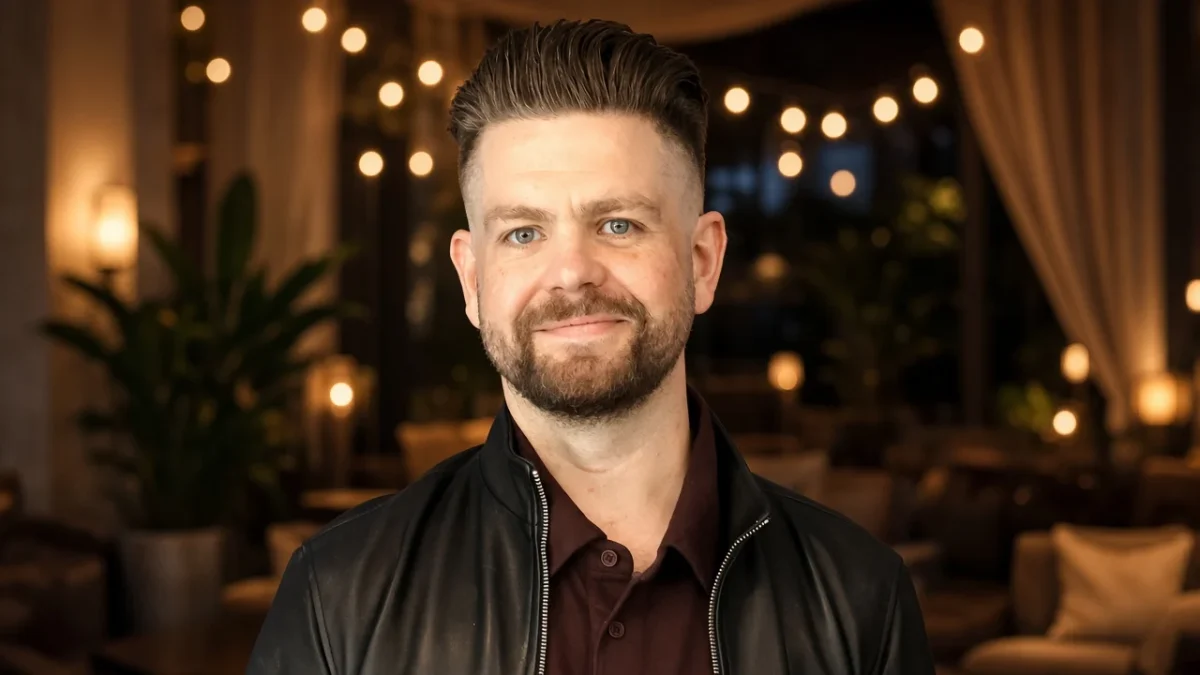
Jack Osbourne admits he often feels like a “fraud” within the multiple sclerosis community because the condition has not slowed him down. Speaking candidly on the MeSsy podcast hosted by Christina Applegate and Jamie-Lynn Sigler, the 40-year-old television personality revealed the complex emotional toll and guilt that come with living with a mild manifestation of an unpredictable disease.
Diagnosed in April 2012 when he was just 26 years old, Osbourne has spent 14 years managing the condition while watching fellow patients face drastically steeper physical battles.
That contrast between his own physical stability and the severe toll experienced by others sparked an unexpected internal conflict.
The Guilt Behind a Silent Battle
Osbourne explained that attending community gatherings often triggers these complicated emotions.
“I’ll go to these MS events — I’ve had the disease, been diagnosed 14 years now — and I’ll see people who were diagnosed a year ago, and they’re in a much worse position and they’re having a much harder time.”
While the illness has surfaced in distinct “windows” of time throughout his life, his daily reality remains far less restrictive than what many others endure. He acknowledged having a “strange relationship” with his diagnosis for that very reason.

Jack Osbourne
Sigler, who also lives with MS, pushed back on his self-doubt immediately during the conversation. She reminded him that multiple sclerosis exists across a wide spectrum and that his advocacy provides invaluable representation for patients whose symptoms remain largely invisible.
Myth vs. Reality: Understanding Multiple Sclerosis
Public perceptions of neurological diseases often assume that every diagnosis follows the exact same rapid, debilitating path. Documented clinical reality paints a far more nuanced picture.
| Common Public Misconception | Documented Medical Reality |
|---|---|
| MS rapidly immobilizes every patient immediately after diagnosis. | MS is highly unpredictable; symptoms manifest in variable “windows” across a wide spectrum. |
| Mild symptoms mean a patient does not truly have the disease. | Autoimmune nerve fiber damage occurs regardless of how visible outward mobility issues appear. |
According to the Mayo Clinic, multiple sclerosis is an autoimmune disease that causes the breakdown of myelin, the protective covering of nerve fibers. This damage disrupts the flow of information between the brain and the body, as outlined by the National MS Society.
Patients can face unpredictable complications, including vision changes, extreme fatigue, numbness, weakness, and memory impairments.

Jack Osbourne attends An Evening to Celebrate a Decade of Wellness with ALYST Health at Cameo Beverly Hills on September 18, 2024 in Beverly Hills, California.
Facing Fear in the Early Days
The son of Ozzy Osbourne and Sharon Osbourne learned of his condition just three weeks after welcoming his daughter, Pearl Clementine, with his now ex-wife Lisa Stelly. The sudden medical news sent him into an immediate emotional spiral.
Reframing the Diagnosis Through Sobriety
Having previously committed to a sober lifestyle, Osbourne questioned why he had worked so hard to turn his health around only to face a chronic diagnosis.
“It was so frustrating because I just… I instantly went, ‘What the f— did I even get sober for? I should have just burned this whole thing down.’ ”
At the time, his only cultural reference point for the disease was comedian Richard Pryor, who died of a heart attack at 65 nearly two decades after his own MS diagnosis.
A wake-up call came directly from a blunt sobriety mentor whom Osbourne phoned immediately after leaving the hospital:
- The reality check: His mentor asked plainly, “Well, are you gonna die?” When Osbourne answered, “Well, not today,” the mentor hung up with instructions to call back tomorrow.
- The daily accountability: The exact same check-in occurred the following day, anchoring Osbourne to the present reality.
- The core takeaway: The conversation forced him to stop catastrophizing, teaching him to live day by day rather than taking his current health for granted.
💬 Chronic diagnoses carry unseen psychological weight, even when physical mobility remains intact.
✨ By sharing his vulnerable perspective, Osbourne highlights how comparison can rob patients of their own healing space.
📱 Have you or someone you know navigated the emotional highs and lows of an autoimmune diagnosis? Drop your thoughts in the comments below.
 1
 2
 3
 4
