
A 197.8-Carat Imperial Gem Worn at the Last Romanov Ball Heads to Auction: The Storied Past of the Romanov Sapphire

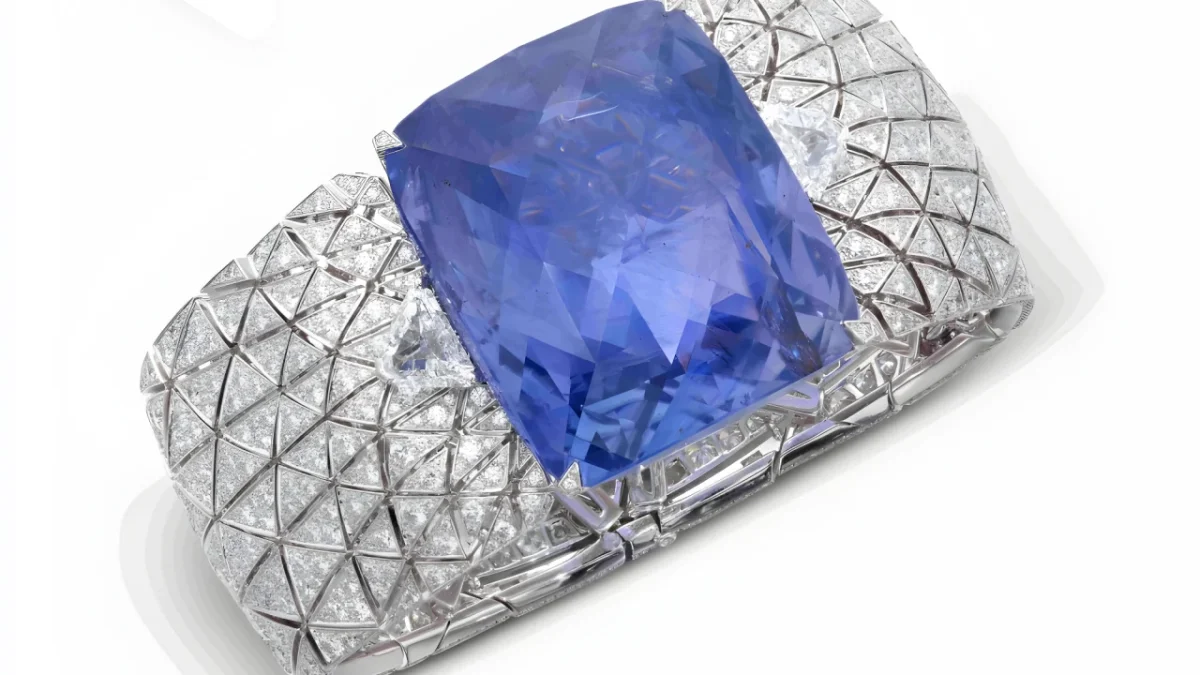
The Romanov Sapphire, a monumental 197.8-carat unheated Ceylon gem once worn by Dowager Empress Maria Feodorovna at the Russian dynasty’s final imperial gala, is heading to auction at Sotheby’s, where specialists estimate it could fetch up to £1.5 million.
Once set by House of Fabergé and later reimagined by Cartier, this extraordinary jewel survived the fall of the Russian monarchy, state-mandated Soviet liquidations, and an eccentric journey across high society.
Its reappearance on the global auction block highlights not just its sheer carat weight, but a documented lineage stretching from imperial ballrooms to a famed California botanical estate.
The 1903 Winter Palace Ball: An Imperial Legacy on Display
The jewel made its most iconic royal appearance during the legendary 1903 Winter Palace Ball in St. Petersburg.
Regarded by historians as the last lavish imperial gathering of the Romanov dynasty, the two-part event required guests to dress in recreated 17th-century Muscovite attire, adorned with jewel-encrusted kokoshnik headpieces and heirloom gems.
Dowager Empress Maria Feodorovna pinned the massive sapphire in a diamond setting, alongside a matching pair, directly onto the front panel of her gown.
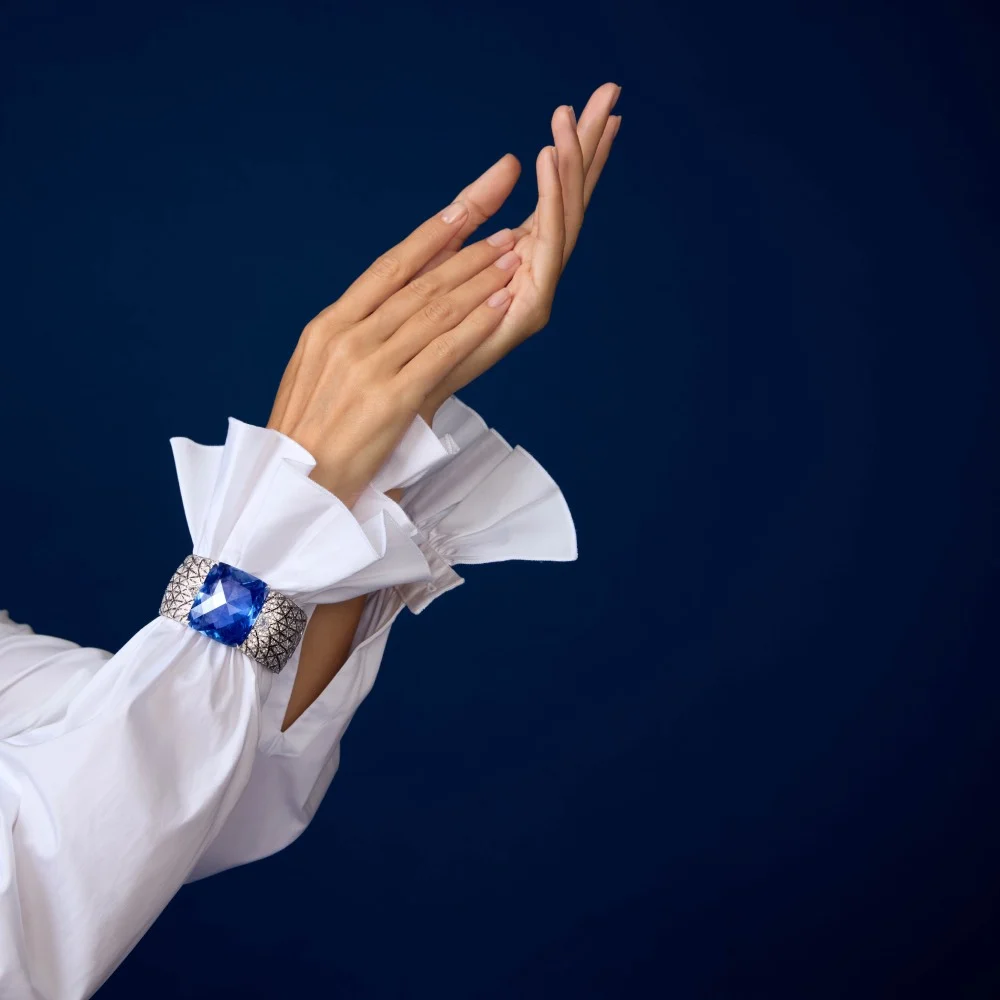
The Romanov Sapphire mounted in an interchangeable rock crystal and diamond bracelet by Cartier.
The display marked the pinnacle of Romanov splendor just years before war and political upheaval dismantled the empire.
When the regime collapsed, the gem did not disappear into obscurity—instead, it became an economic asset for the newly formed Soviet government.
From Soviet Dispersals to an Opera Star’s Collection
During the 1920s and 1930s, the Soviet administration launched extensive dispersal sales, liquidating royal regalia, crown jewels, and fine art to finance state-driven industrial expansion.
The Romanov Sapphire was cataloged and put up for sale through Christie’s in London, escaping the destruction that met other crown treasures.
It was subsequently acquired from Cartier by opera singer Madame Ganna Walska, an avid collector who assembled an enviable archive of historic pieces from Cartier and Van Cleef & Arpels.
Historic provenance transforms rare stones into cultural artifacts, where intact documentation commands exceptional premiums on the international market.
Two years after acquiring the gem, Walska commissioned Cartier to set the stone into a sautoir necklace alongside an astonishing 256.6-carat Mughal emerald she had purchased earlier.

The Romanov Sapphire, formerly part of the Russian Crown Jewels.
Funding a California Garden with Imperial Royalty
Walska’s custody of the sapphire culminated in a major lifestyle shift decades later.
In 1971, she consigned 146 masterworks from her personal jewelry collection to an auction in New York.
The auction proceeds directly funded her passion project: sourcing and planting rare botanical specimens for Lotusland, her historic public garden estate in Montecito, California.
Myth vs. Reality: Historic Royal Gemstones
A common misconception assumes that all Romanov crown jewels were melted down, fragmented, or lost forever after the Russian Revolution.
In truth, several major historical gems survived fully intact because Soviet authorities intentionally sold high-profile items to Western collectors to generate hard currency.
Another popular myth suggests historic stones cannot be safely modernized without destroying their antique status; however, the sapphire’s present mount demonstrates how reversible high jewelry design preserves stone integrity.
- No heat treatment: The sapphire remains in its natural, unheated state, an exceedingly rare status for Ceylon stones of this scale.
- Interchangeable design: In 2015, Cartier reimagined the jewel within an Art Deco-inspired rock crystal and diamond bracelet that nods to Walska’s original aesthetic.
- Auction partner: The piece joins the Duchess of Devonshire’s rare Cartier opal tiara as a centerpiece in Sotheby’s Royal & Noble Jewels sale.
The Evolution of the Romanov Sapphire
| Era / Custodian | Setting & Design History |
|---|---|
| Imperial Russia (House of Fabergé) | Diamond-bordered mount worn on Empress Maria Feodorovna’s gown in 1903. |
| Ganna Walska (Cartier) | Integrated into a grand sautoir necklace paired with a 256.6-carat Mughal emerald. |
| 1971 New York Auction | Sold from Walska’s personal archive to fund rare plant acquisitions for Lotusland. |
| Modern Setting (Cartier, 2015) | Interchangeable bracelet featuring polished rock crystal and pavé-set diamonds. |
Historic jewels combining unimpeachable provenance, royal ties, and natural gemological purity surface at public auction only a few times each decade.
✨ As bidding opens at Sotheby’s, this 197.8-carat imperial survivor offers collectors a tangible link to Russia’s lost royal court.
📱 From grand palace galas to private American estates, the journey of this gem underscores how world history reshapes the destination of irreplaceable masterworks.
💬 Drop your thoughts in the comments below: Would you preserve an imperial gem in a museum vault, or reset it for modern wear?
 1
 2
 3
 4
