
Before It Became America’s Most Polarizing Halloween Treat, Candy Corn Was Marketed as Literal Chicken Feed

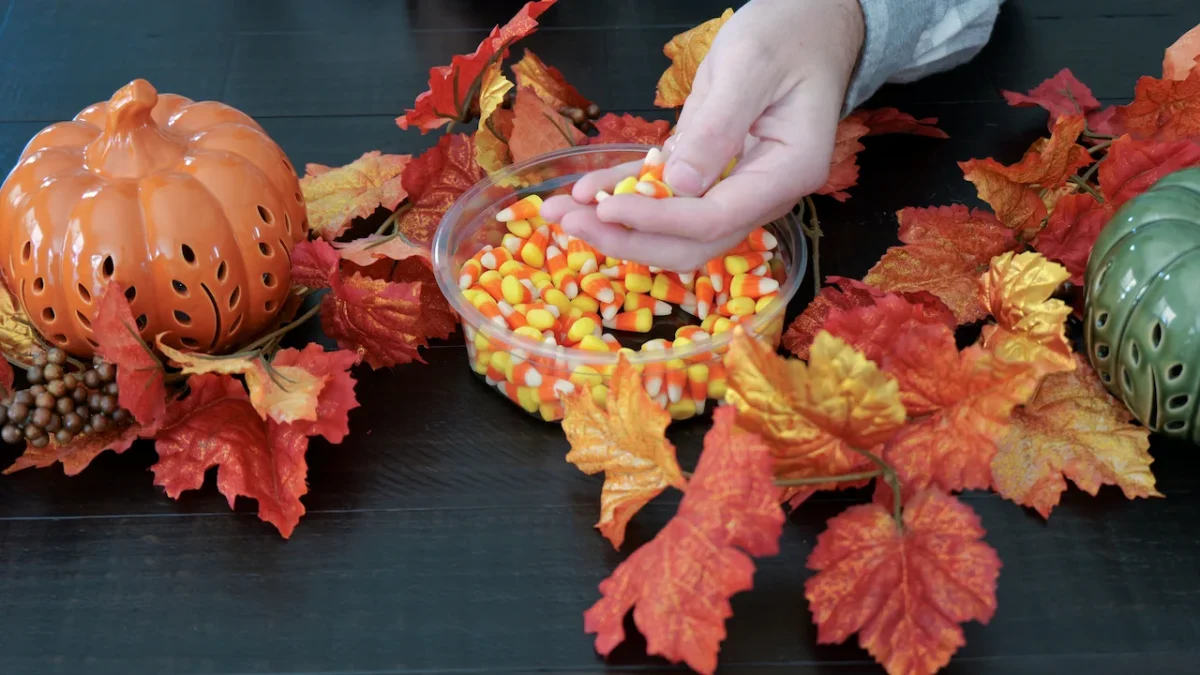
Before it became the most fiercely debated staple in modern trick-or-treat bags, candy corn was originally invented and marketed to late-19th-century consumers as faux chicken feed. Today, manufacturers churn out roughly 35 million pounds of the triangular candy every single year, igniting an inescapable autumn feud between sweet-toothed loyalists and critics who claim it tastes like chalk.
The treat has spent well over a century on store shelves, but its connection to late October was never part of the original blueprint.
From 1880s Chicken Feed to Autumn Icon
The confection traces its roots back to the 1880s in Philadelphia, where George Renninger, an employee at the Wunderle Candy Company, first invented it, according to the National Confectioners Association in Washington, D.C.
During that era, American confectionery shops leaned heavily into agricultural trends, crafting sugar treats modeled after elements of rural nature. The tri-colored sugar kernels were meant to mimic real field corn.
Because corn was primarily viewed as livestock feed rather than a boutique snack, early packaging pitched the confection as faux chicken feed, as documented by The Wall Street Journal.
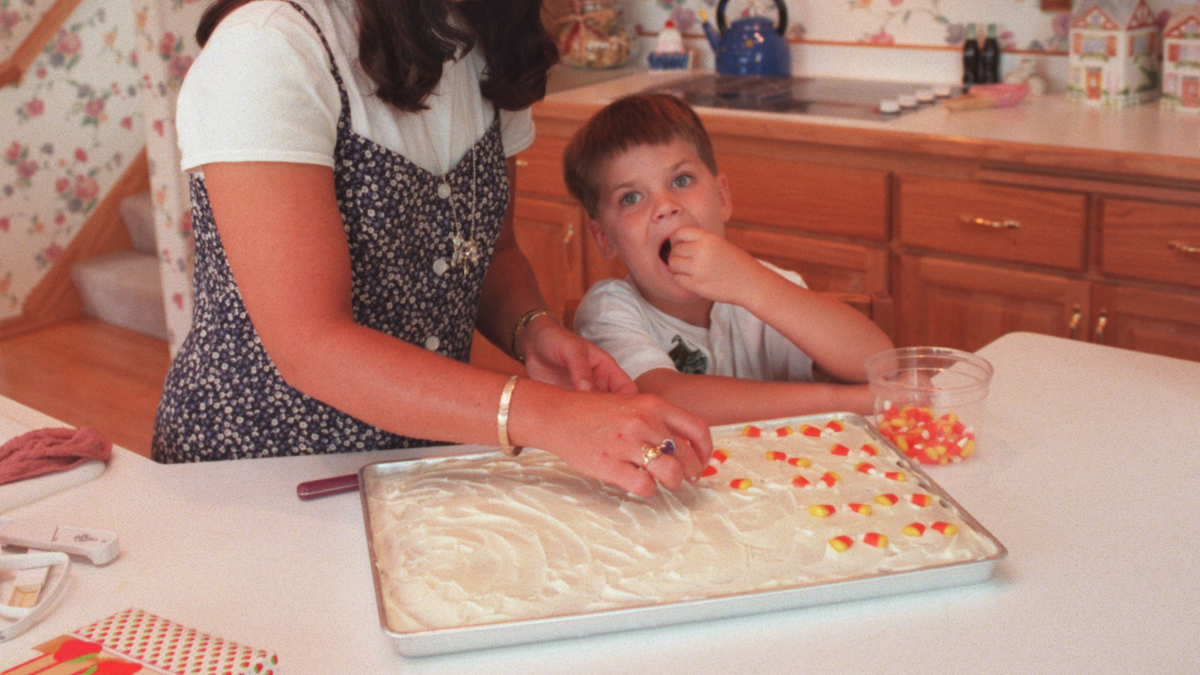
A view of a woman and young boy working together in a kitchen, decorating baked pumpkin bars with candy corn kernels.
Why Early Production Was a Manufacturing Headache
Creating the signature look required pouring three separate colors of warm liquid candy into starch molds. In the late 19th century, factory automation was minimal, turning the multi-layered pouring process into an agonizing manual chore.
Because the process proved so labor-intensive, the sweet inherently became a limited seasonal release. Factories fired up production in late August and ran runs straight through the autumn harvest, according to the National Confectioners Association.
At the turn of the 20th century, Goelitz Confectionery—the enterprise now known as the Jelly Belly Candy Company—stepped into the arena. Goelitz scaled up mechanized production and pioneered the deliberate marketing blitz that permanently tied the sugary kernels to Halloween festivities.
The 35-Million-Pound Great American Divide
Data from the Farmers’ Almanac shows that approximately 35 million pounds of candy corn are manufactured annually. Yet despite its staggering sales volume, public sentiment remains split down the middle.
“It’s the only other candy I would hope for aside from Reese’s pieces if I was trick-or-treating,” one candy corn enthusiast shared online.
Others find the concentrated sugar rush overwhelming after just a few bites. A vocal camp of detractors refuses to touch the confection altogether.
“It’s disgusting. Tastes like nothing or chalk and never sweet. Don’t like the texture. Don’t like the color,” an online critic argued.
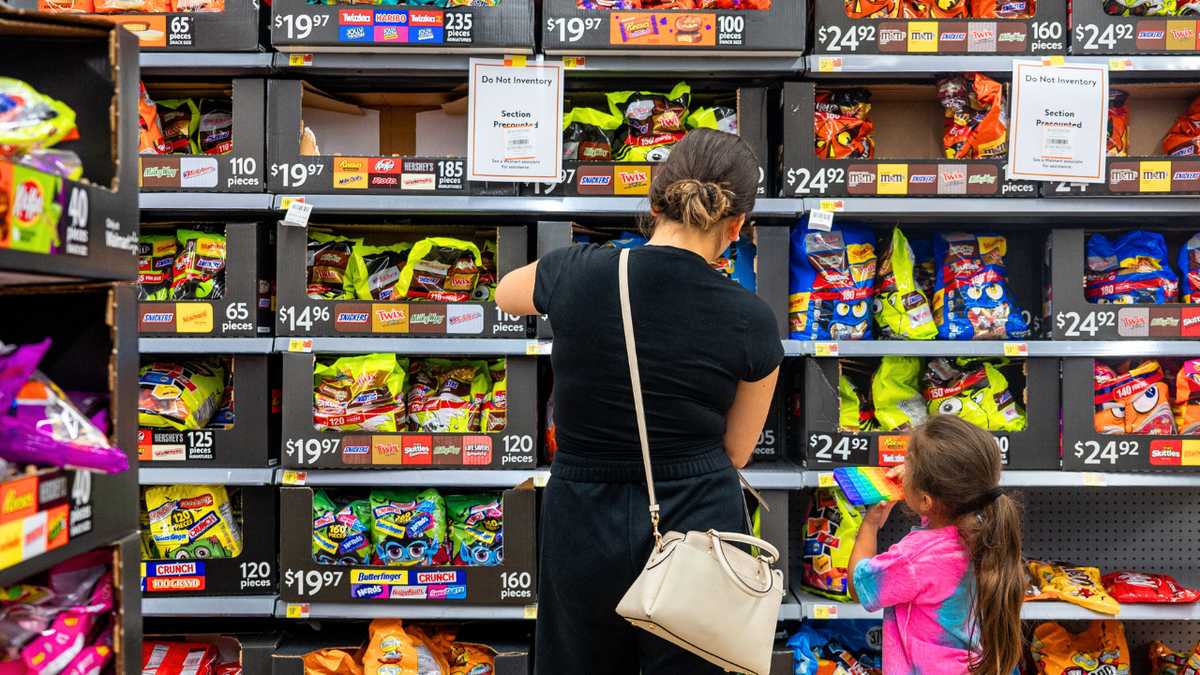
A family shops for Halloween candy at a Walmart Supercenter on October 16, 2024 in Austin, Texas.
Candy Corn: 19th-Century Farm Feed vs. Modern Staple
The journey from barnyard-inspired novelty to nationwide pop-culture divider highlights how seasonal consumer traditions evolved over the past 140 years.
| Historical Attribute | Modern Reality |
|---|---|
| Original Concept | Marketed as faux chicken feed inspired by agricultural corn |
| Target Occasion | General harvest-season confection sold from August through fall |
| Production Method | Labor-intensive manual pouring of three separate sugar layers |
| Annual Volume | Roughly 35 million pounds manufactured across the country |
| Product Scope | Expanded beyond edible candy to novelty items, including custom perfume |
Bottling the Controversy into Fragrance
The confection’s cultural footprint has pushed beyond the candy aisle entirely. Major manufacturer Brach’s unveiled a non-edible novelty designed to capture the treat’s unmistakable essence.
Released as a limited-edition fragrance dubbed Ode to Candy Corn, the perfume was formulated to smell exactly the way the confection tastes, according to parent company Ferrara. It serves as ultimate proof that love it or hate it, the 1880s farm-feed experiment still commands center stage every fall.
💬 Few holiday treats generate as much fierce loyalty or intense pushback as this century-old sugar kernel.
✨ From Philadelphia candy shops to nationwide grocery store aisles, its journey from poultry feed to October superstar remains unmatched.
👇 Where do you stand on the great candy corn debate? Drop your thoughts in the comments below: do you stock up every October, or does it go straight into the trash?
 1
 2
 3
 4
