
Conjoined Baby Turtles Found in a Backyard Sparked a High-Stakes Rescue Operation — Here Is the Bittersweet Reality Behind Their Surgical Separation

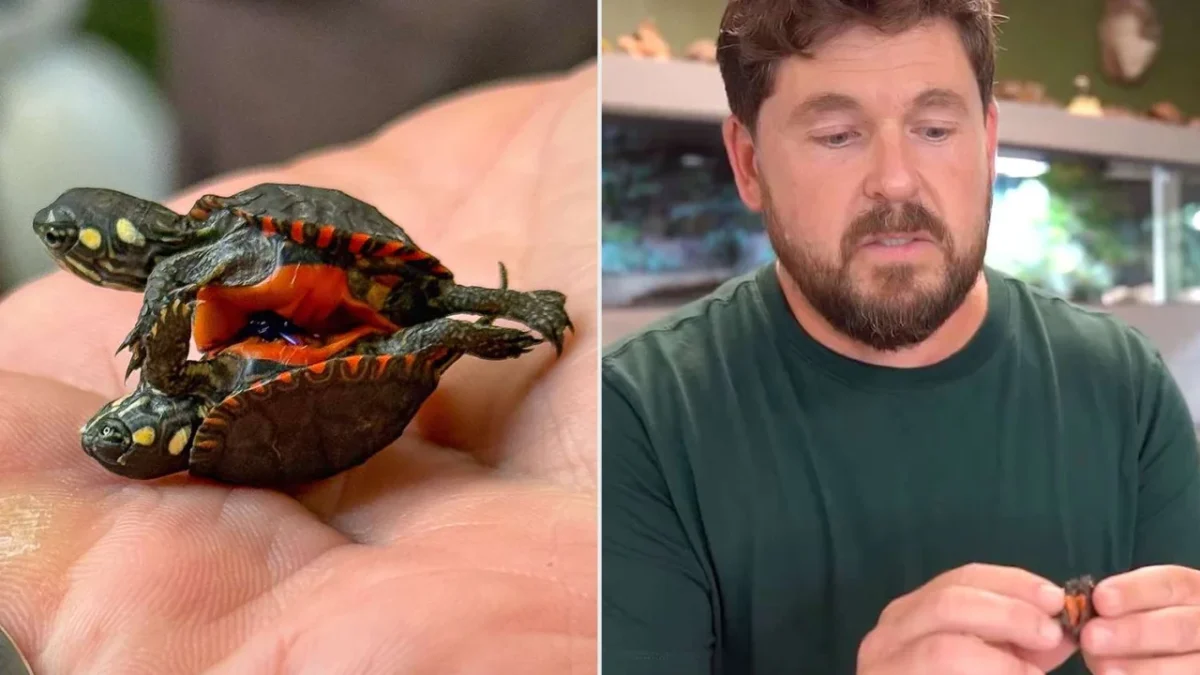
When an elderly homeowner spotted an unusual movement in her backyard garden, she uncovered one of the rarest developmental anomalies in the reptile world: two fully formed baby conjoined turtles joined directly at their abdomens. The hatchlings, quickly dubbed Flip and Flop, were rushed to expert care, triggering a delicate surgical attempt that saved one hatchling while delivering a heartbreaking loss on the other.
The discovery caught the immediate attention of 44-year-old herpetologist Chris Leone, founder of Garden State Tortoise, a dedicated reptile rescue and breeding facility in New Jersey. While developmental defects occur occasionally in nature, encountering two fully developed, active hatchlings moving in tandem presented an unprecedented scenario for the rescue team.
Left conjoined, their chances of surviving long-term were virtually nonexistent. Both hatchlings faced severe physical restrictions and escalating risks of fatal internal complications as they grew.
An Unprecedented Dilemma: Why Separation Was the Only Path Forward
Handling conjoined reptiles is far from routine. Leone recognized early on that without intervention, neither animal would survive long-term in captivity or the wild.
“While I’ve encountered countless unusual animals and abnormalities, seeing two fully formed, living baby turtles physically connected was something extraordinary.”
The core challenge began with their microscopic size. In human medicine and larger animals, advanced diagnostic imaging maps out vital vascular and organ pathways before a single incision is made. With hatchling conjoined turtles, standard diagnostic scans were impossible to perform.
The medical team could not verify which internal organs the twins shared, leaving them to navigate critical anatomical unknowns.
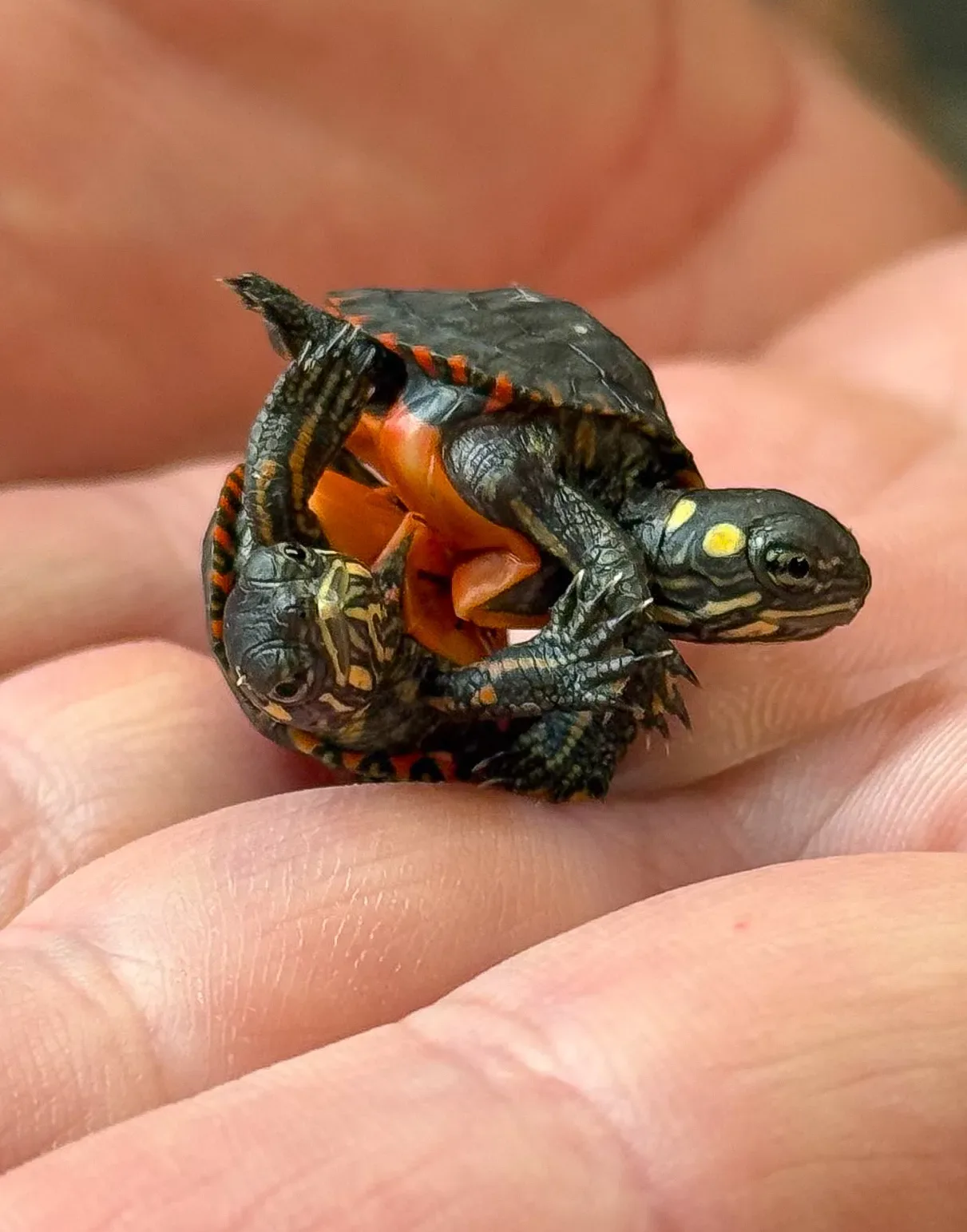
Conjoined turtles Flip and Flop prior to their surgical separation.
The Surgical Strategy: Gradual Intervention Under Extreme Constraints
Leone teamed up with veterinarian Dr. Chris Lambert to determine an operative strategy. Because a rapid surgical cut carried catastrophic hemorrhage risks, the team opted for a measured, staged approach.
- Careful Assessment: Observing how Flip and Flop moved and functioned together while monitoring baseline stability.
- Strategic Suture Placement: Applying specialized sutures sequentially across the shared abdominal tissue bridge.
- Progressive Restriction: Allowing the sutures to gradually constrict connective tissue while monitoring each turtle’s vitals and physical reactions.
- Final Separation: Severing the remaining connection after placing the third suture to completely free the pair.
When the third suture was secured, the physical bridge gave way, achieving physical independence for both hatchlings for the first time.
Myth vs. Reality: The Truth About Conjoined Reptiles
A widespread misconception among animal enthusiasts is that conjoined hatchlings simply share skin and shell tissue, making separation a low-risk cosmetic procedure. In documented herpetological medicine, the reality is far more complex.
Twins joined at the plastron or abdomen frequently share critical gastrointestinal structures, hepatic tissue, or primary circulatory vessels. When internal organs are fused unequally, separation inevitably compromises the twin that lacks sufficient independent organ function.
| Factor | Clinical Reality |
|---|---|
| Pre-Op Imaging | Impossible due to the hatchlings’ minute body size |
| Organ Allocation | Unknown internal organ sharing between the twins |
| Surgical Method | Staged suture placement to constrict connective tissue |
| Long-Term Outlook | Zero survival without separation; high risk during procedure |
A Bittersweet Outcome: One Twin Survives Against the Odds
The milestone separation quickly gave way to grief. While Flip weathered the intervention, Flop succumbed shortly after the procedure concluded.
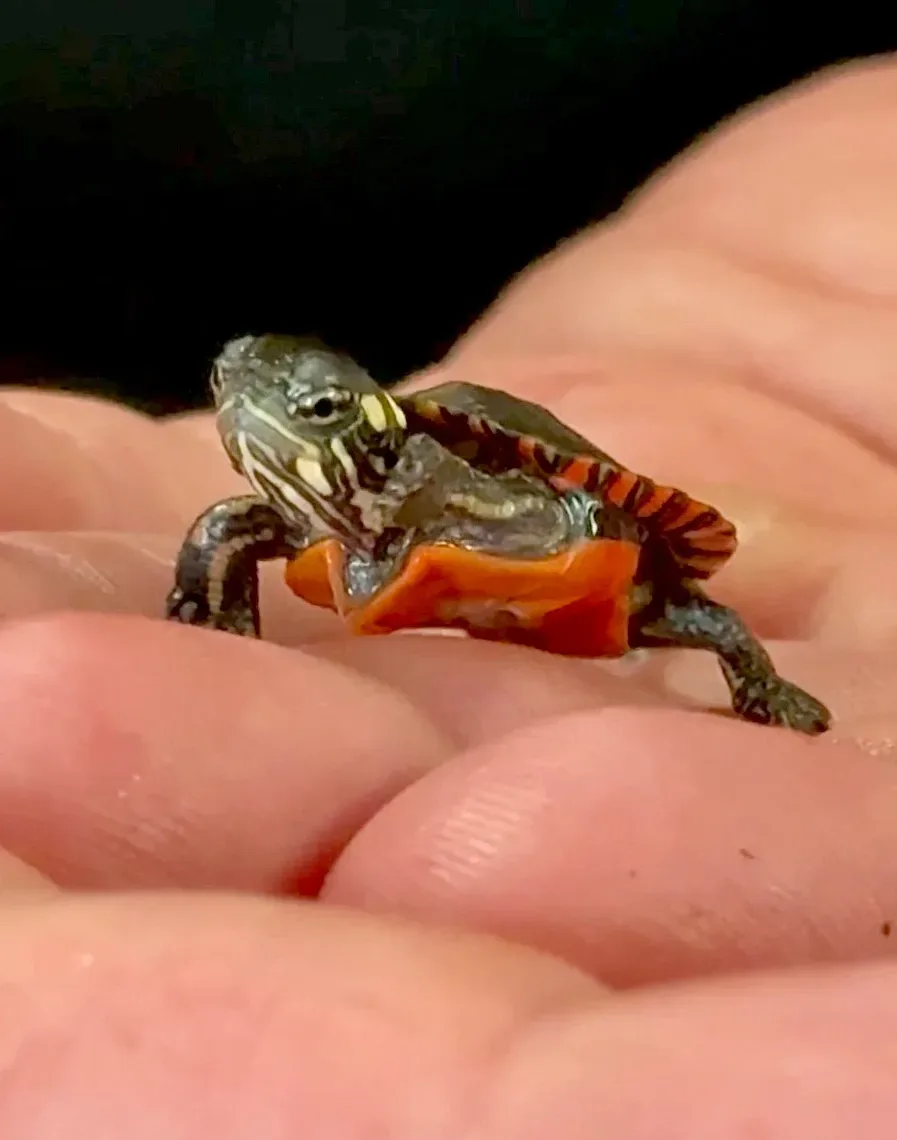
Surviving turtle Flip following the separation procedure.
Because diagnostic scans could not be performed beforehand, experts suspect vital internal organs necessary for Flop’s life support were either compromised or predominantly retained by Flip. The loss hit the rescue team hard after days of intense preparation.
“Losing Flop was heartbreaking, especially after everything we had gone through trying to give both turtles a chance at life. And while losing Flop was devastating, seeing Flip alive, independent, and beginning to thrive gave us something incredibly meaningful to hold on to.”
Flip’s recovery has since defied expectations. The surviving hatchling has demonstrated steady vigor, actively diving, swimming, eating, and basking under heat lamps.
Today, Flip shares an enclosure at Garden State Tortoise with another rescue turtle named Nemo, serving as a lasting reminder of an extraordinary biological event and the team that fought to give him a future.
💬 Wildlife rescues frequently face split-second, high-stakes medical calls with zero room for error.
✨ Flip’s journey highlights just how fragile and resilient natural life can be under extraordinary circumstances.
📱 Have you ever witnessed an unusual wildlife rescue firsthand? Share your thoughts in the comments below!
 1
 2
 3
 4
