
Pentagon Probes Bizarre Military Base Freezer Outages as Suspected Cyberattack After Cooling Systems Mysteriously Crank Up Heat

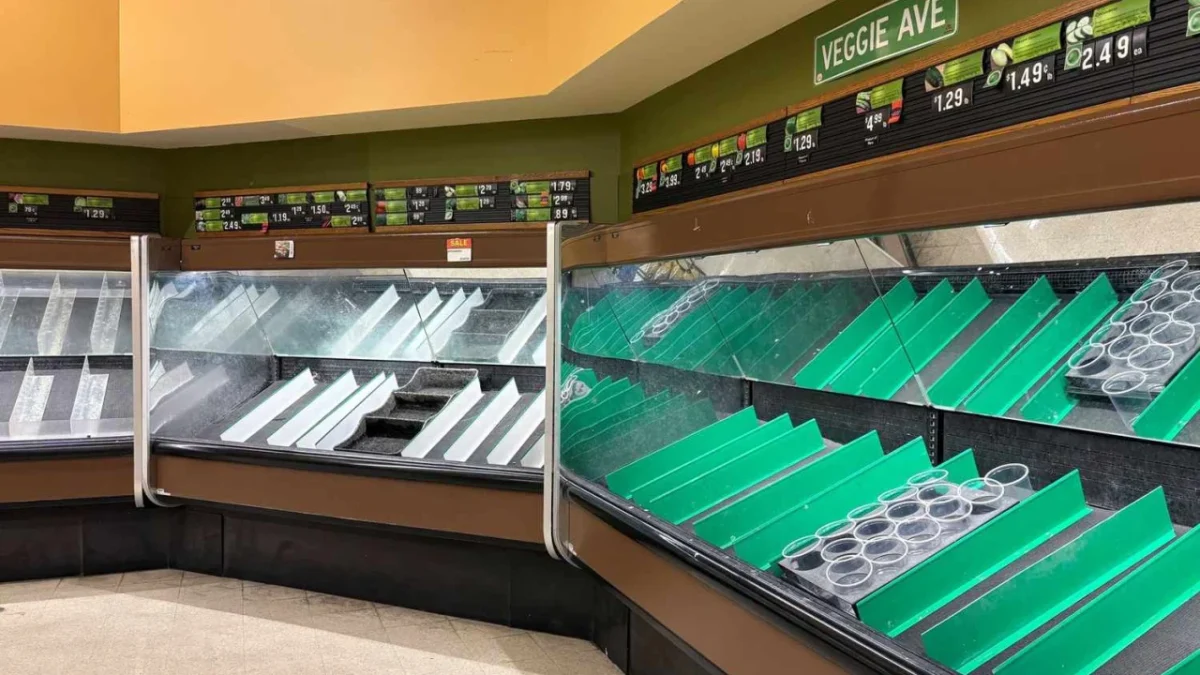
The Pentagon is treating a rash of sudden commercial freezer breakdowns across multiple U.S. military bases as a suspected coordinated freezer cyberattack. Instead of merely losing power, refrigeration systems at military grocery stores were remotely overridden and cranked into reverse, turning chilling chambers into heaters overnight.
The incidents hit commissaries—on-base grocery stores serving active-duty service members and their families—at at least six American military installations. The automated sabotage caused massive amounts of perishable food to spoil before staff arrived in the morning.
Federal investigators are now working alongside international partners to determine whether foreign threat actors intentionally weaponized industrial climate controls against critical domestic supply lines.
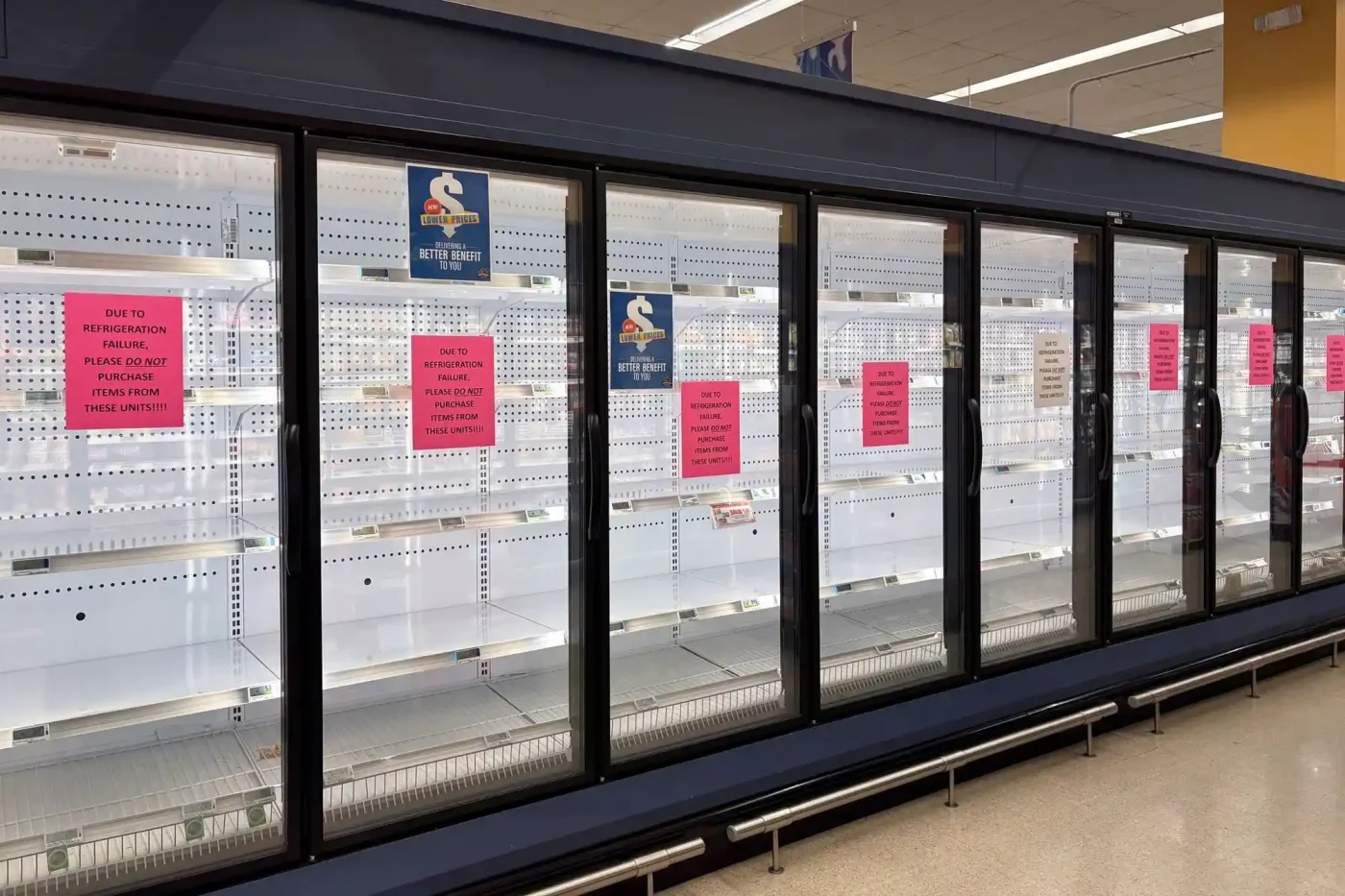
Empty freezers at grocery stores
How Commercial Freezers Were Turned Into Heaters
The disruptions did not resemble standard grid outages or accidental hardware breakdowns. Rather than simply powering down, targeted commercial cooling units experienced deliberate firmware adjustments that forced systems into continuous defrost cycles.
At U.S. Army Fort Huachuca in Arizona, officials reported that on-base grocery store units completely inverted their core function. Perishable inventory sat exposed to sustained high temperatures for hours.
“Trust us when we say it was ‘spoiled,'” Fort Huachuca shared following the incident, documenting entirely cleared shelves and melted frozen inventory.
The commissary freezer “went into defrost mode where it heated up all the food,” rendering full aisles of frozen goods unusable. Similar patterns appeared at five other military installations, prompting immediate federal inquiries.
Federal Agencies Mobilize for Joint Cyber Investigation
The scope of the grocery system disruptions quickly drew the attention of specialized defense units. Multiple investigative bodies within the U.S. Department of Defense launched a collaborative inquiry into the electronic intrusion vectors.
Key entities leading the inquiry include:
- Defense Criminal Investigative Service (DCIS): The law enforcement branch of the Department of Defense Office of Inspector General heads the joint investigation.
- U.S. Cyber Command: Specialized military cyber teams are coordinating across federal law enforcement agencies to trace digital footprints.
- Department of the Army Criminal Investigation Division (CID): Digital investigators from the Army CID Cyber Field Office are analyzing affected control hardware.
“We are aware of speculation regarding a potential cyber incident. The Defense Criminal Investigative Service (DCIS), the criminal investigative arm of the DoD Office of Inspector General, is leading a joint investigation,” a Defense Department official confirmed.
Public Myth vs. Digital Reality
A widespread assumption among consumers is that internet hackers only target financial databases, classified intelligence, or personal credentials. In reality, operational technology (OT) systems—such as industrial thermostats, HVAC units, and refrigeration controllers—are increasingly targeted to cause direct physical disruption.
When physical heating components are activated remotely, malicious software bridges the gap between digital code and real-world infrastructure damage.
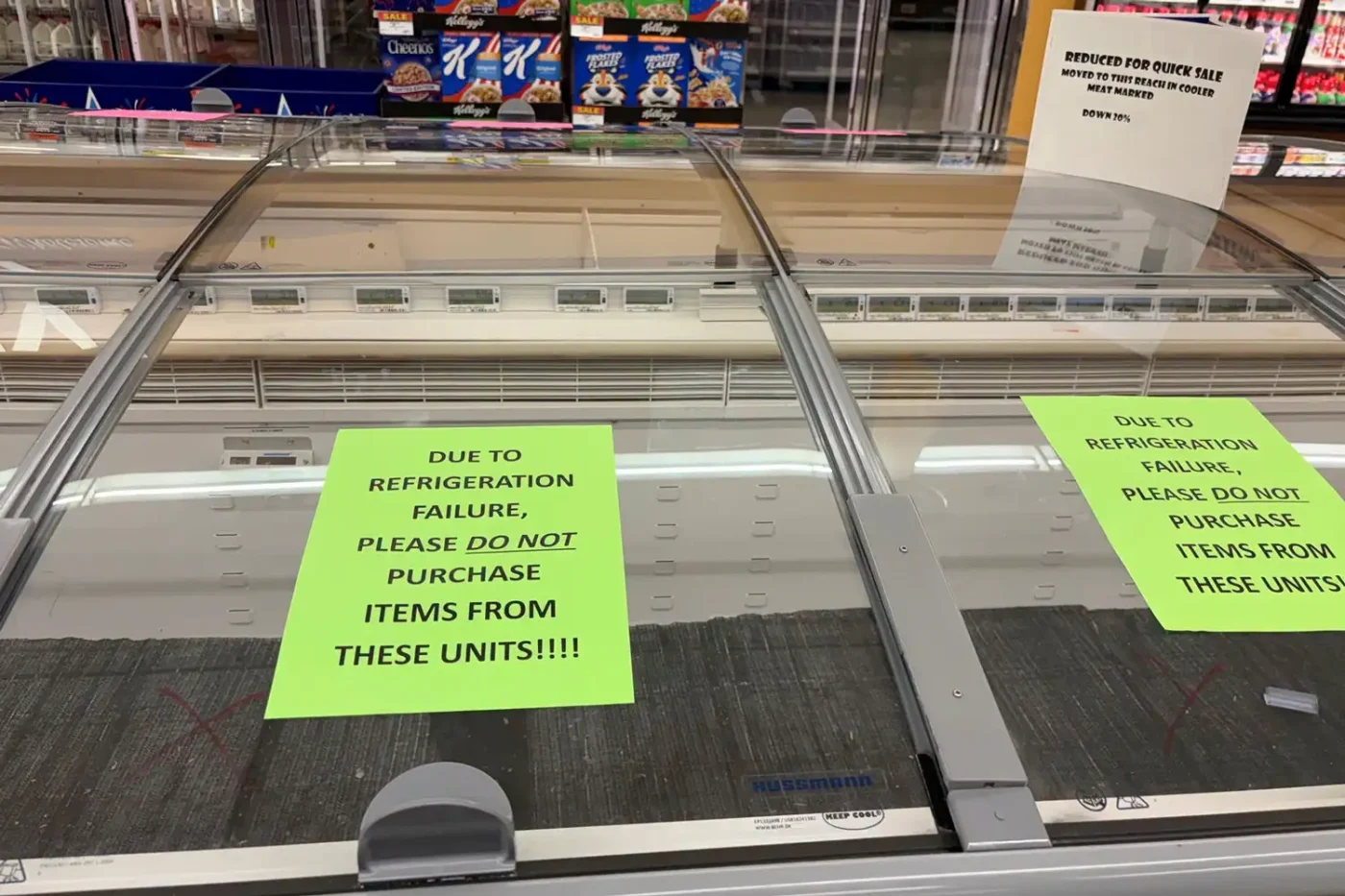
Empty freezers at grocery stores
The International Connection: Attacks Across Europe
U.S. defense investigators are actively coordinating with French law enforcement after European commercial facilities suffered identical technical sabotage. More than 350 commercial businesses across Europe experienced remote temperature manipulation on their commercial cooling infrastructure.
In several European grocery networks, attackers manipulated temperatures so aggressively that cooling motors overheated and ignited physical fires. The shared tactics point toward an identical vulnerability in centralized refrigeration hardware.
| Incident Feature | Investigative Finding |
|---|---|
| Primary Attack Mechanism | Digital temperature override forcing units into extreme defrost heating mode |
| Known Facility Impact | At least 6 U.S. military bases and over 350 European retail businesses |
| Targeted Equipment Status | Obsolete or unpatched firmware running on centralized cooling units |
| Operational Result | Mass food spoilage, destroyed inventory, and localized fire hazards |
Vulnerable Firmware in Industrial Systems
Danish manufacturing company Danfoss, which provides control infrastructure for many affected units, confirmed the underlying vulnerability risk. Company representatives noted that numerous affected devices in the field were either technologically obsolete or operating on outdated firmware versions.
Legacy operational technology often lacks multi-factor authentication or modern encryption, leaving internet-connected thermostats exposed to automated remote exploits. When maintenance teams skip scheduled firmware updates, network-connected refrigeration gear becomes a back door for malicious intrusions.
The Pentagon’s ongoing inquiry highlights how everyday equipment can suddenly emerge as an active national security liability.
💬 Modern infrastructure relies heavily on internet-connected sensors and climate controls that rarely get updated.
📱 As federal authorities continue tracing the origin of these industrial disruptions, the incident serves as a sharp wake-up call for commercial supply security.
👇 How concerned are you about cyberattacks targeting everyday infrastructure like food and energy? Share your perspective in the comments below.
 1
 2
 3
 4
