
Did Watergate Prosecutors Break the Law to Oust Richard Nixon? Inside the Sealed Records Sparking a Modern Justice Department Inquiry

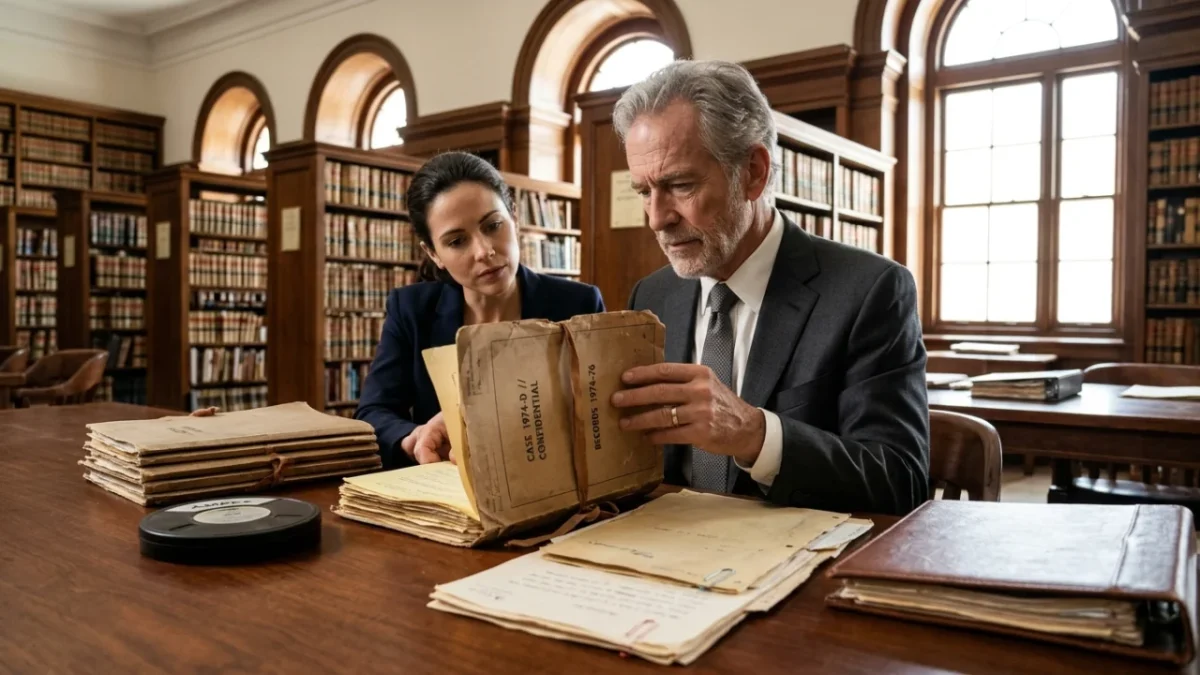
Decades after Richard Nixon resigned the American presidency in disgrace, newly surfaced internal prosecution files have prompted the US Department of Justice to review whether the federal lawyers who brought him down committed serious ethical misconduct. The inquiry centres on unsealed records revealing clandestine, ex parte meetings between Watergate prosecutors and presiding judges, as well as evidence allegedly withheld from the defence.
Geoff Shepard, a former White House lawyer on Nixon’s defence team who originally coined the phrase “the smoking gun,” delivered a formal two-hour, 78-slide briefing titled “Watergate As Lawfare” to the Justice Department’s Office of Professional Responsibility. The presentation followed an invitation from a senior department official, reopening questions surrounding the integrity of America’s most iconic constitutional crisis.
For more than half a century, historical consensus held that Nixon’s downfall was entirely self-inflicted—a lawful response to the abuse of executive authority. Yet records dislodged through Freedom of Information Act requests and court petitions suggest the prosecution may have circumvented fundamental legal safeguards to secure convictions.
Secret Judicial Conferences and Altered Witness Testimony
The files assembled by Shepard detail what he identifies as ten private meetings between members of the Watergate Special Prosecution Force and the federal judges overseeing the trials, including Judge John J. Sirica. Under American judicial rules, private conferences between prosecutors and a presiding judge without defence counsel present represent a profound violation of due process.
The disclosures also include a 26-page internal prosecution memorandum tracing how star witness John Dean, the former White House counsel, systematically revised his narrative across consecutive debriefing sessions. At least one significant document capable of aiding the defence was allegedly never disclosed to Nixon’s legal team.
The gravity of the documentation has caught the attention of independent scholars who have spent lifetimes studying the scandal. Luke Nichter, a historian at Chapman University who previously secured the release of sealed Watergate court files, observed that any reasonable reader evaluating these historical records would conclude that the conduct looks exceptionally bad.
The Battle Over the Declassified Archive
The controversy does not alter the physical recordings that captured Nixon discussing political obstruction inside the Oval Office. What it challenges is whether the administration of justice complied with constitutional standards or slipped into prosecutorial overreach.
Among the key historical records driving the current review are:
- Internal Special Prosecution Force Memos: Confidential communications documenting private, off-the-record consultations with trial judges prior to key rulings.
- The Witness Revisions Ledger: A detailed 26-page prosecution dossier tracking day-by-day modifications to John Dean’s testimony before he took the witness stand.
- The Sealed Congressional “Road Map”: The evidentiary summary transmitted to the House Judiciary Committee that outlined the legal architecture for Nixon’s impeachment.
- Withheld Exculpatory Records: Internal government documents that defence attorneys argue should have been disclosed under constitutional discovery obligations.
Even the core evidentiary foundation of the resignation has faced renewed scholarly debate. The pivotal June 1972 recording—long labelled the definitive proof that sealed Nixon’s fate—has been re-evaluated by figures on both sides of the investigation.
John Dean himself has noted that the recording was misread in its original context, even as he maintains complete certainty regarding Nixon’s underlying complicity. David Dorsen, an assistant chief counsel on the Senate Watergate Committee, concurs that the tape was misconstrued, though he firmly disputes the premise that Nixon could ever have legitimately survived the political fallout.
A Resurgent Political Battleground
The fresh examination arrives amid a cultural and political reappraisal of the 37th president across the United States. Younger political circles have engaged in a revisionist re-evaluation dubbed “Nixonmaxxing,” while senior political figures have drawn explicit comparisons to contemporary legal fights.
Vice President JD Vance directly invoked the scandal during an address at the Nixon Presidential Library in Yorba Linda, California. Vance argued that the coordinated institutional effort that forced Nixon from office mirrored recent federal investigations directed against modern political leaders, insisting that clear parallels exist between both eras.
Evidentiary Limits and the Weight of History
Federal authorities emphasise that the current examination by the Office of Professional Responsibility remains preliminary. The Department of Justice declined an earlier petition from Shepard in 2022, citing the decades that had passed since the trials concluded.
Substantial institutional hurdles remain against any formal exoneration. Nearly every principal participant in the proceedings, including Nixon and Judge Sirica, is deceased, and no federal court has formally adjudicated the newly surfaced records.
Critics also highlight that Shepard is not an impartial academic observer; he served directly inside Nixon’s defence apparatus, authored three volumes challenging the trial procedures, and openly acknowledges seeking historical vindication. Crucially, no newly released internal memo erases a single word spoken on the Oval Office recording system.
Before his role on the defence team, Shepard served on John Ehrlichman’s Domestic Council, working under Egil “Bud” Krogh on policy initiatives ranging from southern school desegregation and ending the military draft to the creation of the Environmental Protection Agency. When Krogh moved to recruit G. Gordon Liddy to head the covert White House “Plumbers” unit, Shepard had actively objected to the hire.
💡 The emerging files force modern observers to confront an uncomfortable legal question: can a legally compromised prosecution be excused if the target was undeniably culpable?
🔍 As historical records continue to surface from sealed archives, the boundary between necessary constitutional accountability and political lawfare remains fiercely contested across the American landscape.
📌 Whether the Justice Department’s review yields a formal reassessment or closes quietly, the debate over Richard Nixon Watergate prosecutions proves that America’s defining scandal is far from settled history.
👇 Do unsealed records of prosecutorial misconduct change your perspective on Richard Nixon’s resignation? Share your thoughts below.
 1
 2
 3
 4