
Driving Under the Influence of Drugs and Alcohol: How Multi-Driver Traffic Stops and Checkpoints Lead to Immediate Criminal Charges

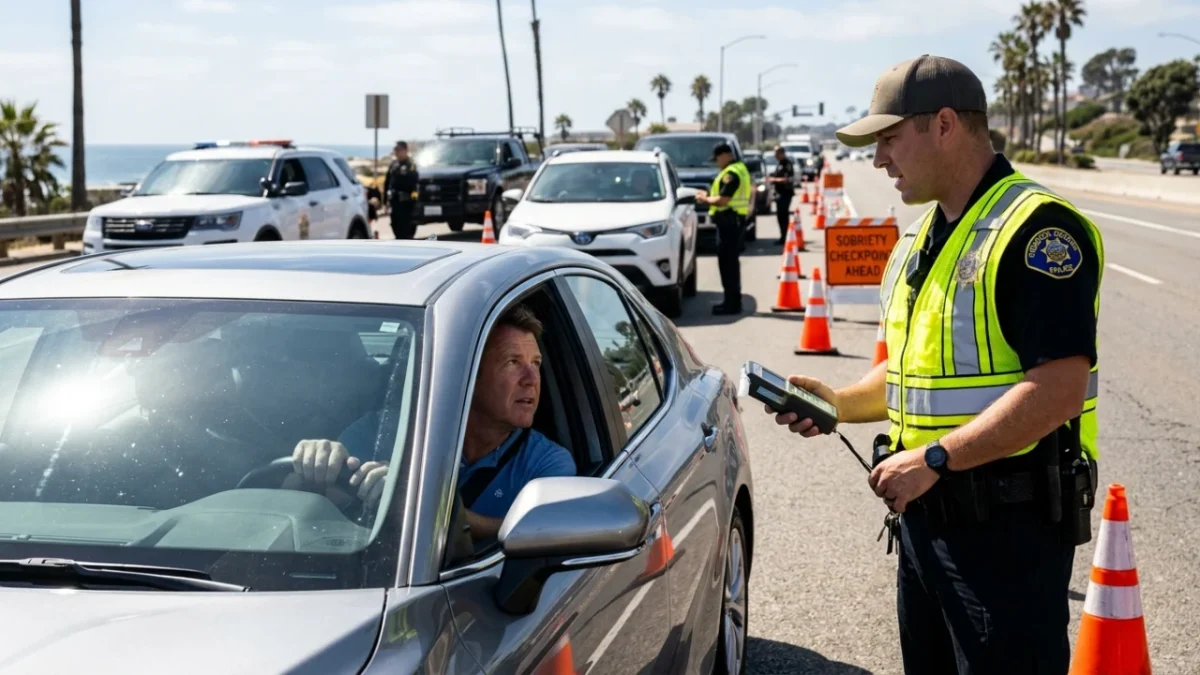
A single targeted traffic enforcement sweep can swiftly result in multiple criminal citations when drivers choose to operate vehicles under the influence of intoxicants. When patrol units set up stationary checkpoints or launch saturation patrols, officers actively screen for both chemical narcotics and alcohol consumption, leading directly to vehicle impoundment, immediate license confiscation, and formal court summonses.
Operating a vehicle while impaired remains one of the most aggressively prosecuted traffic offenses nationwide. Whether the substance involved is alcohol, prescription medication, or illicit narcotics, the threshold for physical impairment does not require an accident to occur for officers to file serious criminal charges.
Understanding how roadside operations identify multiple offenders in a single night reveals how law enforcement coordinates screening tactics to remove hazardous drivers before a collision happens.
The Anatomy of Roadside Saturation Patrols
Law enforcement agencies frequently deploy saturation patrols along designated high-risk corridors where incidents of erratic driving peak. Rather than waiting for emergency dispatch calls, specialized patrol units monitor specific zones to catch moving violations such as lane drifting, irregular braking, and speed fluctuations.
When an officer initiates a stop, a preliminary evaluation begins immediately. Visual cues, speech patterns, and physical dexterity dictate whether standard field sobriety testing is warranted.
In operations where three or more drivers face simultaneous charges in one operational window, it often stems from coordinated checkpoints. These roadblocks systematically funnel traffic through a designated inspection lane, allowing officers to interact briefly with every driver and flag indicators of impaired driving.
Screening for Alcohol vs. Detecting Chemical Narcotics
Detecting blood alcohol concentration relies on standardized technology, but evaluating drug impairment requires a distinct protocol. While a roadside breathalyzer measures alcohol vapor within seconds, detecting illicit or prescription drugs demands specialized observation.
Certified Drug Recognition Experts (DREs) perform standardized physical evaluations when a driver registers zero alcohol on a breathalyzer but displays obvious cognitive impairment. These evaluations assess pupil dilation, pulse rate, coordination, and horizontal gaze nystagmus.
Field assessments do not rely on breath tests alone; physical coordination tests and toxicology screenings establish legal impairment regardless of which substance is present in the bloodstream.
If drug use is suspected, officers secure authorization for chemical toxicology tests, including blood draws or oral fluid screenings, which serve as foundational evidence for criminal prosecution.
The Compounding Risk of Polysubstance Use
The combination of alcohol and drugs dramatically amplifies cognitive impairment. Even modest amounts of alcohol, when paired with sedatives, stimulants, or cannabis, impair reaction times far beyond what either substance would cause on its own.
From a legal standpoint, carrying traces of multiple substances frequently leads to stacked charges, leaving defendants with compounding legal liabilities in traffic court.
Separating Impairment Myths from Legal Realities
A widespread misconception is that drivers cannot face criminal prosecution if their blood alcohol content tests below the standard legal limit of 0.08 percent. In reality, criminal statutes penalize impairment rather than a specific chemical threshold alone.
If an individual exhibits diminished motor control while carrying trace amounts of alcohol combined with prescription medication, law enforcement officers possess the legal authority to arrest and file formal criminal charges. A valid medical prescription provides zero legal immunity against charges for driving while physically compromised.
| Enforcement Measure | Operational Impact |
|---|---|
| Preliminary Breath Testing | Delivers immediate on-site chemical verification of alcohol concentration. |
| Standardized Field Sobriety Tests | Documents physical and psychophysical clues of balance and motor control loss. |
| Drug Recognition Evaluation | Pinpoints specific categories of drug influence through clinical examination. |
| Evidentiary Blood Screening | Secures admissible, laboratory-grade toxicology proof for courtroom proceedings. |
| Immediate License Suspension | Revokes driving privileges administratively prior to the first criminal court date. |
What Follows a Criminal Citation at the Roadside?
Receiving formal citations during a targeted enforcement sweep triggers an automatic sequence of legal and administrative consequences. Drivers facing multiple citations must navigate both motor vehicle agency sanctions and judicial proceedings.
- Immediate Vehicle Towing: The vehicle is placed in an impound lot, requiring towing and administrative storage fees to recover.
- Administrative License Action: Driving privileges are often suspended automatically under implied consent regulations following a test failure or refusal.
- Formal Booking and Processing: Offenders are processed at a precinct, fingerprinted, and issued mandatory court appearance dates.
- Judicial Penalties: A conviction introduces heavy criminal fines, mandatory community service, mandatory substance education courses, and potential jail time.
Enforcement operations focused on drug and alcohol interdiction continue to be the primary tool for reducing fatal roadway collisions. Staying informed about standard traffic safety protocols protects everyone sharing the road.
💬 What are your thoughts on targeted sobriety checkpoints? Drop your thoughts in the comments below.
📱 Share this breakdown with family and friends to keep your community informed about roadway safety laws.
👇 Have you seen an increase in local checkpoint enforcement lately? Let us know your perspective.
 1
 2
 3
 4
