
How Late Is Too Late for Trick-or-Treating? Etiquette and Safety Rules for Kids, Teens, and Homeowners


Standard trick-or-treating hours run firmly between 4 p.m. and 9:30 p.m., giving younger children daylight to fill their bags while setting a hard boundary before bedtime. Knowing when to start, when to pack it in, and when to leave a porch light off is essential to mastering modern trick-or-treating etiquette.
Even when festivities land on a weekend without early school curfews, neighborhood boundaries remain crucial. Emily Post’s great-great-granddaughter and Awesome Etiquette podcast co-host Lizzie Post, along with pediatrician Dr. Tanya Altmann, broke down the exact ground rules for parents, kids, and homeowners.
The secret to avoiding awkward doorstep encounters comes down to a few basic signals and timing guidelines that keep the night safe and neighborly.
When Should Trick-or-Treating Start and End?

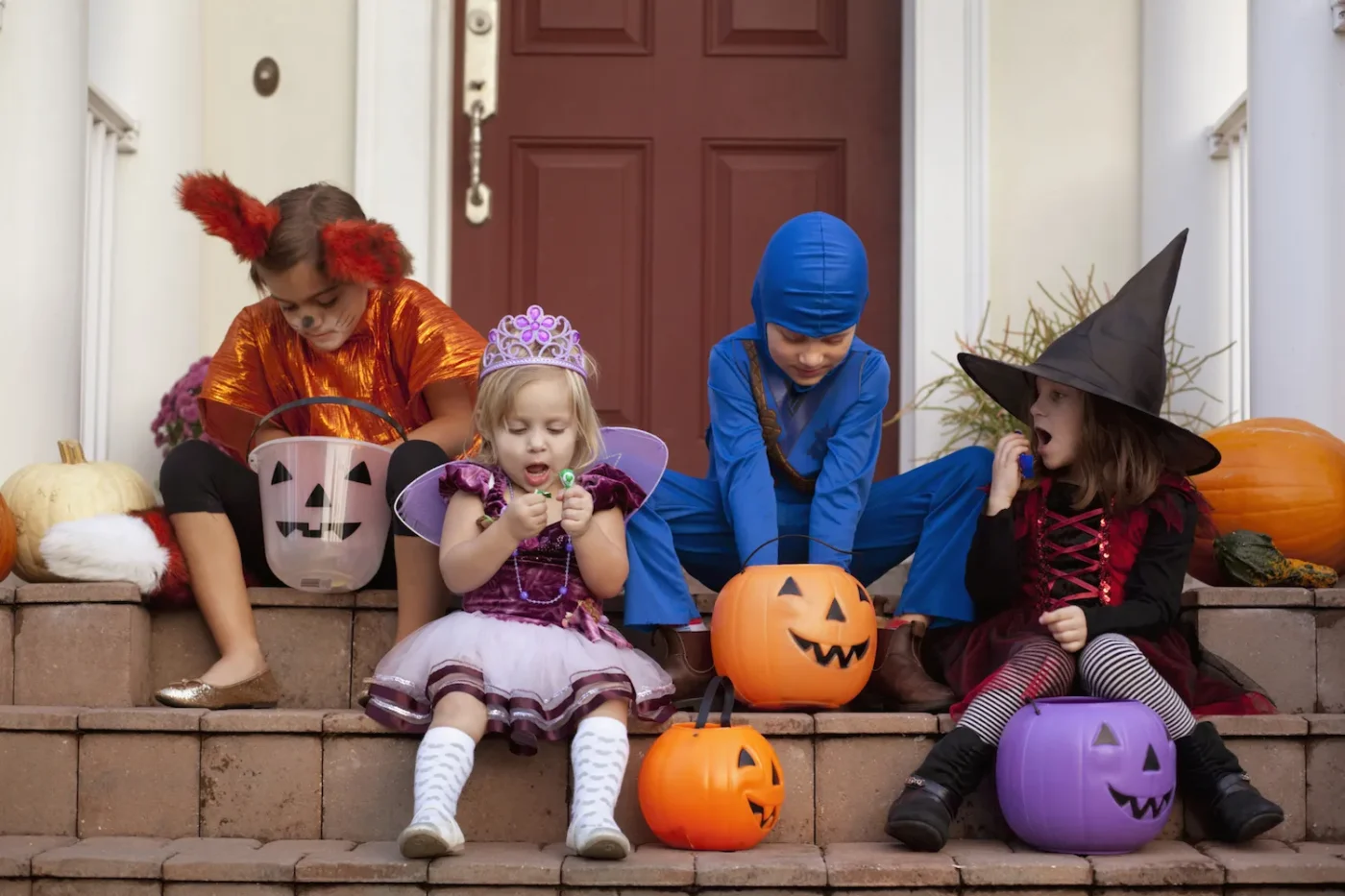
A group of kids trick or treating.
While there are no universal national curfews, individual municipalities often establish specific local hours that residents should honor.
For neighborhoods that leave the timing open, Lizzie Post recommends a standard window.
“I tend to think of trick-or-treating hours as between 4 p.m. and 9:30 p.m.,” Post said.
Toddlers and elementary schoolers typically venture out around 5 p.m. to take advantage of remaining daylight. Older children usually prefer to wait until dusk settles, but knocking on doors past 9:30 p.m. violates general neighborhood etiquette.
Even on a Saturday night, municipal rules override weekend excitement. Following set local guidelines remains the most respectful approach for everyone on the block.
Porch Light Protocols and Doorstep Etiquette
Knowing whether a home welcomes visitors starts with one universal sign: an illuminated porch light.
A lit exterior light, festive decorations, or a bowl stationed near the entryway signals that residents are handing out candy. If a porch is pitch-black, trick-or-treaters should bypass the walkway entirely—even if the yard is fully decorated.
Approaching the door properly matters just as much as checking the lights.

A group of kids collect candy while trick or treating.
Kids should walk along sidewalks and driveways rather than trampling across landscaped lawns. Parents of older kids can hang back on the sidewalk, giving young trick-or-treaters a chance to practice polite interactions with adults.
Mastering the 60-Second Knock Rule
Deliver one firm knock or ring the doorbell once, then pause.
Spamming the chime or pounding continuously creates unnecessary stress. Homeowners might be walking up from a basement or stepping away from a chore, which can take up to a full minute.
If 60 seconds pass without movement, a single follow-up knock is acceptable before moving on to the next house. Once the door opens, children deliver their “trick-or-treat,” wait for the homeowner to designate the candy count, and close out the exchange with a clear “thank you.”
Etiquette Breakdown: Expectations vs. Best Practices
| Situation | Standard Etiquette Practice |
|---|---|
| Running low on candy | Turn off exterior lights once supplies hit your budget limit |
| Dark front porch | Skip the house completely without knocking |
| Unresponsive front door | Wait 60 seconds before a second ring; leave if unanswered |
| Walking between homes | Stick strictly to sidewalks and paved driveways |
| Unrecognized costume | Politely ask who they are dressed as without taking offense |
The Great Candy Budget and Age Limit Myths
A widespread misconception is that participating homeowners must spend hundreds of dollars to keep up with neighborhood foot traffic. That standard simply does not exist.
“I [want to] remind households, just because you get a ridiculous influx of kids doesn’t mean you have to participate at that multi-hundred-dollar level,” Post explained. “If you only [want to] spend $30 on Halloween candy, then when you run out, you turn your lights off.”
Another common myth suggests that teenagers have aged out of trick-or-treating entirely. Etiquette experts actively dispute this idea, pointing out that teens knocking on doors are choosing harmless fun over neighborhood mischief.
The only caveat for older participants comes down to spirit: teens should always wear a real costume. If an older kid skips dressing up, homeowners are under no obligation to share treats.
Chaperoning parents can also join in. Handing a piece of candy to walking adults keeps neighborhood goodwill running high.
Essential Safety Measures for the Night
Trick-or-treaters walking outdoors with safety essentials.
Pediatric guidance centers on preparation and visibility before children ever step onto the pavement. Dr. Tanya Altmann of Calabasas Pediatrics stresses practical checks that keep the evening fun.
- Verify Costume Fit: Hem overly long costumes to prevent tripping, swap oversized shoes for sturdy sneakers, and avoid masks that block peripheral vision.
- Maximize Visibility: Use bright clothing accents, attach reflective tape to trick-or-treat sacks, and ensure someone carries a flashlight or glow stick after sundown.
- Establish Route Boundaries: Walk with young children directly. For older groups traveling alone, confirm the exact path and set a fixed check-in time beforehand.
- Maintain Pedestrian Focus: Cross exclusively at street corners, stay on sidewalks, and teach children never to assume drivers can see them.
- Inspect the Loot: Sift through bags at home before eating. Toss unsealed items, torn wrappers, or unusual packaging while keeping allergens away from vulnerable kids.
💬 How strictly does your neighborhood stick to the 9:30 p.m. cutoff? Drop your thoughts in the comments below and tell us your house rules.
✨ From porch lights to teenage costumes, a little courtesy makes the entire evening run smoother for everyone on the block.
📱 Have you experienced this firsthand? Let us know how your block handles early knocks and candy curfews!
👇 Share this guide with parents and neighbors before heading out this season.
 1
 2
 3
 4
