
Inside the Fierce Academic Battle Over Cambridge University’s Jason Arday Appointment: Top Ivy League and UK Scholars Launch Rival Inquiry

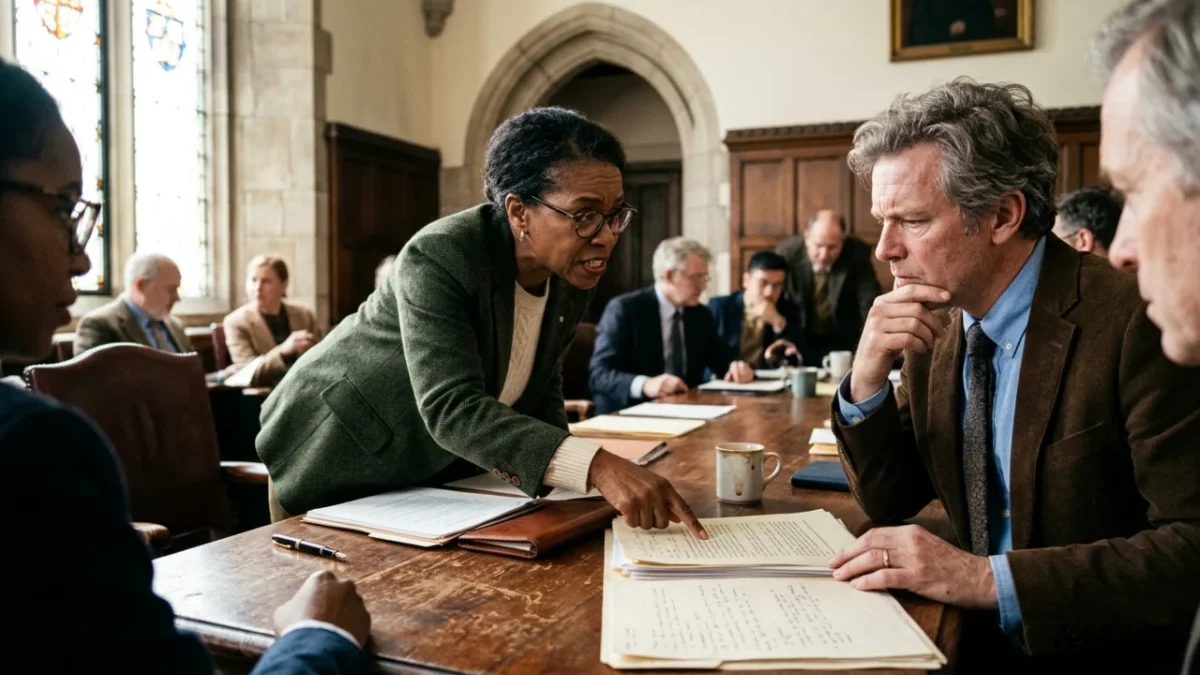
A high-profile coalition of international academics from Harvard University and University College London has officially launched an independent inquiry into the University of Cambridge’s hiring practices, focusing squarely on the controversial Jason Arday appointment. The move comes as scholars openly challenge Cambridge’s internal handling of the scandal following the sociologist’s resignation over plagiarism allegations and his tragic death at home on 14 August.
The dispute has escalated far beyond a standard personnel review. What began as internal scrutiny at Britain’s most historic institution has exploded into a global debate over academic standards, institutional merit, and statutory employment law.
At the centre of this dispute sits the Committee for Academic Freedom (CAF), an advocacy group that has assembled an influential panel to examine the entire chain of recruitment decisions that placed Arday into a coveted professorship in Cambridge’s Faculty of Education.
The Battle Between Cambridge and Independent Watchdogs
Cambridge Vice Chancellor Deborah Prentice initially promised an internal investigation that would be rigorous and thorough. That inquiry saw former chief Crown prosecutor Nazir Afzal assigned to oversee its initial phase.
However, leading academics soon voiced profound scepticism regarding the university’s objectivity. The CAF announced its own rival inquiry after identifying what it described as a damaging shift in Cambridge’s narrative tone.
Specifically, watchdogs took issue with Prentice characterizing the intense public scrutiny Arday faced before his resignation as an “appalling period of external criticism and focus.” Critics argue this stance risks prejudging the inquiry’s outcome by framing legitimate scholarly vetting as unjust hostility.
Swaran Singh, a professor of social and community psychiatry at the University of Warwick who previously led an inquiry into discrimination within the Conservative Party, has taken the chair of the independent panel. Veteran investigative journalist Nick Wallis, widely known for exposing the British Post Office Horizon scandal, is directing the investigative operations.
A High-Powered Academic Panel
The panel assembled to bypass Cambridge’s internal machinery includes several of the most prominent academic figures across the Western world:
- Stephen Pinker: Renowned Harvard University psychologist and co-president of Harvard’s Council on Academic Freedom.
- Robert Tombs: Renowned French history scholar and emeritus professor at the University of Cambridge.
- Alice Sullivan: Sociologist at University College London, who led the UK government-commissioned independent review on sex and gender research data.
- Maurice Glasman: Influential political theorist and Labour life peer.
Although the CAF panel lacks statutory authority to subpoena documents or legally compel witness testimony, its findings carry enormous reputational weight across global higher education networks.
Equality Policies, Positive Action, and Academic Scrutiny
The controversy extends well beyond the tragic personal circumstances surrounding Arday’s death. Academics across the UK and the United States are treating the episode as a critical case study on how equality, diversity, and inclusion (EDI) frameworks influence senior faculty appointments.
Edward Skidelsky, an Exeter University philosopher and director of the CAF, noted that the panel began without predetermined conclusions. Yet, the review directly targets whether modern university recruitment protocols allow institutional orthodoxies to eclipse long-standing measures of academic merit.
Freddie Attenborough, communications manager for the CAF, indicated that university faculty members have persistently flagged anxieties over recruitment processes. Many scholars argue that internal diversity policies occasionally misinterpret positive action provisions within UK equality legislation, generating systemic pressures to bypass traditional vetting protocols.
Expected to conclude its work within four to six months, the independent investigation will cross-examine faculty governance records, hiring panels, and administrative decisions dating back to Arday’s initial 2023 appointment.
💡 The escalating investigation signals a decisive turning point in how elite global universities balance social policy mandates with traditional research integrity.
🔍 As top-tier universities worldwide re-evaluate hiring guidelines, the outcome of this inquiry could establish fresh benchmarks for recruitment transparency across higher education.
📌 Does institutional pressure to meet diversity initiatives conflict with rigorous academic vetting? Share your perspective in the comments below.
 1
 2
 3
 4