
Inside ‘The Gilded Age’: Who Is Real, Who Is Fiction, and the True Gilded Age Icons Behind Julian Fellowes’ High-Society Drama

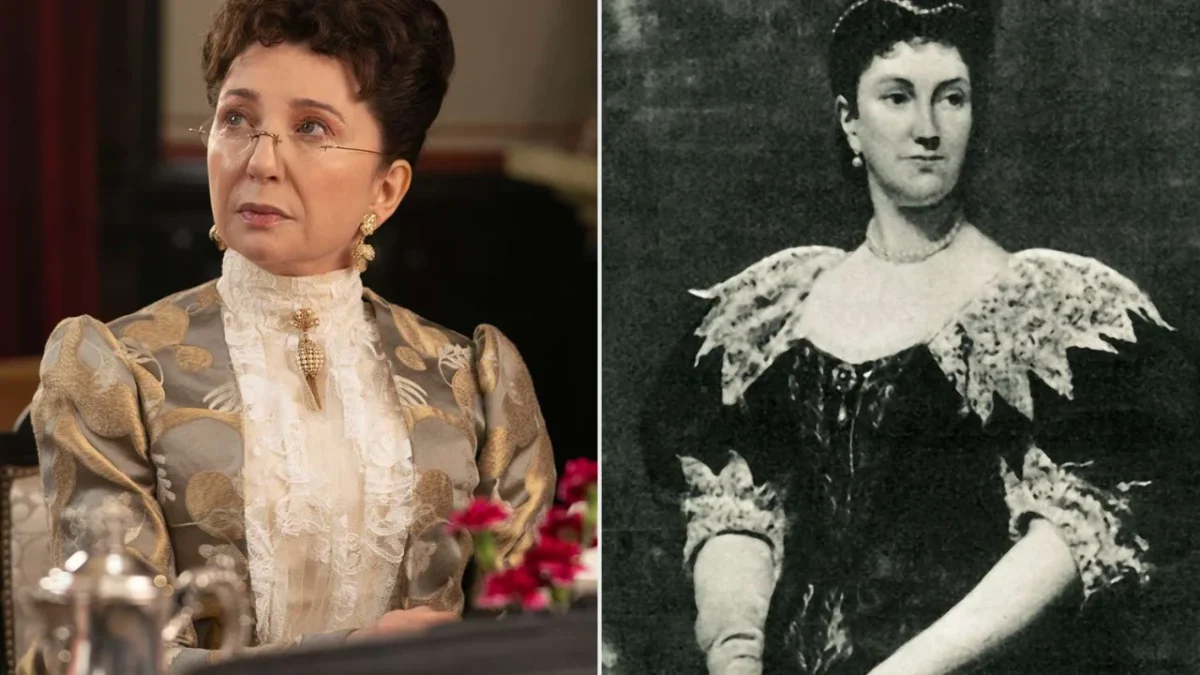
HBO’s The Gilded Age blends ruthless New York ambition with historical reality, weaving actual Gilded Age titans directly into its fictional drama. While core dynastic rivalries spring from the mind of creator Julian Fellowes, many prominent players once walked Manhattan’s ballroom floors or commanded Wall Street fortunes.
Co-executive producer and historical consultant Dr. Erica Armstrong Dunbar emphasized the show’s deliberate grounding in late-19th-century America.
“While The Gilded Age is a fictional show, it’s important to ground the storytelling in authenticity. We want viewers to feel and see a landscape that is from the past yet believable and accurate. The show takes place in late 19th century America when the country was moving into a modern era.”
Separating historical record from television scripts reveals how closely HBO mirrors actual high-stakes marriages, cultural icons, and Gilded Age scandals.
Fact vs. Fiction: How Julian Fellowes Reimagined American Royalty
A widespread misconception is that every drama on screen is purely invented for modern shock value. The reality is far more compelling: late-19th-century New York society was often wilder than television can depict.
To keep the narrative fluid, the series employs two parallel character tracks:
- Direct historical figures appearing under their real names, such as Mrs. Astor, Ward McAllister, and J.P. Morgan.
- Composite fictional figures inspired by genuine historical icons, most notably Gladys Russell and the Duke of Buckingham.
The Vanderbilt Connection: The Real Deal Behind the Buckingham Wedding
Gladys Russell’s orchestrated entry into foreign aristocracy directly parallels one of New York’s most scrutinized marriages.
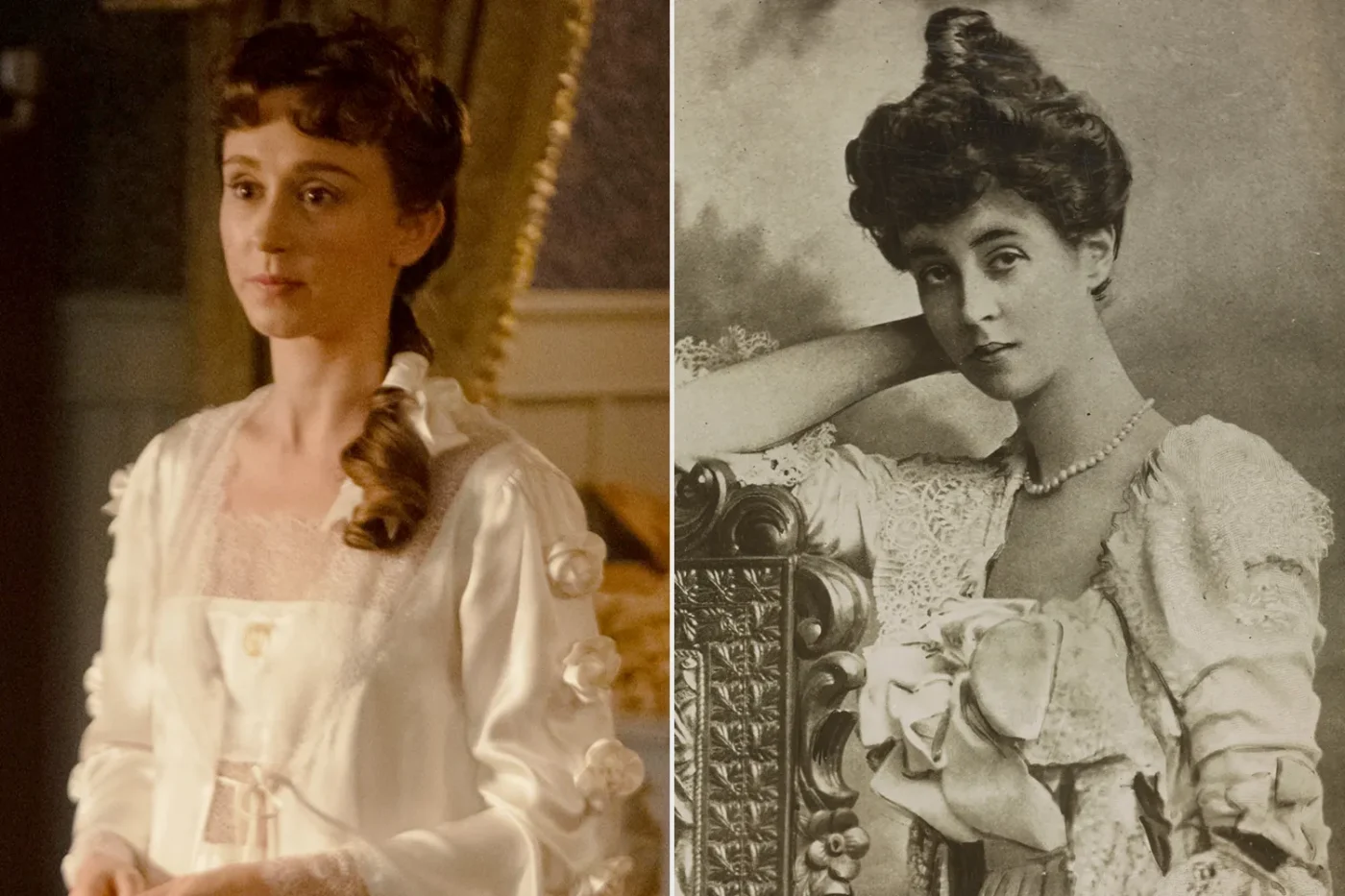
Taissa Farmiga in The Gilded Age and American socialite Consuelo Vanderbilt.
Taissa Farmiga plays Gladys Russell, the daughter of a railroad baron and an intensely ambitious mother. The character draws heavy inspiration from Consuelo Vanderbilt, who was pressured by her mother into wedding Charles Spencer-Churchill, the ninth Duke of Marlborough.
Consuelo became the first American woman to become a Duchess. Though the couple had two sons, they separated in 1906 and divorced in 1921, after which she wed Jacques Balsan.
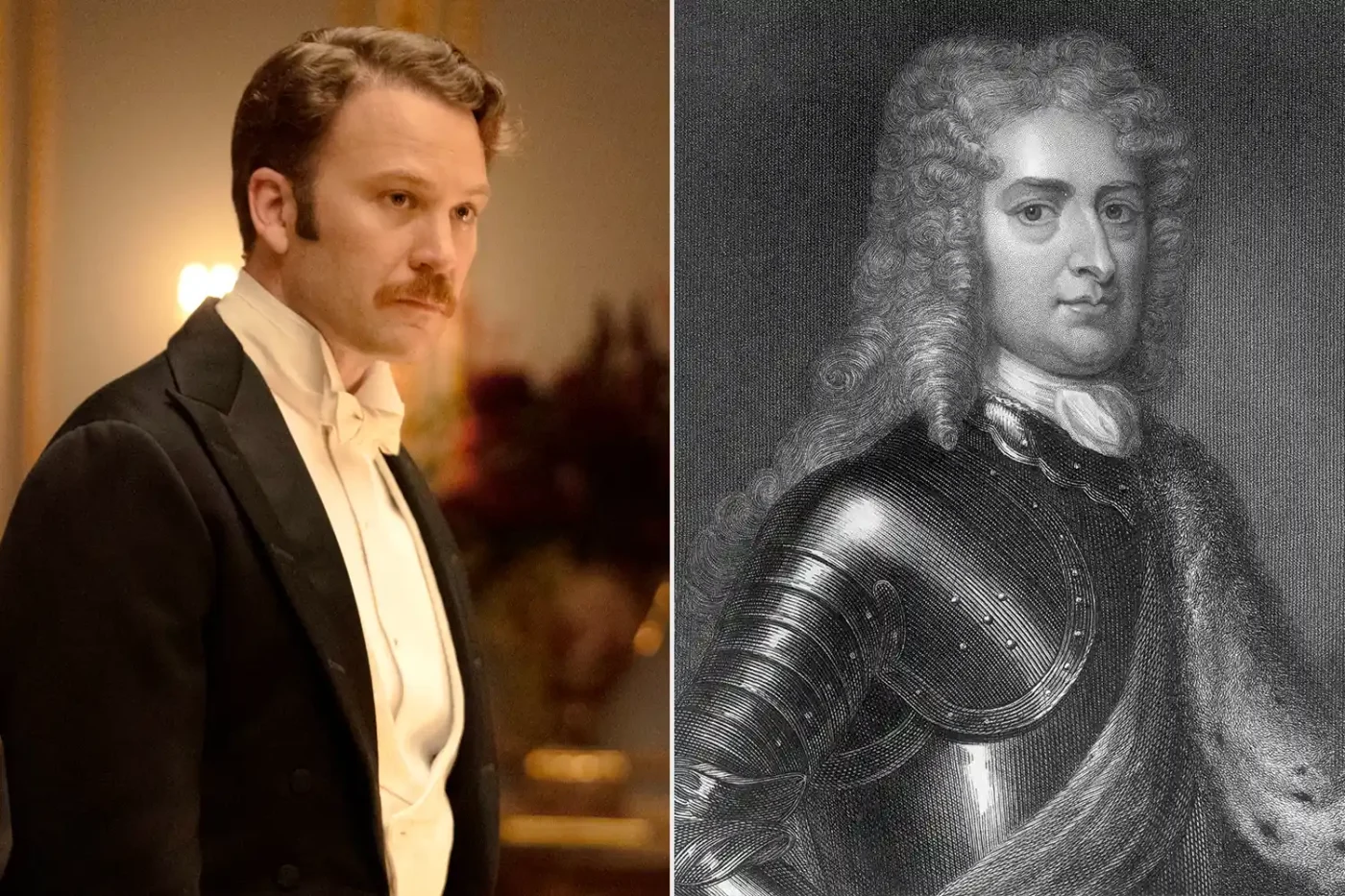
Ben Lamb in The Gilded Age and an illustrated portrait of John Churchill.
Ben Lamb portrays the fictional Duke of Buckingham, the screen counterpart inspired by Spencer-Churchill. While the Duke of Buckingham title exists in British history, the character functions as an artistic vehicle to reflect the wave of American heiresses marrying cash-poor European nobility.
Who Were the Gatekeepers of New York High Society?
Long before social media influencers, a small circle of Manhattan elites dictated who belonged and who was completely shut out.
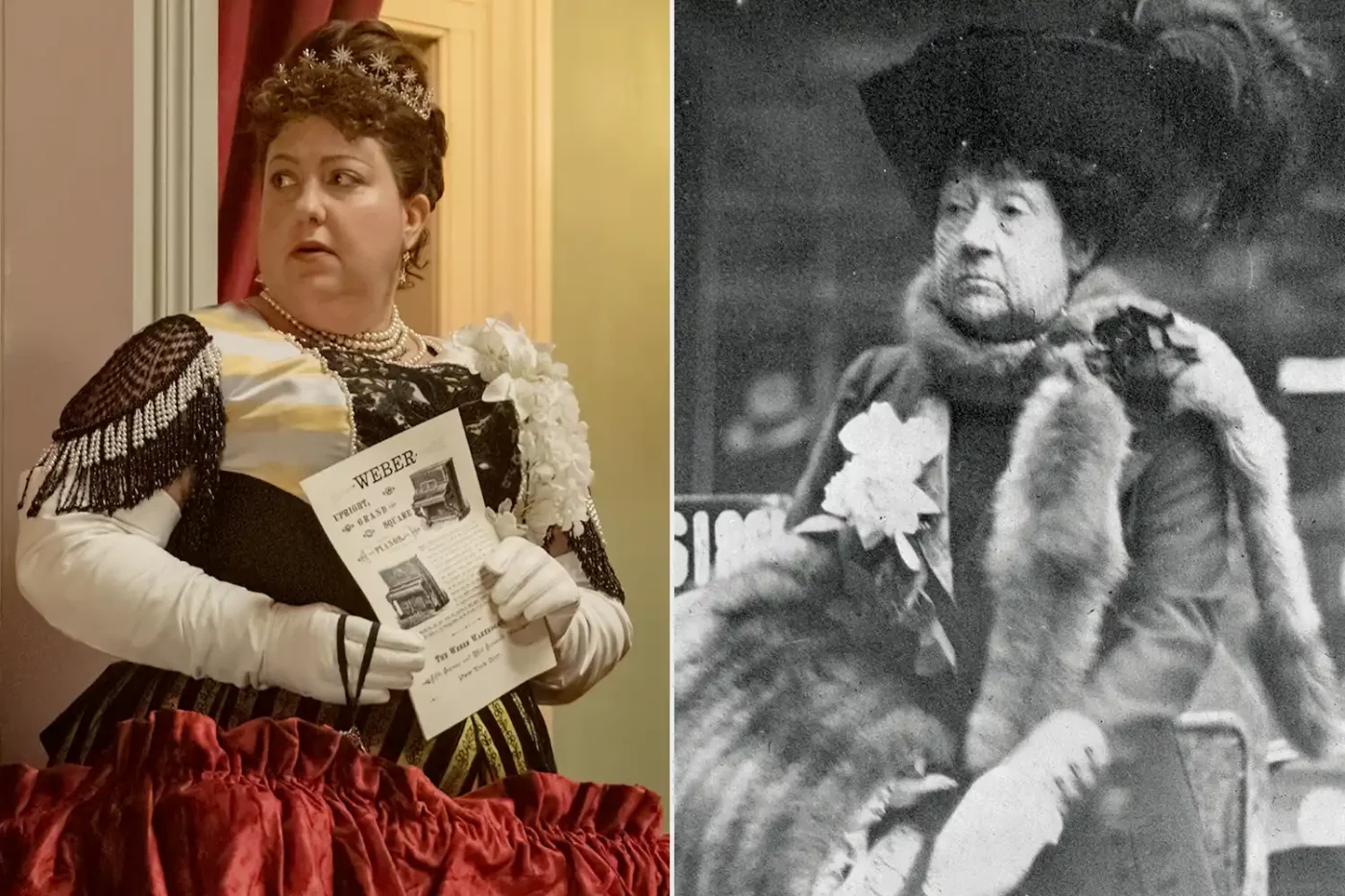
Ashlie Atkinson in The Gilded Age and American socialite Marion Graves Anthon Fish.
Ashlie Atkinson portrays Marion Graves Anthon Fish, known universally as Mamie Fish. Married to railroad tycoon Stuyvesant Fish, she earned a reputation as high society’s rule-breaker, hosting eccentric parties that punctured the stuffiness of the era.
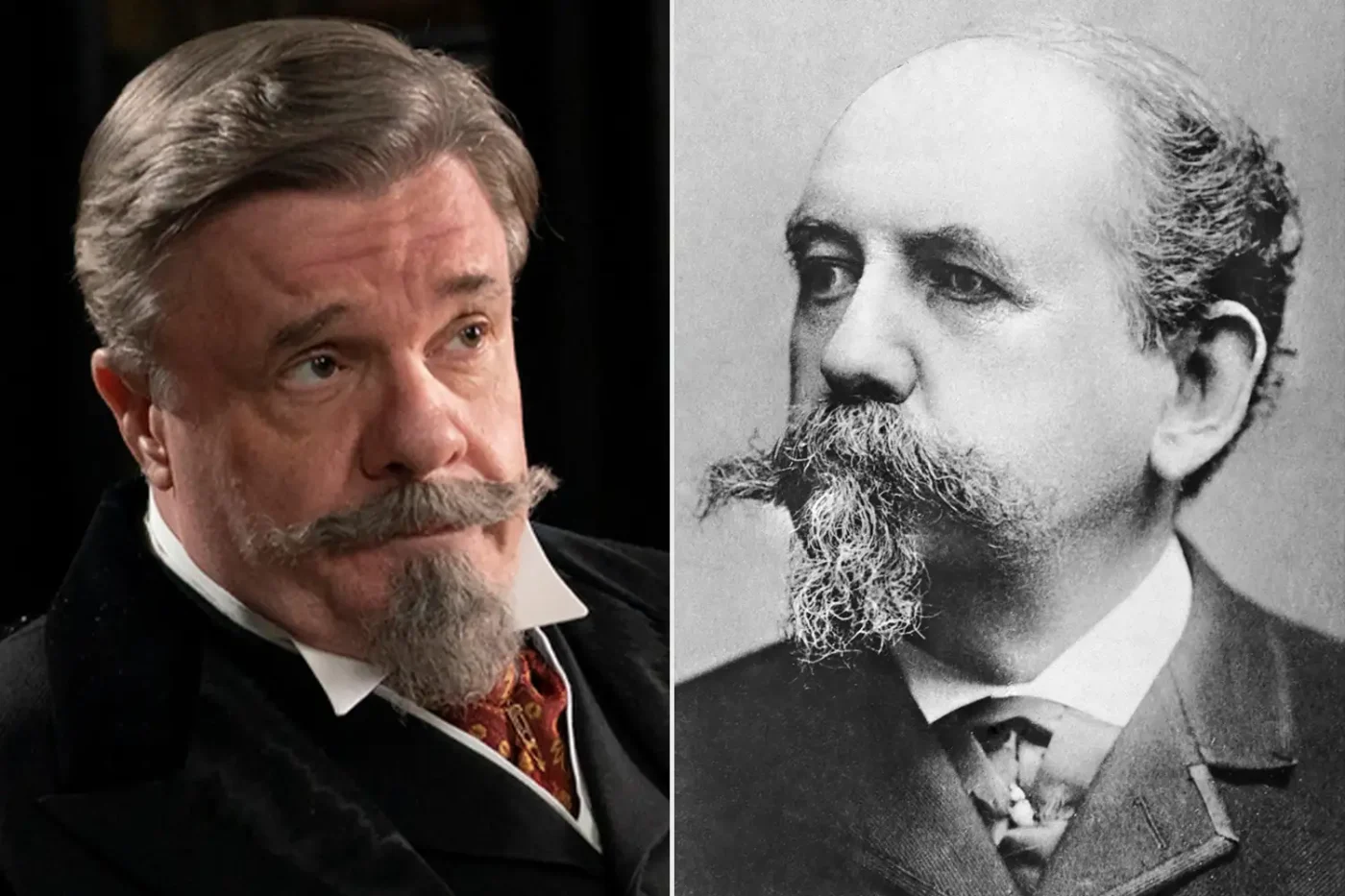
Nathan Lane in The Gilded Age and Ward McAllister.
Nathan Lane brings theatrical precision to Ward McAllister, a real Southerner who steered new-money strivers through old-money waters. In 1890, McAllister published his tell-all, Society As I Have Found It, which quickly alienated him from the elite circles he helped define.
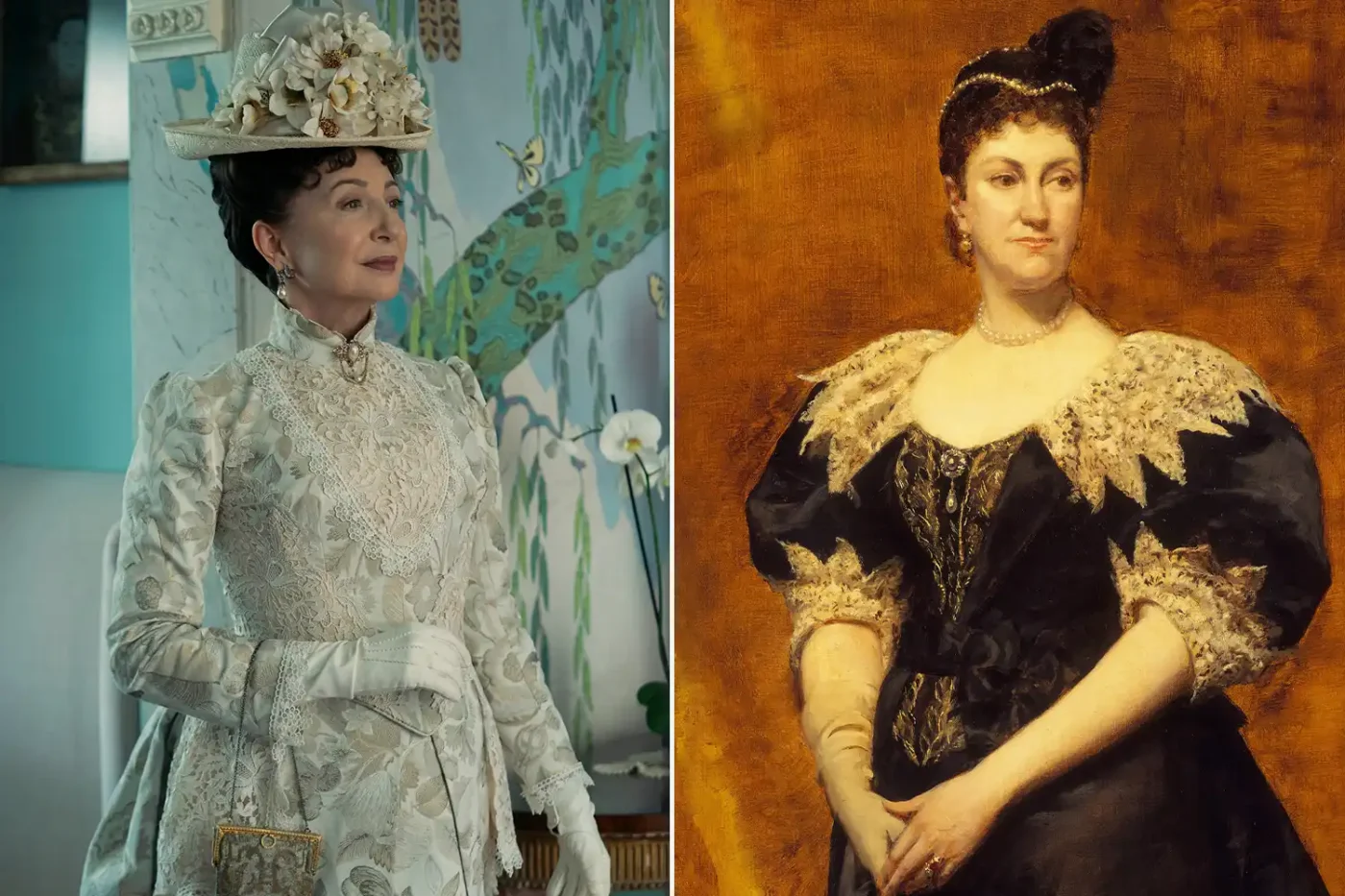
Donna Murphy in The Gilded Age and a portrait of American socialite Caroline Webster Schermerhorn.
Donna Murphy steps into the shoes of Caroline Schermerhorn Astor, the undisputed arbiter known simply as Mrs. Astor. Together with McAllister, she curated the famed “Four Hundred,” a restrictive roster published in The New York Times representing the pinnacle of Manhattan status.
Which Real-Life Moguls and Pioneers Walk the Screen?
Beyond opulent dinner tables, The Gilded Age introduces the financiers, creatives, and reformers who shaped modern America.
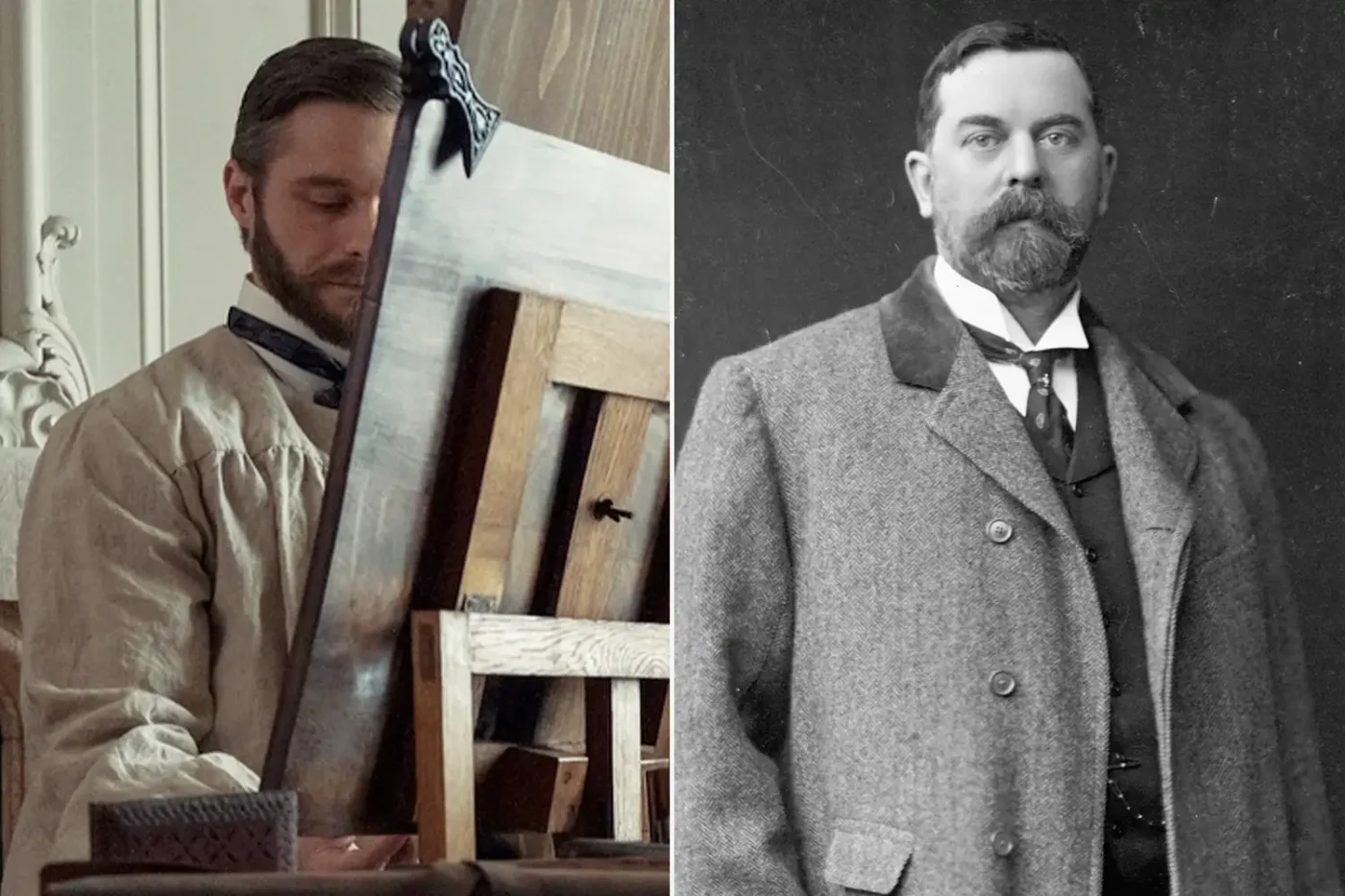
Bobby Steggert in The Gilded Age and painter John Singer Sargent.
Bobby Steggert appears as master portrait painter John Singer Sargent, commissioned on screen by Bertha Russell to paint Gladys. Sargent was the real master behind acclaimed works like Portrait of Madame X and Lady Agnew of Lochnaw.
“I think that Sargent was someone who did not see women as objects. He saw them as three-dimensional, complicated, powerful people,” Steggert noted regarding his connection to the artist.
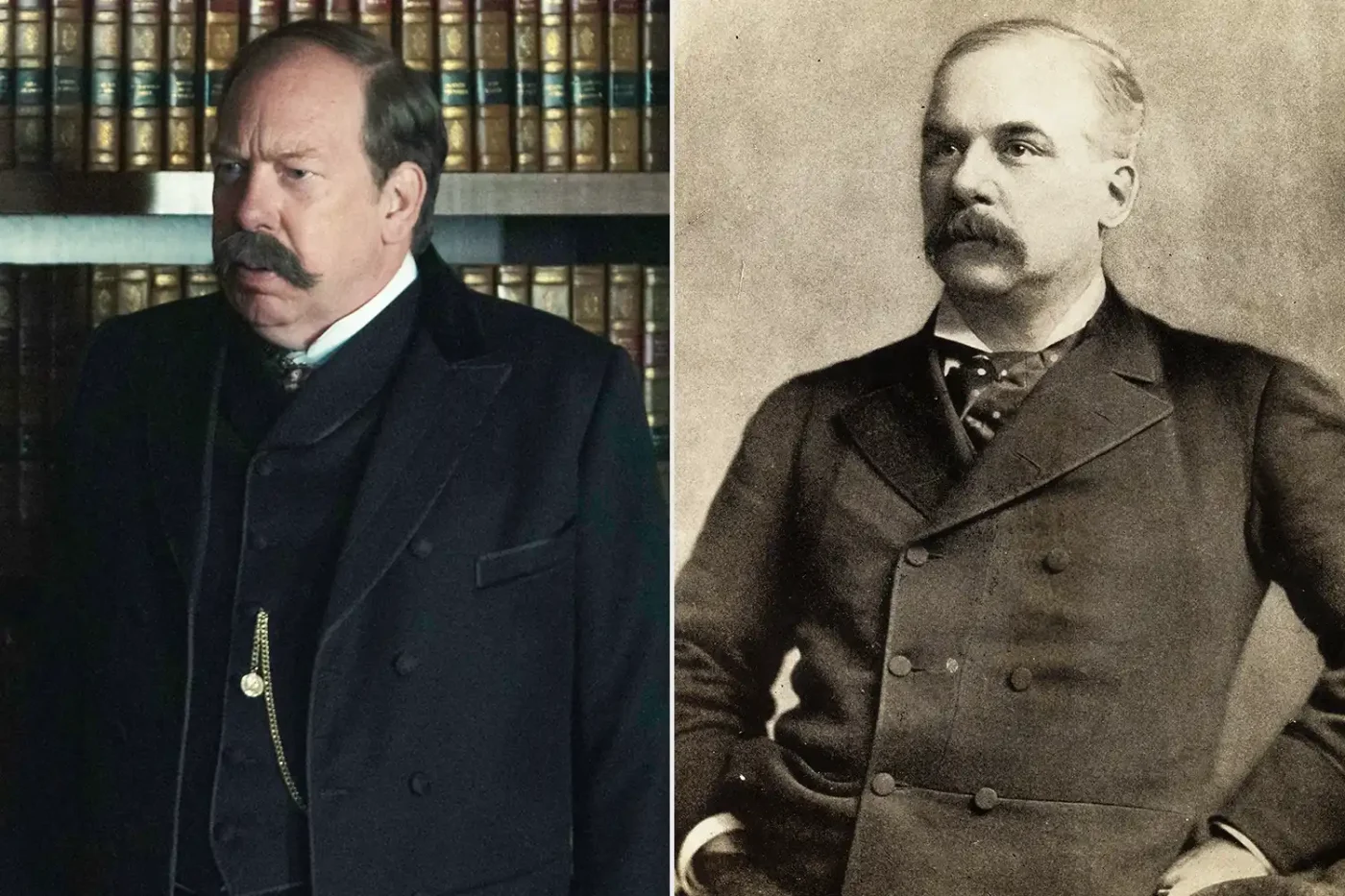
Bill Camp in The Gilded Age and J.P. Morgan Sr.
Bill Camp brings formidable weight to J.P. Morgan, the towering investment banker and railroad financier. Morgan steps into the narrative as a high-stakes business counterpart for rail magnate George Russell.
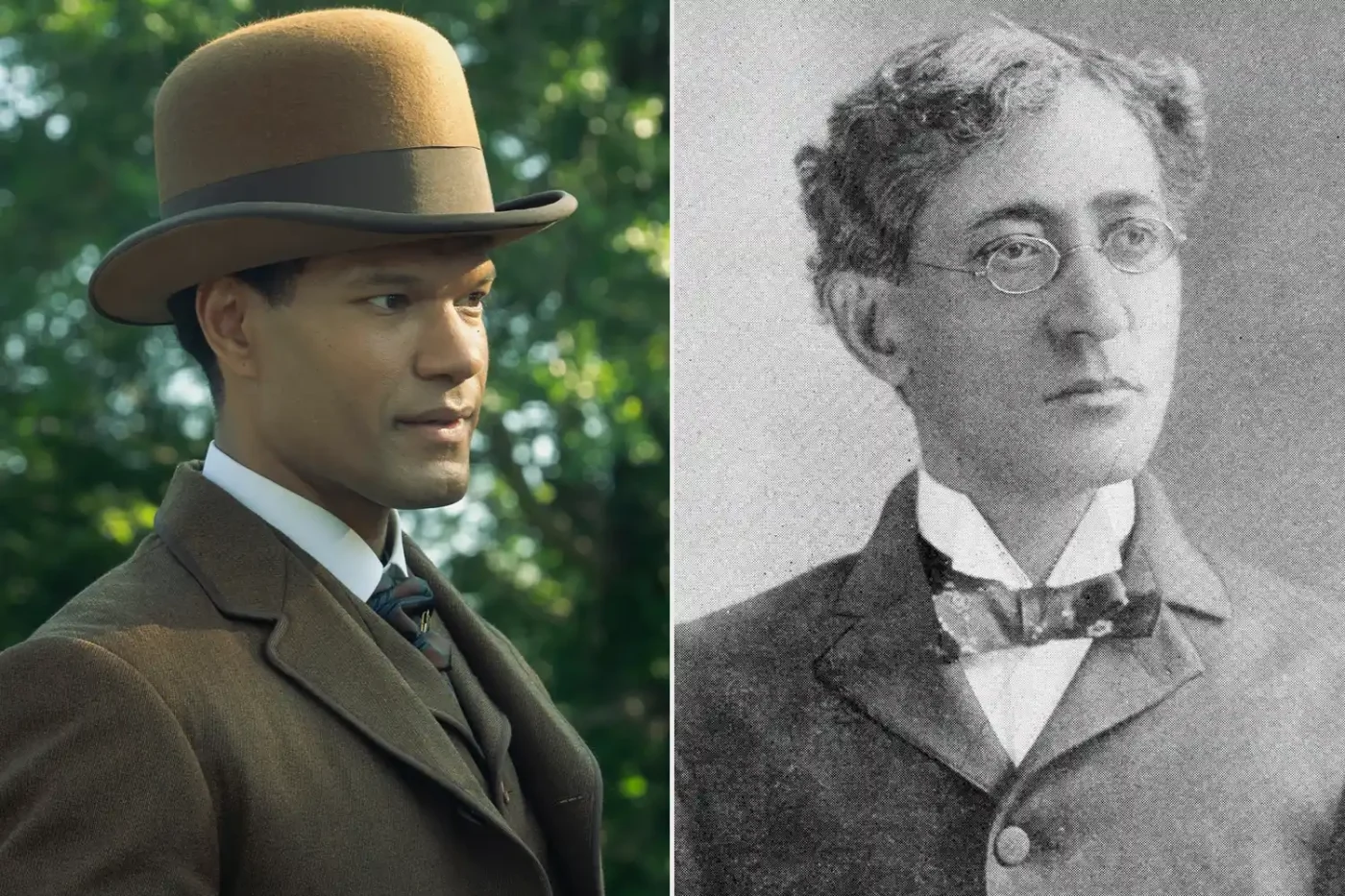
Sullivan Jones in The Gilded Age and T. Thomas Fortune.
Sullivan Jones portrays crusading Black journalist T. Thomas Fortune, editor to aspiring writer Peggy Scott. Born into slavery and freed in 1863, Fortune attended Howard University and became the editor and co-owner of foundational Black newspapers, including The New York Globe.
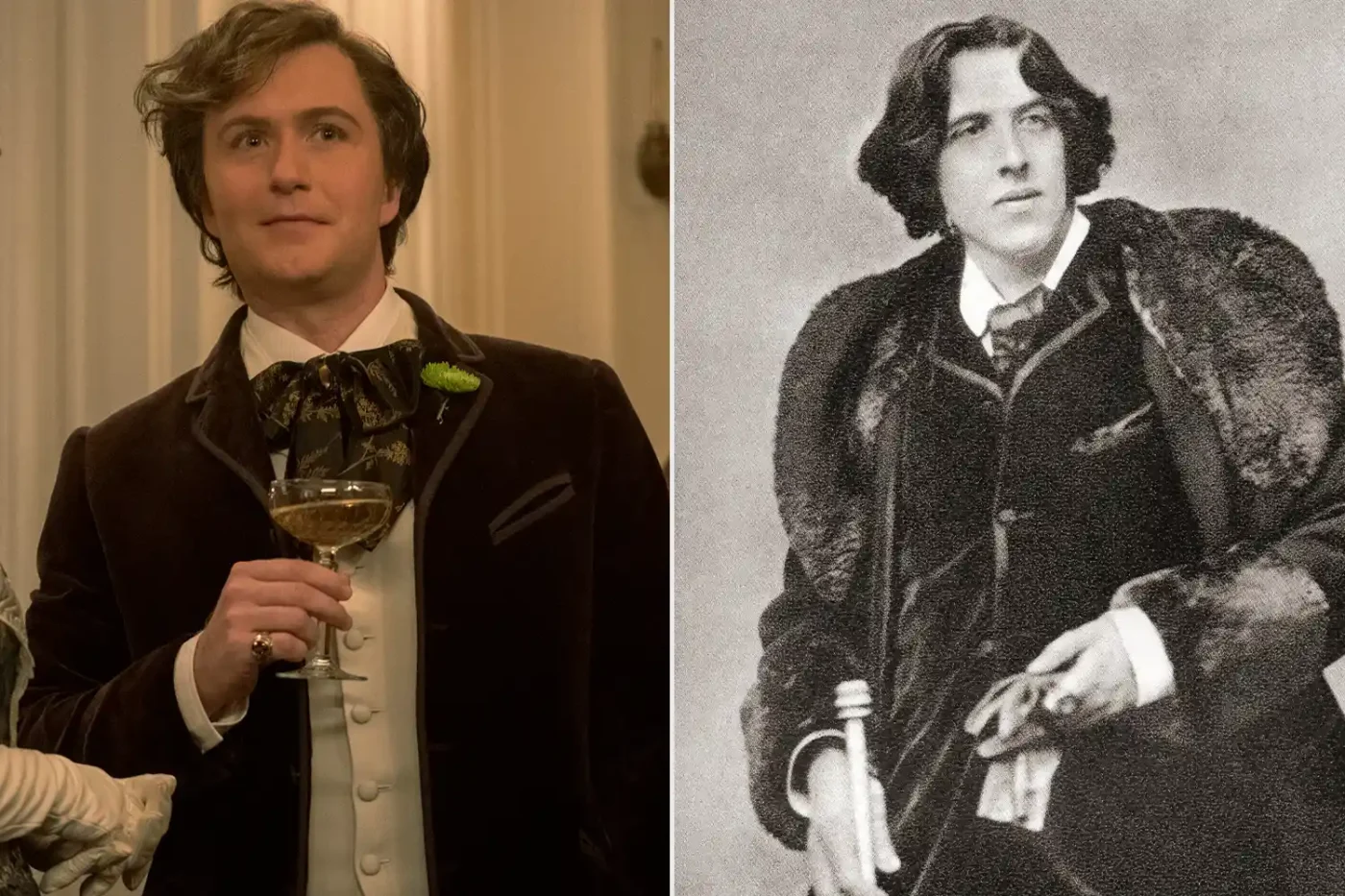
Jordan Waller in The Gilded Age and Oscar Wilde.
Jordan Waller featured as playwright Oscar Wilde during the show’s second season. The historical appearance recalls Wilde’s 1883 trip to New York for his play Vera; or, The Nihilists at the Union Square Theater, a production that closed after just one week.
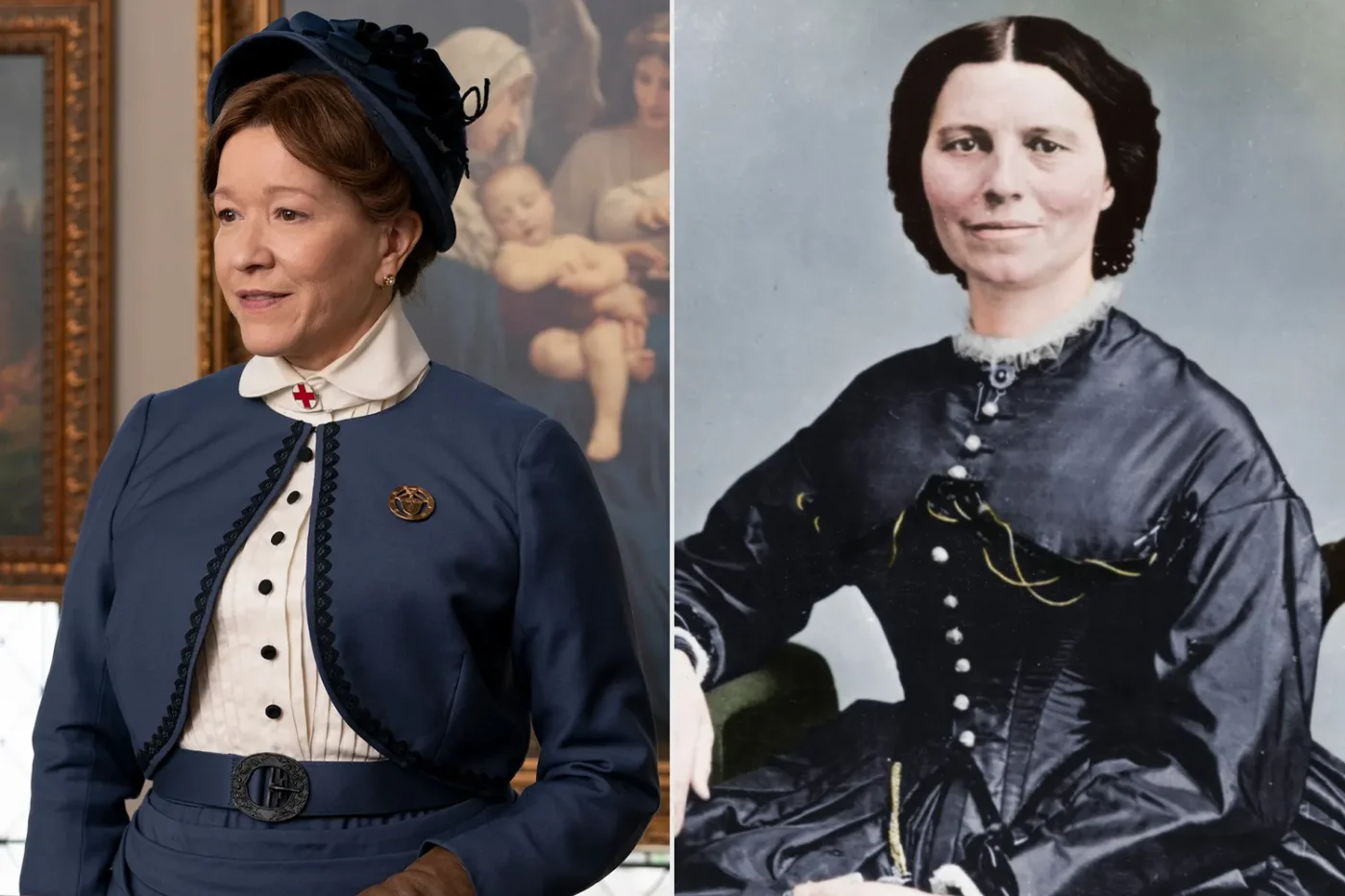
Linda Emond in The Gilded Age and Clara Barton.
Linda Emond portrayed humanitarian Clara Barton, who founded the American Red Cross in 1881. Emond highlighted the honor of playing a figure who single-handedly reshaped crisis response across the nation.
Character Breakdown: Screen Roles vs. Historical Counterparts
Review this side-by-side breakdown to see which key roles are historical originals versus creative interpretations:
| Character Name | Historical Reality |
|---|---|
| Gladys Russell | Fictional role inspired by heiress Consuelo Vanderbilt |
| Duke of Buckingham | Fictional role echoing Charles Spencer-Churchill |
| Mamie Fish | Real historical Manhattan hostess and socialite |
| Ward McAllister | Real social gatekeeper and author of society roster |
| Mrs. Astor | Real leader of New York’s elite “Four Hundred” |
| John Singer Sargent | Real celebrated portrait artist |
| J.P. Morgan | Real financier and American banking titan |
| T. Thomas Fortune | Real pioneering journalist and civil rights voice |
| Oscar Wilde | Real Irish poet, playwright, and satirist |
| Clara Barton | Real founder of the American Red Cross |
✨ Blending real historical titans with original drama gives the show its authentic, razor-sharp edge.
💬 Seeing how Julian Fellowes adapts the Vanderbilt legacy and the “Four Hundred” proves that truth remains just as dramatic as fiction.
📱 Which historical portrayal in The Gilded Age caught you most by surprise? Drop your thoughts in the comments below!
 1
 2
 3
 4
