
Saving 1970s Baby Room Wallpaper: Why Grandparents Kept These Vintage Rolls Hidden for Decades and How to Preserve Them Today

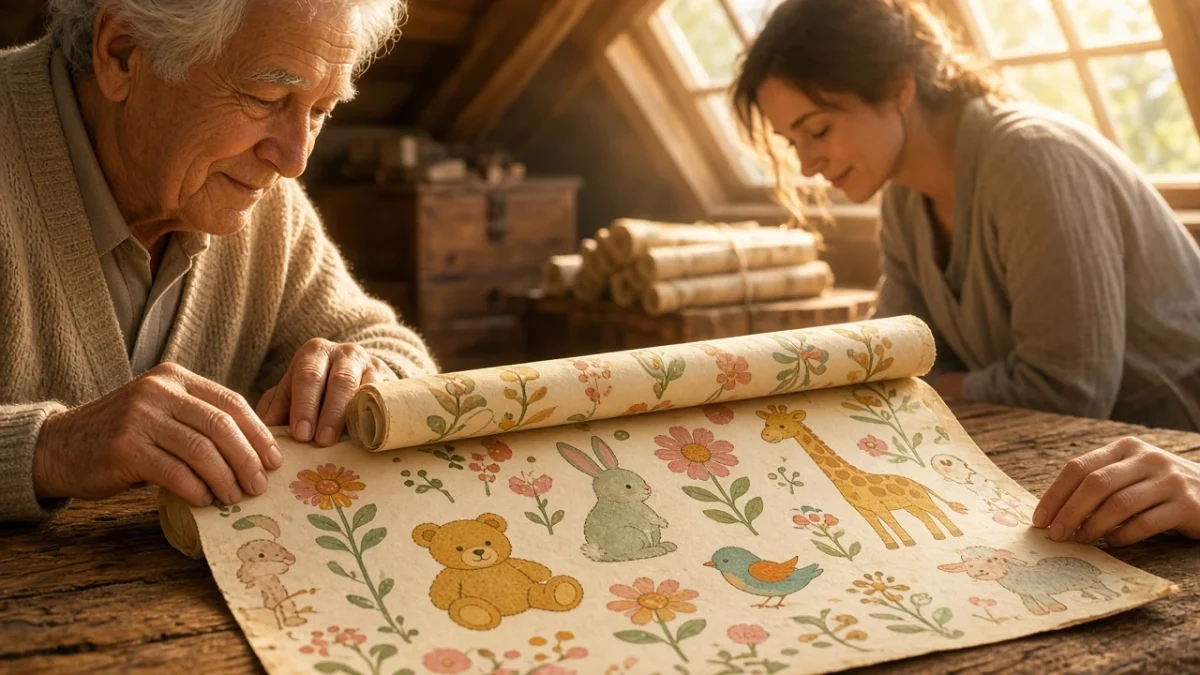
When a grandfather tucks away leftover rolls of 1970s baby room wallpaper in an attic or cedar chest, he creates an accidental time capsule. Decades later, rediscovering these vibrant, retro patterns bridges generations of family history through tangible design.
Original 1970s nursery designs were bold, unapologetic, and full of character. Finding unhung surplus today feels like unearthing a private archive of mid-century domestic life.
What drives someone to preserve wall coverings for half a century, and how can families safely showcase these fragile treasures today?
The Sentimental Impulse Behind the Attic Vault
During the 1970s, wallpaper was the standard choice for American nurseries and children’s bedrooms. Parents frequently bought an extra roll or two to handle future scuffs, seam repairs, or unexpected spills.
For many fathers and grandfathers, tossing leftover remnants felt wasteful. Once children outgrew their cribs, those spare rolls migrated into basements, closets, and rafters.
Over time, the utility faded into pure sentiment. The paper retained the nursery’s memory long after the original walls were stripped, primed, and repainted.
Preservation Challenges Across Five Decades
Unused paper stored in uncontrolled environments faces serious environmental threats. Attics endure extreme temperature swings, while basements harbor moisture and mildew.
Standard 1970s wallpapers were either standard pulp paper, pre-pasted cellulose, or vinyl-coated paper. Each material ages differently under typical household storage conditions.
Archival adhesives from fifty years ago inevitably degrade, leaving vintage wallpaper rolls brittle, dry, or prone to surface cracking along tight coils.
Unrolling an aged cylinder too quickly can fracture the original printed ink. Gentle handling in room-temperature, humidity-controlled settings is essential to avoid cracking the dry fibers.
Safety and Material Checks Before Reuse
A widespread misconception assumes all vintage home materials harbor toxic chemicals or lead. While lead paint was banned for residential use in the United States in the late 1970s, mass-produced decorative wall papers generally avoided heavy lead pigments, relying instead on standard dye lots.
However, dust accumulation, dormant mold spores, and degraded chemical adhesives are very real concerns. Anyone inspecting vintage rolls should check for active odors, dark spotting, or brittle powdering before bringing them near a nursery.
| Paper Condition | Best Repurposing Strategy |
|---|---|
| Pliable, pristine condition | Feature accent wall using modern, non-damaging wheat paste |
| Brittle edges or partial rolls | Framed shadowbox panels and nursery gallery art |
| Adhesive breakdown or fading | Lining heirloom dresser drawers and keepsake box interiors |
| Mild moisture discoloration | Digital scanning and reproduction on modern peel-and-stick paper |
Creative Ways to Honor Preserved Vintage Wallpaper
Rehanging an entire room with vintage rolls is rarely practical due to limited yardage and brittle backing. Modern decorators use targeted, low-impact display methods instead.
- Framed Architectural Panels: Cut clean segments and mount them behind UV-protective glass to prevent fading while highlighting the iconic 1970s motifs.
- Dresser Drawer Liners: Use remaining scraps to line the drawers of a restored baby changing table, adding a secret pop of nostalgic color.
- Memory Book Accents: Incorporate small swatches into baby scrapbooks alongside original photographs of the 1970s room.
By protecting these rolls from direct sunlight and humidity, families keep a physical piece of childhood history intact for the next generation to admire.
💬 Preserving sentimental family relics creates a unique visual story that modern retail decor simply cannot match.
✨ Have you discovered vintage decor or wallpaper saved by older relatives? Share your family discoveries in the comments below.
📱 Pass this story along to anyone renovating a vintage home or sorting through cherished family keepsakes.
 1
 2
 3
 4
