
Mastering the Stick Shift: Why Learning to Drive a Manual Transmission Still Changes the Way You View Driving

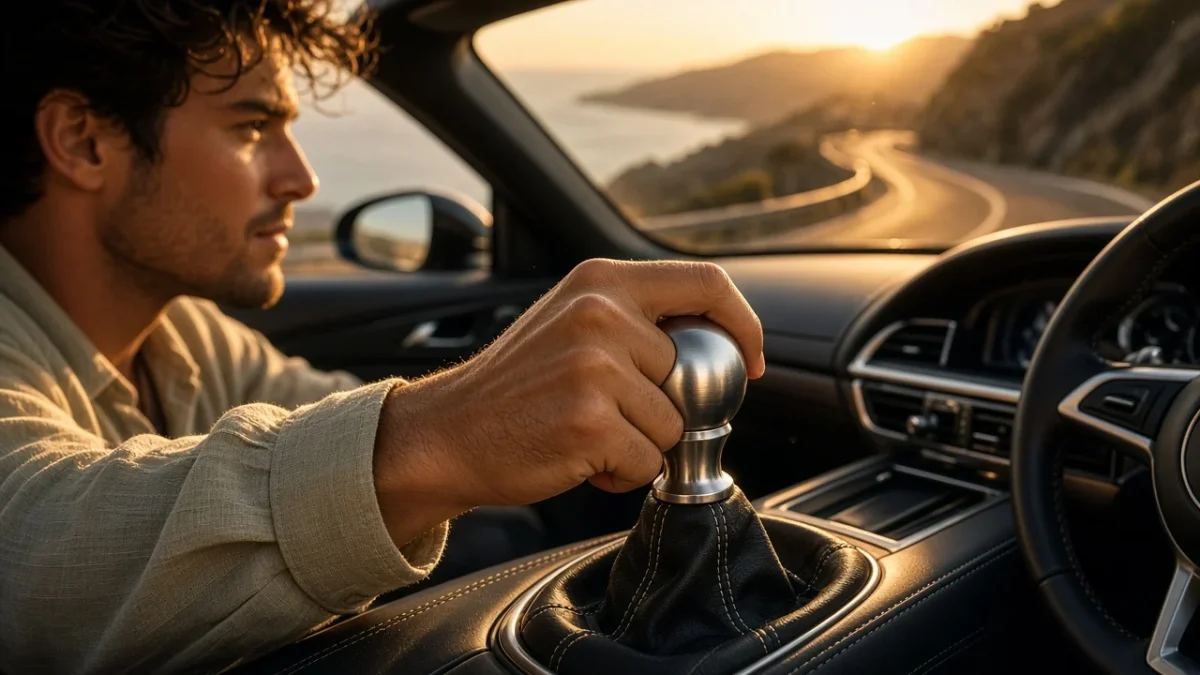
Mastering how to drive manual transmission boils down to one mechanical reality: understanding the friction zone where your engine plate meets the transmission. The entire learning curve comes down to developing muscle memory in your left foot, eliminating the dread of an unexpected stall, and learning to balance engine speed with gear selection.
For most American drivers who grew up with two pedals, climbing into a vehicle with three pedals and a physical gear stick feels alien. Automatic transmissions handle gear ratios behind the scenes, separating the driver from engine output. A stick shift eliminates that isolation completely.
Once you understand how the clutch connects torque from the engine to the wheels, operating a stick shift transitions from an intimidating chore into pure tactile intuition.
The Anatomy of the Pedals: Getting Your Bearings
Before turning the ignition key, you must reset how your feet behave in the footwell. In an automatic car, your left foot rests permanently on the dead pedal while your right foot toggles between brake and accelerator.
In a manual setup, your left foot has a single, dedicated job: operating the clutch pedal on the far left. Your right foot handles the middle brake pedal and the gas pedal on the far right. Mixing this footwork up leads directly to sudden stalls or abrupt stops.
The clutch pedal disconnects the spinning engine from the drive wheels. When the pedal is pressed to the floor, the engine spins freely without transferring power to the transmission. As you release the pedal, two friction discs clamp together, sending rotational force through the driveshaft to the road.
The secret to driving stick is not adding gas; it is giving the clutch disc enough time to synchronize wheel speed with engine speed before letting go completely.
Step-by-Step: The First Launch in an Empty Lot
Find an empty, flat parking lot without curbs, light posts, or cross traffic. Flat ground ensures the car will not roll backward while your feet learn the controls.
- Adjust your seating position: Push the clutch pedal all the way to the floor with your left foot. Your knee should maintain a slight bend so you can press the pedal fully without straining or stretching your hip.
- Start the engine: Keep the gear lever in neutral (it should wiggle freely side-to-side), push the clutch pedal to the floor, press the brake pedal, and turn the key or press the start button.
- Select first gear: With the clutch fully depressed, push the shifter left and forward into first gear, then release the handbrake.
- Isolate the bite point: Keep your right foot completely off the gas pedal. Slowly—over the course of three to four seconds—raise your left foot off the clutch until you hear the engine RPM drop slightly and feel the car crawl forward.
- Pause and hold: Hold your left foot dead-still at that exact spot for two seconds until the car rolls at walking speed. Then, smoothly let the pedal come up the rest of the way.
Mastering the “No-Gas” Drill
The fastest way to eliminate launch anxiety is to practice rolling forward repeatedly without touching the accelerator. Modern fuel-injected engines automatically feed enough idle fuel to prevent stalling if you release the clutch smoothly enough.
Spend your first fifteen minutes doing nothing but creeping forward, depressing the clutch, stopping with the brake, and repeating the process. Once your left calf internalizes the millimeter where the clutch bites, stalling becomes rare.
Busting the Stall Myth: What Really Happens When the Car Dies
Almost every beginner fears that stalling the car breaks the engine or permanently ruins the transmission. That fear causes drivers to panic, dump the pedals, and jerk the vehicle violently.
A stall simply means the engine’s rotational speed dropped below its idle threshold because the load from the wheels overwhelmed it. The computer shuts the engine down to prevent mechanical damage. It is a safety reaction, not an explosion.
If the car shudders and dies, push the clutch in immediately, apply the foot brake, shift back to neutral, and restart the engine. Take a breath and reset.
Clutch Action vs. Vehicle Response
Understanding cause and effect in real time helps you diagnose what your feet are doing incorrectly during practice.
| Pedal Input | Vehicle Behavior |
|---|---|
| Clutch dumped too fast at low RPM | Violent shudder followed by an immediate engine stall |
| Clutch held at bite point for 2 seconds | Smooth forward creep without engine hesitation |
| High gas pedal input with half-pressed clutch | Clutch slippage, engine revving loudly, burning smell |
| Depressing clutch fully before braking | Smooth stop without stalling the idle engine |
| Downshifting without matching gear speeds | Sudden forward pitch as engine braking engages |
Up-Shifting, Downshifting, and Hill Starts
Once you are moving in first gear, shifting into higher gears is significantly easier because the car already carries forward momentum. When the tachometer climbs into the normal operational range—typically between 2,500 and 3,000 RPM—lift off the gas, depress the clutch fully, pull the shifter down into second gear, and smoothly release the clutch.
Downshifting works in reverse when slowing down for turns or climbing steep grades. Depress the clutch, shift into the lower gear, and let the clutch out gradually to allow engine braking to assist your regular brakes.
Hill starts present the final psychological barrier for new manual drivers. When stopped facing uphill, set the mechanical handbrake. As you find the clutch bite point and apply light throttle, feel the rear of the car settle downward against the brake. Release the handbrake lever smoothly as the car pushes forward to prevent any backward roll.
💬 Have you ever tried driving stick, or is learning a manual on your bucket list?
📱 Share this guide with a friend who is getting ready to test-drive their first manual vehicle.
👇 Drop your thoughts in the comments below and share your funniest first-time stalling story!
 1
 2
 3
 4
