
Scientists Are Gluing Tiny $200 Solar Trackers to Monarch Butterflies—and Their 3,000-Mile Flight Paths Are Defying Decades of Biology

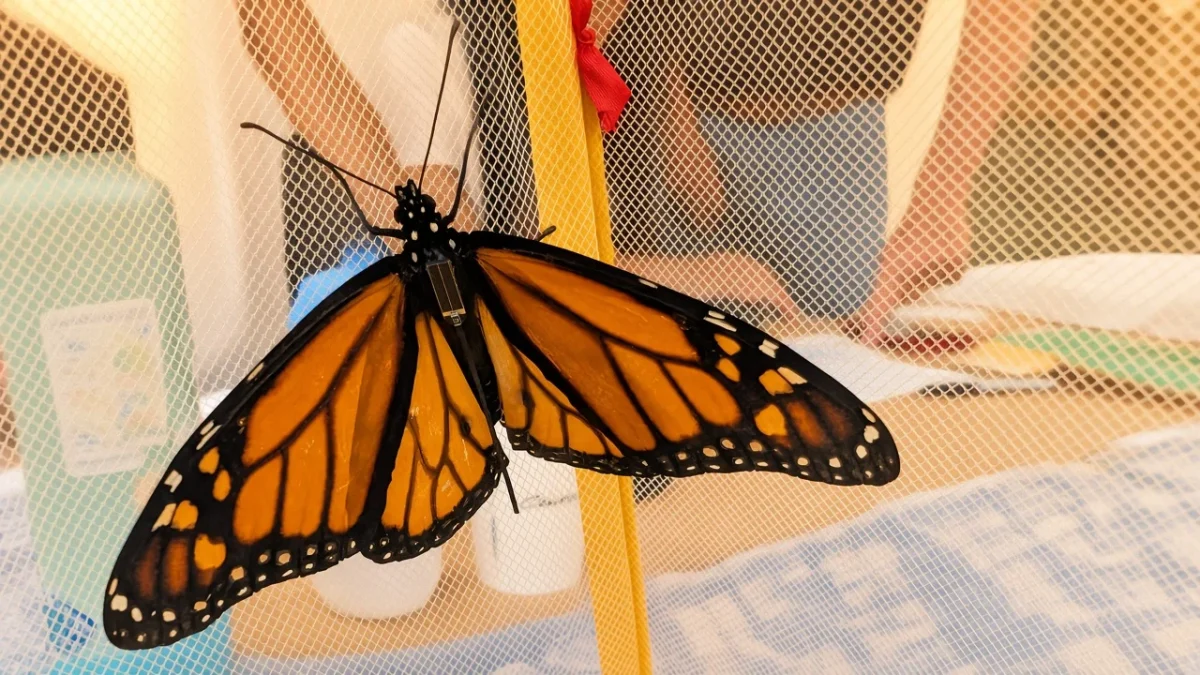
Scientists have attached ultralight, solar-powered radio transmitters to nearly 1,750 monarch butterflies, unlocking real-time data from a grueling 3,000-mile journey that has baffled researchers for generations. The initial findings are already shattering long-held assumptions about how these iconic insects navigate across North America.
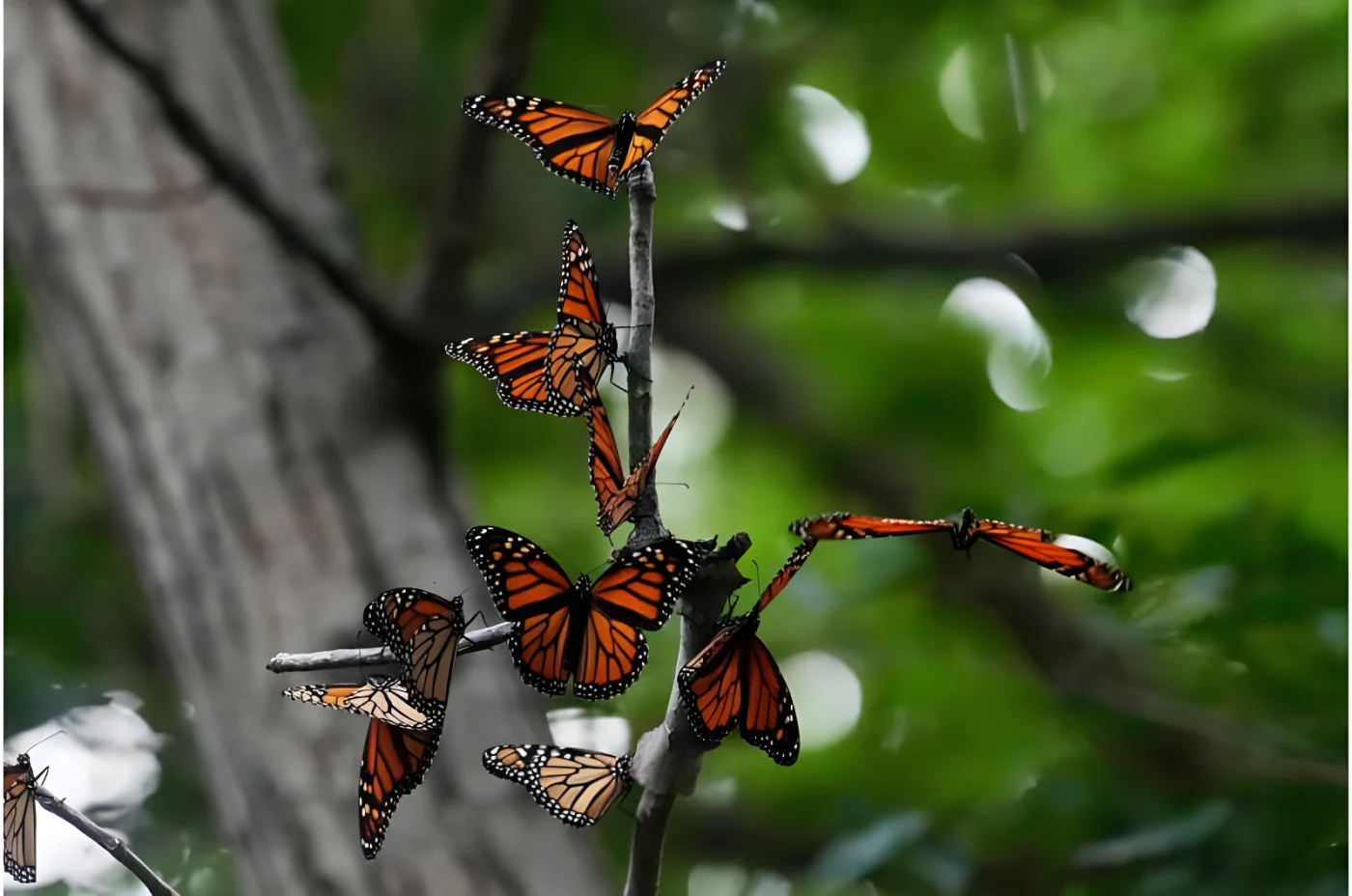
Every autumn, millions of orange-and-black monarchs fly from as far north as southern Canada to spend the winter sheltered in the high-altitude oyamel fir forests of central Mexico. Yet despite decades of observation, the precise paths they travel each day and the exact groves where they rest at night have remained largely invisible.
Now, microscopic technology weighing no more than a single drop of water is finally exposing the flight corridors keeping this endangered migration alive.
How Water-Drop Sized Sensors Are Rewriting Migratory Routes
The miniature tracking devices, engineered by Cellular Tracking Technologies, cost roughly $200 each and represent a massive technological breakthrough. Previous radio transmitters were simply too heavy for an insect that weighs less than a paperclip.
To safely carry the equipment, researchers select only the sturdiest candidates. Biologists and community scientists target butterflies weighing at least 400 milligrams—roughly the weight of a standard pill—or those with exceptionally long wingspans.
Monarch Migration
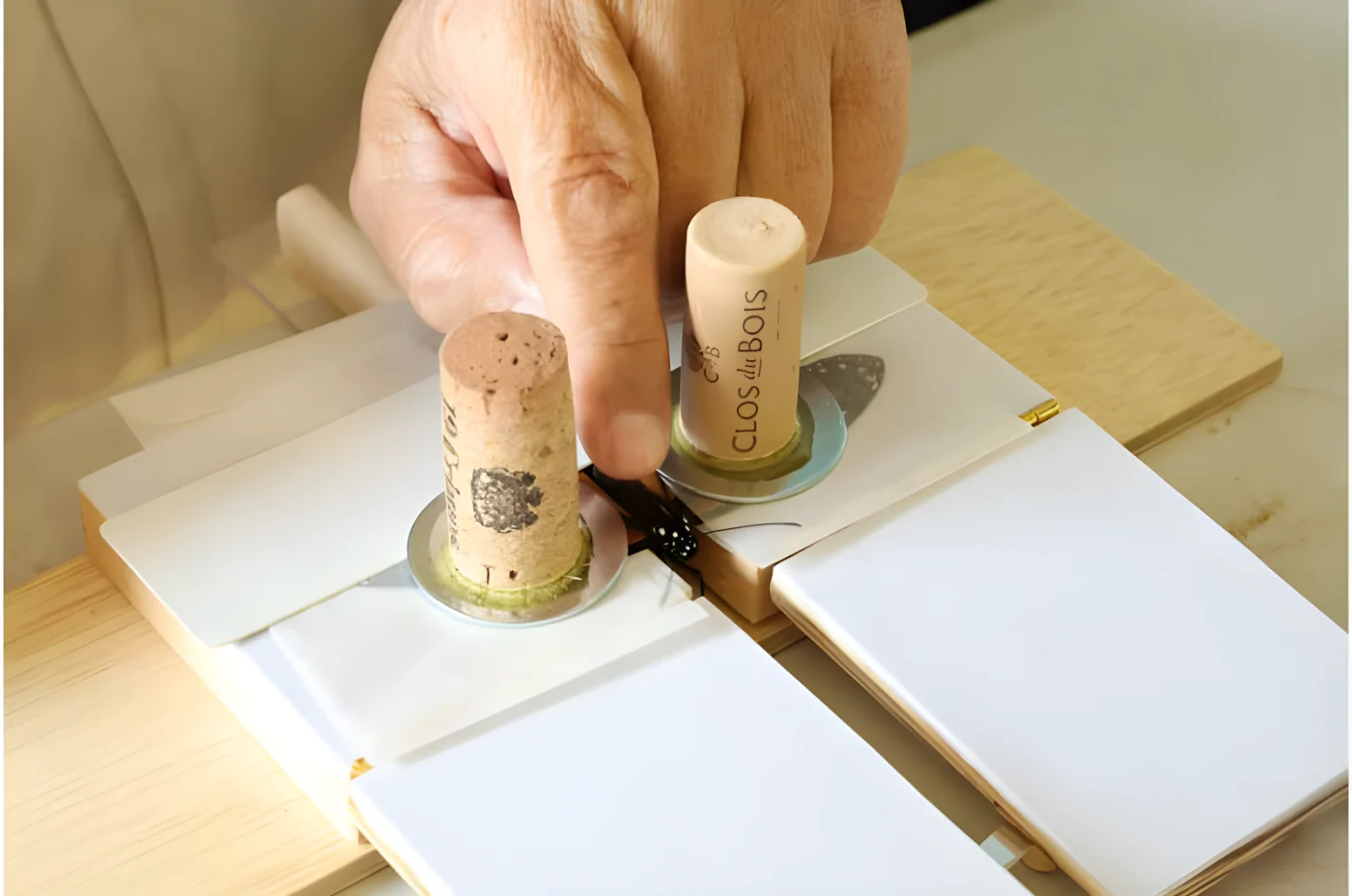
The tagging process demands surgical precision. Handlers catch the monarchs in soft nets and place them in chilled enclosures to safely lower their activity levels.
Once calm, each insect is positioned on a specialized mounting board that secures its delicate legs and antennae. Using a cotton swab, researchers apply adhesive to the butterfly’s abdomen, gently mount the solar transmitter, and release the insect back into the wild.
“There’s just all these unique stories of their paths, connections between the population, that we didn’t know existed or we hypothesized but couldn’t prove,” said Emma Pelton, senior conservation biologist with the Xerces Society for Invertebrate Conservation.
The Breakthroughs Unfolding Inside the ‘Texas Funnel’
Much of the research centers on Texas, a vital geographic bottleneck where monarchs funnel through before crossing into Mexico. Led by Dr. Rebeca Quiñonez-Piñón, senior scientist at the National Wildlife Federation, researchers are combining automated sensor stations with public observations to pinpoint crucial stopover habitats.
Depending on seasonal weather patterns, butterflies shift their path across Texas to track water, flowering nectar sources, and protective tree canopies. Already, the trackers have documented unexpected movements:
- The Continental Divide Crossover: A tagged butterfly from Utah, west of the Rocky Mountains, crossed traditional boundaries to join eastern monarchs overwintering in central Mexico.
- The Gulf Coast Jump: Trackers revealed butterflies flying down the Atlantic Seaboard into Florida before crossing the Gulf of Mexico toward Mexican forests.
- Winter Haven Arrivals: Roughly 175 tagged monarchs have already been logged by detection towers across Mexico.
Anyone interested in following individual routes in real time can monitor the butterflies through the public Project Monarch Science mobile app.
Monarch Migration
Myth vs. Reality: What the Data Actually Tells Us
A widespread public misconception suggests that eastern and western monarch populations represent two completely isolated biological groups that never interact. The new transmitter detections prove that these populations can and do intermingle across the continent.
Another common belief is that modern radio tags function like real-time consumer GPS units. In reality, insect ecologists like Louie Yang of the University of California, Davis, emphasize that the transmitters do not log continuous coordinates.
Instead, a tag records a data point only when an insect passes near a ground-based receiving station. A detection confirms where a butterfly was, but cannot independently verify whether the insect remains alive afterward.
| Metric / Feature | Project Specification |
|---|---|
| Transmitter Unit Cost | Approximately $200 |
| Transmitter Weight | Equivalent to a drop of water |
| Minimum Insect Weight | 400 milligrams |
| Total Butterflies Tagged | Nearly 1,750 monarchs |
| Total Distance Traveled | Up to 3,000 miles |
| Overwintering Lifespan | Up to 9 months |
A Race Against Extinction and Climate Disruption
While summer monarchs live only two to six weeks, the migratory generation can survive up to nine months. They spend nearly their entire lives navigating southward, overwintering in fir canopies, and flying northward again to reproduce in the spring.
Yet their numbers face steep declines. Since the mid-1990s, eastern monarch counts have dropped by more than 80%, while western populations have collapsed by roughly 95% due to habitat loss, urban development, and agricultural pesticides wiping out native milkweed.
“Pollinators are crucial to protect and ensure that our ecosystems remain healthy, and also to have the sources of food that we require as humans,” said Quiñonez-Piñón.
Extreme weather and warming autumns also disrupt natural cues. When high temperatures linger too late into the fall, butterflies delay their southward departure, leaving them vulnerable to sudden freezes before reaching Mexico.
To curb roadside fatalities along the migration path, Texas transportation initiatives have begun installing specialized roadside netting that forces monarchs to fly higher over traffic. Conservation groups continue expanding large-scale plantings of native milkweed and nectar corridors along interstates and community gardens.
Federal authorities face a court-mandated deadline to decide on formal endangered species protections by 2030, making every stopover coordinate mapped today vital for their long-term survival.
📱 Tracking wild insects with solar micro-transmitters proves how rapidly conservation technology is evolving to safeguard fragile species.
✨ By pinpointing the exact trees, roadsides, and rest stops monarchs rely on, researchers can now protect habitats with pinpoint accuracy.
💬 Have you spotted migrating monarchs or planted milkweed in your backyard? Drop your thoughts in the comments below!
👇 Share this story to help spread awareness about the tools saving North America’s most iconic pollinator.
 1
 2
 3
 4
