
Surprising Daily Habits That Help 3 Out of 4 Seniors Avoid Nursing Homes, According to an Orthopedic Surgeon


Three in four Americans aged 50 and older want to stay in their own homes as they grow older, according to data from the AARP. Yet preserving that freedom rarely comes down to sheer luck. Double board-certified orthopedic surgeon Dr. Vonda Wright points out that staying out of institutional care hinges directly on protecting your skeletal longevity through specific physical and nutritional habits.
According to Wright, an Orlando-based mobility specialist, losing independence typically stems from three main problems: struggling to stand up from a chair to handle self-care, memory decline, and incontinence that complicates personal hygiene. When everyday movement deteriorates, the ability to live at home quickly follows.
“The missing piece in most conversations between mental health, physical health and independence is your skeletal longevity.”
Maintaining long-term aging in place requires focused attention on your entire musculoskeletal system, including your muscles, bones, and tendons. Without intentional preservation, simple routines can become insurmountable obstacles.
The Rest Myth: Why Motion Beats Inaction for Joint Pain
A widespread misconception among older adults is that resting is the safest response to chronic joint discomfort. Many assume that taking it easy protects damaged cartilage and prevents further wear.
Wright rejects that premise entirely, noting that the human body craves mobility from our first steps at age one. While severe or acute injuries require medical evaluation, everyday joint stiffness responds far better to consistent, low-impact loading.
“Rest doesn’t cure anything. When you have, for instance, arthritic knees, do you know what can help? Building the muscles around your knees, building the muscles in your hips to support your knees. So rest is not the answer for feeling better — staying strong and mobile is.”
The Centers for Disease Control and Prevention highlights walking, cycling, and water aerobics as optimal low-impact activities. For those managing hip or knee pain, Wright recommends exercising in chest-high water to unload joint pressure while building supporting strength.

Older man with dumbbells
Building Strength at Any Age: Science Proves It Is Never Too Late
A second dangerous myth suggests that muscle loss in late adulthood cannot be reversed. Research shows otherwise.
Groundbreaking 1990 research led by Dr. Maria Fiatarone at Tufts University evaluated nine frail nursing home residents with an average age of 90. Following eight weeks of high-intensity resistance training, the participants increased their muscle strength by an average of 174%, alongside measurable gains in muscle mass and functional mobility.
Strength training directly powers the practical mechanics of aging in place, such as climbing stairs, getting out of chairs, and hauling groceries.

Senior couple walking in park on path with trees in the background.
Essential Strategies for Skeletal Longevity
The National Institute on Aging recommends engaging in muscle-strengthening sessions at least two days per week, ensuring all major muscle groups are worked with adequate recovery in between.
- Body-weight exercises: Basic chair squats and wall push-ups reconnect neuromuscular pathways.
- Resistance tools: Elastic bands and light hand weights provide variable tension without joint strain.
- Gradual progression: Beginners should always start slowly and consult physical therapists or physicians when addressing previous physical limitations.
| Action Area | Direct Impact on Independence |
|---|---|
| Targeted Resistance Training | Restores neuromuscular pathways and builds the power needed to rise unassisted from chairs. |
| Low-Impact Aerobics | Keeps joints functional via walking, cycling, or pool exercise without exacerbating arthritis. |
| Protein-Forward Nutrition | Prevents muscle wasting by providing essential building blocks for tissue maintenance. |
| Early Lifestyle Planning | Establishes strength reserves during peak working decades to avoid rapid decline later. |
Avoiding the Senior Nutrition Pitfall
Physical effort falls flat without proper dietary fuel. A common issue among older adults is a natural drop in appetite, which often leads to severe underfueling.
Wright observes this challenge firsthand with her 86-year-old parents. As seniors consume fewer calories overall, they frequently miss out on critical amino acids necessary to rebuild broken-down muscle tissue.

Older couple hugging.
While total caloric demands decline with age, the National Institute on Aging stresses that nutrient density must increase. Older adults should distribute protein across every meal by choosing options such as seafood, dairy products, beans, lentils, and fortified soy foods.
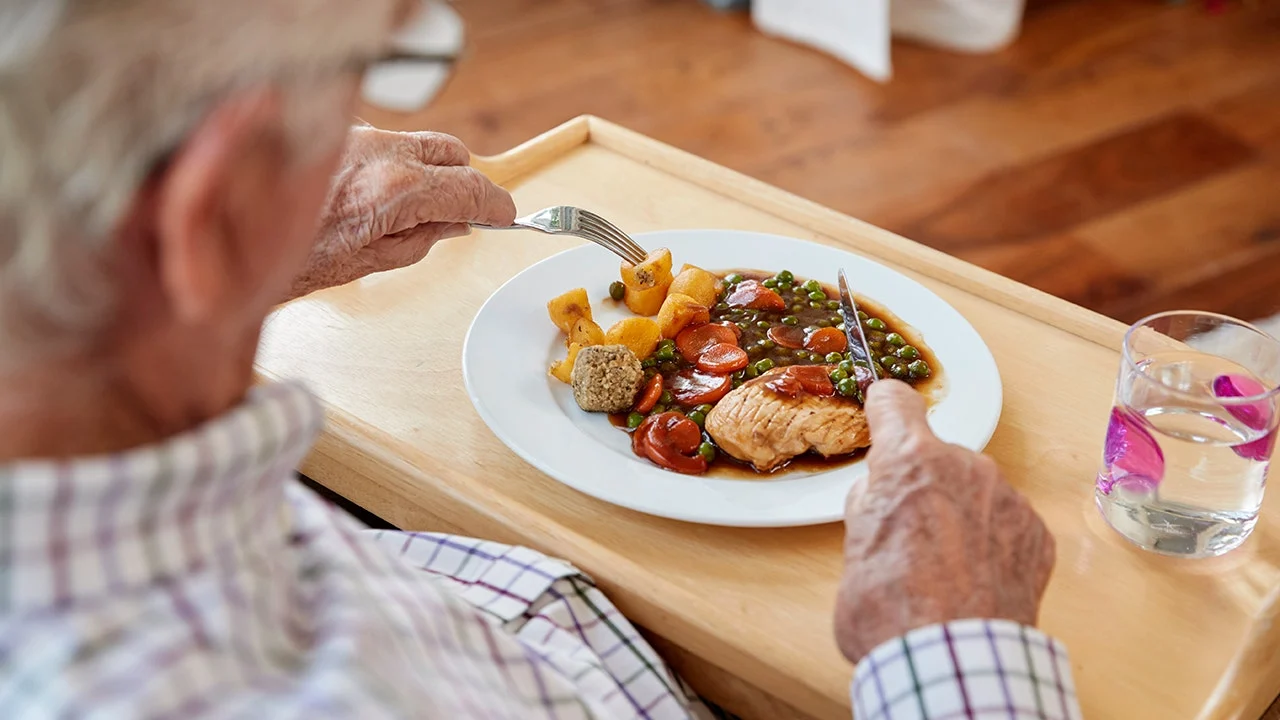
Over shoulder view of senior man eating dinner at home
Reframing the Aging Process
The single greatest barrier to longevity is the belief that aging requires a slow slide into frailty. Wright emphasizes that preparing for independent senior living must start during your 30s and 40s rather than waiting for retirement.
Adult children should also initiate honest, proactive conversations with aging parents about home support, community programs, and meal assistance before crisis strikes. Relying on modest daily assistance allows older adults to preserve personal dignity while staying firmly where they belong: at home.
💬 Maintaining physical independence requires consistent daily practice rather than sudden interventions.
✨ By combining strength training, adequate protein intake, and active mobility, remaining self-reliant into your 80s and 90s becomes an achievable reality.
👇 Have you or your family started planning habits for aging in place? Drop your thoughts in the comments below!
 1
 2
 3
 4
