
The Margot Robbie Likeness Paradox: How Hollywood’s Obsession with Her Image Collided with an Explosive AI Screen Dispute

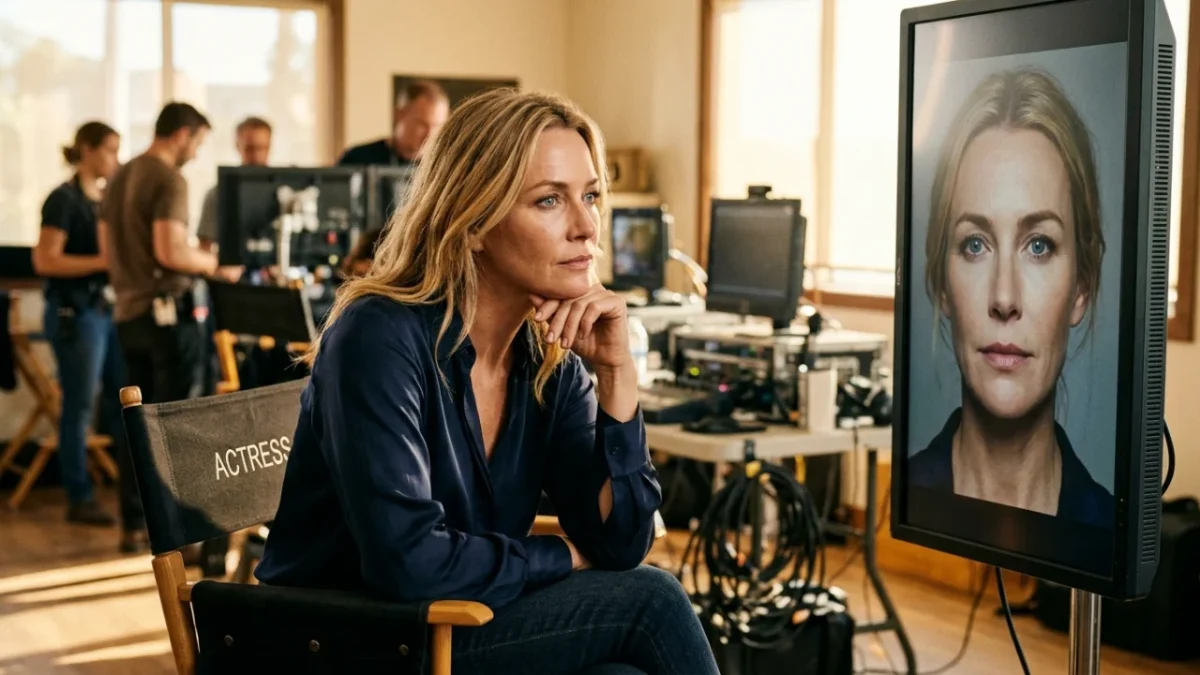
Hollywood’s long-standing obsession with capturing the singular aesthetic of Margot Robbie has collided with an unprecedented industry showdown over digital doubles, archival rights, and performer consent. The fight erupted after production giant Fremantle partnered with RoseBerry Media to transform early television archives into an artificial intelligence-driven mobile microdrama built entirely around the Australian star.
While audiences have spent years discussing uncanny look-alikes across casting calls and red carpets, the entertainment industry is now grappling with a far more contentious reality: the automated repackaging of an actor’s actual face, performance, and presence for short-form mobile platforms.
The venture relies on proprietary AI technology to reshape classic broadcast performances into vertical telephone formats, triggering an immediate backlash from original cast members who warn that the boundary between genuine acting and unauthorised digital mining has dissolved.
The Screen Doppelgänger Effect and the Hunt for Star Power
For more than a decade, casting directors and moviegoers have marvelled at the striking prevalence of the Margot Robbie likeness across major studio releases. The visual archetype that propelled Robbie from suburban Melbourne to global A-list status has repeatedly surfaced in casting trends, creating sudden viral debates whenever similar-looking performers secure prominent studio leads.
Yet the commercial appetite for her image has migrated far beyond traditional casting rooms. As studios navigate an increasingly fragmented digital landscape, executive suites are treating bankable screen likenesses as finite commodities that must be repurposed across fresh distribution models.
That hunger for recognizable celebrity identity sits at the core of the vertical screen boom, where mobile-first entertainment platforms are actively transforming into a global commercial powerhouse.
- The vertical television explosion: Mobile-optimised microdrama serials, which feature episodes lasting roughly sixty seconds, grew into an industry estimated to be worth up to $15bn globally.
- The archive extraction model: Legacy production companies are seeking fresh revenue streams by mining extensive catalog reserves rather than financing risky new productions.
- Digital reframing pipelines: Automated machine learning software now reformats traditional horizontal television into vertical phone streams in minutes.
Industry executives quickly realised that an established global name could instantly monetise these microscopic formats.
The RedSnapper Controversy: Dissecting the AI Microdrama Venture
The controversy crystallised when RoseBerry Media began deploying an AI-assisted production system known as RedSnapper to carve out roughly 150 minutes of vertical mobile content from Robbie’s formative acting era. The project centres strictly on the character of Donna Freedman, whom Robbie portrayed between 2008 and 2011 on the long-running serial Neighbours.
Fremantle commercial and international chief executive Jens Richter hailed the move as an inventive commercial breakthrough, describing it as an exciting method to unlock fresh value from historical catalog libraries. However, original performers whose characters were drawn into those recut scenes discovered the venture only through media announcements.
Veteran screen actor Stefan Dennis publicly condemned the rollout as unbelievably invasive, morally and legally wrong, lamenting that performers appeared powerless to arrest the corporate machine behind it. Fellow co-star Matthew Werkmeister, who featured heavily in Robbie’s primary romantic storylines as Zeke Kinski, warned that older contractual frameworks never contemplated modern machine learning.
Werkmeister emphasised that when he signed his initial contracts at 13 years of age, artificial intelligence and streaming architectures did not exist. He labelled the automated repackaging of his teenage image an unapproved exploitation, questioning whether Fremantle had directly approached Robbie herself before leveraging her international profile.
Defending the Tech: Where Does the Boundary Lie?
Fremantle has mounted a firm defence of the technical pipeline, insisting that the RedSnapper system does not synthesize performances or generate fabricated visual doubles. According to company representatives, the deployment of machine learning is limited strictly to structural analysis and aesthetic alterations:
- The software reframes horizontal scenes into vertical compositions without creating synthetic actors or artificial voice tracks.
- The project relies exclusively on previously broadcast performances, dialogue tracks, and certified original scenes.
- Human visual editors retain final editorial review, approving every cut before release on the Epis mobile platform.
Despite those assurances, talent representatives in Los Angeles and the UK point out that reframing historical footage shifts the context of a performer’s work without direct consultation. Talent manager Mattie Webb, acting for actor Sam Clark, revealed that US actors’ union SAG-AFTRA was examining the situation, noting that managers now spend entire working weeks confronting deepfake footage and automated image disputes.
Regulation, Residuals, and Performer Autonomy
The dispute has accelerated union intervention across international borders. Australia’s primary entertainment body, the Media, Entertainment and Arts Alliance (MEAA), initiated legal consultations to prevent performer contributions from being exploited without clear consent or updated residual structures.
MEAA acting chief executive Adam Portelli called for robust regulatory frameworks to guarantee that legacy contracts cannot be stretched beyond their original intent. Similar concerns echo across the British film and television sectors, where unions continue to demand tighter contractual safeguards surrounding performer likenesses and automated editing pipelines.
As studios explore everything from digital doubles to vertical recuts, the central debate remains unchanged: does a contract signed decades ago grant corporate distributors the right to endlessly alter a performer’s physical identity for algorithmic viewing?
💡 The rapid normalisation of automated reframing proves that Hollywood’s pursuit of a marquee screen presence has entered uncharted technical territory.
🔍 As digital tools outpace legacy contract law, safeguarding the physical and digital integrity of actors remains the most contested frontier in modern entertainment.
📌 The line between celebrating a star’s cultural footprint and commercially mining their image without consultation is thinner than ever before.
👇 Do you believe production houses should be allowed to recut historical performances using AI tools without fresh actor approval? Share your thoughts below.
 1
 2
 3
 4