
The Spaceplane Playbook: How Modern Reusable Orbiters Launch, Endure Mach 25 Re-Entry, and Glide Back to a Runway

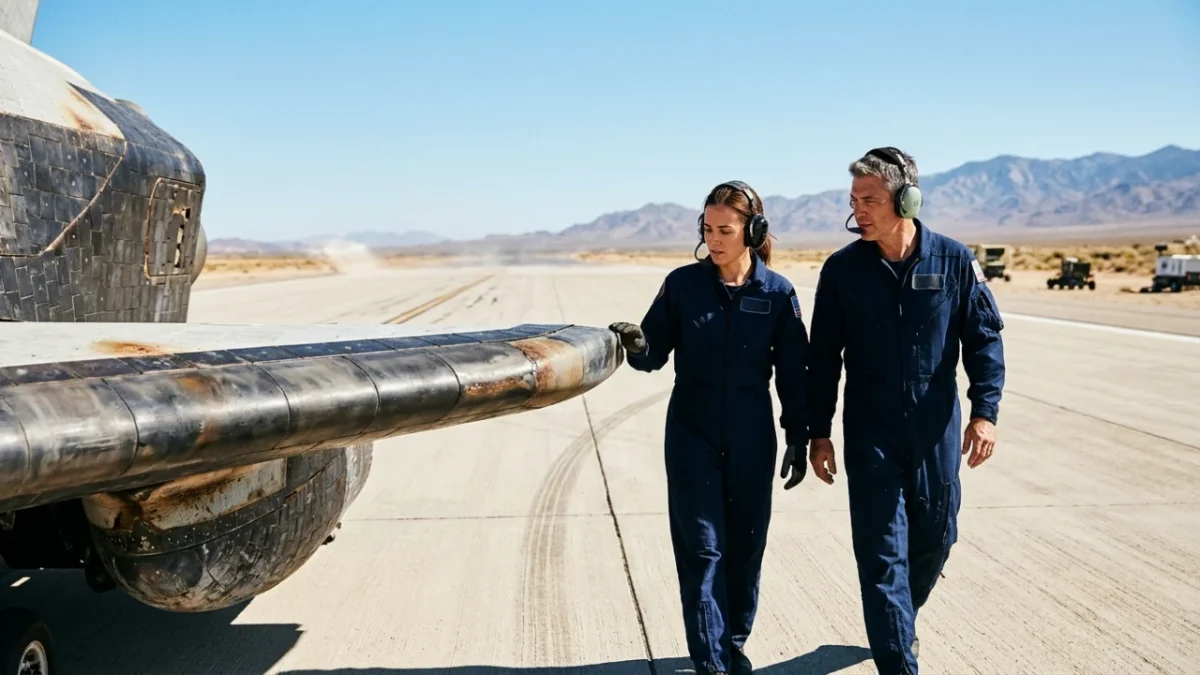
A modern spaceplane bridges the gap between commercial aviation and orbital spaceflight by launching beyond Earth’s atmosphere, executing long-duration orbital duties, and returning to touch down horizontally on a standard runway. Unlike traditional capsule-style spacecraft that splash down into oceans under parachutes, a spaceplane relies on aerodynamic lift surfaces to glide safely home through hypersonic friction.
These hybrid craft serve critical niches in satellite deployment, microgravity testing, and long-range orbital reconnaissance. Their distinctive profile demands a delicate balance: carrying enough thermal shielding to withstand atmospheric re-entry while remaining light enough to sustain extreme orbital velocities.
Understanding how a spaceplane transitions from a vertical rocket launch into a delicate runway glider reveals why aerospace engineers consider winged orbiters the ultimate test of aerodynamic engineering.
How a Spaceplane Launch Differs From a Traditional Capsule
Most traditional spacecraft sit atop a rocket stack, launch vertically, and drop spent stages into the ocean before returning inside blunt-body capsules. A spaceplane, however, transforms the end-to-end mission cycle by prioritizing airframe reuse and precise, runway-based recovery.
During a vertical launch, the spaceplane is mounted either encapsulated within an aerodynamic payload fairing or exposed directly on the rocket’s nose. The launch vehicle must overcome high atmospheric drag caused by the vehicle’s wings before placing the orbiter into low Earth orbit.
The most critical design compromise in any spaceplane mission is carrying aerodynamic wings to orbital velocity, where they serve zero function until the final thirty minutes of flight.
Once freed from the primary booster, the spaceplane relies on internal thrusters and reaction control systems to fine-tune its trajectory. Free of atmospheric friction, aerodynamic surfaces become useless, leaving cold-gas thrusters and hypergolic engines to control pitch, yaw, and roll in the vacuum of space.
Vertical Ascent vs. Horizontal Carrier Air-Launch
Engineers generally employ one of two launch architecture models depending on vehicle mass and mission profile:
- Vertical Rocket Stacking: The orbiter mounts atop a conventional heavy-lift booster, harnessing immense vertical thrust to punch through the thick lower atmosphere directly into orbit.
- Horizontal Carrier Staging: A massive mothership aircraft flies the spaceplane to high altitudes before releasing it mid-air, allowing the craft’s rocket engines to ignite away from ground-level air resistance.
Both methods aim to minimize acoustic damage and mechanical stress on the delicate exterior thermal tiles that protect the airframe during the journey home.
Inside an Orbital Mission: Long-Duration Flight and Extreme Re-Entry
Once stabilized in orbit, spaceplane missions can span months or even years depending on fuel reserves and automated systems. Equipped with solar arrays or fuel cells, uncrewed platforms operate as reusable laboratory bays, testing everything from advanced navigation sensors to radiation shielding materials.
When the mission concludes, retro-rockets fire to decelerate the craft just enough to dip its trajectory back into Earth’s upper atmosphere. This descent initiates the most dangerous phase of flight.
As the craft hits the atmosphere at approximately Mach 25, compressed air superheats around the nose and leading wing edges. Temperatures can exceed 3,000 degrees Fahrenheit, requiring specialized carbon-composite panels and ceramic insulation tiles to protect the underlying structure.
Capsule Splashdowns vs. Spaceplane Landings
Public perception often conflates capsules and winged spacecraft, assuming both handle re-entry identically. The operational reality involves completely distinct aerodynamic principles and logistical footprints.
| Operational Factor | Spaceplane Architecture |
|---|---|
| Atmospheric Return | Controlled hypersonic glide using aerodynamic lift |
| Touchdown Dynamics | Horizontal roll-out on conventional military or commercial runways |
| Cross-Range Mobility | High lateral steering capability to choose alternative landing strips |
| Payload Retrieval | Immediate, clean ground access without oceanic recovery fleets |
| Structural Reuse | Airframe remains intact without corrosive saltwater contamination |
The primary myth surrounding spaceplanes is that their wings make them fly like traditional jet airliners during descent. In reality, an unpowered spaceplane returns as a heavy, high-speed glider with a steep descent angle, giving pilots or automated flight computers exactly one attempt to line up and touch down.
Because the vehicle carries no active jet propulsion during landing, energy management is uncompromising: excess altitude must be bled off through planned S-turns before the wheels make contact with the tarmac.
The Future of Winged Orbital Flight
Spaceplanes bridge the physical gap between commercial runway infrastructure and low Earth orbit, simplifying mission turnaround times. As ground crews streamline the inspection and replacement of thermal protection tiles, these orbiters point toward a future where access to space mirrors the regularity of heavy cargo logistics.
💬 Winged orbiters continue to push the boundaries of materials science, autonomous navigation, and atmospheric dynamics.
✨ The dream of runway-to-orbit operations remains one of aviation’s most challenging technical frontiers.
👇 Do you think runway landings will eventually replace ocean splashdowns for all orbital missions? Drop your thoughts in the comments below!
 1
 2
 3
 4
