
TikTok’s Viral “Brain Stacking” Craze Has Millions Swapping Feeds for Paper: Inside the Surprising Antidote to Digital Burnout

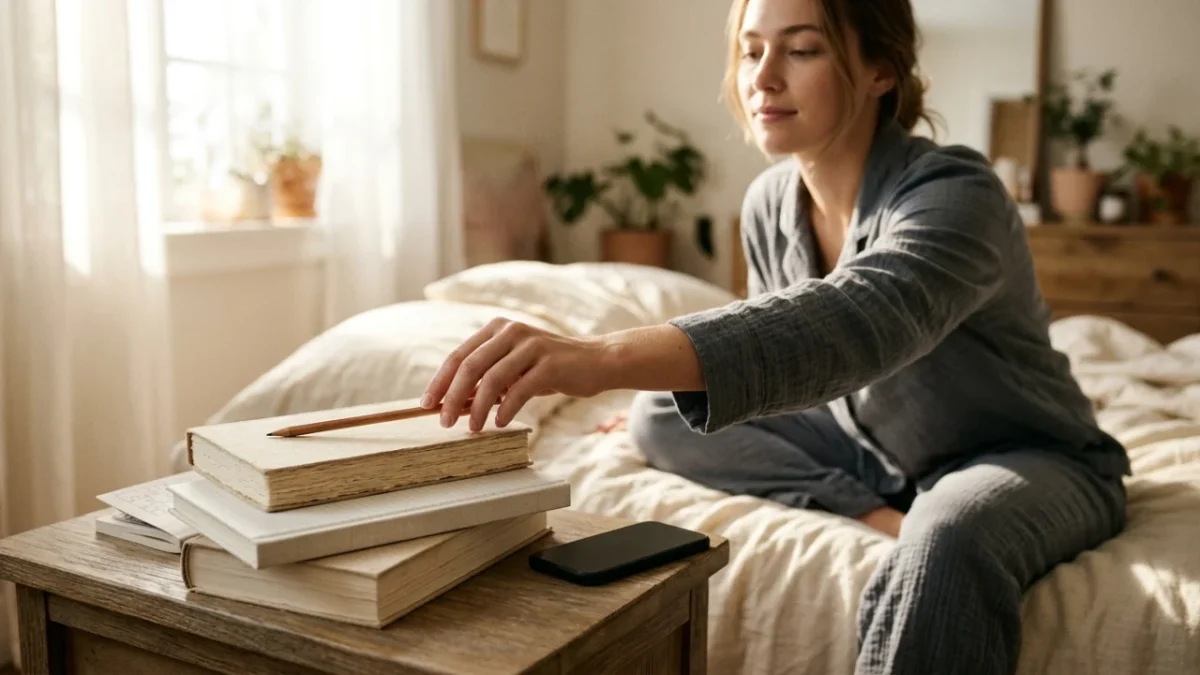
Viral feeds across TikTok are being overwhelmed by an unexpected antidote to screen fatigue known as brain stacking, where users deliberately assemble physical towers of paperbacks, crosswords, and journals to break the compulsive loop of endless scrolling. The practice requires placing mentally stimulating, tactile activities directly within arm’s reach to disrupt the automatic impulse to tap open an app.
Instead of unlocking a glowing screen during idle moments, individuals pick up an analogue challenge.
The habit transforms ordinary bedside tables and desks into deliberate sanctuaries against mental exhaustion. What began as individual creators documenting their evening downtime has quickly evolved into an organised counter-movement targeting the cognitive weariness of modern digital habits.
How Creators Turned Tactile Pastimes into a Viral Ritual
The mechanics of the trend rely on absolute simplicity rather than complex wellness regimes. Participants gather a small selection of non-digital pursuits—typically Sudoku booklets, narrative novels, logic puzzles, or blank notebooks—and position them in the exact spots where they normally leave their smartphones.
The phrase itself gained traction through creator @mandyrulez, widely celebrated online as the community’s “brain stack queen” after demonstrating how grouping varied analogue items created an irresistible alternative to digital consumption. Following that blueprint, lifestyle creator @shykikii shared an evening regimen combining reflective journaling, Sudoku, and long-form reading before sleep, catalysing widespread imitation.
Rather than aiming for immediate intellectual breakthroughs, the objective is far more grounded.
The technique serves as a direct intervention against doomscrolling and its lighter counterpart, bloomscrolling, redirecting restless focus toward tasks that demand concentration, tactile engagement, and authentic critical thinking.
From the “Analog Bag” to Morning Productivity Blocks
The phenomenon represents a domestic evolution of earlier offline trends. Last year, creator Siece Campbell helped popularise the “analog bag” movement, encouraging individuals to pack tote bags with knitting gear, puzzles, and paperbacks to avoid mobile usage while on the move.
Where the tote bag offered mobile defence against public scrolling, TikTok brain stacking secures the home environment. Creators now design timed morning routines around their stacks, using solitary writing exercises and crosswords to stimulate their minds before engaging with morning notifications.
This routine connects directly to a broader renaissance of tactile hobbies, where enthusiasts actively embrace physical formats:
- Tangible media revival: Vinyl records, printed novels, and traditional print journalism replacing algorithmically generated feeds.
- Vintage photography: Film cameras regaining dominance over instant smartphone lenses to encourage patience and deliberate composition.
- Deliberate craft work: Knitting, embroidery, and bespoke sketching—frequently dubbed traditional leisure crafts—providing manual focus without screen glare.
The Cognitive Pushback Against Algorithmic Exhaustion
The rapid rise of the practice highlights an escalating public conversation surrounding fragmented attention spans and compulsive device checks. The constant barrage of push notifications and algorithm-driven clips has left many struggling to engage with sustained narratives.
Analogue stacks establish physical friction between the user and their digital dependencies.
By forcing the hands to pick up a physical pen or turn a paper page, the routine interrupts the subconscious reflex of continuous refreshing. The brain is gently guided back into single-task immersion, reducing the sensory overload associated with relentless micro-content.
The Paradox of Off-Screen Culture Thriving Online
A striking contradiction sits at the very heart of the movement: the vast majority of participants discover their screen-free hobbies precisely because an algorithm served them a video on an application. Millions watch stylised clips of bedside tables to learn how to stop looking at those exact clips.
This visibility introduces the familiar pitfall of aesthetic commercialism.
Social media feeds frequently commercialise basic mindfulness, tempting viewers to purchase pristine designer notebooks, imported fountain pens, and colour-coordinated puzzle collections to build the “perfect” bedside display. Yet experienced participants point out that an old paperback, a half-used jotter, or a puzzle clipped from a morning newspaper delivers the exact same psychological relief without spending a single penny.
💡 The real measure of success is not how attractive the stack appears in a video, but how long the screen remains turned off once the morning begins.
🔍 Reclaiming your attention span rarely requires costly accessories or complex lifestyle overhauls—just the willingness to trade passive digital consumption for a few quiet pages of ink and paper.
📌 Choosing analogue engagement over automated scrolling provides an immediate, tangible boundary against burnout.
👇 Have you tested brain stacking on your own nightstand, or do you find digital habits too hard to break? Share your experience in the comments below.
 1
 2
 3
 4