
Why Top Female Executives Are Hitting the Brakes on AI and Rebuilding Their Wealth Strategies from the Inside Out



Janine Rubenstein, Amanda Agati, and Kameryn Stanhouse
Artificial intelligence might dominate corporate headlines, but financial power players are tapping the brakes on letting algorithms steer their money. During the Formula 1 United States Grand Prix in Austin, Texas, top financial and tech leaders delivered a blunt reality check on building wealth: tech tools can handle data crunching, but sustainable growth still demands tactical human judgment and a battle-tested support network.
The conversation took center stage at a panel titled “Who’s in Your Pit Crew: Building Wealth for the Long Run,” hosted by The Female Quotient in collaboration with F1 Academy and sponsored by PNC. Moderated by People editor-at-large Janine Rubenstein, the session brought together Amanda Agati, chief investment officer for the Asset Management Group at PNC, and Kameryn Stanhouse, vice president of global sports and entertainment partnerships at IBM.
Together, they mapped out why rushing headfirst into digital trends can backfire—and what it actually takes to stay financially agile when market dynamics move at full throttle.

Janine Rubenstein, Amanda Agati, and Kameryn Stanhouse speak on the panel
Why Wall Street Is Putting AI in the Passenger Seat
Market sentiment around artificial intelligence has swung violently from euphoria to caution. While early hype treated automated tools as an unstoppable money-maker, institutional managers are approaching portfolio allocations with fresh restraint.
Agati pointed directly to rapid policy shifts in Washington and volatile trading patterns as core reasons to slow down. Investors, she noted, spent months going all-in on tech disruption, only to hit the brakes as questions about governance and noise reduction surfaced.
“We have not gone to a place in our investment world where AI is in the driver’s seat making decisions. It sits alongside our portfolio managers. It has made recommendations. …I don’t expect us to go all-in on AI [and get] rid of my entire investment team, but we will lean further into use cases that make us faster, better.”
Rather than letting algorithms dictate long-term capital preservation, institutional teams treat machine learning as an efficiency partner. It streamlines execution without stripping human oversight from high-stakes financial choices.

A tote bag that reads “Women are not just in the race—they’re leading it”
Automating Tedium Without Losing Your Edge
For legacy institutions that prize tradition—like the Masters Tournament and Wimbledon—adopting cutting-edge workflows often triggers skepticism. Stanhouse manages partnerships with these historic brands and sees high-performance sports as the entry point for proving the utility of next-generation tools.
Real-time player tracking and instant data modeling simply cannot happen fast enough through manual logging. Yet when teams fear technological replacement, Stanhouse recommends mapping out day-to-day duties to isolate mundane burdens from high-value relationship building.
“Eighty percent of the things we hated could be managed by A.I. That wasn’t taking someone’s job. That was creating efficiency and allowing people to focus their time on the things that matter most and fill their heart.”
Practical Tech Adoption: A Two-Track Strategy
- Target Repetitive Reporting: Offload data compiling, administrative summaries, and basic scheduling to automated platforms.
- Protect Personal Data: Weigh identity risks carefully before handing over sensitive credentials, personal passwords, or financial keys to consumer applications.
- Double Down on Real Connection: Reinvest recovered hours into direct client pitches, high-touch contract negotiations, and career sponsorships.
While Stanhouse utilized an invite-only platform called Instinct to coordinate vendor negotiations, travel reservations, and courthouse appointments for her wedding, Agati remains deeply hesitant on personal platforms after experiencing identity theft in recent years. Tech adoption remains a calculated trade-off between personal bandwidth and security.
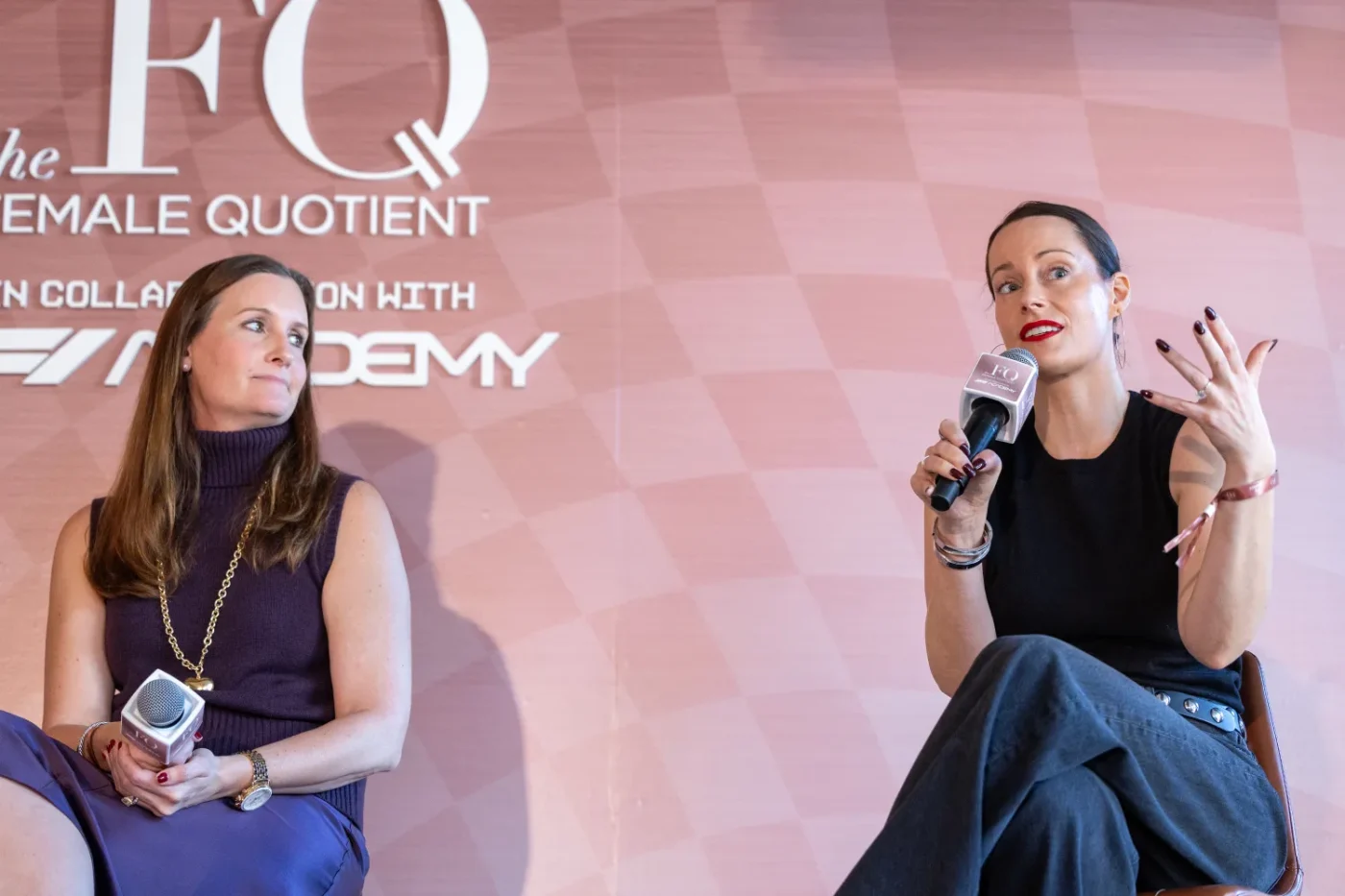
Amanda Agati and Kameryn Stanhouse
The Myth of the Solo Hustler
A widespread misconception across corporate culture is that financial self-reliance means doing everything in isolation. Both executives shattered that assumption, stressing that long-term career resilience requires an intentional advisory network.
| Traditional Solo Mindset | Strategic Wealth Crew |
|---|---|
| Believing one person must manage all tasks alone | Relying on mentors, coaches, and personal confidants |
| Chasing volatile home runs for instant gains | Prioritizing steady singles and doubles for long-term growth |
| Avoiding workflow changes to minimize mistakes | Embracing calculated discomfort to accelerate career progress |
Agati confessed that earlier in her career she felt pressure to manage every burden solo before realizing vulnerability is a prerequisite for compounding progress. Surrounding yourself with peers from unrelated industries delivers outside perspective on salary negotiations, leadership challenges, and major career pivots.
Risk Tolerance: Singles and Doubles Over Home Runs
When it comes to financial portfolios, capital stage dictates tactical exposure. Agati pointed out that wealth creation requires a fundamentally different strategy than wealth preservation.
While institutional portfolio leaders operate with specialized information edges, everyday wealth builders win by staying grounded. Instead of hunting for speculative jackpots, long-term stability is secured through measured, consistent gains—stacking singles and doubles rather than striking out swinging for home runs.
In the workplace, however, Stanhouse argues that playing it too safe guarantees stagnation. Within historic organizations, pushing past legacy habits and operating in an uncomfortable zone—aiming to be 10 percent comfortable and 90 percent uncomfortable—builds the exact muscle needed to advance.
💬 Strategic finance isn’t about chasing every tech trend—it’s about knowing who stands in your corner when the market shifts.
✨ Cultivating genuine advisers while treating automation as a tool, not a savior, keeps your long-term goals on track.
📱 How are you balancing tech adoption with your own financial pit crew? Drop your thoughts in the comments below!
 1
 2
 3
 4
