
An 18-Million-Year-Old Fossil Jaw Found in Egypt Upends the Timeline of Ape Evolution and the Geographic Roots of Humanity

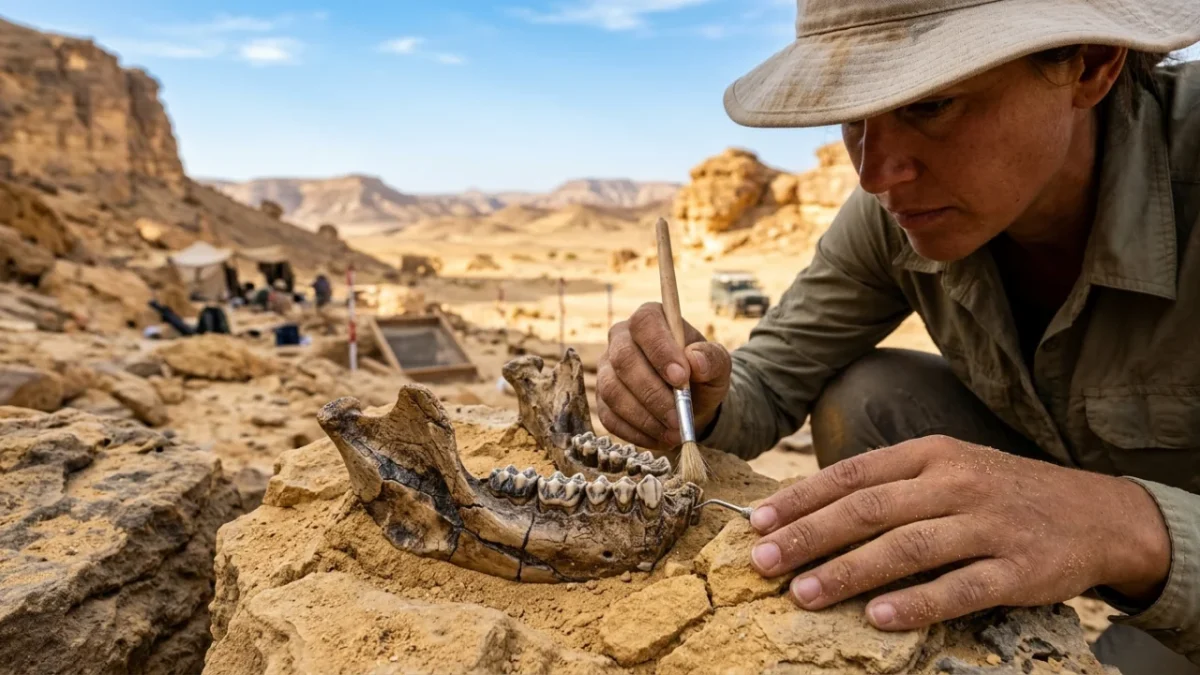
An 18-million-year-old ape jaw unearthed in Egypt is completely upending decades of textbook science. The newly identified species proves that the ancient evolutionary roots of modern apes and humans trace back to North Africa and the Middle East, directly challenging the long-held belief that East Africa was the sole birthplace of our earliest primate ancestors.
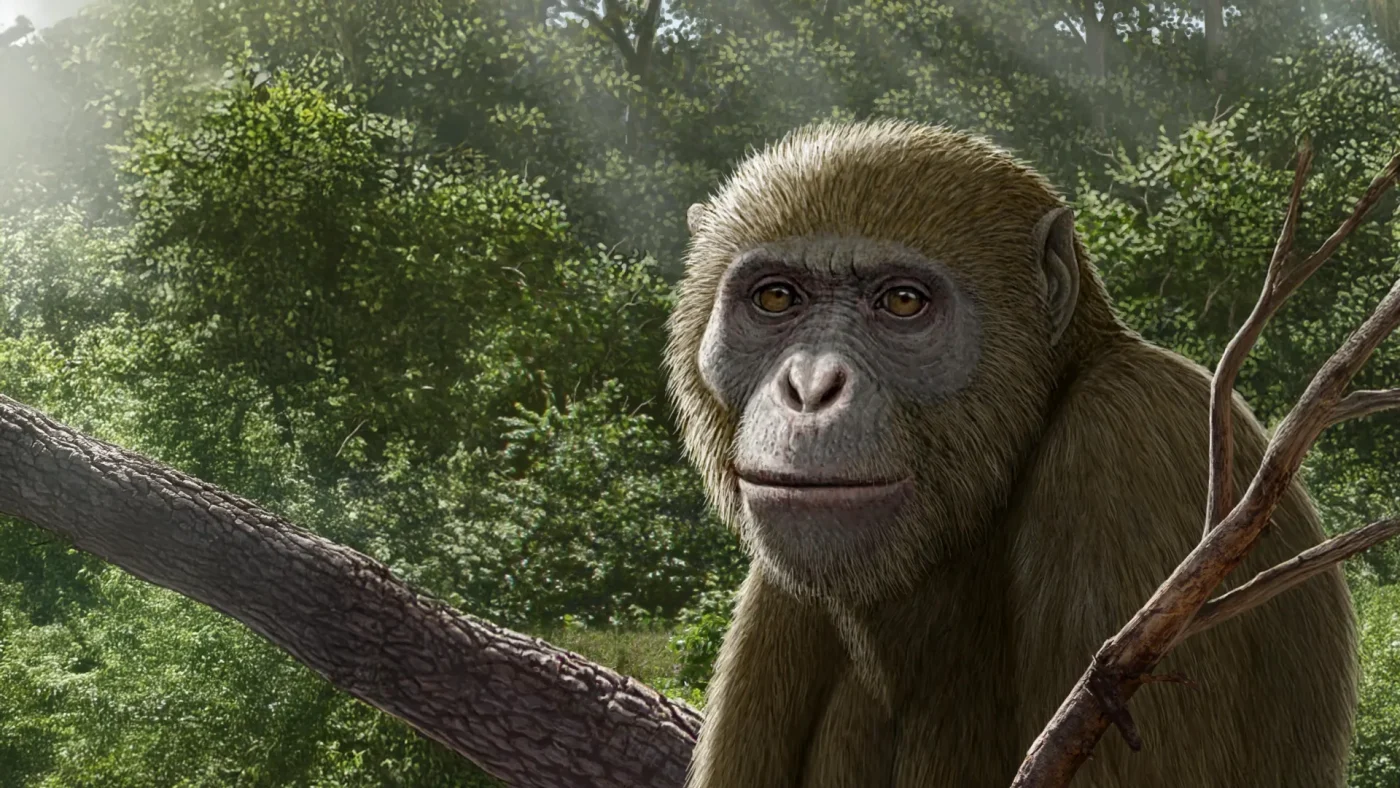
The landmark find, officially named Masripithecus moghraensis, represents the first definitive fossil ape ever discovered in North Africa. Unearthed from the windswept badlands of Wadi Moghra in northern Egypt, the specimen dates to the Early Miocene epoch, between 17 and 18 million years ago.
Detailed in a study published in Science, the discovery stems from a joint expedition by researchers at the Mansoura University Vertebrate Paleontology Center in Egypt and the University of Southern California in Los Angeles. Their rigorous anatomical and statistical modeling suggests that the ultimate cradle of all living apes was positioned much farther north than previously acknowledged.
The Landmark Find in the Egyptian Desert
For more than half a century, the fossil trail for the earliest hominoids ran almost exclusively through equatorial and eastern regions of the African continent. North African dig sites produced ancient monkey bones from the Early Miocene, but true ape specimens remained completely absent from the fossil record.
That persistent absence created a massive blind spot in evolutionary trees, leaving researchers to guess how early apes dispersed into Eurasia.
“We spent five years searching for this kind of fossil because, when we look closely at the early ape family tree, it becomes clear that something is missing — and North Africa holds that missing piece,” said Hesham Sallam, a paleontologist at Mansoura University and senior author of the study.
The discovery provides critical evidence regarding the origins of crown Hominoidea. This evolutionary category includes the last shared ancestor of every living ape today: gibbons, orangutans, gorillas, chimpanzees, and humans.
Breaking the East Africa Monopoly: A Scientific Myth Busted
A widespread assumption across modern paleontology was that East Africa was the solitary engine driving early ape diversification. While later fossils have surfaced across Europe and Asia, conventional wisdom maintained that the critical early lineage emerged exclusively south of the Sahara.
The discovery of this ape fossil Egypt site directly shatters that narrative. The Egyptian specimen shows a closer evolutionary link to living apes than any known ape species recovered from the Early Miocene beds of East Africa.
“For my entire career, I considered it probable that the common ancestor of all living apes lived in or around East Africa. But this new discovery, and our new and novel analyses of hominoid phylogeny and biogeography, now strongly challenge that idea,” explained co-author Erik Seiffert, a paleontologist at the University of Southern California.
Advanced Bayesian Modeling Traced the True Ancestral Map
To verify the placement of the Egyptian jaw on the primate family tree, the international research team used sophisticated Bayesian statistical methods. This analytical approach combined three distinct lines of evidence:
- Detailed anatomical measurements from both living and extinct ape species
- Comprehensive genetic datasets extracted from modern living hominoids
- Precise geological dating benchmarks to calculate evolutionary divergence timelines
The resulting biogeographic model pinpointed northern Africa and the Middle East as the most statistically probable origin zone for the shared ancestor of all living hominoids between 23 million and 16 million years ago.
| Fossil Attribute | Scientific Finding |
|---|---|
| Species Identification | Masripithecus moghraensis |
| Geological Age | 17 to 18 million years old (Early Miocene) |
| Discovery Location | Wadi Moghra, Northern Egypt |
| Preserved Material | Lower jaw with large canines and textured molars |
| Evolutionary Significance | First definitive ape fossil from North Africa; closest relative to crown apes |
Built for Survival: A Crushing Bite and Seasonal Versatility
Although field researchers have only recovered lower jaw material so far, the bone structure tells an extraordinary story about prehistoric survival. The mandible is remarkably robust, housing unusually large canines and premolars alongside distinctively textured molars with rounded chewing surfaces.
These specific dental adaptations offered the animal an invaluable evolutionary edge as ancient African climates began shifting rapidly.
Researchers concluded that while the creature favored a fruit-rich diet, its powerful bite force allowed it to crush fibrous vegetation, hard nuts, and resistant seeds when seasonal droughts scorched the landscape. That dietary resilience allowed it to endure dramatic ecological changes that drove less adaptable species toward extinction.
The Ancient Tectonic Crossroads Between Continents
Geography was the deciding factor behind this evolutionary hub. During the Early Miocene, the Arabian and African tectonic plates pushed steadily northward toward their eventual collision with Eurasia.
Fluctuating sea levels exposed strategic land bridges between the continents. These land bridges transformed northern Africa and the Levant into an active wildlife corridor rather than an isolated desert fringe.
The existence of Masripithecus proves that apes were already diversifying into modern forms at this continental junction well before crossing fully into Europe and Asia. Rather than an evolutionary backwater, North Africa stood at the heart of our shared planetary origins.
💬 This single Egyptian jawbone is forcing scientists to redraw the map of our deepest evolutionary roots.
✨ As researchers continue excavations at Wadi Moghra, further fossil discoveries could reveal even more startling surprises about primate history.
📱 Did you expect the origins of our ancient ancestors to be rewritten outside of East Africa? Drop your thoughts in the comments below!
 1
 2
 3
 4
