
Brazil Presidential Election Runoff on Knife-Edge as Flávio Bolsonaro and Lula Lock in Dead Heat Following Historic First-Round Defeat

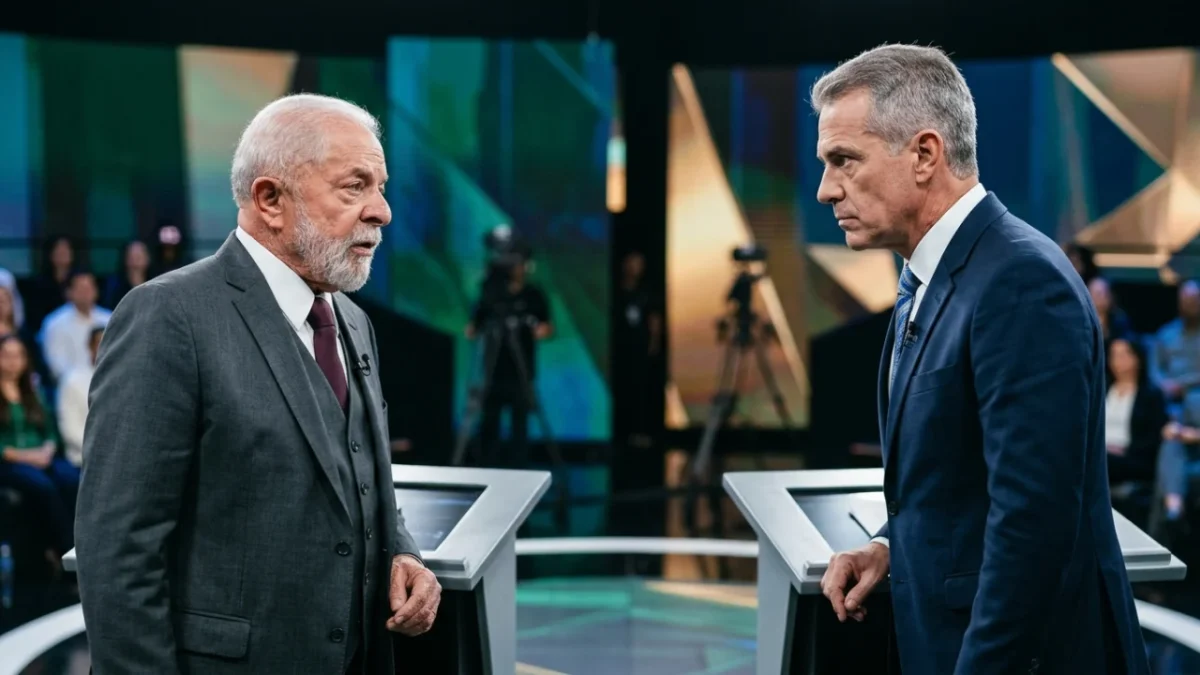
Leftist incumbent Luiz Inácio Lula da Silva and far-right senator Flávio Bolsonaro have reached a dead heat in the polls ahead of Sunday’s runoff, turning the Brazil presidential election into the tightest political showdown in South American history. After suffering an unprecedented first-round setback on 5 October, the 81-year-old president has narrowed the gap to fractions of a percentage point in a desperate bid to stage an upset never before seen in the nation’s democratic era.
The stakes extend far beyond policy. Senator Flávio Bolsonaro, who stood in place of his father Jair Bolsonaro, has publicly pledged that securing victory will lead immediately to a presidential pardon for his father, who remains under house arrest serving a 27-year sentence following a failed coup attempt.
With pollster Datafolha recording the two rivals neck and neck, the final outcome rests entirely on voter turnout across pivotal battleground regions.
The Minas Gerais Battleground and the Battle Over Abstentions
No presidential contender in modern Brazilian history has captured the presidency without winning Minas Gerais. The country’s second-largest electorate delivered a critical five-point advantage to Bolsonaro in the initial vote, turning the state into ground zero for both campaigns.
The incumbent’s campaign strategists have identified civic disengagement as their most dangerous obstacle. Nationally, abstention surged to a historic 21 per cent in the opening round, disproportionately sapping turnout among low-income communities, older citizens, and less-educated voters who form Lula’s core electoral base.
Strikingly, eight of the ten Brazilian municipalities recording the highest voter absenteeism are located directly within Minas Gerais.
Political scientist Manoel Leonardo Santos, a professor at the Federal University of Minas Gerais, observed that while the contest represents a virtual tie, Lula’s campaign has mounted a markedly stronger recovery throughout the second-round sprint. Grassroots activists have taken to door-to-door canvassing in state capital Belo Horizonte, targeting abstaining relatives and peeling away conservative voters hesitant about restoring the former administration’s dynasty.
How Lula Overhauled His Digital Machine to Erase the Deficit
Facing a deficit of nearly two percentage points after finishing behind his rival on 5 October—receiving 3.8 million fewer votes than his 2022 tally—Lula executed a total tactical pivot.
Despite not owning a personal smartphone, the octogenarian head of state began publishing direct selfie videos across social networks, taking strategic direction from younger, digitally native allies. Under the coordination of congressman André Janones, millions of supporters mobilised into a coordinated WhatsApp network dubbed “Lula’s Army”, which bypassed conservative dominance online for the first time in recent history.
Alongside digital disruption, the administration deployed aggressive state interventions designed to cushion household budgets:
- Accelerated welfare distributions: Pushing family cash-transfer payments forward to the maximum limits permitted under federal campaign finance laws.
- Labour reform momentum: Securing a legislative triumph in congress to implement a shorter working week affecting roughly 30 million private-sector employees.
- Targeted youth mobilisation: Harnessing spontaneous student-led street rallies across metropolitan hubs to counter apathy among first-time voters.
Conversely, Flávio Bolsonaro, who outperformed his father’s previous first-round tally by 5 million votes and oversaw a sweep across congressional and gubernatorial seats, has seen his personal rejection ratings tick upward during the closing weeks of campaigning.
Dynastic Stakes and the Conservative Coalition
The conservative movement is fighting aggressively to prevent complacency from eroding its narrow mathematical cushion. During a major rally featuring a 23-foot inflatable effigy of Jair Bolsonaro, newly elected Minas Gerais governor Cleitinho Azevedo warned the party faithful that victory was far from settled, demanding uninterrupted door-to-door campaigning.
Conservative voters maintain strong allegiance to religious messaging and traditional social policies. The younger Bolsonaro has consolidated vast swathes of evangelical congregations and working-class suburban voters, even among communities that previously benefited from historical government scholarship schemes.
The ultimate determination will hinge on whether Lula can achieve what no previous candidate has managed: overturning a first-round defeat on election night.
💡 The razor-thin polling numbers confirm that turnout among undecided and historically disengaged voters will settle the final balance of power within hours of the ballots closing.
🔍 As Brazil’s advanced electronic tally system prepares to release immediate returns, the international community is closely watching how institutional norms and economic stability will respond to the eventual winner.
📌 The contest represents a monumental test of whether an entrenched incumbent can deploy social policy victories fast enough to halt an insurgent political dynasty.
👇 How do you view this historic Latin American electoral showdown? Share your thoughts in the comments below.
 1
 2
 3
 4