
Driving a Nail Into Your Fruit Tree Trunk to Make It Produce Faster? Agricultural Experts Issue a Clear Warning About the Viral TikTok Gardening Hack

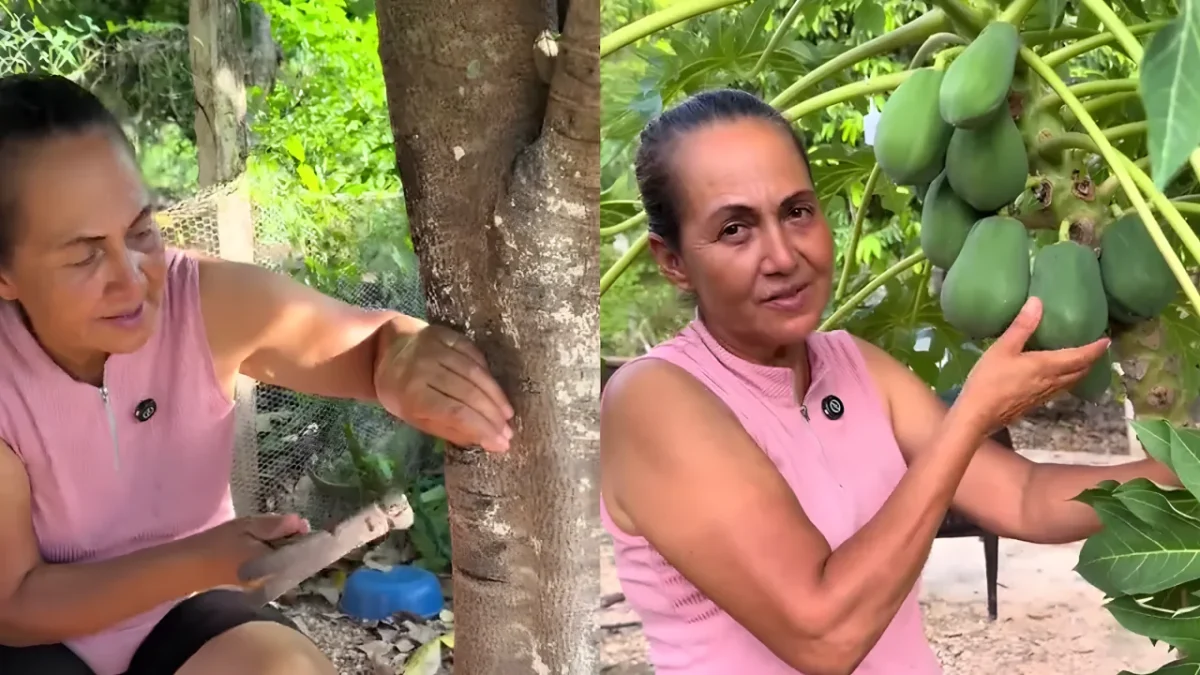
Hammering a metal nail into the trunk of a fruit tree will not guarantee a sudden, bountiful harvest—in fact, agricultural scientists warn that driving hardware into wood exposes your backyard orchard to severe rot and fungal disease. The controversial fruit tree nail hack circulating across social media claims that physically injuring a trunk shocks the plant into survival mode, triggering rapid flowering and early fruit production.
While the physiological idea of environmental stress influencing plant development is rooted in science, puncturing a trunk with metal creates an open wound that offers no documented yield benefit. Instead of accelerating fruit production, the stunt often leaves homeowners with a permanently damaged tree vulnerable to fatal infections.
The Viral Claim Behind the Trunk-Nailing Hack
The viral technique gained widespread traction when content creator Mariluz del Campo shared the unconventional trick on her TikTok channel, La granja de mis sueños (@lagranjademissue1). In her demonstration, she suggested that mechanically stressing the bark alters the tree’s growth priorities almost immediately.
“If you insert a nail into a fruit tree, it will start bearing fruit very quickly. This happens because the nail stresses it and creates a sense of danger, so the tree stops focusing on growing and focuses on ensuring its survival, which is why it starts producing flowers and fruits.”
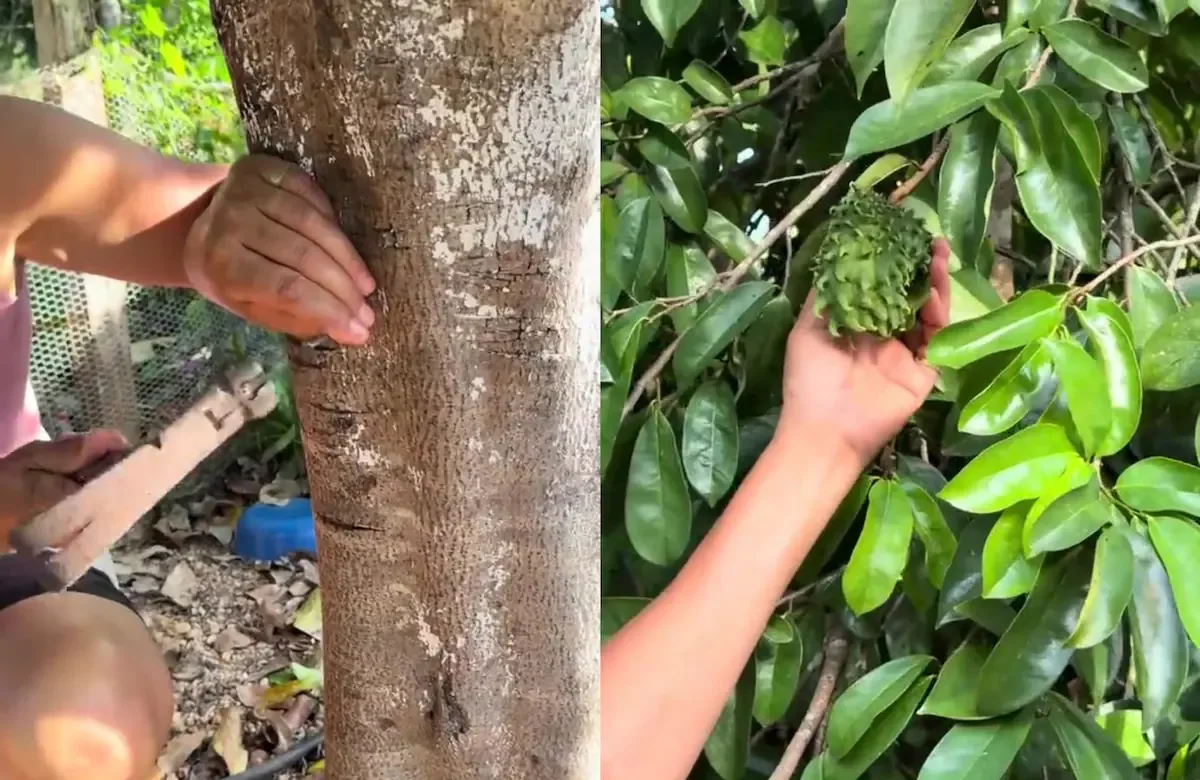
Mariluz del Campo demonstrates how to insert a nail into a fruit tree trunk.
Horticultural science does recognize that specific environmental pressures can prompt a shift from vegetative growth to reproductive flowering. However, inflicting random physical trauma through metal hardware does not guarantee blooms, nor does it ensure that any resulting flowers will set viable fruit.
What University Research Says About Trunk Wounds and Rot
Decades of research from leading agricultural extensions paint a very different picture than viral social clips. Controlled water stress can impact citrus bloom cycles, as outlined in technical findings by the University of Florida Institute of Food and Agricultural Sciences (UF/IFAS). Yet UF/IFAS researchers emphasize that stress responses vary dramatically by species and climate, noting that unmanaged stress causes blossom drop, root decline, and lost yields rather than a production miracle.
More critically, controlled deficit irrigation bears no resemblance to driving rusted metal through living tissue. Experts from the University of California Integrated Pest Management (UC IPM) program caution that mechanical wounds on trunks and limbs serve as primary access points for wood-decay fungi.
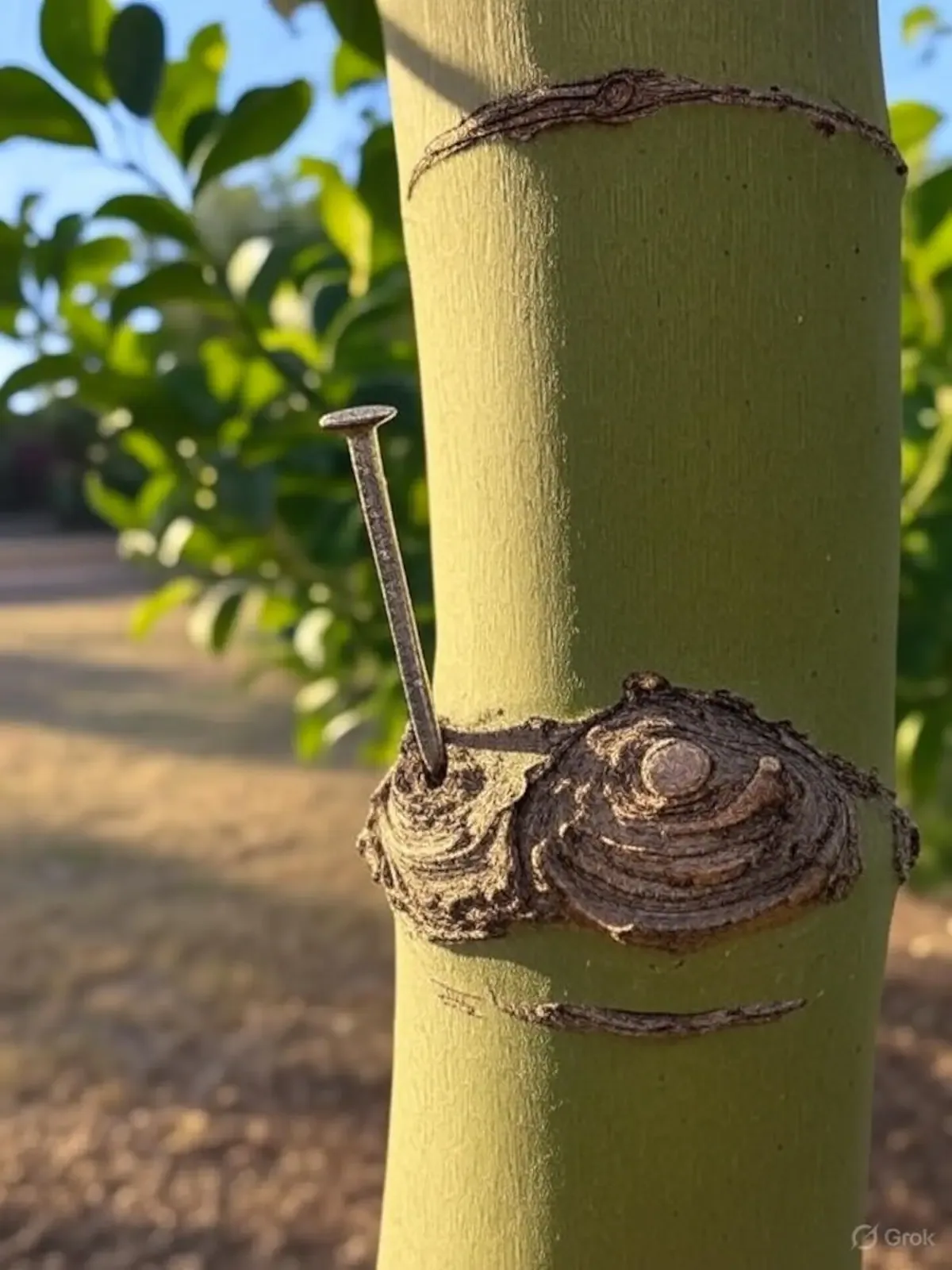
A metal nail inserted into the trunk of a lemon tree.
Piercing the bark disrupts vascular layers and introduces outside contaminants into the interior sapwood. Even if the specimen does not collapse immediately, the owner creates an unnecessary point of failure without gaining a proven harvest advantage.
| Viral Social Media Claim | Agricultural Science Reality |
|---|---|
| Trunk stress triggers survival instincts that rapidly produce heavy fruit. | Physical wounding creates entry pathways for rot-causing fungi without proven yield gains. |
| Driving a nail is an effective shortcut for non-bearing backyard trees. | Fruit delays usually stem from juvenile age, excessive nitrogen, or pruning mistakes. |
Why Your Fruit Tree Is Failing to Bloom
Before reaching for hardware, growers need to assess baseline cultural care. Specialists at Penn State Extension and the University of Florida report that poor or nonexistent fruit set typically stems from identifiable cultivation errors rather than stubbornness.
- Excess Nitrogen Fertilization: Applying too much high-nitrogen fertilizer stimulates aggressive leafy vegetative growth at the direct expense of bud development.
- Improper Pruning Cuts: Overly aggressive or poorly timed pruning removes fruiting spurs and throws the tree back into defensive foliage production.
- Pollination Breakdown: Incomplete cross-pollination or adverse weather during bloom prevents successful fruit set even when flowers appear.
- Subpar Environmental Siting: Deficits in direct daily sunlight, poor drainage, or root compaction compromise the plant’s overall energy reserves.
The Chronological Factor: Tree Age and Rootstocks
Patience remains the most overlooked element of backyard orcharding. Biological maturity schedules dictate when a tree can support a crop, regardless of home remedies.
According to cultivation benchmarks from the University of Minnesota, rootstock selection fundamentally controls the timeline:
- Dwarf Rootstock Varieties: Typically initiate fruit production early, often within two to three years of planting.
- Standard Full-Size Trees: Require a significantly longer maturation period, taking up to eight years before establishing consistent yields.
Sensible Steps Before Taking Extreme Measures
If your tree refuses to bloom, extension specialists recommend tackling root causes through a systematic evaluation:
- Identify the exact cultivar: Pinpoint the variety and its specific winter chilling requirements to verify suitability for your local climate.
- Check cross-pollination needs: Verify whether the tree is self-fertile or requires a complementary partner tree blooming at the identical time.
- Match cultural care to its growth stage: Scale back heavy fertilizers, optimize irrigation, and allow the tree to reach its natural biological bearing age.
✨ Skipping viral shortcuts protects your long-term backyard harvest from irreversible fungal infection.
💬 Relying on proven agricultural timing yields far sweeter results than driving nails into living wood.
👇 Have you ever tried an unusual trick to get your fruit trees producing? Share your experiences in the comments below!
 1
 2
 3
 4
