
Why Are Neighbors Putting Teal Pumpkins and Blue Buckets on Their Porches This Halloween? The Meaning Behind the Viral Colors

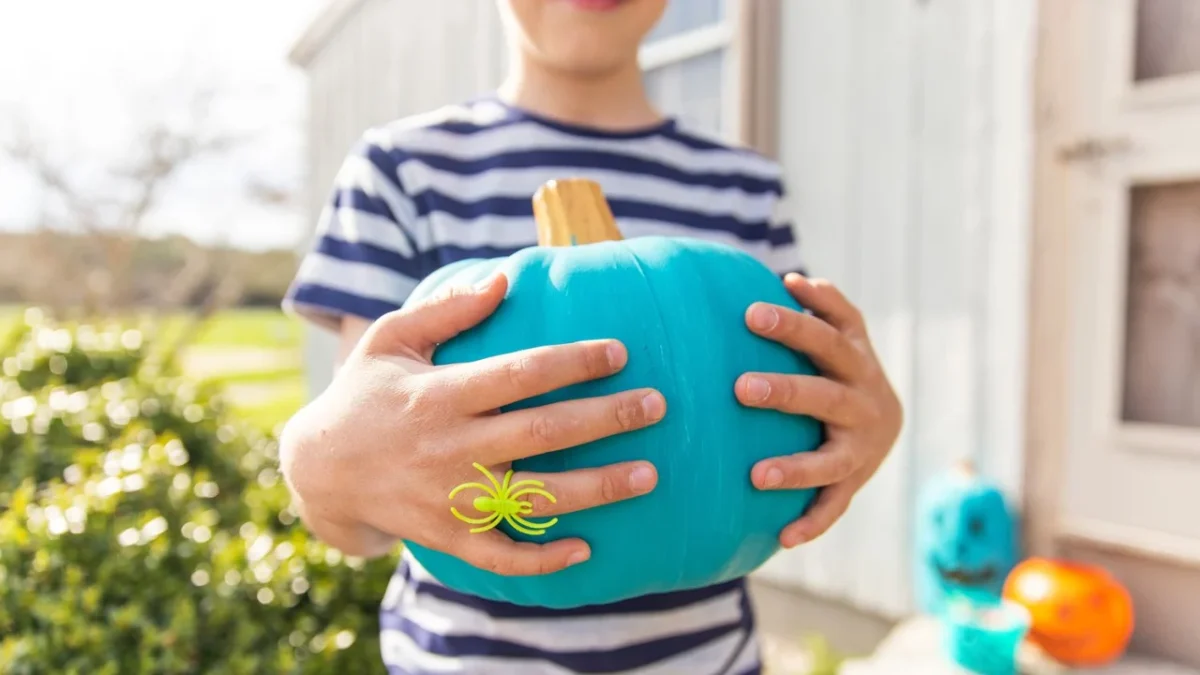
Halloween bucket colors and doorstep pumpkins are no longer just about spooky aesthetic choices: a teal pumpkin indicates a home has non-food treats safe for kids with severe allergies, while a blue bucket signals that a trick-or-treater may have autism.
Both color-coded movements were launched by mothers seeking safer, more inclusive neighborhood celebrations. Today, these vibrant shades are transforming porch traditions across the country.
Before stocking up on bulk candy bags or handing out standard chocolate bars, knowing how to interpret these silent cues can make all the difference for a child visiting your doorstep.
What Do Teal Pumpkins Mean on Halloween?
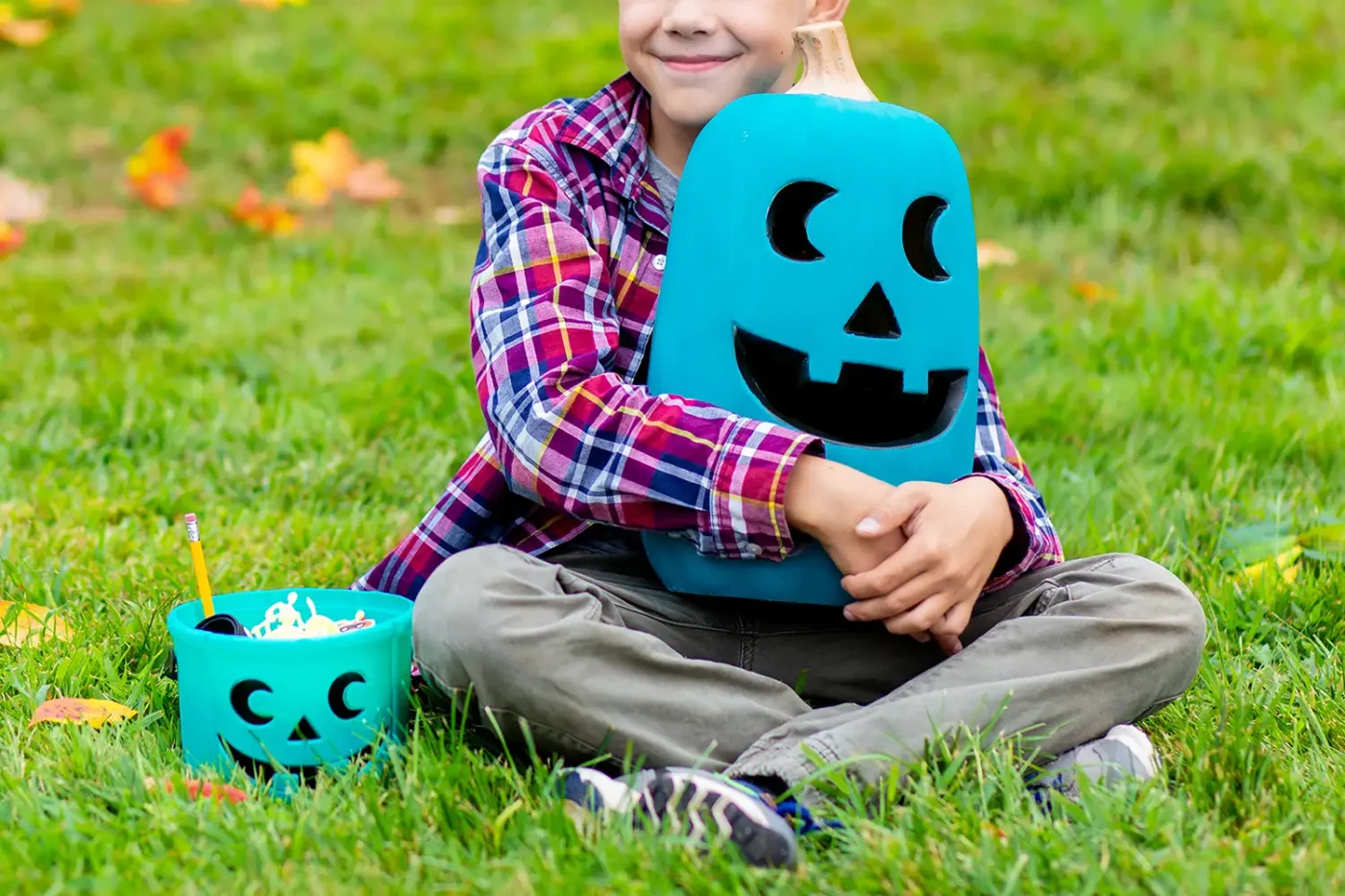
A child holds a teal jack-o’-lantern representing alternative non-food treats for trick-or-treaters with food allergies.
Placing a teal pumpkin outside signals that your home offers safe, non-food goodies for children navigating life-threatening medical conditions. Similarly, a child carrying a teal bucket indicates they cannot safely accept standard edible sweets.
The movement officially kicked off in 2012 when a Tennessee food allergy group launched the Teal Pumpkin Project. The grassroots idea quickly gained national backing from Food Allergy Research & Education (FARE), expanding nationwide and overseas.
“No child should ever be excluded from a celebration because of a disease. Food allergies are a disease of the immune system — not a diet — not a choice,” said Sung Poblete, CEO of FARE.
According to FARE, food allergies affect more than 33 million people in the U.S., including nearly 6 million children. For these families, accidental exposure to peanuts, dairy, or gluten can trigger an emergency.
What Should You Do If You See a Teal Pumpkin?
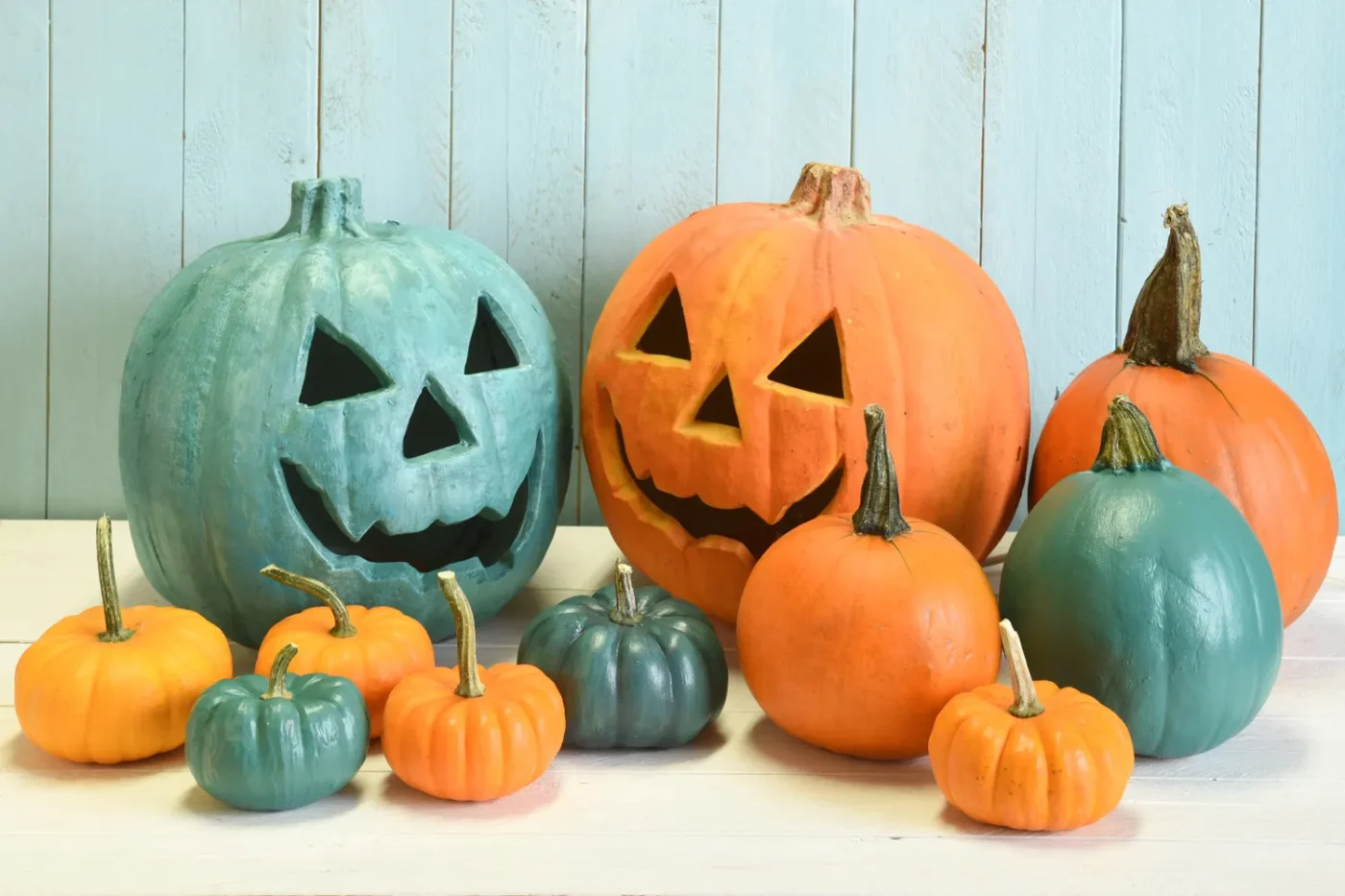
Teal and orange pumpkins displayed together on a porch.
You do not have to change your routine if you spot a teal pumpkin on a neighbor’s stoop. However, if you want your own house to participate, FARE suggests painting an ordinary pumpkin teal and placing it outside your front door.
FARE also provides free downloadable printable signs for front doors and windows announcing that non-food goodies are waiting inside. Keeping your edible and non-edible items in separate containers prevents accidental allergen cross-contact.
Safe Non-Food Giveaways for Trick-or-Treaters
- Glow sticks and spider rings
- Mini notebooks and Halloween erasers
- Stickers and bookmarks
- Fidget toys and bouncy balls
- Pencils, bubbles, and novelty playing cards
What Do Blue Buckets Mean on Halloween?
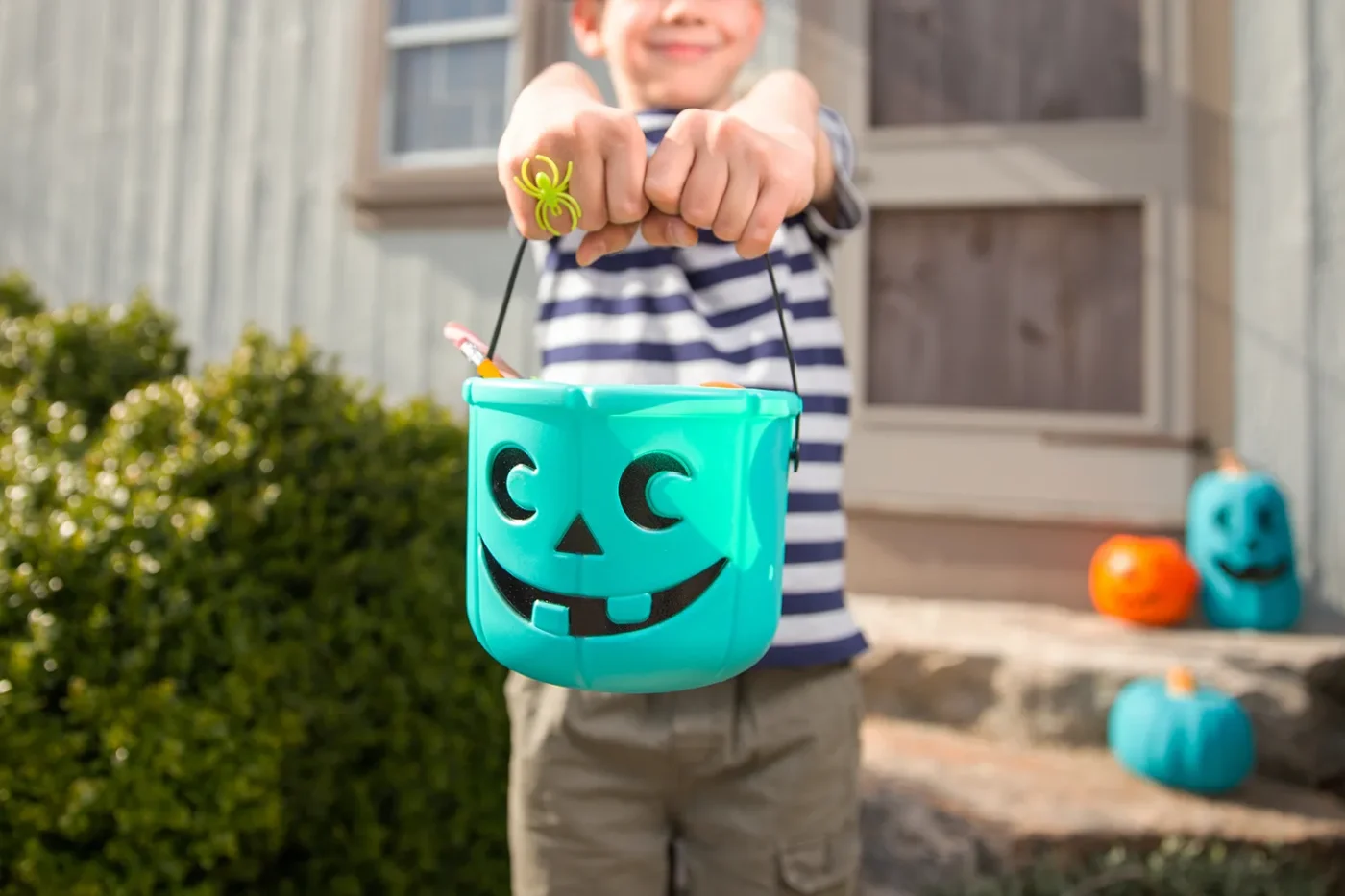
Teal Pumpkin Project jack-o’-lantern representing health awareness during the Halloween season.
A child or young adult carrying a blue bucket signals that the trick-or-treater may have autism. The pail alerts neighbors that the visitor might be non-verbal, avoid eye contact, or struggle to say the customary phrase.
According to the National Autism Association (NAA), this viral trend began after a mother shared a photo on Facebook explaining that her 21-year-old son, BJ, has autism and loves Halloween despite his inability to speak traditionally.
Following that viral post, nationwide retail stores including Amazon, Target, and Walmart began stocking blue Halloween trick-or-treat pails on their shelves.
The Debate Surrounding Blue Buckets
Unlike the universally praised teal pumpkin initiative, blue buckets remain a subject of active debate within the autism community.
Many parents appreciate the visual cue because it protects non-verbal kids from awkward or demanding interactions at stranger doorsteps. Conversely, critics argue the color forces an unnecessary public disclosure of a child’s medical diagnosis.
Journalist Jackie Spinner outlined this tension in The Washington Post, noting that while supporters act with good intentions, children shouldn’t have to announce their neurodivergence to strangers just to receive candy. The NAA emphasizes that using a blue bucket remains a personal family decision based on individual needs.
| Halloween Symbol | Core Meaning |
|---|---|
| Teal Pumpkin or Bucket | Indicates non-food treats for trick-or-treaters managing severe food allergies |
| Blue Bucket | Signals that a trick-or-treater has autism and may be non-verbal |
How to Respond When a Child Arrives with a Blue Bucket
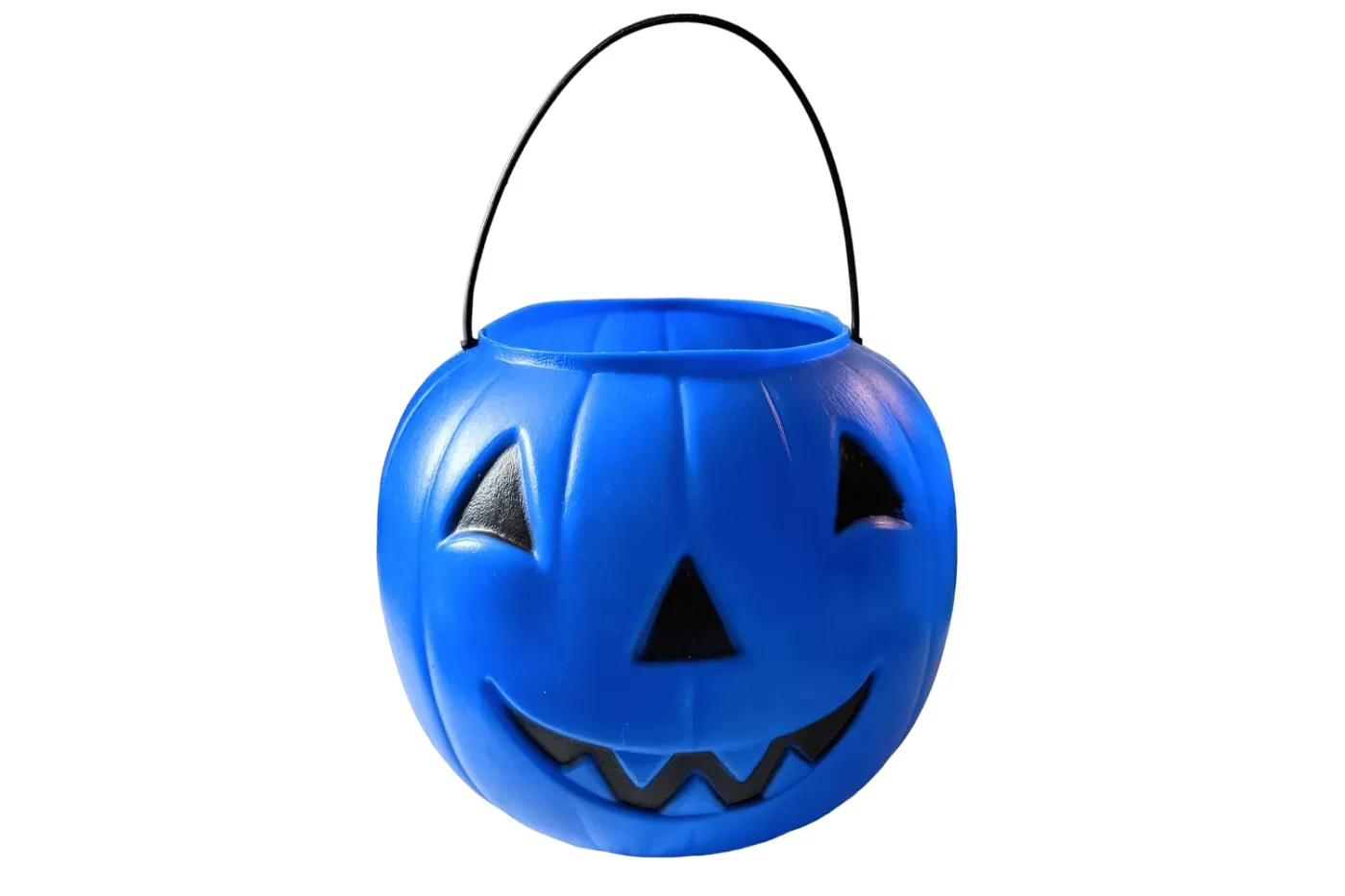
A blue plastic pumpkin bucket designed for Halloween trick-or-treating.
When a trick-or-treater arrives carrying a blue bucket, the NAA recommends leading with patience, warmth, and understanding.
Instead of withholding candy until the child shouts “trick-or-treat” or demands an eye-contact greeting, welcome them immediately with a friendly “Happy Halloween!”
“I used to have to explain at every door that my daughter is unable to speak, then say ‘thank you’ on her behalf,” shared Wendy Fournier, former president of the NAA. “My heart breaks when I think about how she may have been feeling as I had to address her inability to ask for a treat at house after house.”
Recognizing these quiet door-to-door symbols takes zero effort, but it creates a welcoming experience for every kid in your neighborhood.
🎃 Have you handed out non-food treats or spotted these colored buckets on your street? Let us know your neighborhood experience below!
📱 Share this quick guide with friends and neighbors to spread awareness before Halloween night arrives.
✨ Small neighborhood adjustments ensure every child leaves the porch with a smile.
 1
 2
 3
 4
