
Florida Learjet 60 Crash: Pilot Identified as Chilling Cockpit Audio Reveals Final Moments Before Deadly Breakup

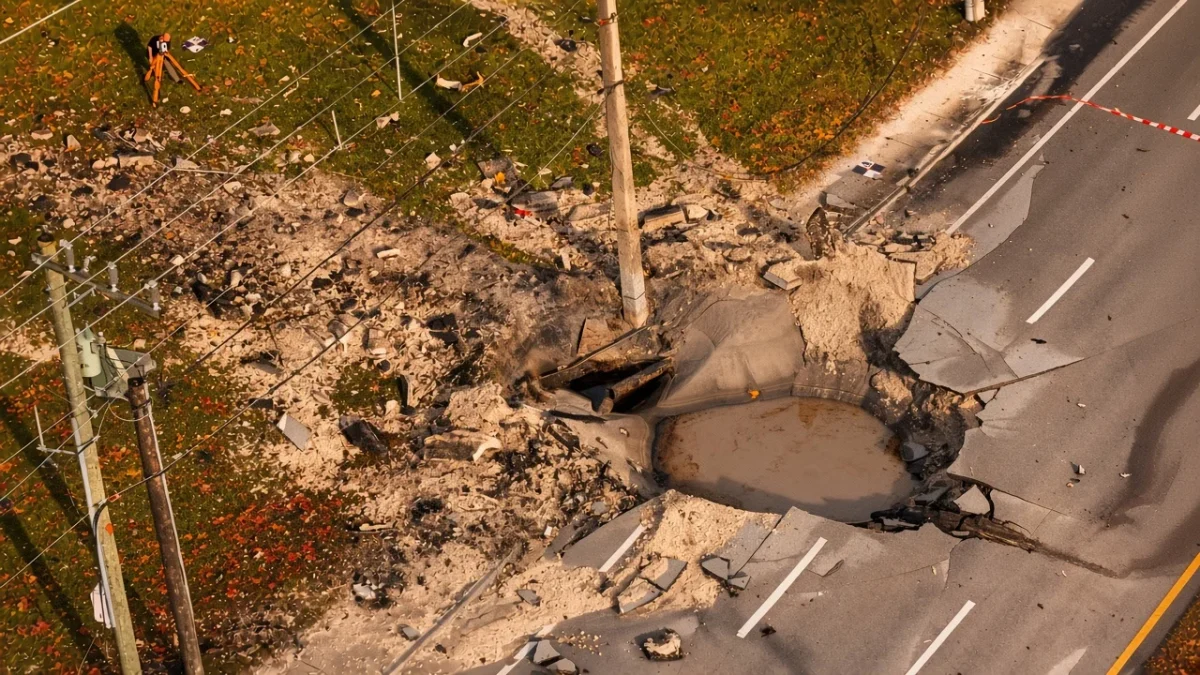
All nine people aboard a private Learjet 60 lost their lives after the aircraft suffered a catastrophic midair descent and crashed into a residential neighborhood near Cresthaven in Palm Beach County, Florida. The flight, which departed Austin, Texas, bound for the Bahamas, plunged toward the ground at more than 20,000 feet per minute before impact, leaving a massive fiery crater in a residential roadway.
Federal records and company statements have now identified the captain behind the controls as 55-year-old Jeff Gregory of Gilbertsville, Pennsylvania. His former employer, Allentown-based charter company East Coast Jets, confirmed his presence on the fatal flight as federal authorities continue piecing together the events that led to the sudden disaster.
The tragedy claimed nine lives in total, wiping out an entire family alongside their crew and traveling companions. But as federal investigators dig into the wreckage, radio transmissions and wreckage patterns reveal that the jet may have failed structurally long before hitting the earth.
Who Was on Board the Tragic Florida Flight?
The crash claimed the lives of both pilots, a prominent tech executive, his young family, and their close personal friends. Aviation records and local reports quickly established the identities of the victims on board the chartered flight.
Captain Jeff Gregory had previously worked with charter operator East Coast Jets in 2016 and 2017 before moving on to other aviation ventures. Co-pilot Nathalia Filgueiras was seated alongside him in the cockpit during the flight from Austin.
“We are deeply saddened to learn that Captain Jeff Gregory was among those who lost their lives in yesterday’s tragic aviation accident in Palm Beach,” East Coast Jets said in a statement. “Jeff was a former member of the East Coast Jets team… Our prayers go out to Jeff’s family, his fellow crew member, the passengers and everyone affected by this heart breaking tragedy.”
The passenger cabin carried seven individuals bound for an island getaway. Those victims include:
- Adam Robinson, a prominent technology company founder.
- Helen Sharp, Robinson’s wife.
- The couple’s young son and daughter.
- Anita Maria Cetina, the Robinson family’s nanny.
- Rachael Reed and Charmi Fehr, family friends traveling with the household.
None of the occupants survived the 12:50 p.m. impact, which scattered wreckage across streets and ignited fires mere feet from surrounding Florida residences.
Chilling Air Traffic Control Audio: 30 Seconds from Calm to Mayday
Transmissions between the flight crew and regional air traffic control capture an unnerving shift from standard operations to complete distress in under half a minute. Captured via LiveATC.net recordings, the communications show the flight crew initially maintaining a calm demeanor while addressing routine atmospheric challenges.
The flight crew initially reported encountering “light, clear ice” that remained manageable, as well as moderate turbulence. As rain conditions developed, the crew requested clearance to climb to an altitude of 37,000 feet to escape the weather.
Within seconds, conditions turned catastrophic.
“Less than 30 seconds later, a transmission from the airplane announced a descent, followed by a mayday call,” National Transportation Safety Board (NTSB) member Tom Chapman revealed during a briefing.
During the harrowing final transmission, a female crew member warned that the jet was dropping in excess of 20,000 feet per minute. “We’re going to crash into the ground,” she stated, before screaming in the final moments of the recording, “Holy f—-, we’re out of time.”
Investigative Breakdown: Flight Profile vs. Impact Sequence
The sudden transition from cruising altitude to uncontrolled dive forms the backbone of the federal safety review. Investigators are cross-referencing telemetry logs against radar debris fields to establish an exact timeline.
| Phase of Flight | Reported Aircraft Status |
|---|---|
| Cruise & Weather Check | Moderate turbulence; manageable light ice reported |
| Climb Request | Pilots requested clearance to 37,000 feet for precipitation |
| Emergency Descent | Mayday broadcast; descent exceeding 20,000 ft/min |
| Ground Impact | Total impact in roadway crater; in-flight breakup suspected |
NTSB Findings: Did the Jet Break Apart Midair?
A widespread public assumption during high-speed crashes is that aircraft structural disintegration occurs purely upon ground impact. In this tragedy, however, federal authorities are confronting evidence pointing toward structural failure at altitude.
During an on-site press conference, NTSB board member Tom Chapman confirmed that debris distribution patterns suggest the plane began fragmenting before it struck the ground. Parts of the twin-engine business jet are expected to be recovered well away from the primary crater.
A critical focus for the federal team involves finding the physical hardware that recorded the crew’s flight performance and cabin audio:
- Cockpit Voice Recorder (CVR): Has not been located; authorities remain uncertain whether a functioning CVR unit was installed on the airframe.
- Impact Crater Excavation: Timothy Monville, the NTSB investigator in charge, identified the deep roadway impact crater as the primary physical hurdle for retrieving structural wreckage.
- Atmospheric Data: Weather radar data, icing conditions, and convective turbulence readings along the flight corridor north of Miami are being examined.
Ground Fallout and Neighborhood Aftermath
The blast force left residential streets resembling a disaster zone. Debris damaged nearby structures, while ignited fuel severed local utility grids, instantly knocking out power to adjacent homes.
Local resident Anthony Blackmon, who was roughly 500 feet away when the aircraft plummeted, reported debris striking his house. “Everything was on fire. The road was on fire,” Blackmon recalled, describing a scene that many neighbors initially mistook for an extreme localized storm strike or explosion.
Palm Beach County Commissioner Joel G. Flores stated that authorities currently have no firm timeline for allowing displaced residents back into their homes, as forensic experts must first clear every piece of evidence from the site.
💬 The aviation community is closely following this investigation as federal authorities work to identify what caused the jet’s rapid breakup.
✨ Tragedies of this scale leave lasting impacts on the families, the neighborhood, and aviation safety protocols nationwide.
👇 Have you followed the recent NTSB updates on this flight? Share your thoughts and join the conversation in the comments below.
 1
 2
 3
 4
