
Florida Scientists Track Hidden Parasite Spillover Between Invasive Burmese Pythons and Native Snakes

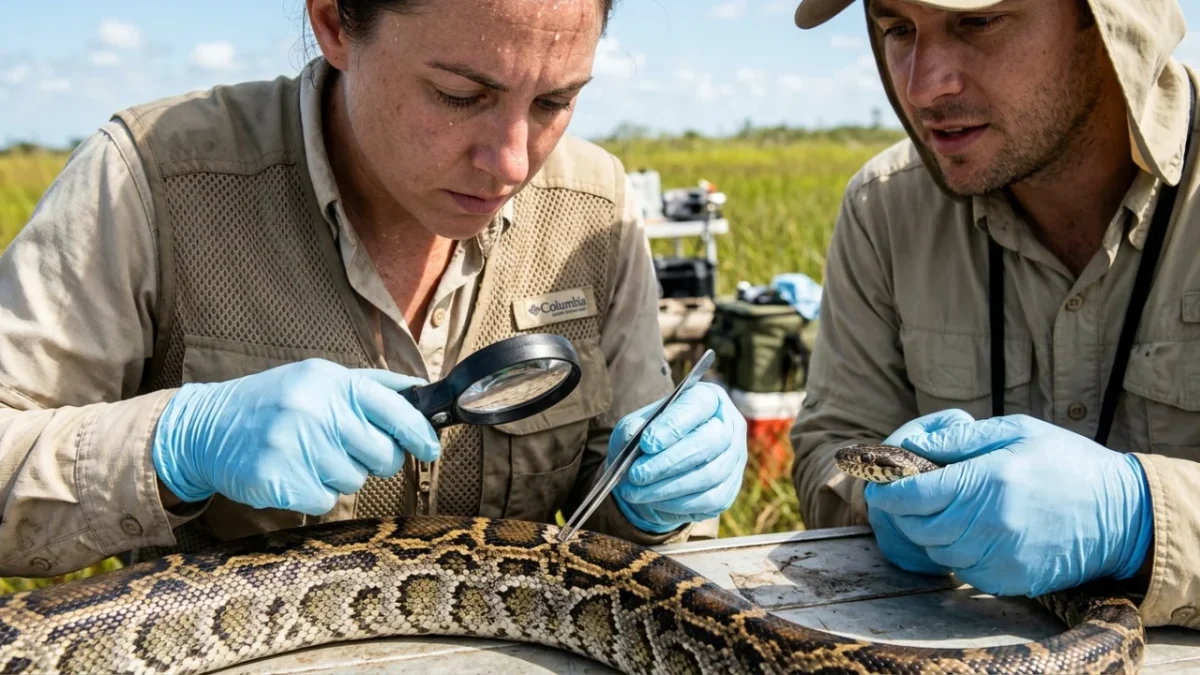
Invasive Burmese pythons across South Florida carry vastly different parasite profiles than indigenous serpents, according to new research tracking parasite spillover in the Everglades ecosystem. A research team from Florida Gulf Coast University found that while native species harbor common local flatworms and lung parasites, invasive pythons completely avoided the platyhelminths typical of native reptiles, fundamentally shifting what biologists know about cross-species infection risks.
The spread of invasive apex predators has long disrupted native wildlife populations across the state. Now, scientists are looking beneath the scales to evaluate biological threats that cannot be seen from a distance.
Inside the Florida Gulf Coast University Study
Researchers Luke Niemann and Dr. Christina Anaya conducted the investigation through the Florida Academy of Sciences to establish critical baseline figures for reptilian parasites. Their work focused on measuring three specific factors across populations: parasite diversity, overall prevalence, and infection intensity.
Securing specimens required two distinct fieldwork pipelines across South Florida terrain. Native snakes were gathered as roadkill salvage, while specimens of invasive Burmese pythons were donated directly by local snake hunters.
Invasive Burmese pythons collected in South Florida examined for internal parasite diversity.
Using detailed morphological methods, the team cataloged recovered organisms and matched their findings against previous taxonomical records. Statistical analyses then mapped out the distinct parasitic fauna belonging to native versus non-native species.
Establishing baseline metrics for parasite infection in native and invasive snake populations provides a foundation for monitoring changes in the rate of spillover from invasive into native snakes.
Tracking Pentastomes Across Native Species
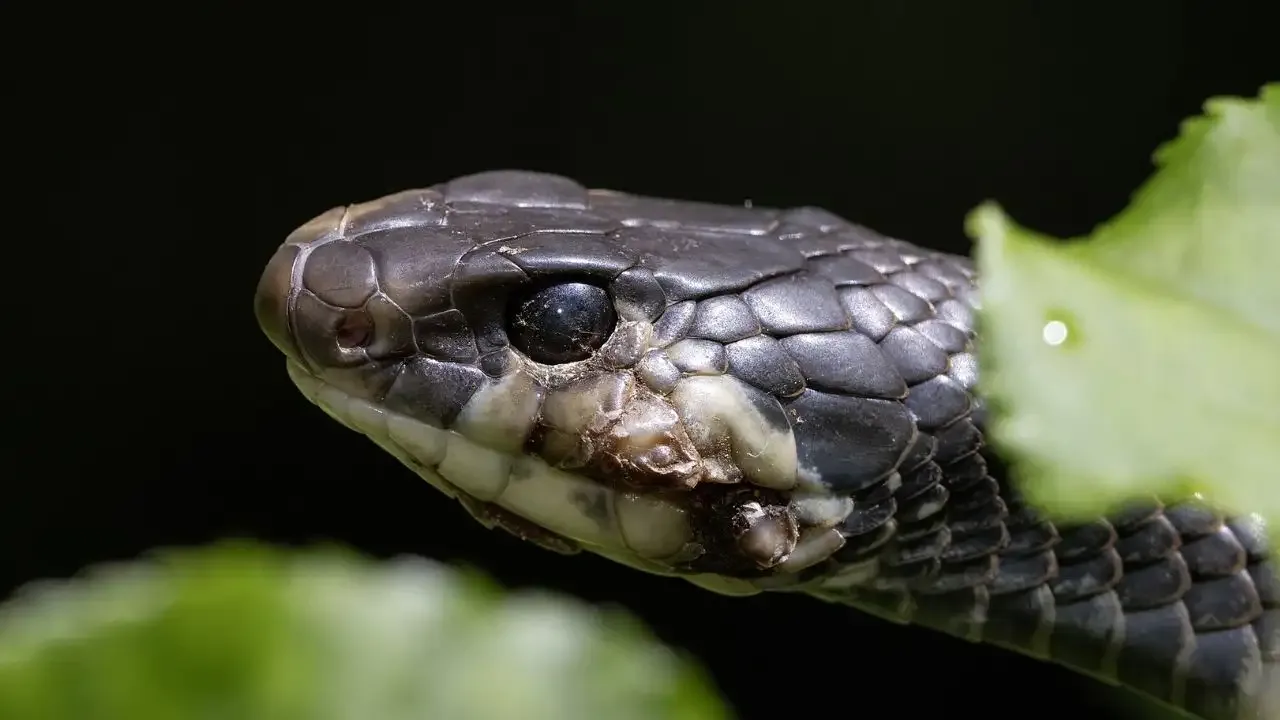
The study pinpointed noticeable variation in infection rates among native reptiles inhabiting the same wetlands as pythons. Specifically, researchers documented pentastome internal parasites across multiple aquatic and semi-aquatic serpents.
- Mudsnakes: Recorded a 28.6% infection prevalence rate for identified pentastomes.
- Banded watersnakes: Documented a 16.7% infection prevalence rate for the same parasite class.
These concrete percentages reveal how widespread certain internal organisms already are within native ecosystems, providing a vital point of comparison for monitoring future ecological shifts.
Myth vs. Reality: The Parasite Exchange
A widespread assumption among casual observers is that invasive apex predators immediately absorb and amplify all existing local parasites once they settle into an ecosystem. The data gathered in South Florida proves the opposite.
Burmese pythons were not infected with platyhelminths, despite those flatworms being common residents inside local native snakes. Rather than blending entirely into the native parasite web, the invasive giant constrictors maintain an isolated parasite dynamic that scientists are still working to map.
| Metric / Species Group | Observed Parasite Status |
|---|---|
| Burmese Pythons | Zero platyhelminth infections detected |
| Native Mudsnakes | 28.6% pentastome infection rate |
| Native Banded Watersnakes | 16.7% pentastome infection rate |
| Native Snake Baseline Data | Historically limited scientific documentation |
Why Baseline Checklists Matter for the Everglades
Until recently, field knowledge regarding internal parasites in native southeastern snakes remained sparse. Without historical data points, wildlife biologists had no reliable method to determine whether a parasite outbreak was normal or triggered by non-native wildlife introductions.
By producing an exhaustive species checklist of recovered parasites, the Florida Gulf Coast University team established the reference data needed to detect spillover before it spirals. Tracking these baseline numbers enables scientists to detect whether foreign parasites jump into native wildlife—or if native parasites ever adapt to the expanding python population.
💬 Wildlife researchers face massive hurdles tracking microscopic threats across the Florida wetlands.
✨ Establishing hard baseline data offers the clearest path toward protecting vulnerable native reptile populations.
📱 Have you encountered invasive species in your local ecosystem? Share your observations in the comments below.
 1
 2
 3
 4
