
How Audrey Hepburn Completely Rewrote Hollywood Hair Rules: 15 Iconic Cuts That Redefined Modern Glamour

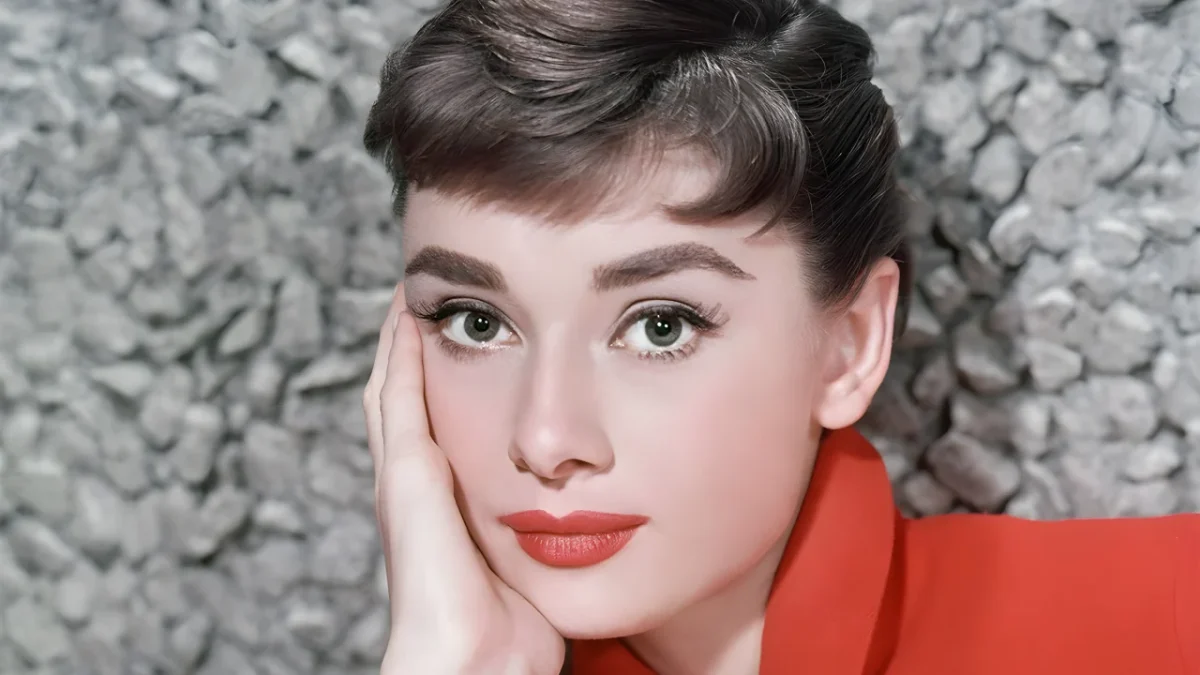
Audrey Hepburn permanently altered the standard of American glamour the moment she traded Hollywood’s traditional pinup curls for sharp European tailoring and ultra-short crops. While the 1950s cinema landscape prized cascading blonde locks and hyper-curvaceous silhouettes, Hepburn introduced a lean, razor-sharp sophistication imported straight from Parisian fashion houses.
According to fashion author and historian Bronwyn Cosgrave, Hepburn was an intentional departure from the era’s established aesthetic archetype.
“She was the antithesis—and this includes her hair—of the Hollywood pinup. You would see women like Betty Grable and Marilyn Monroe with cascading blonde locks, and her look was dramatically different. She was very slim, not curvaceous, and her hair was very well-groomed.”
By sidestepping the standard Hollywood studio mold, she proved that shorter cuts, precise micro bangs, and architectural updos could deliver unmatched star power. Here is how her defining hairstyles fundamentally changed beauty culture and why they continue to dominate modern runways.
Challenging the Golden Age Beauty Formula
During the peak of the studio system, female leads were frequently molded into uniform beauty standards designed around soft waves and heavy, rounded curls. Hepburn disrupted that entire formula by seeking creative guidance across the Atlantic.
Cosgrave highlights that Hepburn looked outside the traditional studio machine, forging partnerships with European couturiers and top stylists in Paris and London. Her collaboration with French hair maestro Alexandre de Paris transformed hairstyling into haute coiffure, giving her cinematic characters an elevated, effortless refinement.
| Traditional Pinup Aesthetic | Audrey Hepburn’s Aesthetic |
|---|---|
| Cascading, voluminous blonde curls | Tailored, well-groomed brunette crops |
| Heavy studio glamour | European couture minimalism |
| Uniform long lengths | Sharp pixies, bobs, and micro bangs |
| Symmetrical salon waves | Textured layers, high chignons, and sleek parts |
A common misconception is that Hepburn never altered her signature appearance throughout her decades on screen. In reality, she continuously updated her silhouettes, subtly altering parting angles, fringes, and textures to redefine her look for every decade.
The Evolution of 15 Definitive Audrey Hepburn Hairstyles
1. The Baby-Bang Beehive
Hepburn’s styling in the 1961 classic Breakfast at Tiffany’s remains one of the most recognizable silhouettes in cinema history. The look paired a lifted, highlighted crown with innocent baby bangs, accessorized with a petite tiara.
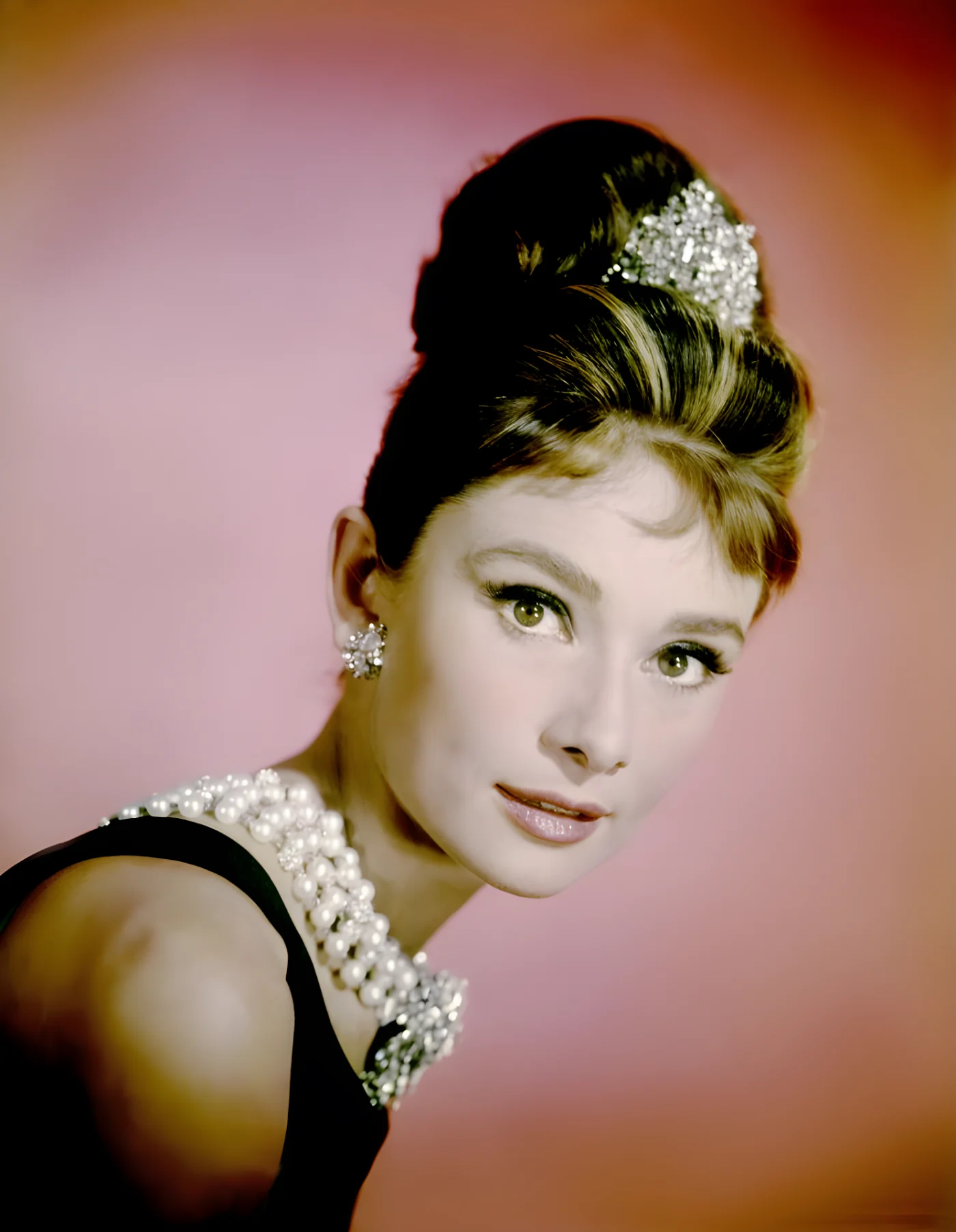
Audrey Hepburn on the set of Breakfast at Tiffany’s in 1961.
2. The Pixie With Microbangs
Subtle alterations kept her trademark cropped aesthetic feeling consistently modern. By incorporating side-swept micro bangs, she introduced sharp geometric texture across the forehead.
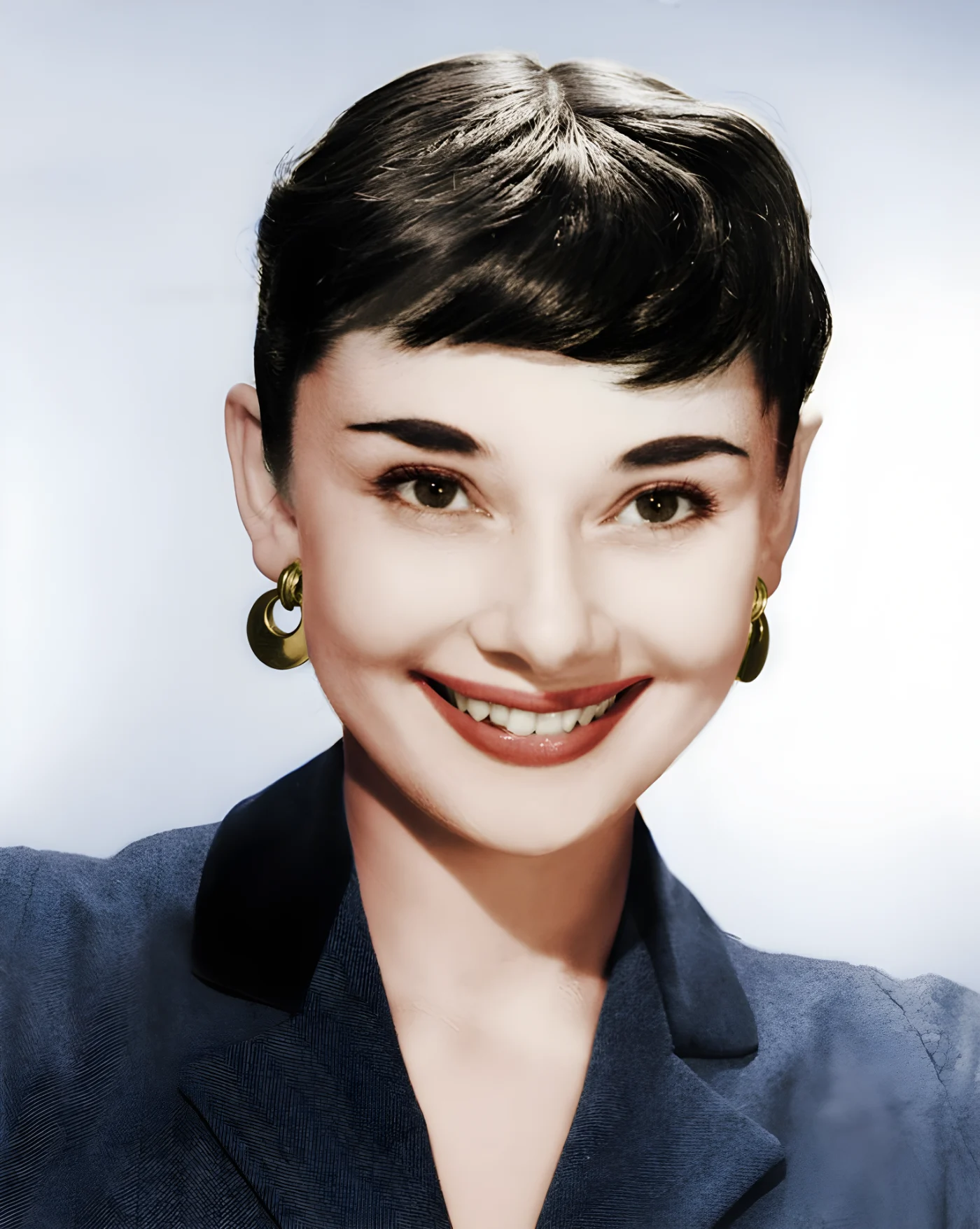
Audrey Hepburn wearing a navy blazer, gold earrings, and a pixie with microbangs.
3. The Middle Part Bob
Shifting away from ultra-short cuts, Hepburn displayed her versatility with a clean, center-parted bob for her role in Love in the Afternoon. The balanced symmetry added classic elegance.
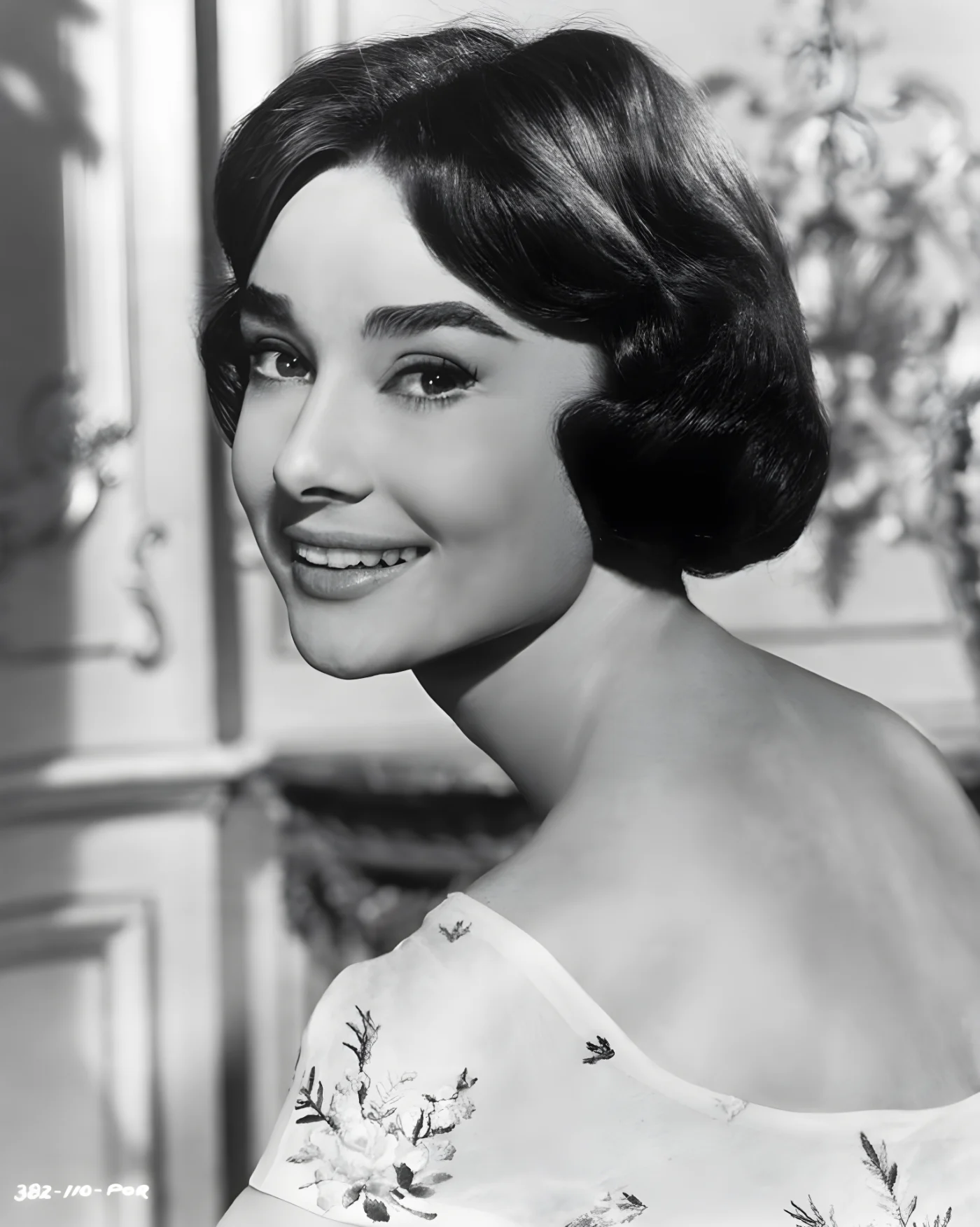
Audrey Hepburn in the film Love in the Afternoon.
4. The Swoop Bang
Curved and textured, her delicate side-swept fringe framed her bone structure while preserving soft movement. This flattering detail became one of her most enduring beauty signatures.
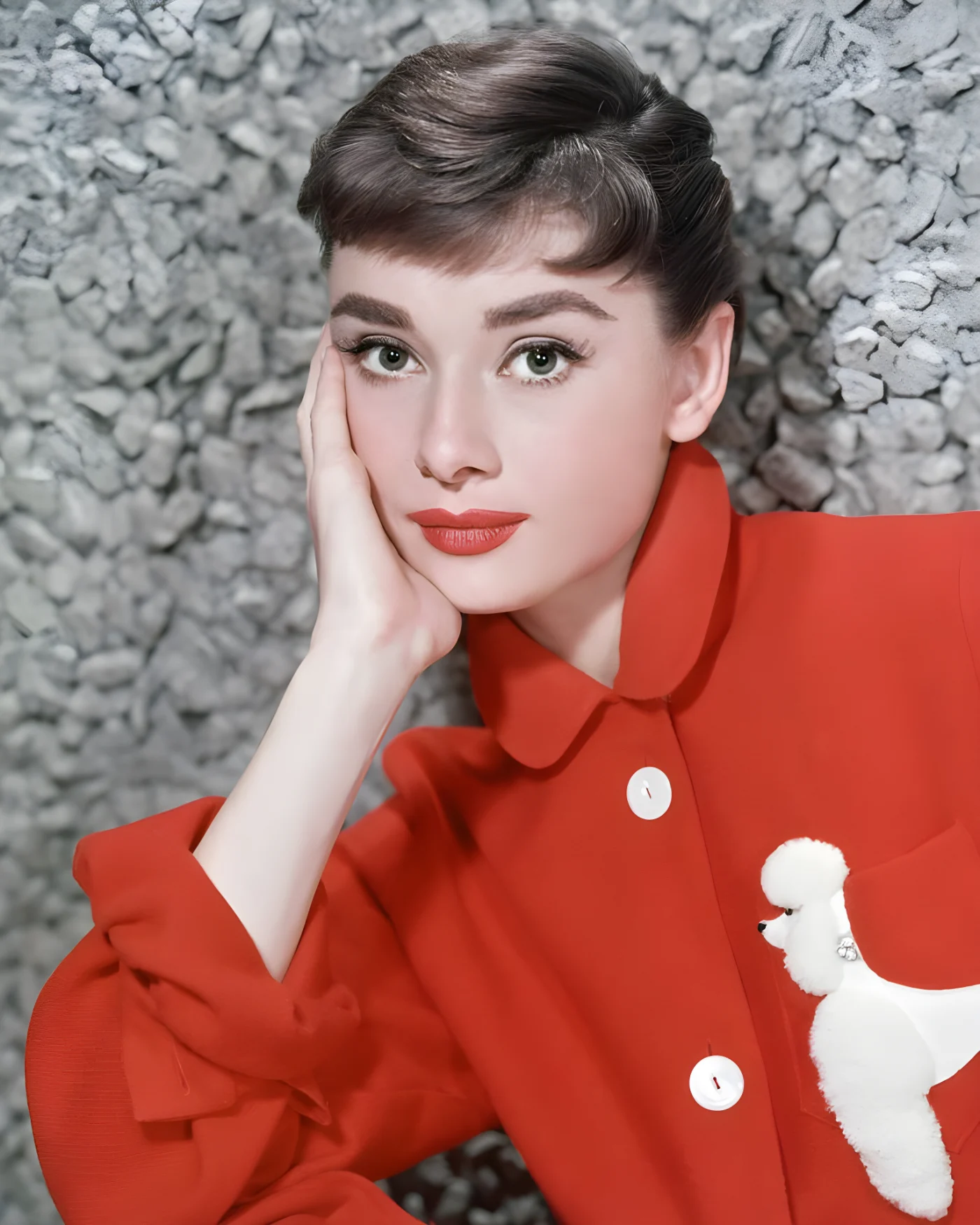
Actress Audrey Hepburn poses for a publicity still circa 1957.
5. The Signature Pixie Cut
Perfected in the 1954 film Sabrina, this cropped cut established Hepburn as an international style leader. It showed that short hair could deliver intense glamour without relying on heavy styling.
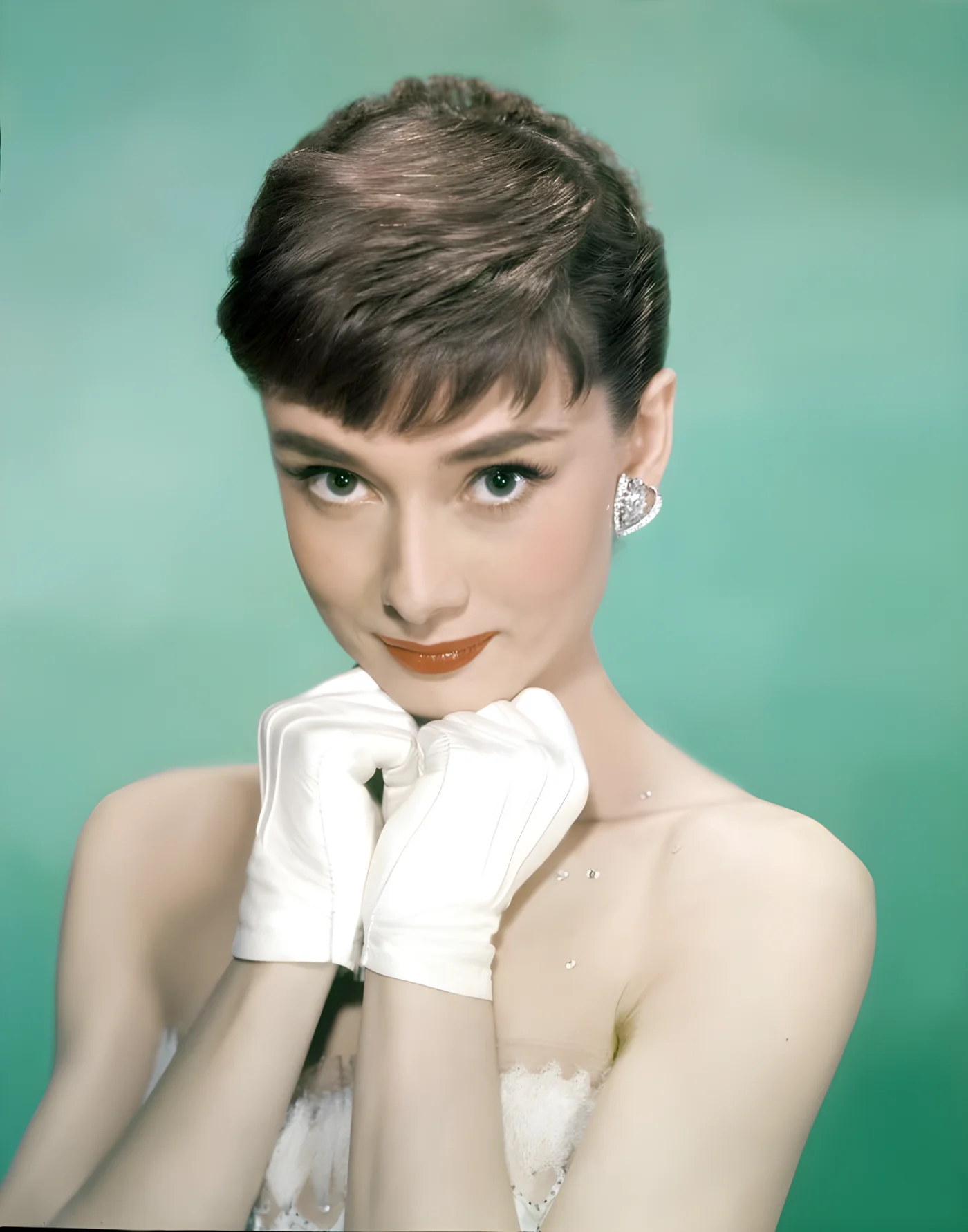
Audrey Hepburn in 1950.
6. The Feathered Shag
Before standardizing her sleek pixie, Hepburn wore softer, layered lengths with natural movement. The feathered cut predated modern textured chops by several decades.
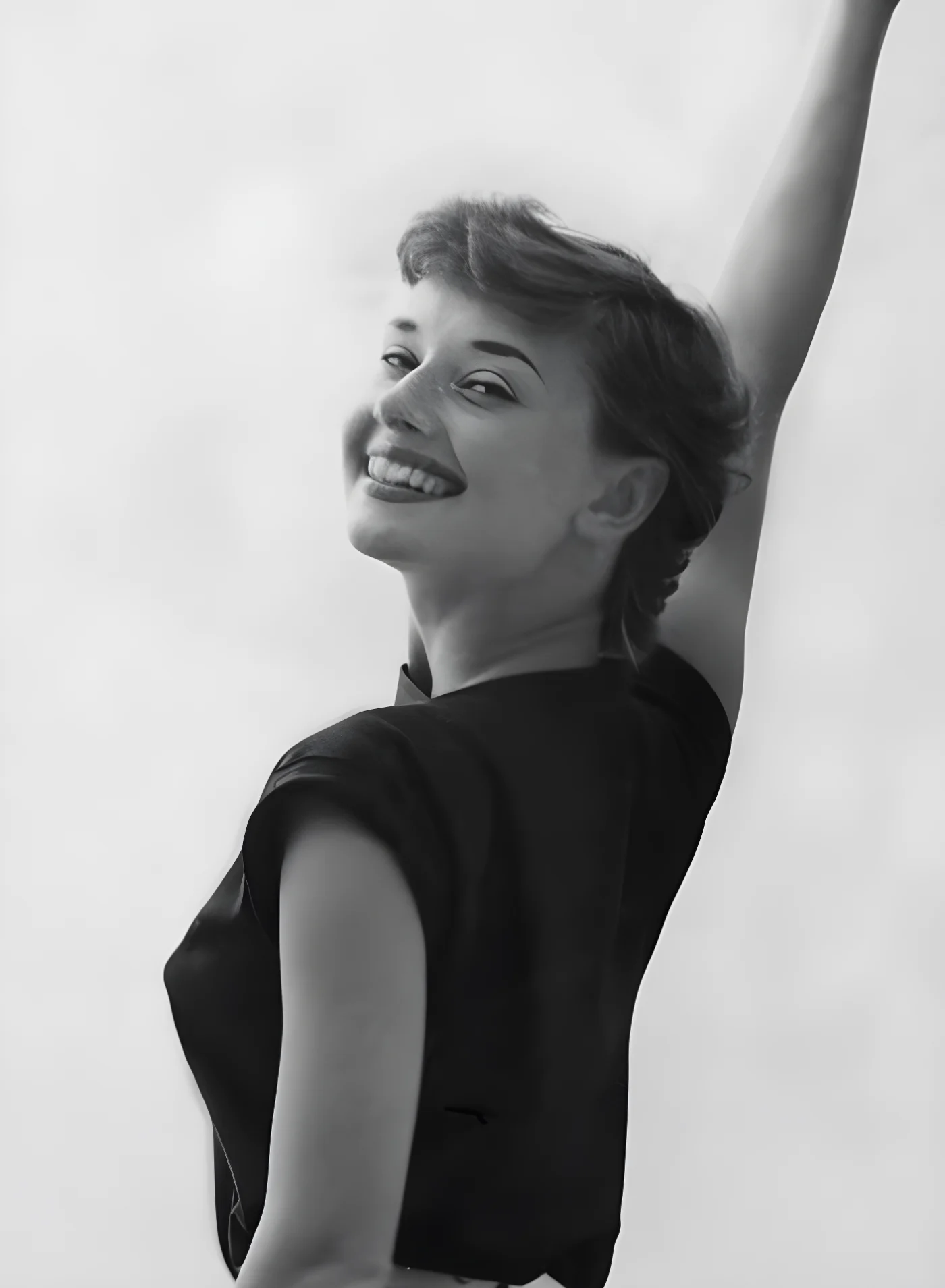
Audrey Hepburn photographed in an early feathered cut.
7. Petite Pigtails
Paired with a polished side fringe, ribbon-tied pigtails highlighted a youthful, playful dimension in Love in the Afternoon. The style showcased her knack for balancing girlish whimsy with couture tailoring.
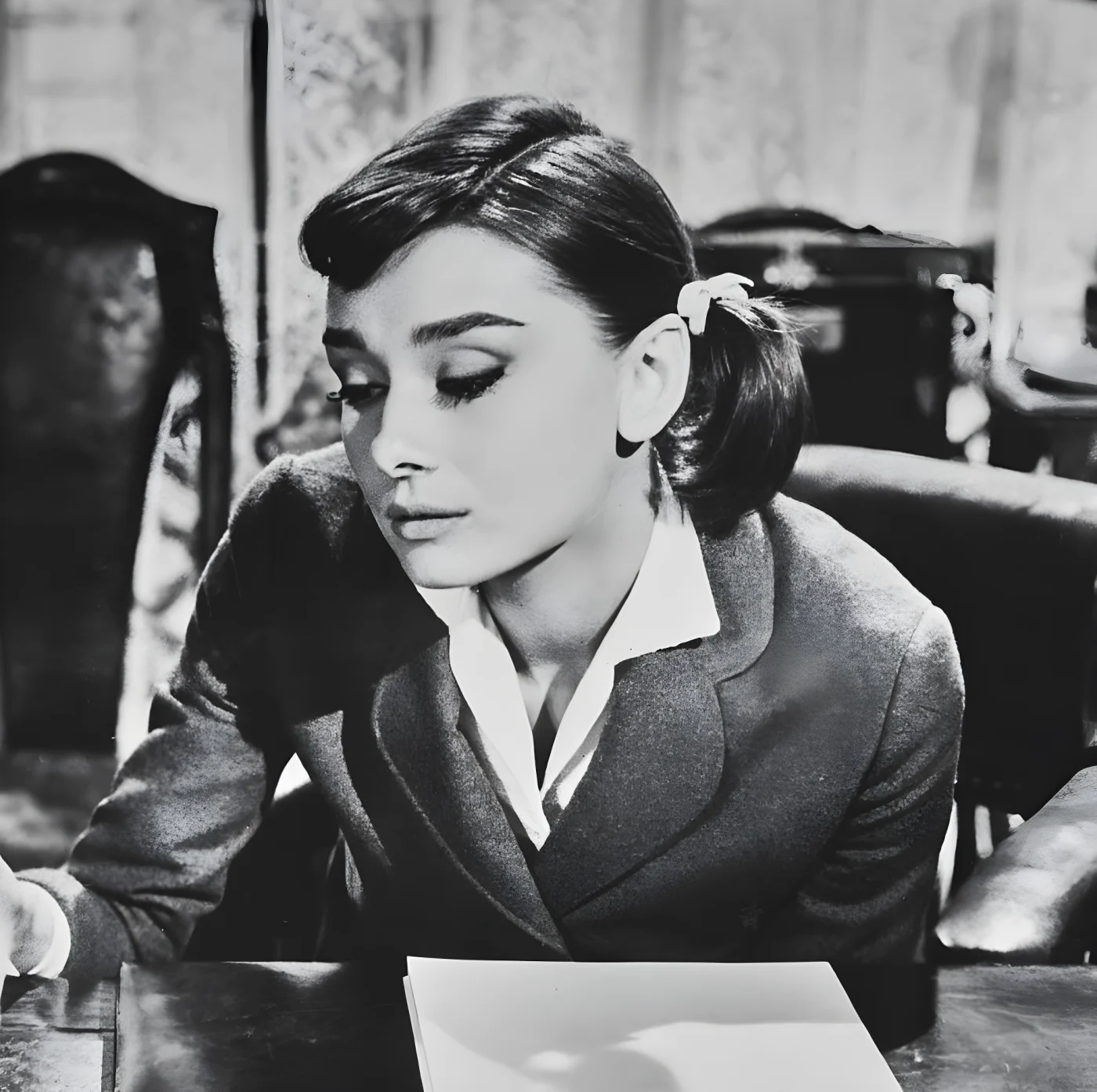
Audrey Hepburn in a scene from Love in the Afternoon in 1956.
8. The Regal Chignon
Crafted specifically for the movie Charade by Alexandre de Paris, this elevated false chignon proved that hair design could operate as a fine art form on the silver screen.
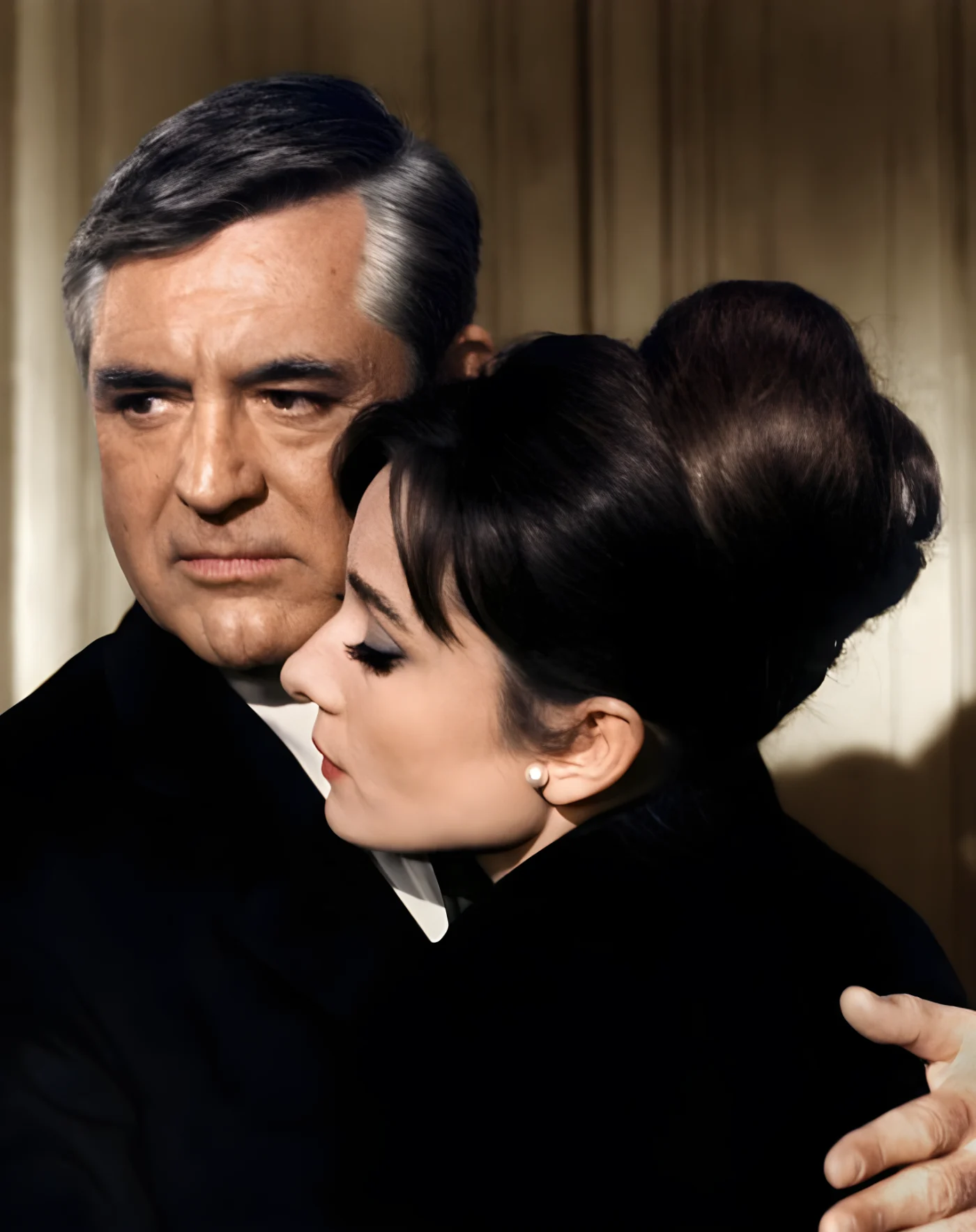
Audrey Hepburn on the set of Charade with Cary Grant.
“This is hair as a fine art. He was the creator of ‘haute coiffure.’”
9. The Mod Beehive Pixie
As the swinging 1960s transformed global style, Hepburn adapted by adding teased height to her crop for How to Steal a Million. Stylized sideburns and bold eye makeup anchored the mod transformation.
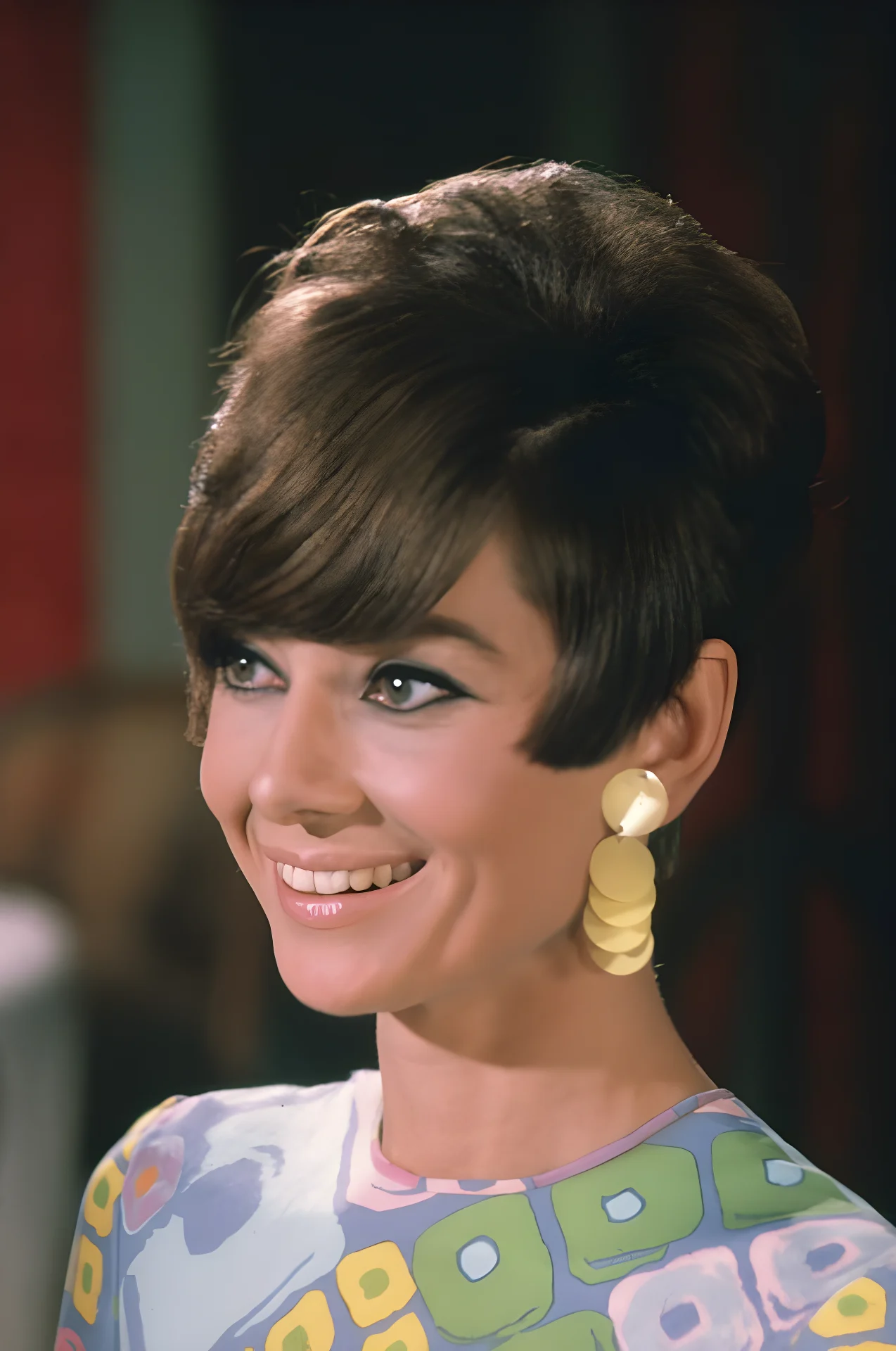
Audrey Hepburn in a scene from the film How To Steal A Million in 1966.
10. The Micro Bob
Cropped just below the ears, this tailored micro bob shifted direct visual focus to her brow line and eyes. It provided a neat alternative to her shortest pixies.
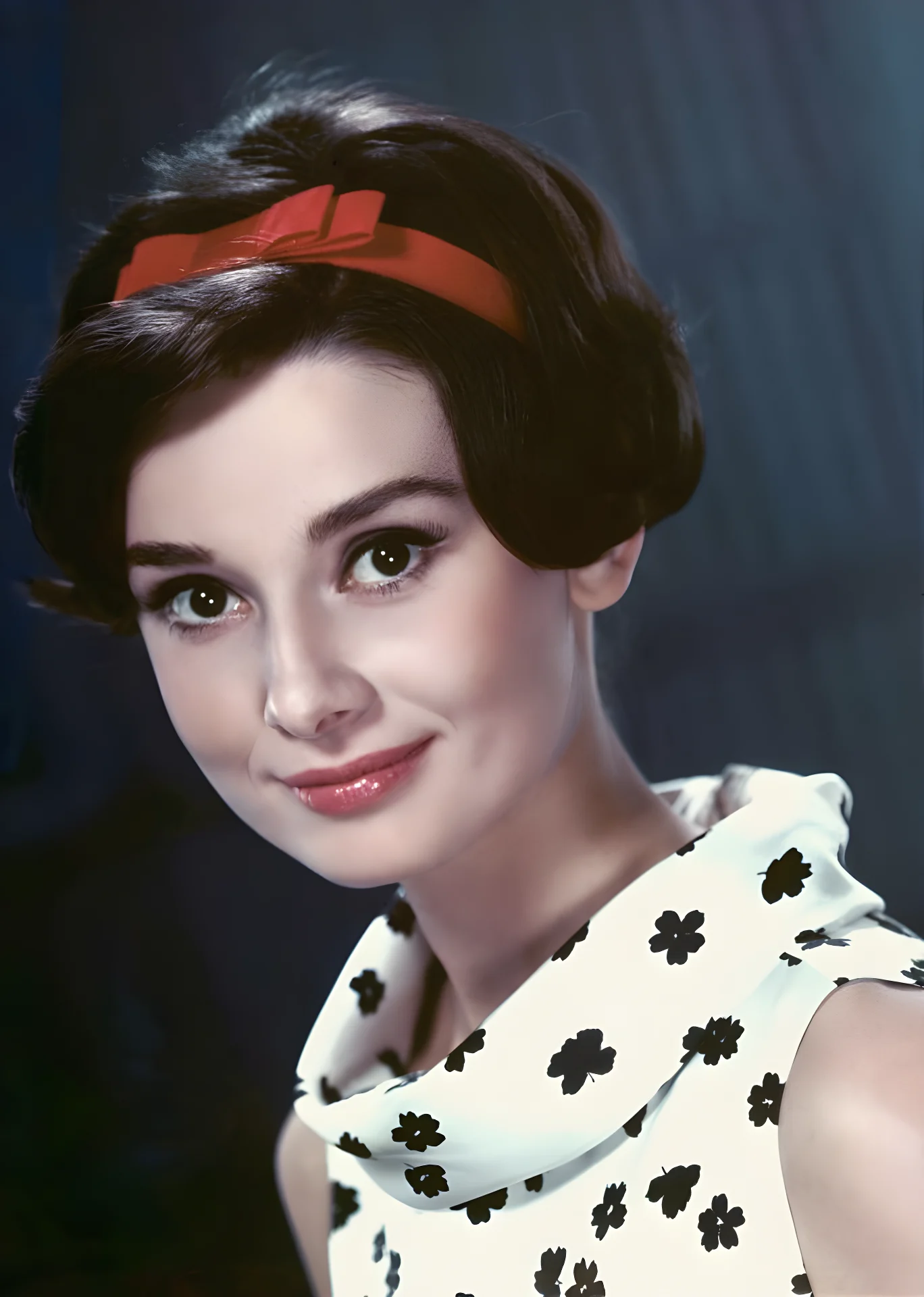
Audrey Hepburn in 1959.
11. The Swept-Back Updo
Hepburn avoided severe flatness by maintaining crown volume in her evening styles. At California’s First Lifetime Achievement Awards, she paired this brushed-back updo with an iconic red-feathered Givenchy gown.
12. The Parisian Sabrina Updo
Representing her character’s dramatic style evolution in Sabrina, this look combined pulled-back sides with neat micro bangs, signaling high-fashion continental polish.
13. Structured Hats and Headpieces
Accessories played an essential part in framing Hepburn’s hairstyles. During the filming of Funny Face, wide-brimmed straw hats completed her character’s artistic transformation.
14. The Coiffed Finger-Wave Bob
For promotional portraits supporting Love in the Afternoon, Hepburn wore a sculpted bob styled softly away from her face, drawing direct inspiration from loose 1920s finger waves.
15. The Voluminous Curly Crop
In the 1970s, Hepburn departed from sleek finishes in favor of tight, springy curls. The rounded silhouette offered a softer, distinctly feminine profile that fit the era’s changing trends.
How to Adapt Audrey’s Signature Elements Today
Adopting Audrey Hepburn hairstyles in modern salons requires focusing on deliberate structure rather than heavy styling products. Key steps to capture her aesthetic include:
- Prioritize Bone Structure: Request micro bangs cut slightly above the brow to draw immediate attention to the eyes and cheekbones.
- Focus on Clean Updos: When styling chignons or high crowns, build internal volume using light teasing rather than stiff hairsprays.
- Embrace European Minimalism: Pair cropped hair with understated, tailored outfits to maintain an effortless, sophisticated balance.
✨ Hepburn’s hair legacy endures because she viewed beauty as an extension of personal individuality rather than conforming to the studio mold.
📱 From micro bangs to sculpted chignons, her historical cuts continue to inspire today’s biggest runway and red-carpet hair trends.
💬 Which of these 15 historic cuts would you dare to try today? Drop your thoughts in the comments below!
 1
 2
 3
 4
