
Inside the Southern Tyrrhenian Seismic Swarm Rattling Sicily: Fault Line Ruptures Trigger Palermo Evacuations and Tsunami Alerts

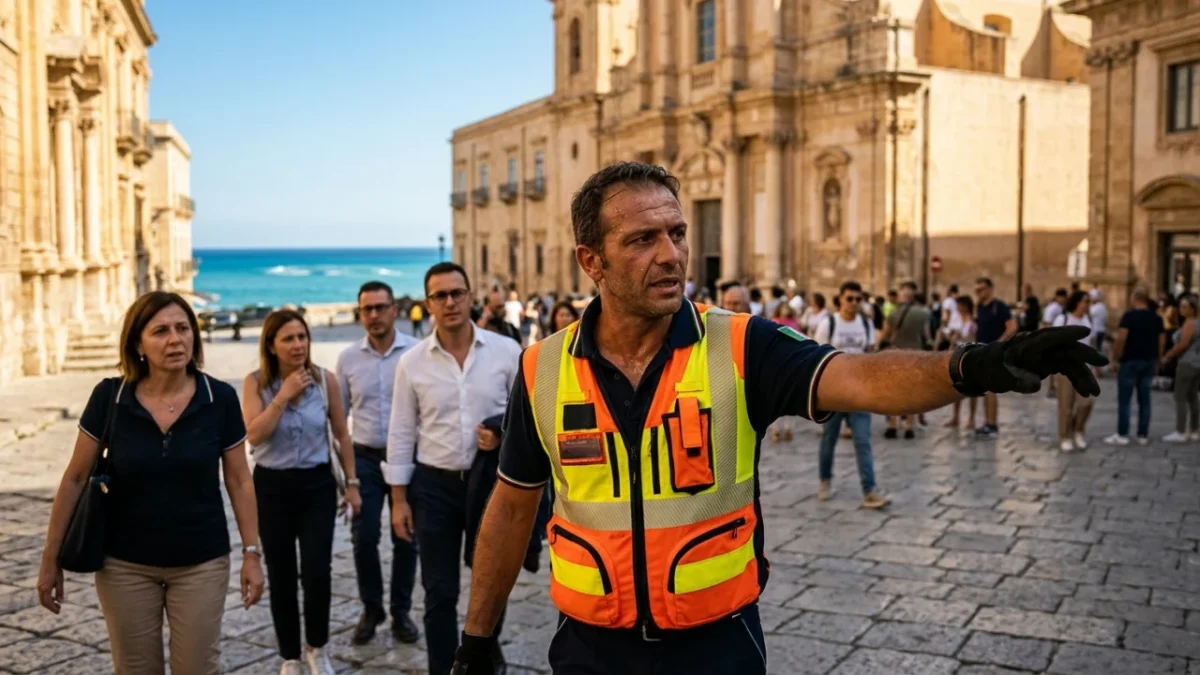
A relentless Southern Tyrrhenian seismic swarm has sent shockwaves across Sicily and southern Italy, rattling the streets of Palermo and triggering the evacuation of schools and municipal buildings after a shallow magnitude 5.5 earthquake struck just off the Aeolian Islands.
The sudden event unleashed an automatic regional tsunami alert across coastal areas and triggered rockfalls on offshore islands, setting off widespread alarm across hundreds of miles of coastline.
Civil protection officials rapidly deployed emergency protocols as the tremor shook high-rises from Trapani to Messina and across the Strait of Messina into Reggio Calabria.
Shallow Fault Rupture Triggers Widespread Alarms
The intense seismic activity, which began late on 20 October, peaked when a rupture occurred at a depth of roughly nine kilometres, approximately 30 kilometres north-west of Alicudi.
Instruments recorded a series of sharp tremors within minutes of one another, including events measuring magnitude 4.3 and 3.6 alongside the dominant magnitude 5.0 to 5.5 shock.
In Palermo, civil servants and schoolchildren were quickly guided onto pavements as buildings swayed throughout the metropolitan area.
Municipal offices, including the city’s Polo Tecnico technical headquarters, were evacuated on safety grounds while engineers and emergency crews mobilised to inspect infrastructure.
Palermo’s civil protection councillor Piero Alongi confirmed that inspections revealed no initial structural damage or casualties, a statement mirrored by the national fire brigade command.
Further east on the Aeolian Islands, the shallow depth of the epicentre produced noticeable physical effects on the landscape.
- Alicudi and Filicudi: Coastal rock faces experienced sudden cliff collapses that sent debris tumbling toward the sea.
- Lipari: Ground subsidence was detected along the western portion of the island, prompting immediate structural checks by local authorities led by Mayor Riccardo Gullo.
- Mainland Sicily: Tremors were felt as far south as Agrigento, more than 170 kilometres from the rupture zone.
Panic intensified when automatic Mediterranean warning networks issued a green tsunami alert for Calabria, forecasting potential waves under one metre.
The alert was cancelled within an hour after sea-level monitors recorded no unusual maritime variations.
Seismologist Raffaele Azzaro explained that the alert was an automated fail-safe calculated by a probabilistic model instituted after the 2023 Turkey disaster, confirming that a seismic rupture of this size in deep, open waters lacks the physical displacement required to generate a hazardous tsunami wave.
The Subterranean Clash Beneath the Tyrrhenian Sea
The forces fuelling this sudden escalation lie in one of the most structurally violent tectonic junctions on Earth.
Beneath the southern Tyrrhenian basin, the northward advance of the African plate grinds relentlessly against the Eurasian plate.
During this tectonic vice, the oceanic crust of the Ionian plate plunges beneath the Calabrian Arc and sinks directly into the Earth’s mantle.
While deep subduction events routinely create earthquakes at depths between 100 and 300 kilometres, this specific swarm is operating under a distinctly different structural mechanism.
The Tear Along the Filicudi Fault
The rupture did not stem from magma migration or deep mantle sinking.
Instead, researchers trace the activity to a shallow reverse fault located along the Filicudi fault system, an active right-lateral strike-slip zone.
Here, massive blocks of subterranean rock slide past one another horizontally while simultaneously wrenching apart.
Geological assessments show this fault functions as the surface manifestation of a deep structural tear, where the subducting oceanic slab descending beneath Calabria physically decouples from the stable continental plate sitting under Sicily.
Because the crust does not glide smoothly, vast reserves of elastic strain accumulate over months and years.
When the rock mass surpasses its breaking threshold, it snaps in violent mechanical bursts, generating dense clusters of shallow quakes.
Because the hypocentre was positioned barely nine kilometres beneath the seafloor, ground shaking radiated across northern Sicily, registering an estimated intensity level V on the Mercalli-Cancani-Sieberg scale.
Volcanic Rumours vs Tectonic Reality
With more than sixty distinct seismic events logged during the sequence, speculation swiftly turned to the region’s notorious volcanic systems.
The epicentre sits roughly 70 kilometres away from the submerged summit of Marsili, Europe’s largest underwater volcano, alongside other active seabed structures including Palinuro, Glabro, Eolo, and Enarete.
The National Institute of Geophysics and Volcanology (INGV) intervened to quell public unease, clarifying that the swarm is entirely tectonic in nature.
Sensors detected no evidence of ascending magma bodies, separating this event entirely from the volcanic mechanisms driving neighbouring Stromboli.
The corridor stretching between Ustica and the Aeolian archipelago belongs to the Southern Tyrrhenian System, a volatile fault network with a well-documented seismic history:
- May 1980: A magnitude 5.7 earthquake struck Alicudi, causing substantial structural damage reaching levels VI and VII intensity.
- 1957: Twin earthquakes measuring magnitude 5.2 and 5.3 shook the basin in rapid succession.
- Recent Decades: Notable events measuring magnitude 4.7 struck in September 2009 and February 2025, alongside a 50-tremor sequence in March that peaked at magnitude 4.6.
Seismologists tracking the current cluster note an overall decreasing frequency, though stress redistributions along adjacent fault segments remain under continuous observation.
The collision zone separating Europe and Africa remains locked in motion, serving as a stark reminder of the fragile crust beneath the central Mediterranean.
Emergency management teams across Sicily continue to prioritise building resilience and public awareness as fault lines off the coast gradually release their accumulated strain.
🔍 Have you ever felt a sudden earthquake while travelling or at home? Share your perspective in the comments below.
 1
 2
 3
 4