
King Charles Confronts Colonial History in the Caribbean but Stops Short of an Apology on UK Government Advice

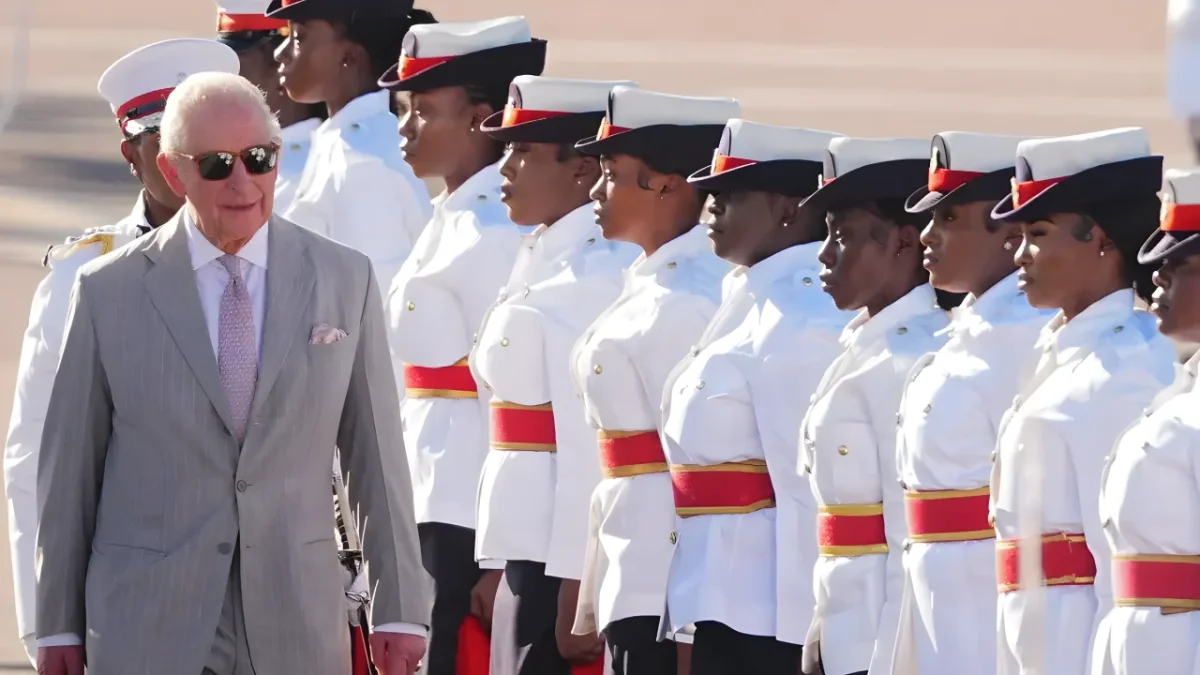
King Charles touched down in the Bahamas to begin a pivotal nine-day tour of the Caribbean, directly confronting “the great suffering of the past” whilst stopping strictly short of offering an apology or financial reparations. Operating firmly on the formal guidance of the UK Government, the monarch walked an exacting diplomatic line from the moment his Royal Air Force transport touched down at Lynden Pindling International Airport.
The sovereign arrived just after 4pm local time to face mounting regional calls to reckon with Britain’s imperial past. He was greeted on the tarmac by Governor-General Dame Cynthia Pratt and Prime Minister Philip E. Davis, who observed formalities alongside a ceremonial welcome.
Taking to a raised dais, Charles watched 96 members drawn from both the Royal Bahamas Police Force and the Royal Bahamas Defence Force execute a royal salute. The military detachment performed the Bahamian national anthem, March On, Bahamaland, before the King conducted a formal inspection of the guard.
Confronting the Legacy of Enslavement at Clifford Park
The symbolic heart of the opening leg centres on Clifford Park in Nassau—the historic ground where the Bahamas formally declared independence in 1973. Addressing The Future Bahamas Youth Rally and Exhibition, the King prepared to deliver a landmark speech framed around historical honesty and reconciliation.
His address follows a live performance of Junkanoo, the vibrant street parade rooted deeply in the survival and resistance of enslaved people across the islands. Addressing the crowd, Charles acknowledged the painful origins underpinning the celebration.
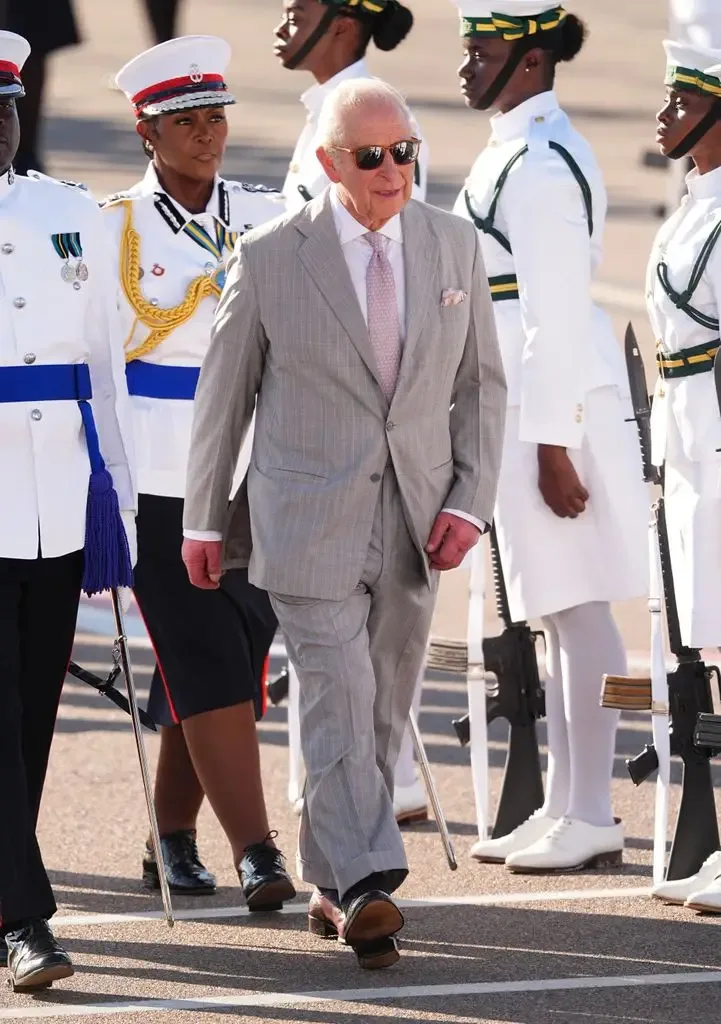
King Charles walks among uniformed officers during his arrival inspection in the Bahamas.
“Some of what is best in Bahamian culture today—the most joyful, the most hopeful, the most bright—was born out of darkness,” the King stated in prepared remarks. “It is only right that we should acknowledge the great suffering of the past, in these islands and beyond, even as we rejoice in the successes of the present and build new opportunities for the future.”
He praised successive generations who took ancestral trauma and built a distinct cultural identity.
“Tonight it gives me enormous hope to see the way generations of Bahamians have carried the history, the legacy and the promise bequeathed to you by your ancestors, with pride in your hearts and purpose in your steps,” the King noted. “You have not only carried their legacy, you have nurtured and enhanced it, creatively and courageously, and we have seen tonight what a wonderful gift it is, to The Bahamas and to the world.”
The Royal Dilemma: Reflection Without Reparation
Despite the King’s candid references to historic trauma, ministerial guidance from London set strict constitutional boundaries. Under instructions from the UK Government, the monarch refrained from delivering an explicit state apology or entering discussions surrounding financial reparations for transatlantic slavery.
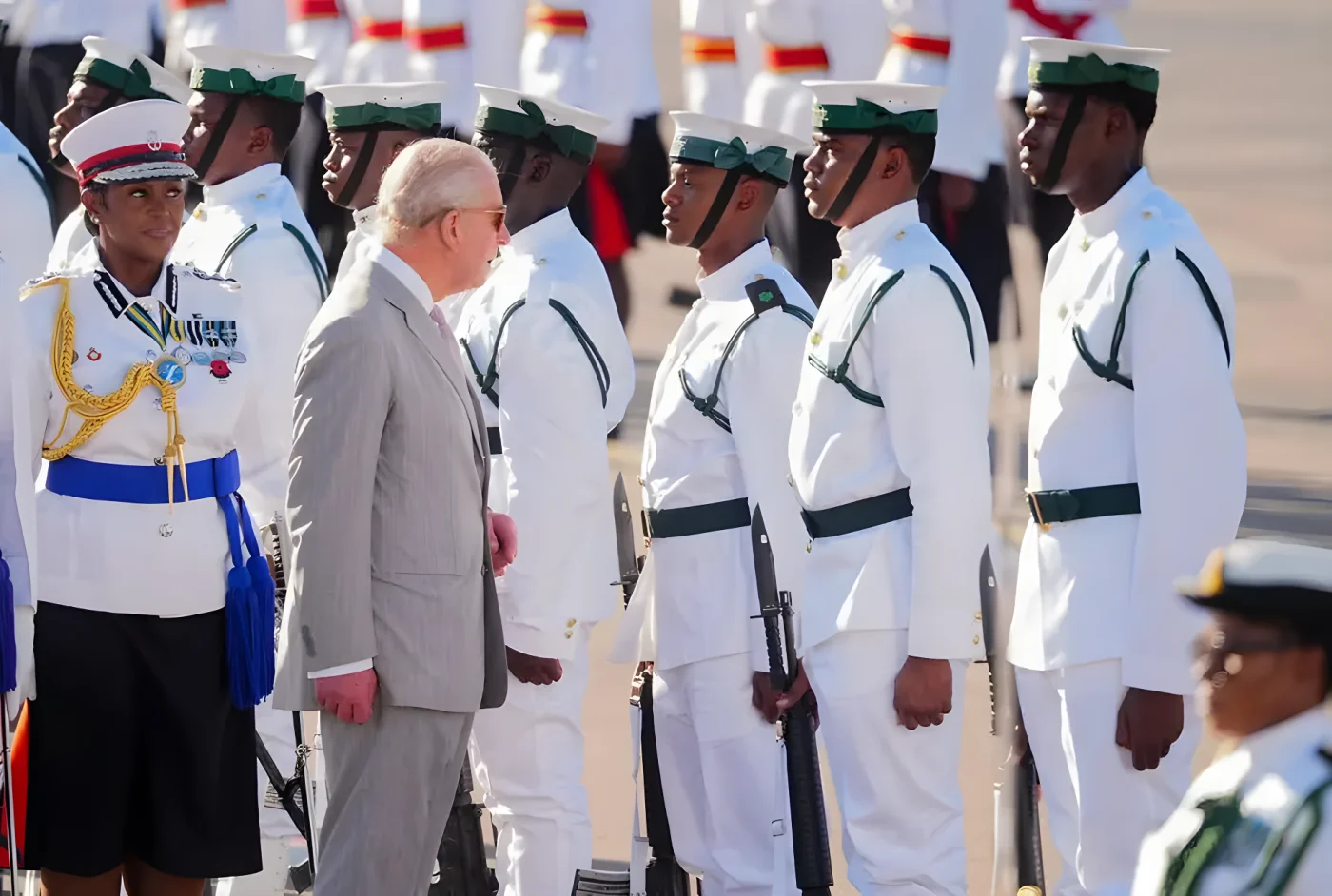
King Charles stands alongside Bahamian military officers in white uniforms.
The sovereign nonetheless intends to pause across all three host nations to reflect on the human cost of the slave trade and the ongoing reverberations of colonial rule. Palace officials emphasised that this delicate posture balances historical awareness with the diplomatic wishes of local leaders.
“At the request of host Governments, The King’s programme will primarily focus on shining a light on the many modern partnerships and opportunities for the future that are having a transformative effect on the region, as it confronts the challenges of today,” a Palace spokesman explained.
The Palace spokesman expanded on the King’s personal stance regarding former British territories:
- Lifelong Engagement: “For His Majesty, this tour is both a new journey but also the continuance of a lifelong one, in which he has sought to engage, understand and educate about the most shameful aspects of our past.”
- Evolving Dialogue: “This will therefore also be reflected in differing ways and words during the tour, as you would expect.”
- Future Partnerships: Regional administrations are actively prioritising sustainable employment, technical training, and youth advancement alongside historical dialogue.
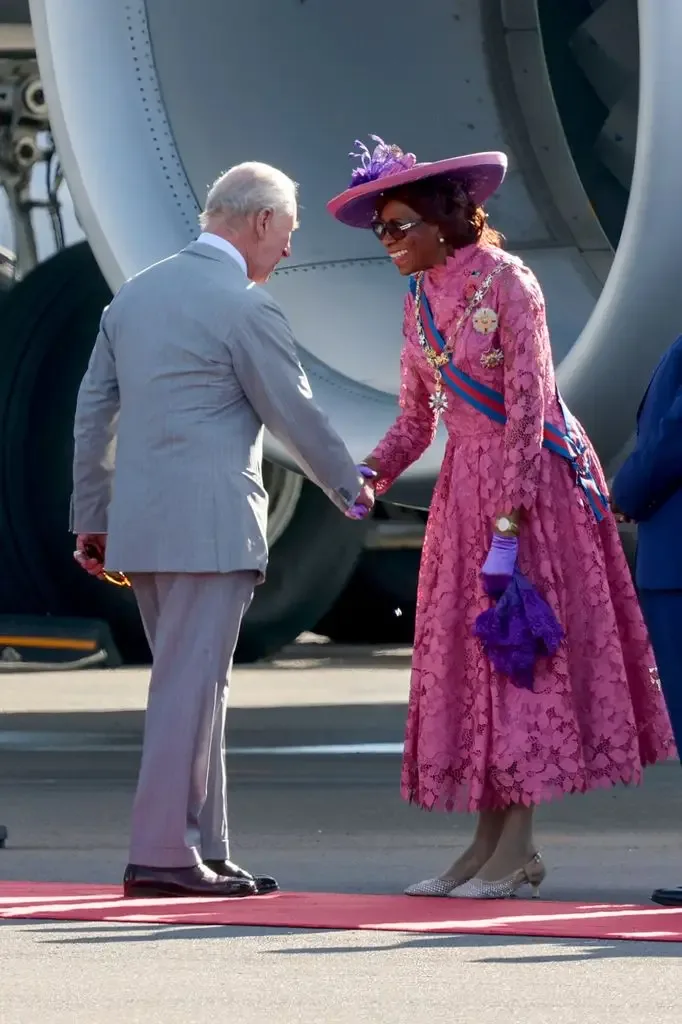
King Charles greets the Governor-General of the Bahamas, Dame Cynthia Pratt.
Climate Peril and Generational Duty
Beyond debates over historical accountability, environmental vulnerability forms a dominant pillar of the tour. The Bahamas sits an average of just two metres above sea level, making coastal communities exceptionally vulnerable to extreme weather and rising ocean levels.
The King, who has campaigned on global conservation issues for over five decades, directed his speech directly at younger islanders facing existential climate threats. He framed climate action not merely as policy, but as an urgent moral duty.
“Our world cries out for healing,” Charles remarked, recalling his work across the Commonwealth to encourage sustainable innovation. “In years to come, this will surely be the measure of every person—how they answered the call to care for Planet Earth—the source of our life, our prosperity and our security.”
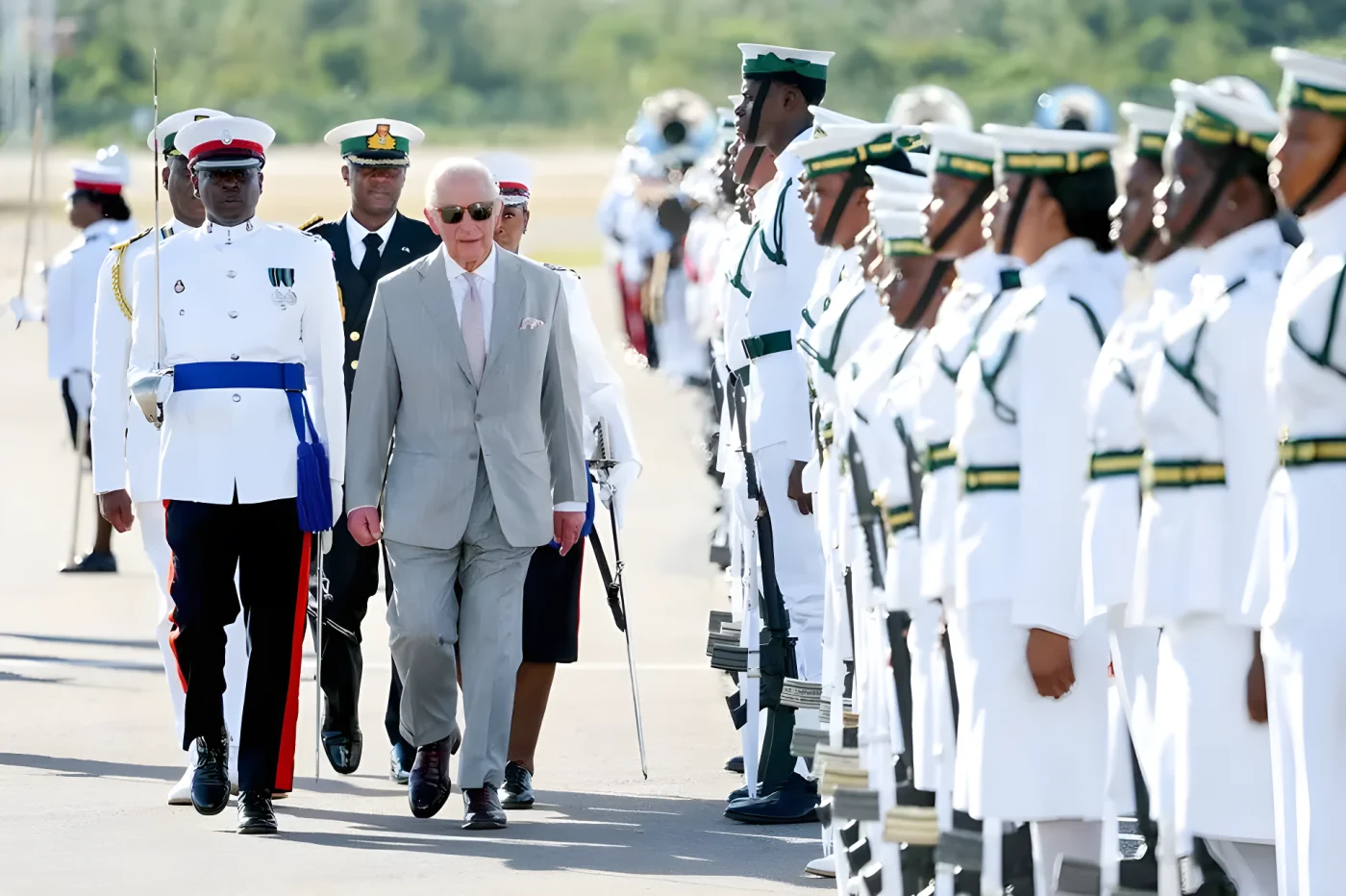
King Charles attends official engagements during his nine-day Caribbean tour.
The current visit marks an evocative return for Charles, who stood at Clifford Park more than 50 years ago to read an official message from Queen Elizabeth II during the initial 1973 independence ceremonies. Now returning as King, his itinerary takes him through the Bahamas and Guyana before concluding in Antigua and Barbuda for the pivotal Commonwealth Heads of Government Meeting.
As the regional itinerary unfolds across three sovereign nations, the balance between historical reckoning and 21st-century diplomacy remains under intense international scrutiny.
The conversations taking place across Nassau, Georgetown, and St John’s will likely shape the modern Commonwealth’s cohesion for decades to come.
🔍 How should the British monarchy balance historical accountability with modern diplomatic ties? Share your perspective in the comments below.
Source: www.hellomagazine.com
 1
 2
 3
 4