
WORLD NEWS ENVideo
Mario Lopez and Tiffani Thiessen Confirm Their Saved by the Bell Residuals Have Completely Dried Up: Why the Cheques Now Cost More to Post Than They Are Worth


Despite starring in one of the most beloved television comedies of the 1990s, Mario Lopez has confirmed that his Saved by the Bell residuals have dropped so low that sending the physical payment often costs more than the cheque itself.
The revelation shatters the popular assumption that starring in an enduring worldwide pop-culture phenomenon provides guaranteed, lifelong financial independence for its actors.
Lopez, who portrayed high school athlete A.C. Slater on the NBC show between 1989 and 1993, backed up identical revelations made by his former co-star Tiffani Thiessen, admitting the original cast signed agreements that left them virtually empty-handed in syndication.
The Myth of Lifelong Sitcom Wealth
Speaking candidly to the Daily Mail, the television host explained that viewers routinely conflate screen visibility with endless royalty streams.
Lopez pointed out that their royalty structures bear no resemblance to the historic windfalls enjoyed by stars of evening television staples from that era.
“A lot of people think just ’cause you come out of TV and stuff, you’re set,” Lopez explained. “That’s not always the case. Not everybody’s making that sort of ‘Seinfeld’, ‘Friends’-type money from that era.”

Tiffani Thiessen as Kelly Kapowski and Mario Lopez as A.C. Slater in an episode of Saved by the Bell.
The core disparity stems from when and how the programme originally reached viewers across the Atlantic and at home.
Because the sitcom aired primarily on Saturday mornings rather than during lucrative evening primetime slots, broadcast agreements were negotiated under significantly lower standard union compensation rates.

Mario Lopez attending an industry event in Hollywood.
Tiffani Thiessen Speaks Out on Vanishing Royalty Cheques
The public conversation reignited when 52-year-old Tiffani Thiessen, renowned for playing head cheerleader Kelly Kapowski, discussed the show’s revenue on Page Six Radio.
Thiessen revealed that royalty payments from the vintage teen series had effectively vanished over time.
“It’s, like, negative now. It costs more to print the check,” Thiessen stated. “We didn’t have pull on that show. We made nothing and we just did our job.”

Tiffani Thiessen and Mario Lopez appearing together at the Hollywood Christmas Parade.
She clarified that when the production briefly moved into an evening schedule for a single season, the cast received marginally better compensation, though it did not transform their long-term royalty situation.
Lopez endorsed her remarks publicly on social media platform X, describing Thiessen’s assessment as “real talk” before confirming they regularly laugh together about their microscopic cheques.

Mario Lopez on a red carpet event.
Behind the Contract Numbers: Why the Cast Received Pencils While Networks Made Millions
The financial imbalance becomes startling when comparing network revenue against baseline talent salaries during the show’s peak run.
- Starting Pay: Child star manager Denise Simon disclosed in the documentary series Hollywood Demons that Lopez earned approximately $1,500 per episode when production began.
- Advertising Windfall: By the conclusion of its second season, the show was generating roughly $15 million in advertising income for the network.
- Contract Leverage: As young performers early in their careers, the teenage ensemble lacked the legal leverage required to negotiate backend gross percentages or lucrative syndication clauses.

Tiffani-Amber Thiessen, Mario Lopez, and Lark Voorhies in Saved by the Bell: Hawaiian Style.
Mark-Paul Gosselaar and the Broader Industry Reality
The issue of inequitable early contracts extends across the entire Bayside High alumni roster.
Mark-Paul Gosselaar, who led the series as Zack Morris, addressed their financial arrangements directly during a 2019 appearance on Watch What Happens Live With Andy Cohen.

Tiffani Thiessen in New York City.
“It is what it is. You move on, you learn,” Gosselaar admitted, acknowledging the cast had agreed to “really bad deals” during their teenage years.
Despite the lack of generational wealth from the production, the cast maintains an overwhelmingly positive view of their formative roles.
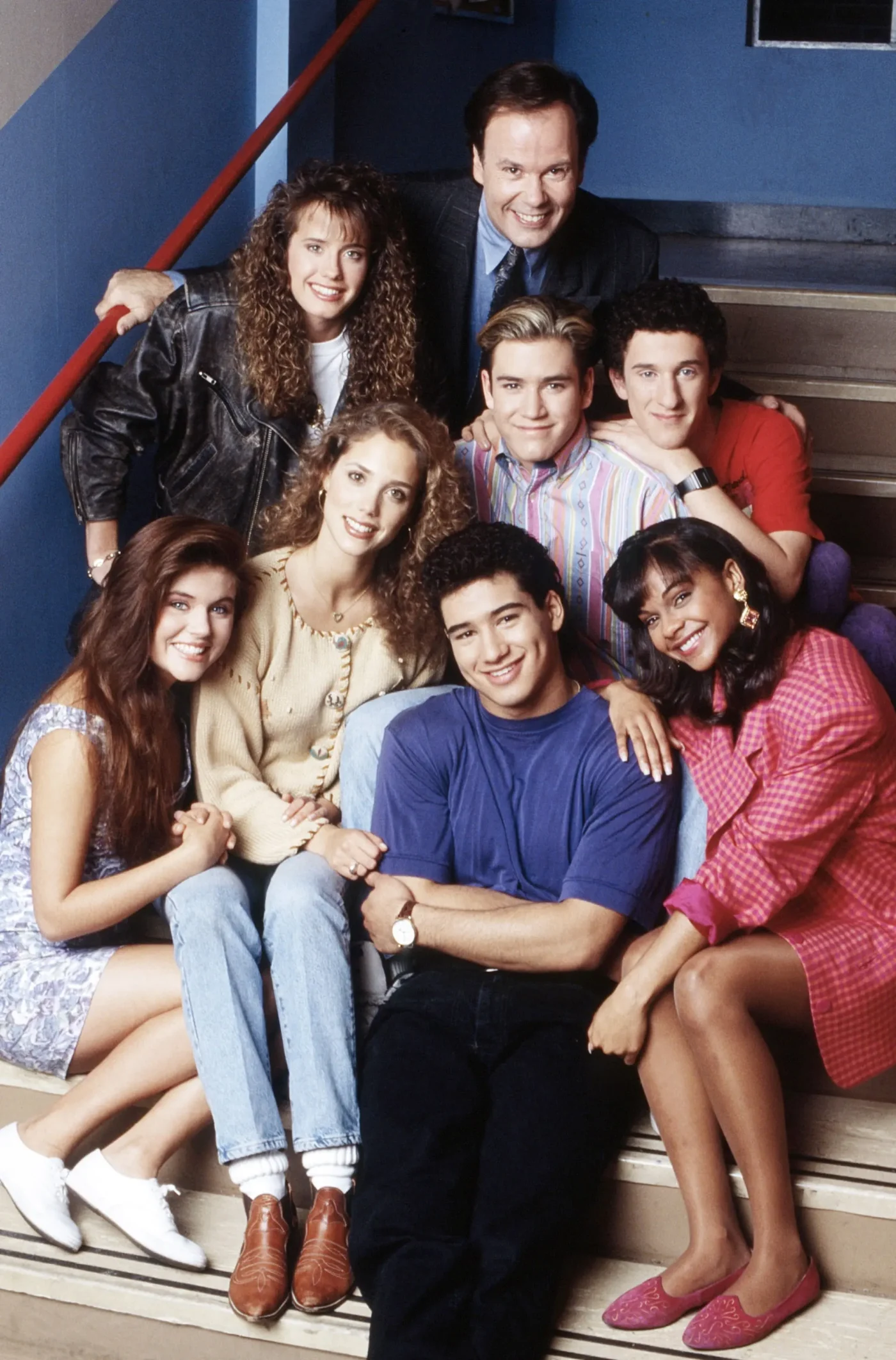
The cast of Saved by the Bell posing in a promotional photo.
Lopez readily credits the series for providing the career springboard that enabled him to build a decades-long presenting career across major entertainment news programmes.
“I have nothing but pleasant memories and a great experience,” Lopez stressed. “It provided a lot of the opportunities that I’m able to kind of have today.”
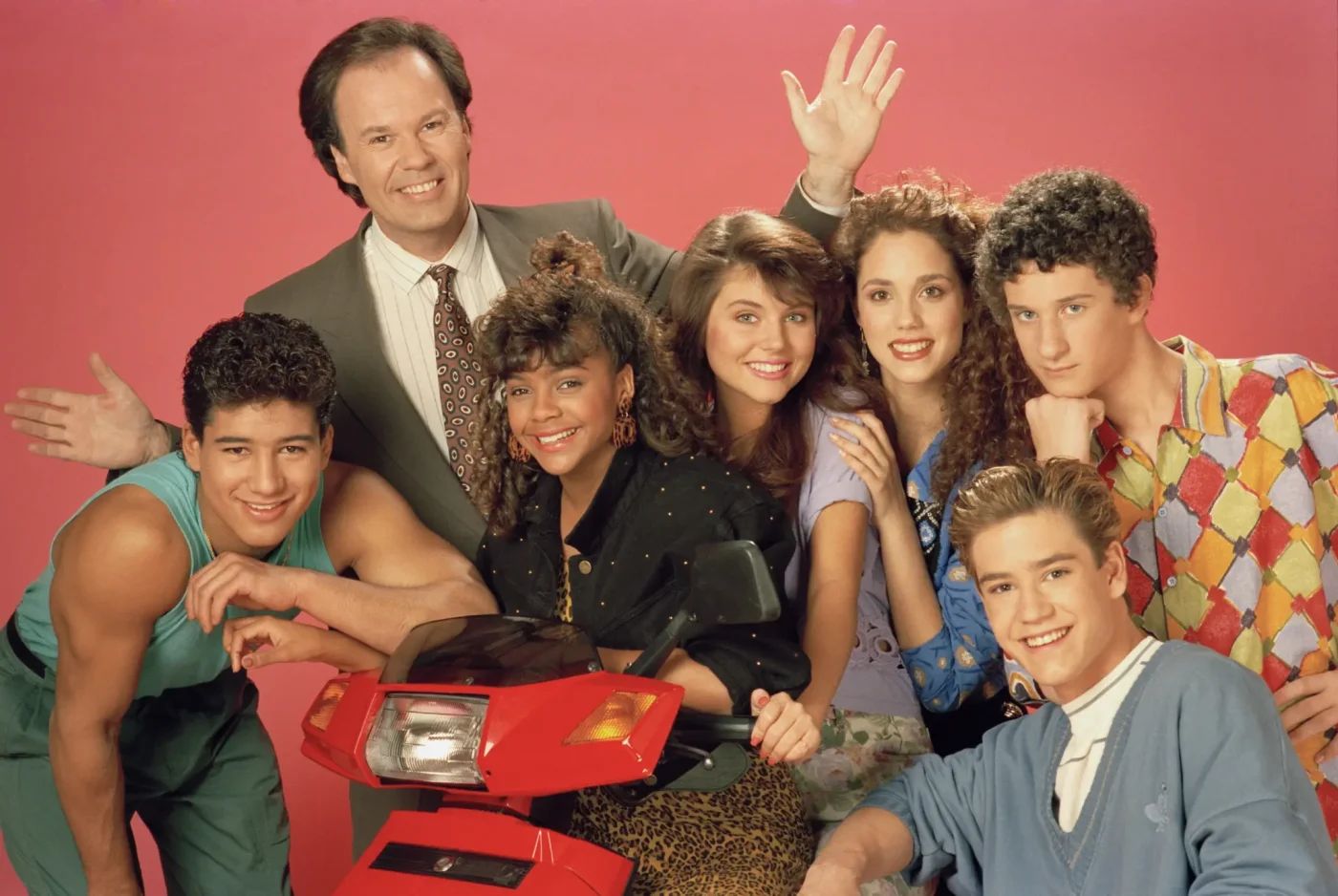
The ensemble cast of Saved by the Bell with character Principal Belding.
💡 The disclosure offers a sobering glimpse into the entertainment industry, proving that global nostalgia and continuous re-runs do not automatically translate to ongoing earnings for on-screen talent.
🔍 For young performers entering broadcast entertainment today, the lessons from the Bayside High cohort underscore the immense importance of negotiating robust long-term royalty and syndication terms early.
👇 Did you assume classic sitcom stars earned substantial fortunes from endless re-runs? Share your thoughts in the comments below.
Source: pagesix.com
 1
 2
 3
 4