
Paris Nicknamed It ‘The Fakir’s Rest’: The Chilling Urban Trap Installed on City Streets That Sparked Global Backlash

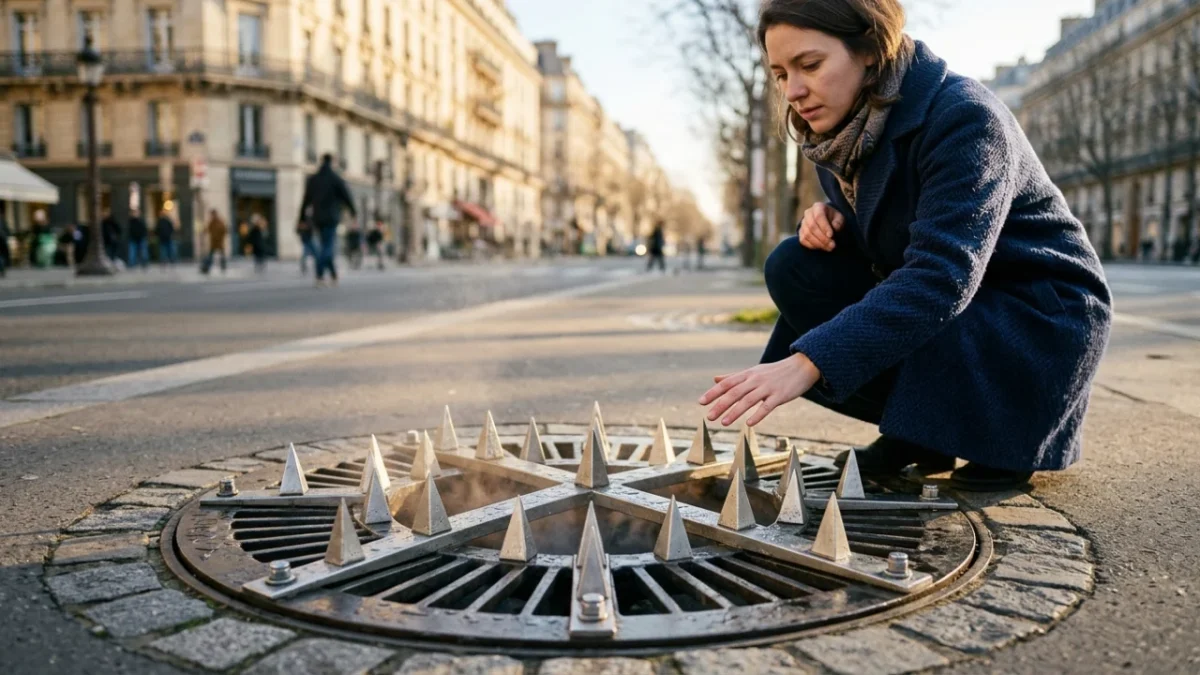
The notorious Parisian street fixture known as “the fakir’s rest” is not an art installation, but a deliberate weapon of defensive design: sharp metal studs and ribbed steel bars bolted directly over warm pavement exhaust grates to stop homeless people from lying down. Evoking the legendary bed of nails used by ascetic mystics, these metallic deterrents stripped rough sleepers of one of their few winter lifelines—the warm exhaust air escaping from the Paris Métro and underground heating systems.
The device quickly became the defining symbol of hostile architecture Paris witnessed across its historic boulevards and modern plazas. Rather than addressing the systemic cracks forcing thousands onto the streets, urban planners and private property owners quietly redesigned public surfaces to make basic human rest physically intolerable.
What began as subtle architectural tweaks soon triggered fierce public outrage, investigative campaigns, and a profound ethical reckoning over who actually owns the city.
The Cold Mechanics Behind ‘The Fakir’s Rest’
During brutal winter conditions, subway grates and ventilation shafts function as informal survival stations. Rising warm air can mean the difference between surviving a freezing night and succumbing to hypothermia.
To eliminate rough sleepers from shopfronts and tourist thoroughfares, property managers installed angled plates, pyramid-shaped metal studs, and sharp crossbars across these thermal vents. Anyone attempting to sit or recline on the warm surface finds their body pressed against unyielding steel spikes.
Street outreach workers and activists quickly coined the sardonic label le repos du fakir (the fakir’s rest). The name stuck, laying bare the calculated cruelty behind designs engineered to look modern while inflicting physical discomfort.
The Silent Expansion of Defensive Urban Design
Hostile architecture rarely advertises its true intentions. It conceals exclusion behind the language of visual polish, civic cleanliness, and pedestrian safety.
Across the French capital, public furniture was methodically altered to prevent extended lingering or horizontal rest. Benches received awkward central armrests, bus shelters featured steep, polished perches that defy gravity, and recessed entrance alcoves were filled with jagged stone masonry.
These interventions target the most vulnerable while quietly degrading the public realm for everyone else, including the elderly, pregnant women, and weary pedestrians.
The Satirical Revolt: The ‘Golden Spikes’
Public anger reached a boiling point when French anti-poverty charities stepped in to document and challenge the spread of exclusionary designs across the capital.
The Abbé Pierre Foundation launched a scathing satirical awards ceremony known as the Pics d’Or (Golden Spikes). The campaign invited everyday citizens to photograph, geo-locate, and submit the most egregious examples of defensive street furniture in their neighbourhoods.
- Deceptive Planters: Large concrete or metal flowerboxes strategically arranged solely to block recessed doorways.
- High-Pressure Deterrents: Automatic sprinkler nozzles positioned to soak anyone lingering beneath shop awnings after closing hours.
- Subdivided Benches: Pavement benches modified with rigid steel dividers every eighteen inches to block reclining.
- Granite Boulders: Massive raw rocks dumped beneath motorway bridges and overpasses to displace informal encampments.
By attaching bright stickers declaring “Instead of preventing the homeless from sleeping here, let’s make sure they have a place to sleep,” campaigners stripped the design choices of their plausible deniability.
A Battle for the Democratic Soul of the Street
Urban planning always reflects a society’s core values. When public space is weaponised, it sends an unambiguous message: visual comfort takes precedence over human survival.
Defensive design does not resolve rough sleeping; it merely shuffles human suffering into peripheral, unmonitored corners of the metropolitan perimeter. By rendering pavements unusable for the vulnerable, cities subtly dismantle public spaces that were meant to be accessible to all.
Today, the legacy of the fakir’s rest stands as a stark warning for municipalities worldwide. Pavements, benches, and open squares are the shared commons of urban life, and modifying them to exclude the vulnerable diminishes the civic fabric of the entire city.
💡 The next time you walk through an urban centre, look closely at the benches, window sills, and pavement grates around you.
🔍 You may realise that features you once assumed were purely decorative were actually engineered to deter human touch.
👇 Have you spotted hostile architecture like this in your own city? Share what you noticed in the comments below.
 1
 2
 3
 4