
Scientists Blast Underwater Sound at Beach Seals—and the Data Reveals a 3.57x Shift in Animal Behavior

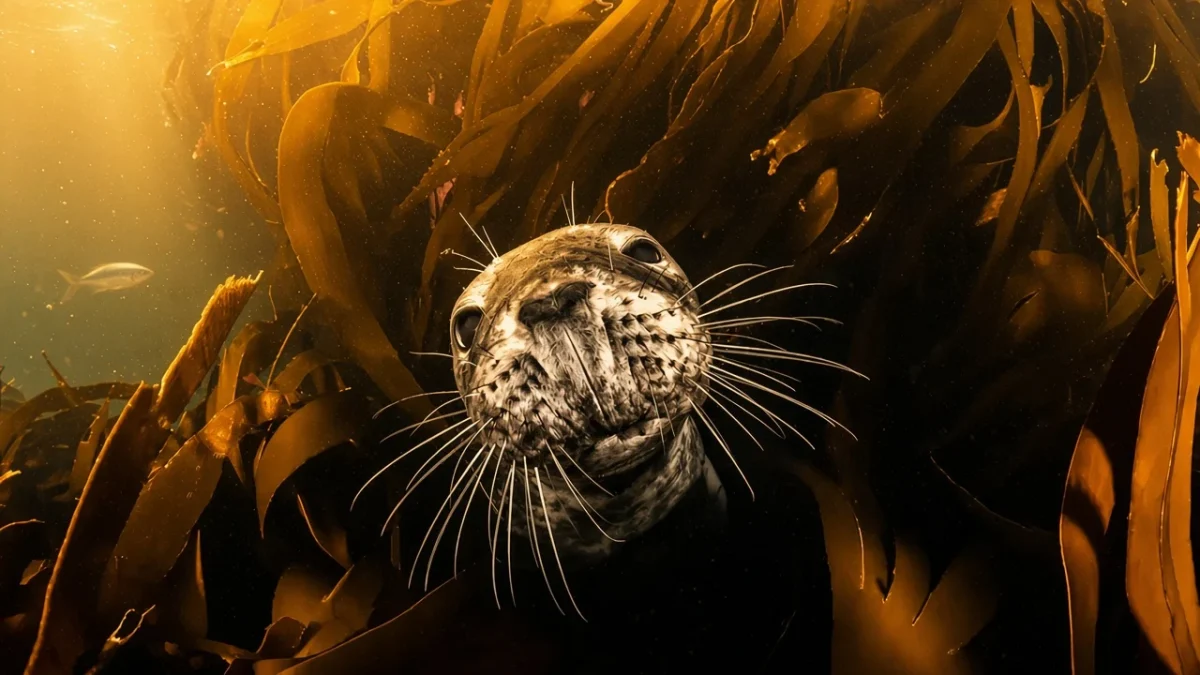
Pulsing targeted acoustic bursts underwater makes grey seals 3.57 times more likely to keep their distance from designated swimming zones, according to peer-reviewed research analyzing more than 22,000 animal positions. The breakthrough field trial offers the first empirical proof that non-lethal sound can steer massive marine mammals away from crowded recreational waters without walling off their natural territory.
The trial took place at Helgoland Dune, a small island off Germany’s North Sea coast that hosts the nation’s largest grey seal colony. Because the popular tourist beach draws thousands of vacationers into the exact shallows where wild seals hunt and rest, wildlife managers faced an escalating safety challenge after previous physical encounters raised alarms.
Erecting physical fences would sever marine life from essential foraging grounds. Leaving the shoreline unmanaged, however, invited unpredictable close calls between 600-pound predators and unsuspecting swimmers.
How Targeted Acoustic Startle Technology Works Underwater
To solve the standoff, scientists tested an innovation known as Targeted Acoustic Startle Technology (TAST). Published in Scientific Reports under the title “Acoustic deterrence as a mitigation tool for seal-human conflicts in the Helgoland Dune swimming zone,” the study evaluated whether brief, calculated noise pulses could alter seal swimming paths.
Rather than using deafening volume to drive animals away through physical discomfort, the system triggers an instinctive, momentary startle reflex.
- Pulse Duration: Transmissions lasted exactly two seconds per pulse.
- Acoustic Frequency: Signals operated across a targeted range of 700 to 1,500 hertz.
- Source Level: Emitted at 180 decibels relative to one micropascal.
- Monitoring Method: High-precision cameras logged real-time animal coordinates across two field trials.
The goal was simple: persuade the animals to reroute before they drifted within arm’s reach of beachgoers.
The Data: Tracking 22,086 Recorded Seal Positions
To measure effectiveness, the research team monitored 22,086 recorded seal positions, sorting them into three distinct zones: under 10 meters, between 10 and 25 meters, and farther than 25 meters from the swim perimeter.
Using a cumulative link mixed model to evaluate the coordinates, researchers observed a statistically undeniable shift. During active acoustic broadcasts, seals were 3.57 times more likely to hold in the two outer zones rather than pressing into the close-contact band under 10 meters.
The statistical validity remained airtight, logging a 95% confidence interval of 2.38 to 5.37 and a p-value below 0.001. Random ocean movement alone could not explain the pattern.
Acoustic deterrence serves as a targeted tool to reduce close human-wildlife encounters without degrading surrounding marine access.
The 94% Individual Variation Factor
While the broader colony shifted outward, the animals did not respond as a monolithic herd. The data revealed that individual variability accounted for 94% of the behavioral differences observed during testing, based on the intraclass correlation coefficient.
Certain seals reacted instantly to the acoustic pulses by banking away, while others demonstrated higher tolerance or curiosity. Because the field trials occurred strictly within Helgoland Dune, researchers emphasized that the deterrent might yield different baseline reactions across separate colonies, seasons, or coastal topographies.
Myth vs. Reality: Managing Marine Wildlife Encounters
A persistent public misconception suggests that managing marine mammals requires either heavy physical barriers or total beach closures. In reality, physical nets trap non-target wildlife, alter tidal sediment, and provoke severe regulatory pushback from conservation authorities.
The Helgoland Dune trials prove that an invisible, acoustic perimeter can alter animal distribution while leaving the physical ecosystem completely open.
| Management Strategy | Observed Coastal Impact |
|---|---|
| Physical Barriers & Netting | Disrupts natural marine migration, risks animal entanglement, and damages seafloor habitat. |
| Targeted Acoustic Deterrence | Yields an odds ratio of 3.57 toward greater separation without restricting wild habitat access. |
By relying on localized, 2-second acoustic bursts rather than continuous acoustic pollution, managers can activate deterrence specifically when human recreation peaks.
💬 Balancing public beach safety with active wildlife conservation remains one of the toughest challenges facing coastal communities worldwide.
✨ As non-invasive tools like TAST evolve, coastal managers gain a viable blueprint for sharing shorelines with apex marine species without resorting to barriers.
👇 Have you ever encountered large marine wildlife while swimming at the beach? Drop your thoughts in the comments below!
 1
 2
 3
 4
