
Scientists Sent 1,027 People Into an Allegedly Haunted Royal Palace: What Happened Inside Explains Why We Sense Ghosts

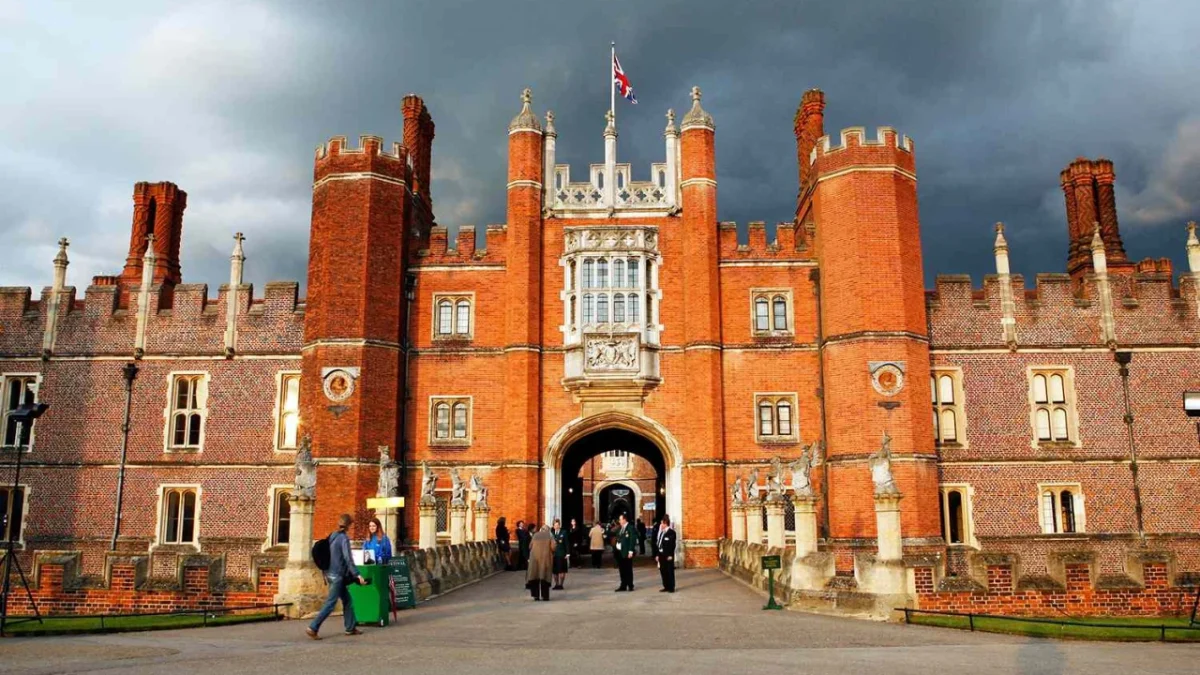
When psychologists sent 1,027 volunteers into the shadowy corridors of England’s Hampton Court Palace, they were not hunting for Catherine Howard‘s screaming spirit. Instead, they wanted hard data on what truly triggers the feeling of a paranormal encounter: actual phantoms or the power of human expectation.
The landmark investigation confirmed that belief and suggestion directly dictate how the human body interprets cold spots, strange odors, and eerie chills. According to Guinness World Records, the project marked the largest scientific study of an allegedly haunted building ever conducted.
What the researchers uncovered inside the royal halls changes everything we know about spooky spaces.
Inside the Landmark 1,027-Person Experiment
Led by psychologist Richard Wiseman of the University of Hertfordshire, the massive test ran through May and June 2000. Volunteers navigated infamous hotspots across Hampton Court Palace, including the Georgian Rooms and the Haunted Gallery.
Participants were tasked with logging every bizarre physical sensation, from sudden drafts to feeling an unseen watcher breathing down their necks. But the researchers added a hidden psychological twist that divided the crowd.
One group received detailed lore about ghostly sightings in specific corridors. The other group was told the study was simply measuring the physical side effects of building renovation work.
Belief vs. Skepticism: What the Data Showed
The results exposed a stark divide. Volunteers who already identified as believers in the paranormal reported significantly more unusual sensations than skeptics roaming the exact same hallways.
Simply suggesting that a room harbored restless spirits altered how visitors felt physically. When people expected a scare, mundane sensory triggers transformed into supernatural encounters.
| Factor Tested | Observed Participant Reaction |
|---|---|
| Pre-existing Paranormal Belief | Significantly higher reports of sudden chills, strange odors, and eerie presences. |
| Prior Suggestion of Hauntings | Increased hyper-awareness and misinterpretation of ordinary environmental drafts. |
| Skeptical Mindset | Far fewer reported anomalies despite walking the exact same historic routes. |
| Framing as Palace Restoration | Participants largely ignored minor temperature drops and subtle background creaks. |
Busting the Ghost Myth: Mind Over Matter
Popular folklore insists that haunted spots possess lingering supernatural energy that anyone can feel. The Hampton Court findings blew that assumption apart.
Cold drafts and drafts around old palace window seals are physical realities, but our brains assign them meaning. Skeptics barely registered the temperature swings, while believers interpreted the same drafts as ghostly touches.
“I think people have genuinely strange experiences. They can be because of environmental factors and if the house is known to be haunted.” — Richard Wiseman
The human brain acts as an active pattern-matching engine. Feed it spooky tales in a dim hallway, and it will effortlessly manufacture a ghost to match the mood.
The Blueprint for an Artificial Haunted Room
Following the palace trials, Wiseman set his sights on taking the research into a controlled lab environment. He drew up plans for a custom-built, simulated haunted house study space costing over $65,000.
His blueprint relied strictly on environmental manipulation rather than staged actors or parlor tricks:
- Low-Frequency Vibrations: Generating infrasound beneath normal hearing thresholds to induce anxiety and dizziness.
- Electromagnetic Fluctuations: Applying localized magnetic fields that can provoke sensations of being watched.
- Sudden Temperature Drops: Mimicking classic cold spots using subtle air drafts.
- Eerie Ambient Lighting: Exploiting peripheral vision deficits in low-light environments.
By recreating ghostly sensations using pure physics, science proves that the creepiest haunted houses might just exist inside our own heads.
💬 Have you ever walked into an old building and felt an eerie chill down your spine?
✨ It turns out your environment and your expectations play a much bigger role than any lurking spirit.
👇 Drop your thoughts in the comments below: do you believe in haunted houses, or is psychology doing all the work?
Quiz
The Science of Haunted Spaces
Test your knowledge with 3 questions about the article
-
At which historic site did researchers conduct the landmark study on 1,027 volunteers?
Why: The massive scientific experiment was held inside England's Hampton Court Palace.
-
What occurred when researchers told a group that the test measured the effects of building renovations?
Why: Framing the study around palace restoration led volunteers to overlook minor temperature drops and subtle creaks.
-
According to Richard Wiseman's artificial haunted room blueprint, what was used to trigger dizziness and anxiety?
Why: Generating low-frequency infrasound below the normal hearing threshold was planned to induce anxiety and dizziness.
Your stars: 0 ⭐
Invite friends with your link — every friend who gifts you stars is worth 5 ⭐
Thanks for playing! Only 1% of players beat your score. Check the leaderboard! 😱
 1
 2
 3
 4
