
The Backyard Drainage Mistake Ruining French Drains: Why Clean #57 Crushed Stone Beats Pea Gravel

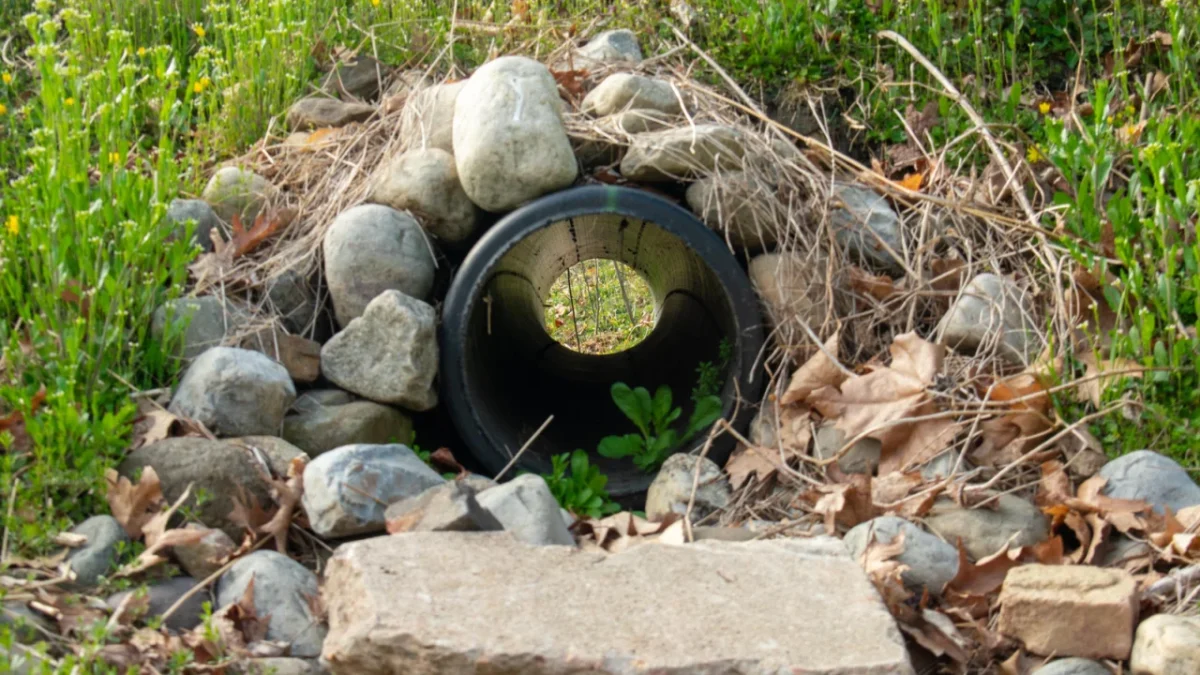
Clean, washed #57 crushed stone is the most durable aggregate for French drains, far outlasting standard pea gravel by locking into a stable base without shifting around your perforated pipe. While pea gravel is a tempting, budget-friendly pick, its smooth surfaces can cause total system failure when water begins to move underground.
Tackling soggy turf or patio runoff usually starts with a simple trench and perforated pipe. Yet the aggregate you pour into that trench determines whether your drainage system functions for decades or collapses under pressure.
Before you shovel tons of rock into your yard, understanding the physics behind subsurface water flow will save you from digging it all back up.
Why Angular Crushed Stone Outperforms Smooth Pea Gravel
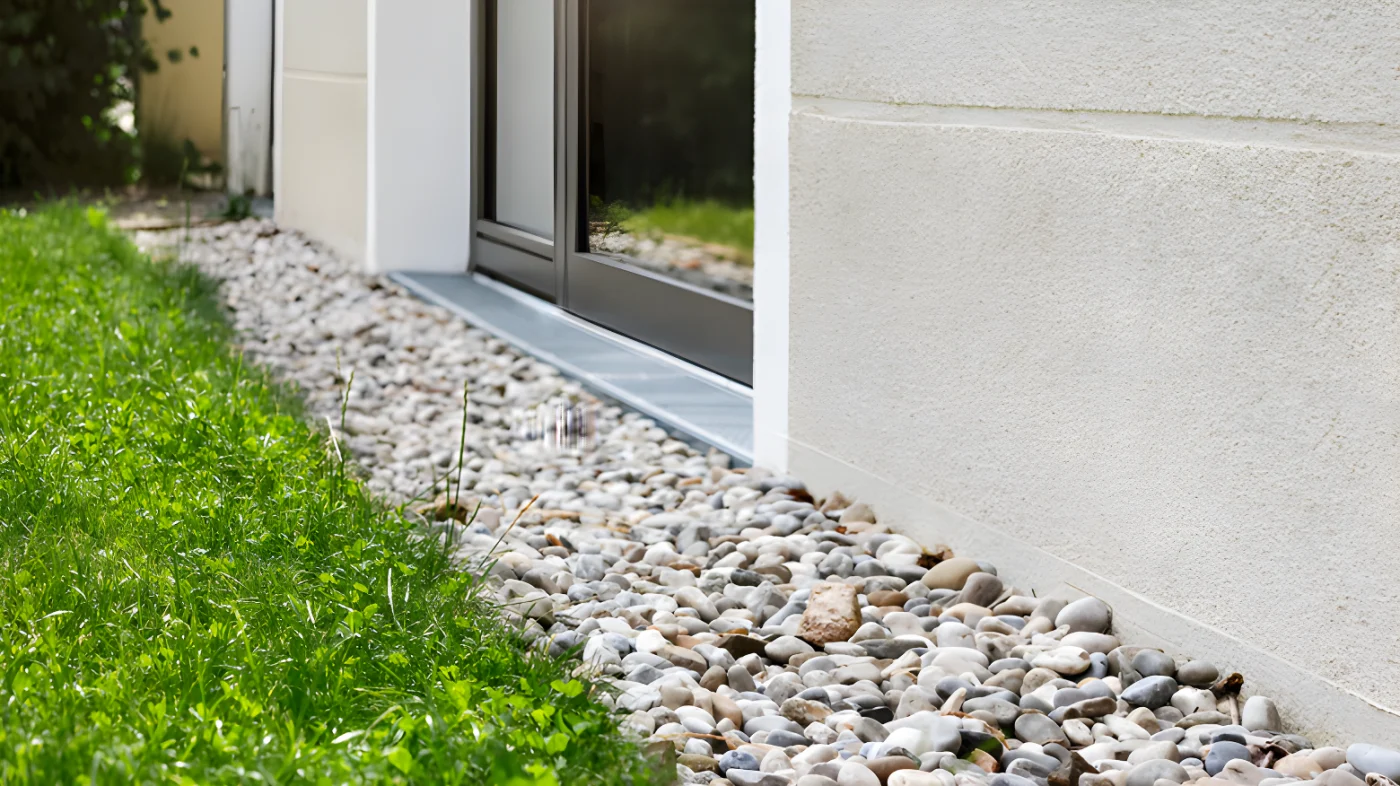
French drain drainage system
Mechanical crushing breaks large rock into sharp, angular fragments with mismatched edges. When dumped into a trench, these irregular edges interlock to form an unyielding, structurally sound envelope around the pipe.
Smooth pea gravel behaves very differently. Because the stones are small and naturally rounded, they slide past each other easily.
Over time, heavy groundwater flow and surface weight cause smooth gravel to migrate and settle unevenly. This movement compromises the trench structure and can distort the slope of your pipe.
Smooth pea gravel shifts and migrates over time, threatening trench integrity, whereas angular crushed stone locks together to maintain open water channels.
Water moves exclusively through the void spaces between individual stones. When rocks pack too tightly or shift out of alignment, water channels choke shut.
Clean, uniformly sized stone creates an open-graded structure with abundant air gaps, allowing high volumes of surface runoff to sink immediately into the perforated pipe.
Aggregate Comparison: Pea Gravel vs. #57 Crushed Stone
Choosing aggregate isn’t just about what looks tidy in your wheelbarrow. The physical differences between rounded gravel and crushed stone directly impact subterranean drainage performance.
| Aggregate Type | Impact on French Drain Systems |
|---|---|
| Standard Pea Gravel | Small, rounded stones roll and shift easily under pressure, reducing stability and altering trench integrity over time. |
| Washed #57 Crushed Stone | Angular pieces measuring ¾ inch to 1 inch interlock for stability while maintaining optimal voids for water flow. |
The Myth About Gravel and Water Flow
A widespread misconception is that any round stone drains faster than jagged rock because smooth surfaces offer zero resistance. In practical drainage design, that logic fails completely.
Unspecified bags of mixed pea gravel often contain small fines that settle into voids, suffocating water pathways. Furthermore, rounded stones offer zero structural resistance against soil pressure, allowing surrounding earth to shift your pipe out of alignment.
How to Correctly Install Crushed Stone in French Drains
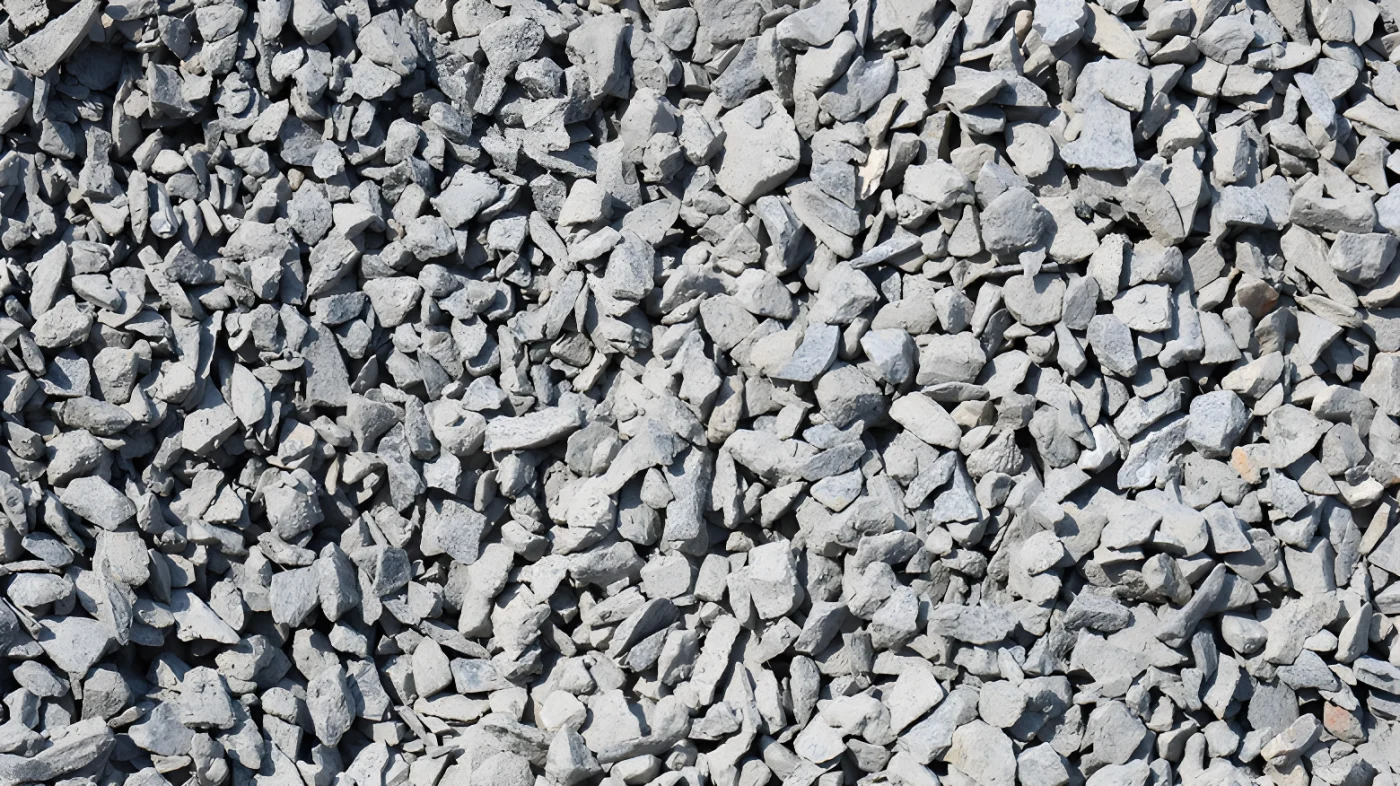
Crushed gray stone used for drainage
Not every crushed aggregate at the quarry works in a drainage trench. Selecting the wrong blend can turn your French drain into a solid strip of underground concrete.
Avoid materials like crusher run at all costs. Crusher run includes dense stone dust and fine particles designed specifically to compact hard beneath driveways, which completely stops water from passing through.
Always order clean, washed drainage aggregate with zero stone dust to protect water void pathways from instant clogging.
To ensure your installation stays clear and functional for the long haul, follow these critical construction steps:
- Excavate with a continuous slope: Dig a trench with a steady downward pitch directed toward a safe, dedicated discharge point.
- Line the trench with non-woven geotextile fabric: Drape the fabric across the bottom and up the trench walls, leaving enough excess on both sides to overlap at the top.
- Lay down a washed stone base: Pour a bed of clean, washed #57 stone along the bottom to support the perforated pipe at the correct pitch.
- Place the pipe and backfill with stone: Set your pipe and surround it entirely with #57 stone so water can enter freely from every angle.
- Wrap and seal: Fold the non-woven geotextile fabric over the top of the aggregate before backfilling with topsoil to permanently block dirt from migrating into the stone.
Even premium materials cannot rescue a trench dug without a continuous downward slope. Ensuring both the pipe grade and aggregate surrounding it are installed cleanly guarantees your yard stays dry during torrential storms.
💬 Have you tackled a drainage trench in your own yard? Let us know what rock you used in the comments below.
✨ Choosing the right aggregate upfront saves thousands of dollars in yard excavation repairs later.
📱 Share this guide with anyone planning a backyard landscape project this season.
 1
 2
 3
 4
