
She Wrote Western History on an Envelope: Inside Dale Evans’ Rise From Teenage Single Mother to Queen of the West

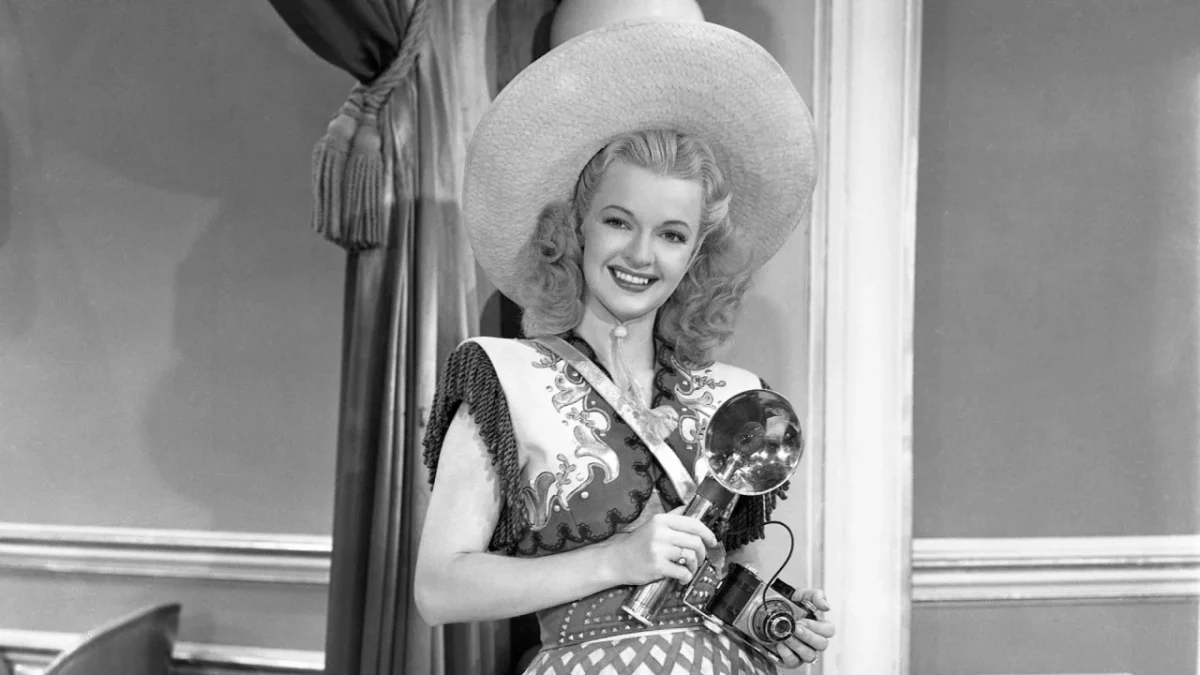
Before she was celebrated as the undisputed “Queen of the West,” Dale Evans was a divorced single mother working as an insurance secretary at just 17 years old. Long before sharing the silver screen with Roy Rogers and writing the Western classic “Happy Trails,” she faced intense industry skepticism and personal hardship in an era dominated entirely by male cowboy stars.
Her path to nationwide fame transformed American popular entertainment. Beyond her signature white stetson, Evans authored more than 400 original songs, co-starred in 28 films alongside Rogers, and built a multimedia empire that spanned network radio, television, and philanthropy.
From Frances Smith to the Radio Airwaves
Born Frances Octavia Smith on October 31, 1912, in Uvalde, Texas, she showed musical independence at an early age. She delivered her first public vocal solo at age three inside a local Baptist church in Italy, Texas, where her father operated a hardware store.
After relocating to Osceola, Arkansas, at seven, her formal piano instruction fell apart for a telling reason: her instructor quit out of frustration because young Frances insisted on improvising her own melodies rather than rehearsing standard scales.
Life shifted rapidly in her teenage years. Smith eloped at 14 and welcomed her first child at 15. By age 17, she found herself divorced, raising a son alone in Memphis, Tennessee, and taking business courses to make ends meet.
While working behind a desk at a Memphis insurance firm, her private humming caught her boss’s ear. Recognizing raw vocal ability, he stepped in to help book her initial auditions across local radio broadcasts, officially launching her professional path.
The Reinvention: How Dale Evans Got Her Name
Seeking broader career prospects, she initially moved to Chicago before recurring health issues prompted a relocation to Louisville, Kentucky. There, a radio station executive decided that Frances Smith needed a punchier moniker for the airwaves.
He renamed her Dale Evans—a crisp, memorable choice designed to roll effortlessly off announcers’ tongues. The stage name stayed with her for the rest of her life as she sang across Louisville clubs and radio stations before returning to Chicago to headline with popular jazz, swing, and big bands.
That high-energy swing circuit eventually caught Hollywood’s attention. Evans landed a screen test for the 1942 holiday favorite Holiday Inn starring Bing Crosby and Fred Astaire. While she missed out on the role, the audition secured her talent agent Joe Rivkin and a studio contract with 20th Century Fox, yielding roles in films like Orchestra Wives and Girl Trouble.
Video feature on the life and career of Dale Evans
Partnering with Roy Rogers and Conquering the Box Office
Evans moved to Republic Pictures, sharing billing with John Wayne in the 1943 release In Old Oklahoma. The pivotal turning point arrived one year later when studio executives paired her with cowboy sensation Roy Rogers in 1944’s The Cowboy and the Senorita.
The on-screen chemistry proved instantaneous, anchoring a collaborative streak across hit Western titles including:
- Sunset in El Dorado (1945)
- Home in Oklahoma (1946)
- Bells of Coronado (1950)
Their working relationship soon evolved into a lifelong romance. The duo married on New Year’s Eve in 1947 at the Flying L Ranch in Davis, Oklahoma—the very ranch where they had filmed Home in Oklahoma the previous year.
A common misconception is that Dale Evans was simply a supportive sidekick to Roy Rogers, when in fact she was a prolific composer and decisive creative partner who generated their defining material.
The Last-Minute Genius of “Happy Trails”
Evans wrote the duo’s signature anthem, “Happy Trails,” under immense deadline pressure. Needing a fresh sign-off track, she jotted the lyrics down on an ordinary mailing envelope and taught the tune to Rogers and his vocal group, the Sons of the Pioneers, just minutes before airtime.
The impromptu composition became the unforgettable theme song for The Roy Rogers Show, broadcasting on NBC from 1951 through 1957 and defining mid-century American Western culture.
Dale Evans Career Highlights
The scale of Evans’ output spanned composition, film performance, network television, and long-running charitable endeavors.
| Career Milestone | Historical Detail |
|---|---|
| Songwriting Catalog | Penned over 400 original songs, including “Happy Trails” |
| Film Collaborations | Co-starred in 28 feature Western films alongside Roy Rogers |
| Television Run | Starred in The Roy Rogers Show on NBC (1951–1957) |
| Solo Broadcasting | Hosted weekly Christian program A Date with Dale (1996–2001) |
| Philanthropic Work | Co-founded Happy Trails Foundation for abused children |
A Enduring Cultural Footprint
Beyond cinema screens, the couple founded Roy Rogers Productions, maintained an operational ranch in Apple Valley, California, and established the Roy Rogers–Dale Evans Museum in Victorville. In their later years, they established the Roy Rogers–Dale Evans Happy Trails Foundation to support abused youth.
Rogers passed away from heart failure in July 1998 at age 86. Evans remained active, hosting her television series A Date with Dale until her death from congestive heart failure on February 7, 2001, at her Apple Valley home at age 88.
💬 Dale Evans shattered industry norms to build an iconic legacy entirely on her own terms.
✨ From jotting timeless anthems on scrap envelopes to commanding Hollywood sets, her resilience reshaped classic Western entertainment.
📱 Did you grow up watching Dale Evans and Roy Rogers? Drop your thoughts in the comments below!
 1
 2
 3
 4
