
The Genetic Mystery Behind the Feline Moustache: Why Street Kittens Are Born With Uncanny Facial Markings

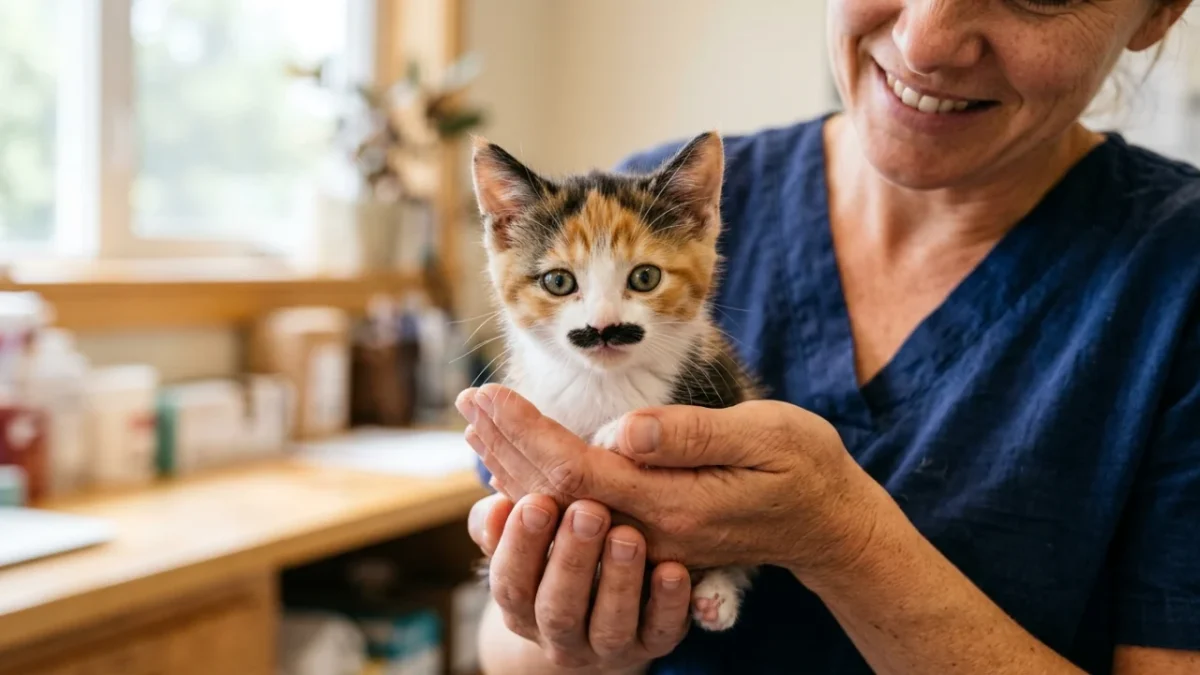
Felines sporting distinct, dapper facial patterns resembling human facial hair—often dubbed a cat mustache—derive their striking look from incomplete melanocyte migration during embryonic gestation rather than deliberate selective breeding. When these kittens appear across urban alleyways and rescue intake centres, their unusual markings instantly turn ordinary stray moggies into viral sensations.
Behind the endearing aesthetic lies a complex biological lottery that governs how coat pigments distribute across a developing kitten’s skin. What appears to be an intentional comedic grooming choice is entirely set by birth on the street or in a litter box, shaped by the unpredictable dance of feline genetics.
Animal welfare organisations across the United Kingdom, including Cats Protection and the RSPCA, regularly intake stray and feral litters displaying these remarkable bicolour coats. Understanding how these patterns form sheds light on feline health, embryonic biology, and the reality facing free-roaming urban cat populations.
The Cellular Journey: How Facial Markings Form Before Birth
The distinctive dark patch sitting neatly beneath a feline nose traces back to the earliest stages of embryonic development. Neural crest cells, which eventually mature into pigment-producing melanocytes, originate along what will become the kitten’s spinal column and travel outwards across the body.
In cats carrying piebald or white-spotting genetics, these melanocytes fail to spread evenly across the entire surface of the body. Pigment cells begin migrating from the spine downwards towards the extremities, but they frequently run out of time before covering the lower face, chest, and paws.
When the migration halts abruptly on either side of the philtrum—the groove running between the nose and upper lip—it leaves isolated clusters of coloured fur surrounded by stark white background. This precise distribution creates the classic cat mustache marking.
- The Piebald Gene (S): A dominant genetic factor that controls white spotting and determines how far pigment cells travel.
- Variable Penetrance: Even full siblings sharing the same stray parentage develop wildly different facial markings due to random cellular drift.
- Temperature and Uterine Dynamics: Micro-environmental factors within the mother’s womb influence how pigment patches settle across the muzzle.
The Anatomy of Feline Whiskers Versus Fur Markings
It is vital to distinguish between cosmetic pigmentation and functional feline anatomy. While a coat marking looks like human facial hair, a cat’s true sensory apparatus sits directly within those follicles.
Vibrissae, commonly known as whiskers, are deeply rooted tactile sensors packed with nerve endings that allow felines to navigate confined spaces in pitch darkness. The coloured fur forming a moustache pattern sits superficial to these complex nerve beds, providing pure visual contrast without altering the cat’s sensory capabilities.
Street Moggies and the Urban Adoption Phenomenon
In British towns and cities, domestic short-haired moggies make up the overwhelming majority of community cats. Without controlled pedigree breeding, natural selection and random mating amplify spontaneous coat patterns, making street litters a common source of unusual facial markings.
Rescue charities frequently observe a clear psychological shift when stray cats present distinctive facial features. Rescue centres often struggle to find homes for plain black or standard tabby street cats, yet an animal born with an identifiable moustache pattern frequently secures an immediate queue of prospective adopters.
Behavioural researchers note that humans instinctively project personality traits onto domestic animals displaying anthropomorphic markings. A stray kitten born in a back alley gains immediate individuality, helping shelter staff run successful rehoming campaigns through visual storytelling.
Welfare Essentials for Free-Roaming and Rescued Cats
While an eccentric appearance captures public affection, cats born outdoors face substantial physiological and environmental pressures. In the UK, statutory requirements mandate that all domestic cats over the age of twenty weeks must be microchipped, ensuring lost pets can be reunited swiftly with their registered keepers.
Stray litters born in unmanaged urban environments require immediate veterinary assessment to address common outdoor hazards:
- Parasite Management: Outdoor litters inevitably contract fleas, ear mites, and intestinal worms that demand licensed veterinary treatment.
- Neutering and Spaying: Preventing uncontrolled breeding is the single most effective method to curb feline overpopulation and protect community cat welfare.
- Infectious Disease Screening: Feline immunodeficiency virus (FIV) and feline leukaemia virus (FeLV) present serious risks among unneutered street populations.
A memorable coat cannot shield a feline from harsh weather, road traffic accidents, or territorial fighting. Providing secure indoor housing or safe outdoor enclosures remains paramount, regardless of how distinguished a pet appears.
Supporting Local Rescue Networks
Anyone who encounters an abandoned kitten or unneutered street colony should resist simply taking the animals home without professional coordination. Contacting an established UK animal welfare charity ensures that lactating queens and their offspring receive comprehensive medical checks before placement.
Dedicated foster networks routinely rehabilitate timid street kittens, socialising them during the crucial early weeks of development so they thrive in domestic environments. Supporting these organisations through adoption, volunteering, or donation ensures that every cat receives proper care, regardless of whether it is born with a show-stopping pattern or a modest plain coat.
💡 The whimsical facial markings seen on domestic felines remind us of the fascinating biological mechanisms operating behind every litter born on British streets.
🔍 If you look closely at your own cat’s muzzle, you might spot the exact line where embryonic pigment cells concluded their journey.
👇 Have you ever adopted a rescue pet with unusual facial markings? Share your experience in the comments below.
 1
 2
 3
 4