
Three Rare Royal Emerald Jewels Head to Auction at Sotheby’s: Inside the Historic Treasures of Portugal and Denmark’s Queens

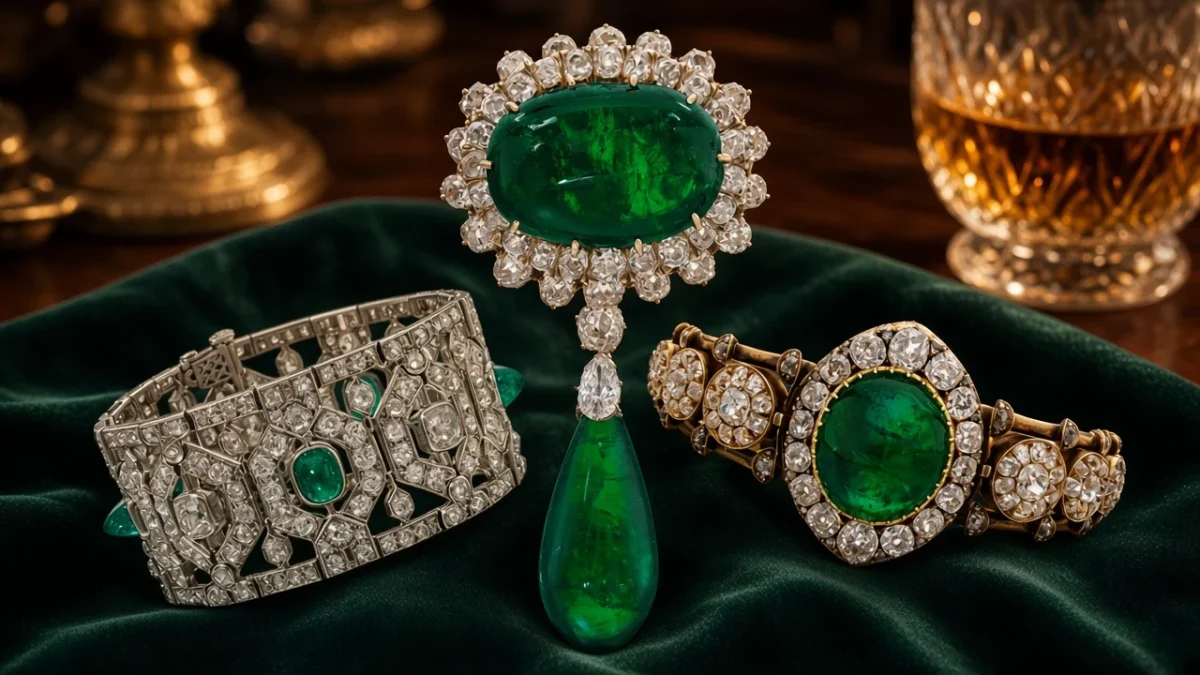
Three historic royal emerald jewels tied to two European queens are heading to the auction block at Sotheby’s in Geneva, carrying combined high estimates that stretch well past $300,000. The rare lineup features an 1880s cabochon bangle and an ornate brooch once owned by Queen Amélie of Portugal, alongside an Art Deco sugarloaf bracelet from the personal vaults of Queen Alexandrine of Denmark.
While centuries-old royal heirlooms often vanish into state museums or private royal trusts, these specific treasures traversed exile, personal handoffs, and high-profile private collections. Now, their return to the international auction circuit offers an uncommon look into how royal heirlooms migrate across generations.
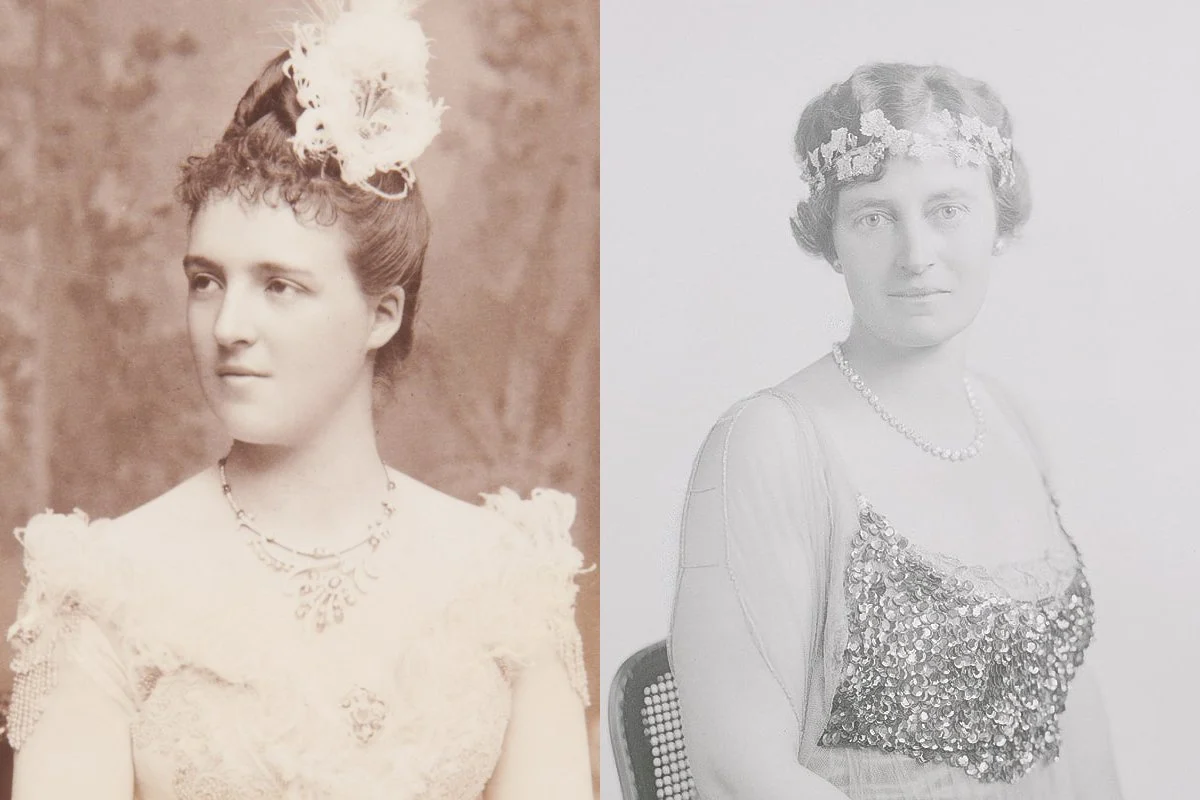
Portraits of Amélie of Orléans, Queen of Portugal and Alexandrine of Mecklenburg-Schwerin, Queen of Denmark.
A Shared Bloodline Behind Two Royal Collections
Despite reigning at opposite ends of the European continent, Queen Amélie and Queen Alexandrine were third cousins once removed. Both traced their ancestry directly to Hereditary Grand Duke Friedrich Louis of Mecklenburg-Schwerin, who lived from 1778 to 1819.
Friedrich Louis married three times during his life, creating sprawling dynastic connections across royal houses. Queen Alexandrine descended through his first union with Grand Duchess Elena Pavlovna of Russia. Queen Amélie traced her descent through his second marriage to Princess Caroline Louise of Saxe-Weimar-Eisenach.
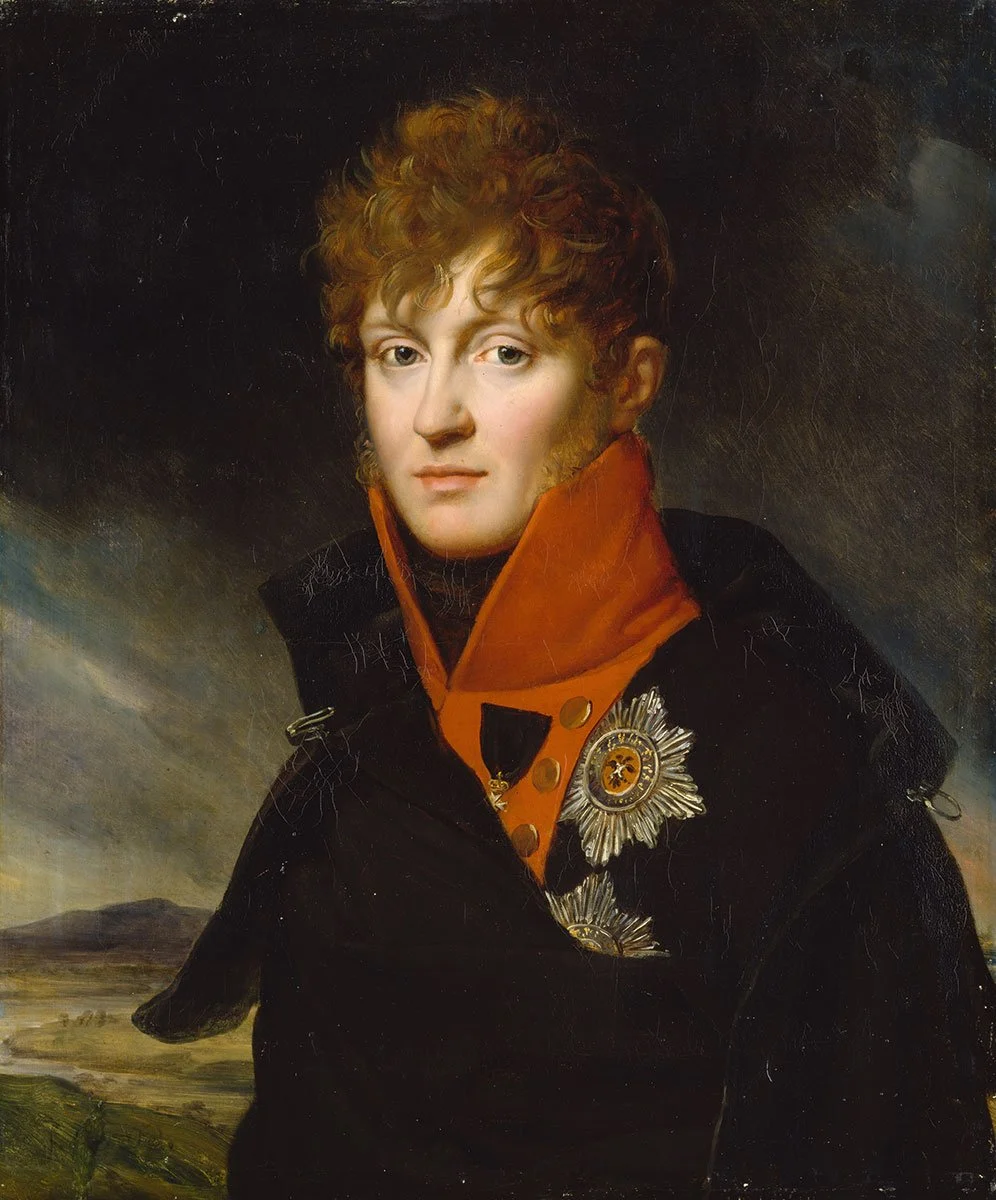
Hereditary Grand Duke Friedrich Louis of Mecklenburg-Schwerin depicted in a historic portrait.
Beyond her German ancestry, Queen Amélie was also a great-granddaughter of France’s King Louis Philippe I. Born in 1865 while her family lived in English exile, she was the eldest of seven children raised by the Count and Countess of Paris.
She maintained lifelong bonds with her immediate family, particularly her brother Philippe, later Duke of Orléans, and her sister Hélène, who eventually became Duchess of Aosta.
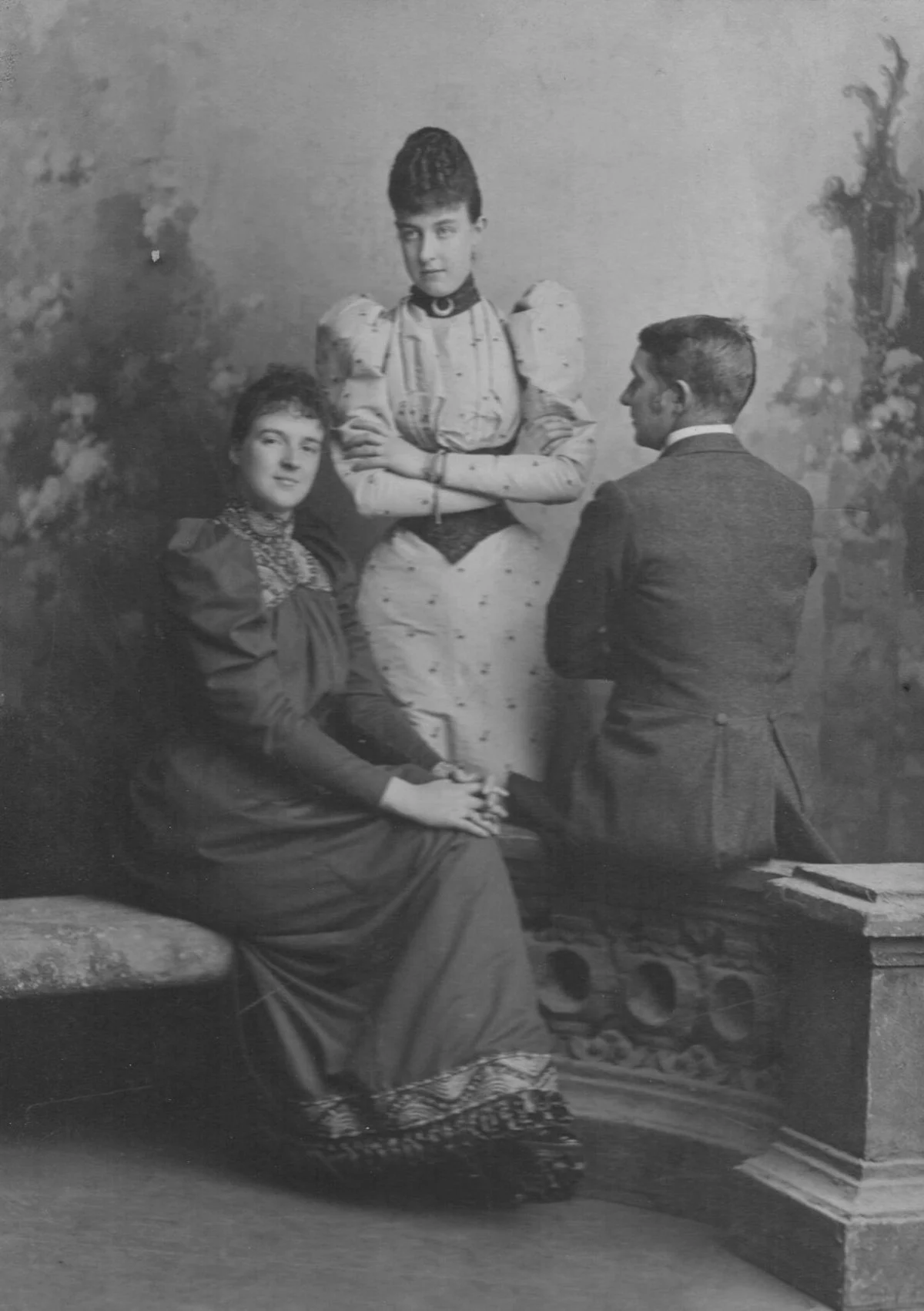
Amélie, Hélène, and Philippe of Orléans during the 1890s.
The Tragic Fall of Portugal’s Throne and Amélie’s Emeralds
Amélie’s 1886 marriage to Carlos, Crown Prince of Portugal, proved to be an enormous diplomatic milestone for the Orléans dynasty. The couple had two sons, Luis Felipe in 1888 and Manuel in 1889, just as Carlos ascended the throne as king.
Tragedy struck the family in 1908 when an assassination in Lisbon killed both King Carlos and Prince Luis Felipe. Amélie’s surviving son took the throne as King Manuel II, but his reign lasted only two years before the Portuguese monarchy fell completely in 1910.
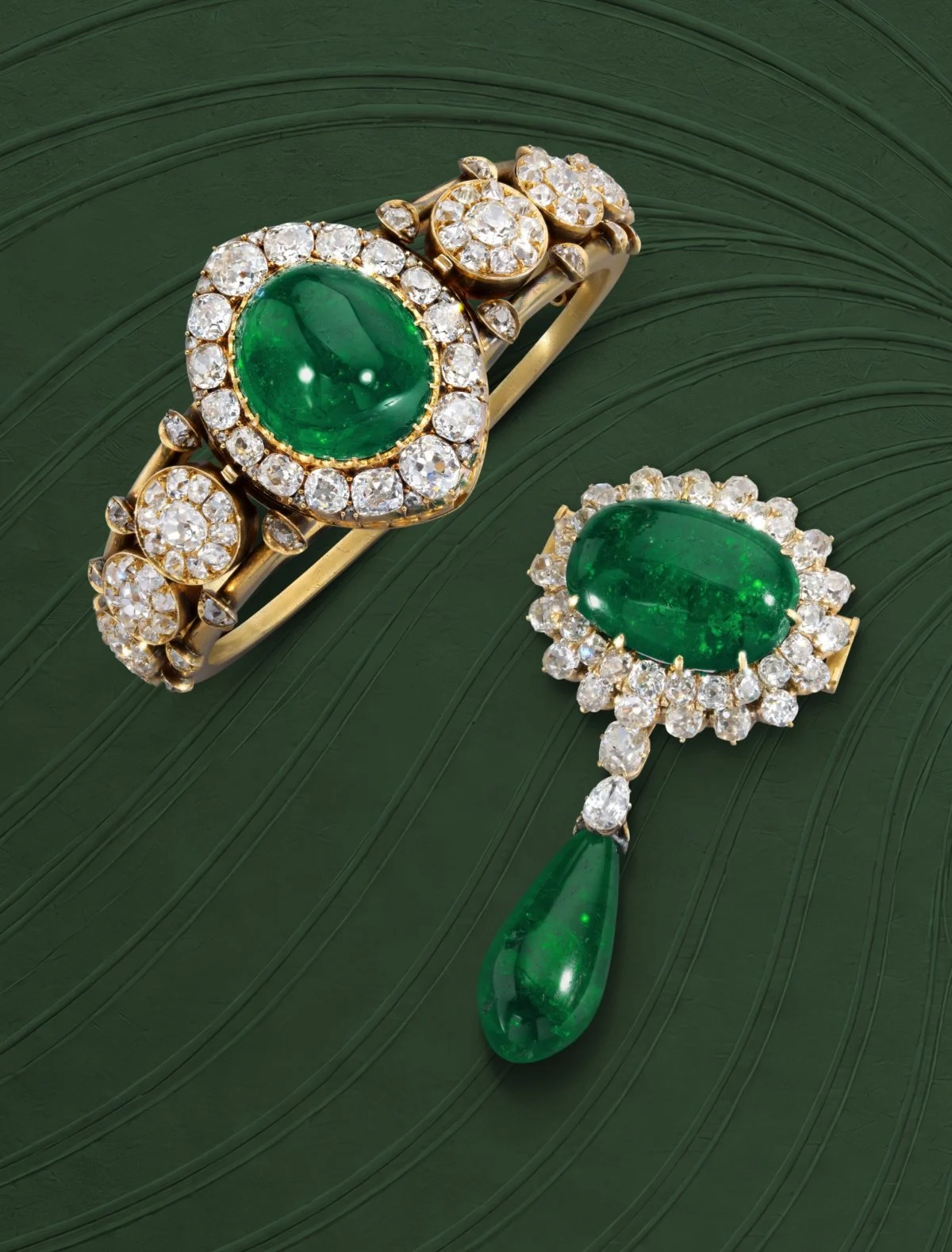
Antique emerald and diamond jewelry pieces featured in the Sotheby’s catalogue.
Amélie carried her private jewelry collection into French exile, preserving pieces she had acquired to establish her public persona as queen consort. She lived in France until her death in 1951, keeping her most significant gemstones intact through decades of political upheaval.
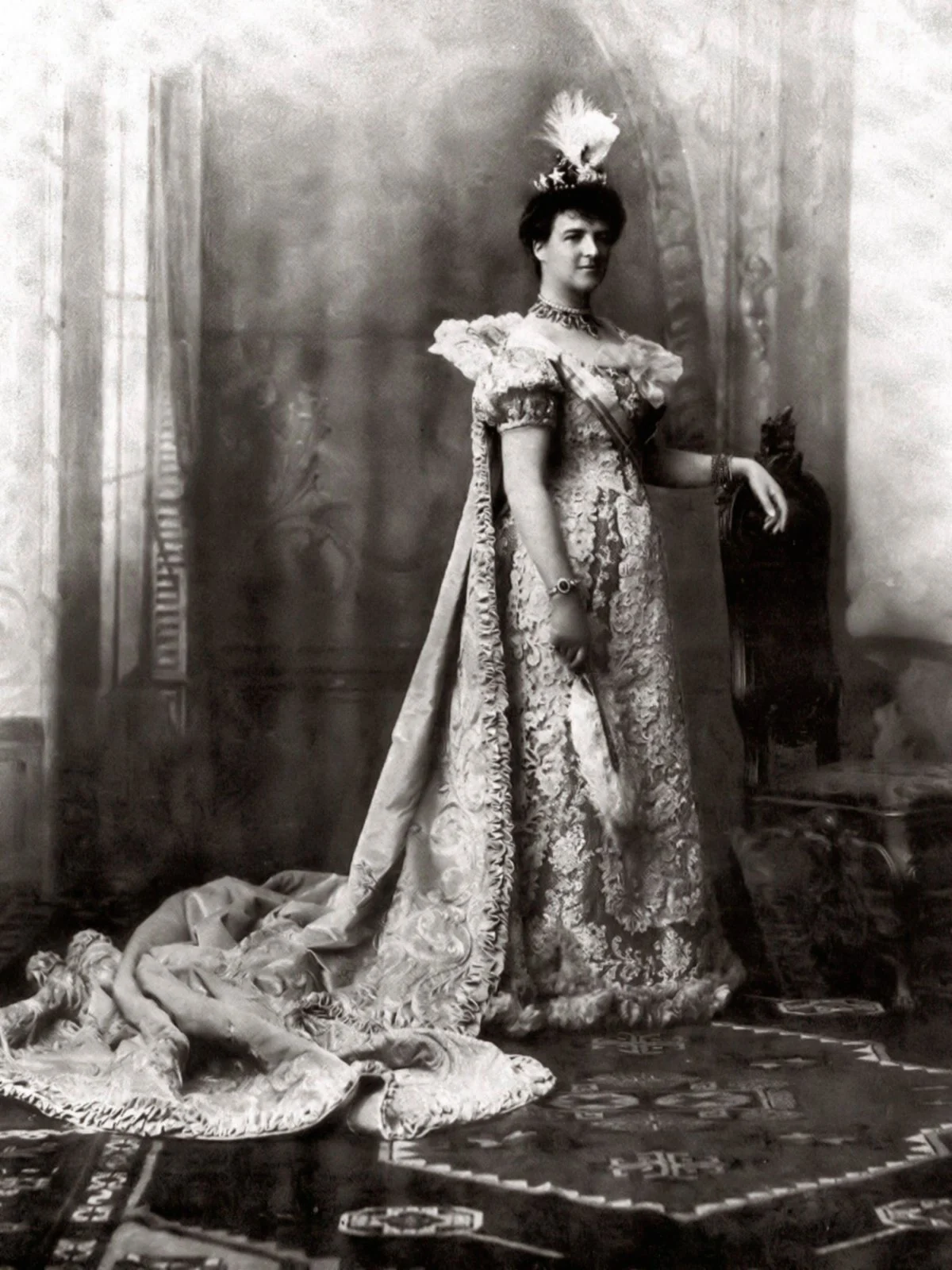
Queen Amélie of Portugal pictured in formal court attire.
The 27-Carat Cabochon Bangle
Official portraits of Queen Amélie show her draped in heirloom gems, including a diamond star tiara inherited from her mother-in-law, Queen Maria Pia. On her wrist, Amélie regularly wore an elaborate 1880s emerald and diamond bangle that remains a standout of the Geneva sale.
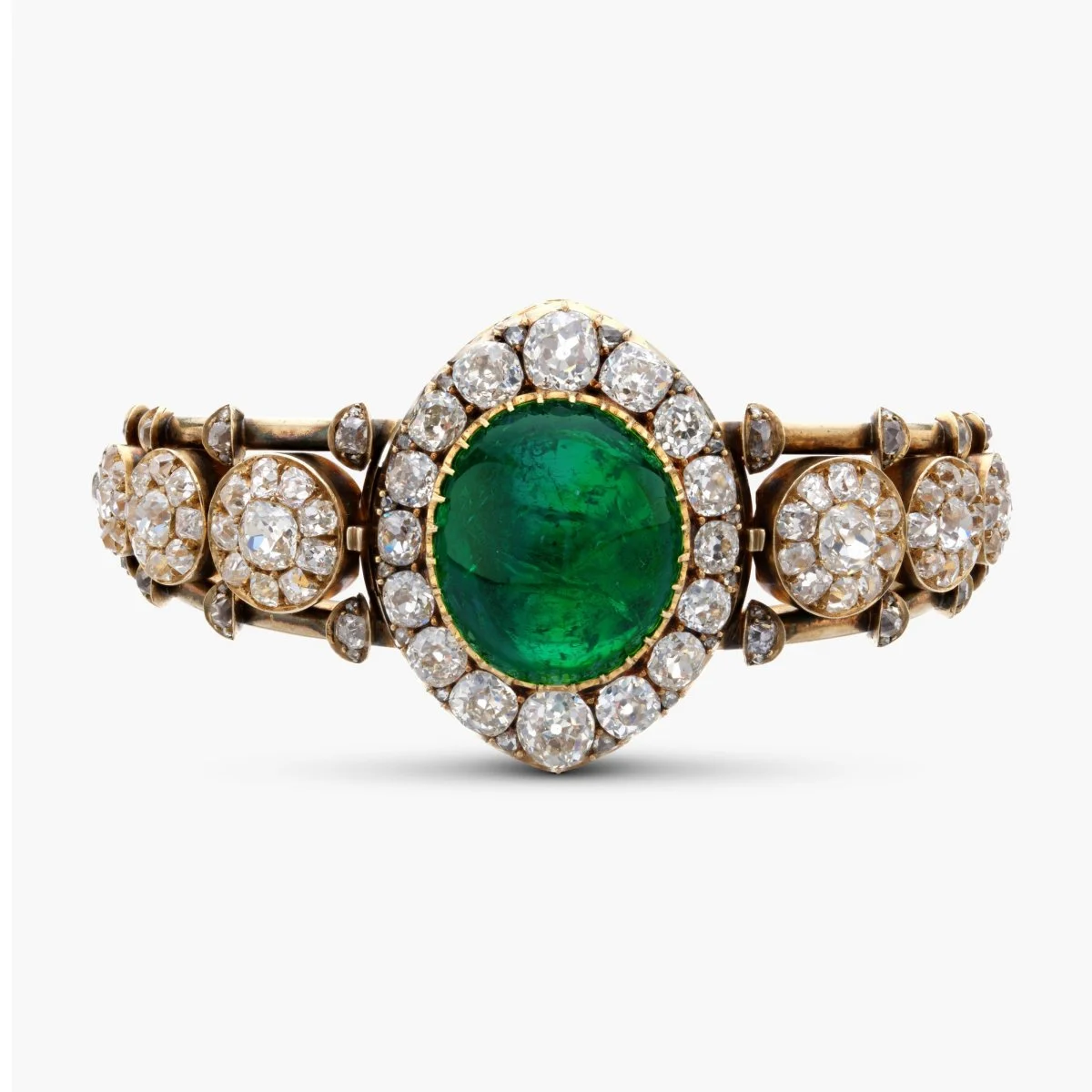
The nineteenth-century emerald and diamond bangle featured at Sotheby’s.
Sotheby’s catalogue confirms the bangle features a detachable centerpiece holding a colossal 27.38-carat cabochon emerald. The center gem is bordered by old mine-cut diamonds and subtle rose-cut diamond accents.
The jewel features a “detachable centre featuring a cabochon emerald weighing 27.38 carats within an old mine-cut diamond border accented by rose-cut diamonds.”
Amélie bequeathed the bangle to her niece, Princess Esperanza, who passed it to Princess Maria da Gloria of Orléans-Braganza. Maria da Gloria consigned the piece to Sotheby’s in 1981 while married to Crown Prince Alexander of Yugoslavia, after which it entered the collection of American philanthropist Gabriele Murdock.
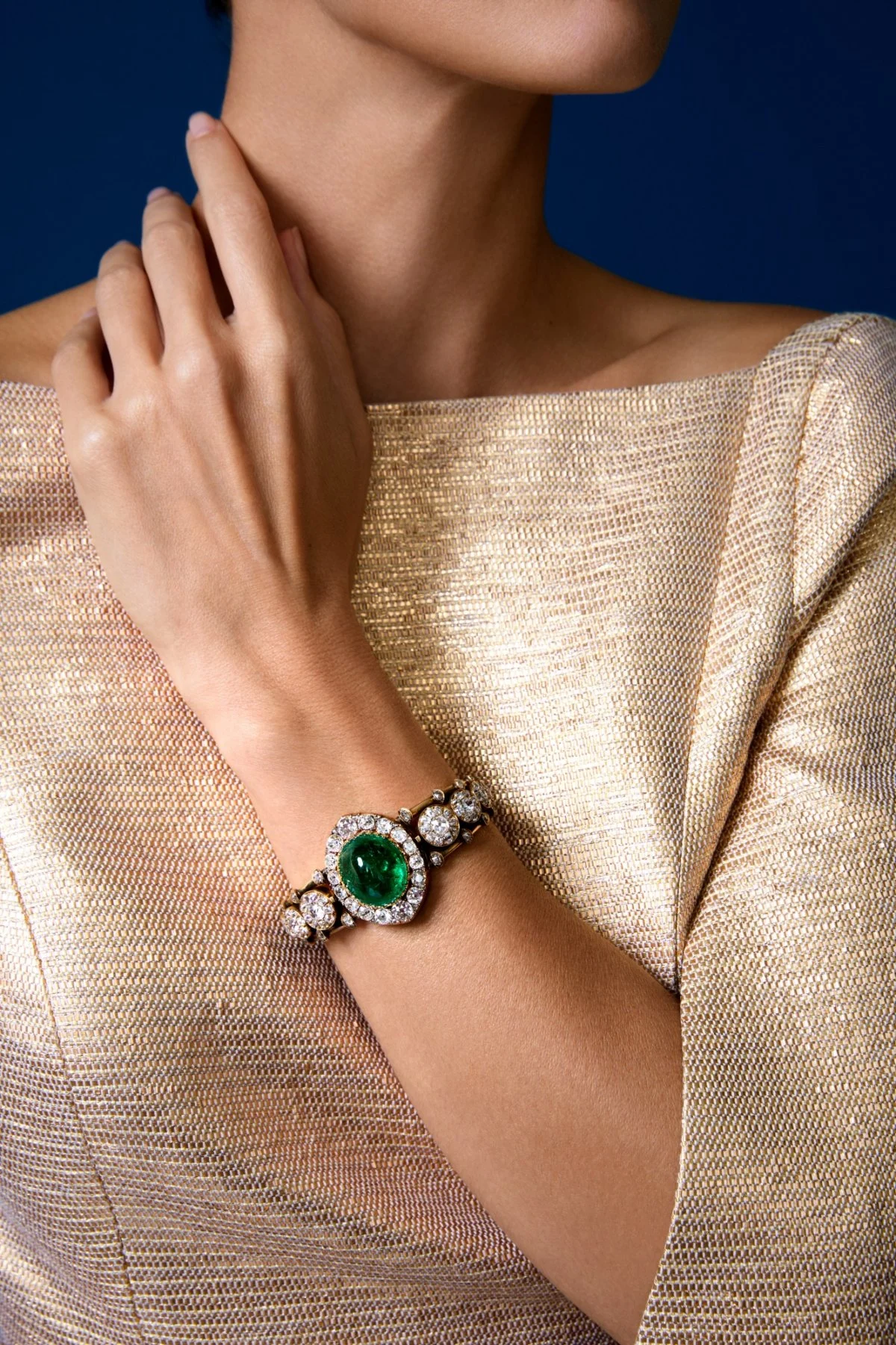
Archival view of the emerald bangle showing its detailed diamond framework.
This auction marks the third time Sotheby’s has handled the bangle, with presale estimates placed between 70,000 and 100,000 Swiss francs (roughly $86,000 to $122,000 USD).
Queen Amélie’s Colombian Emerald Brooch
Sharing the same provenance chain as the bangle, Amélie’s nineteenth-century brooch highlights fine Colombian emeralds paired with antique diamonds. The jewel features a primary cabochon emerald wrapped in a double border of old mine-cut diamonds, suspending a detachable drop surmounted by a pear-shaped diamond.
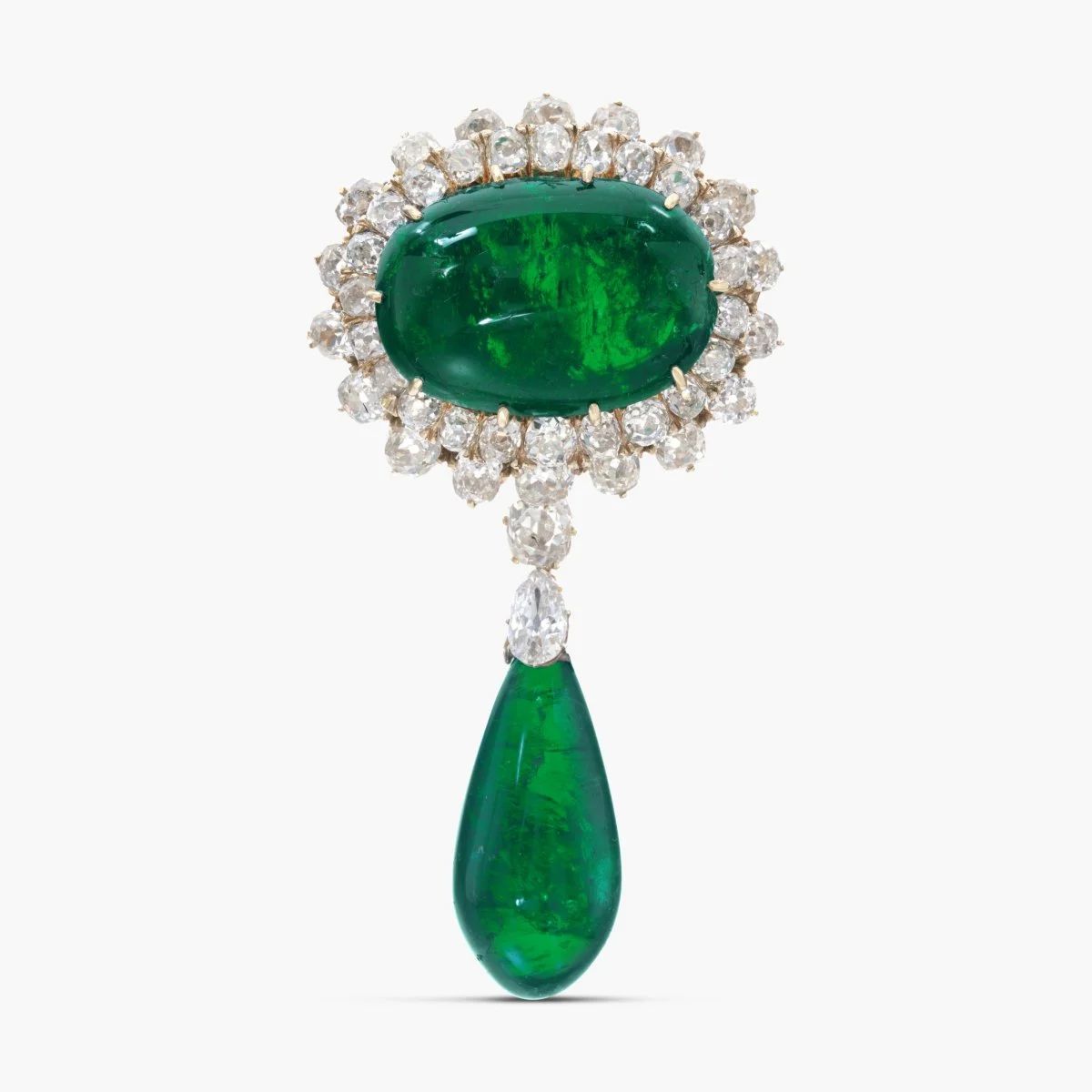
Nineteenth-century Colombian emerald and diamond brooch.
During Gabriele Murdock’s ownership, the brooch was adapted to serve as an interchangeable clasp for a multi-strand cultured pearl necklace. Despite that functional alteration, the historic stones and central mounting remain intact.
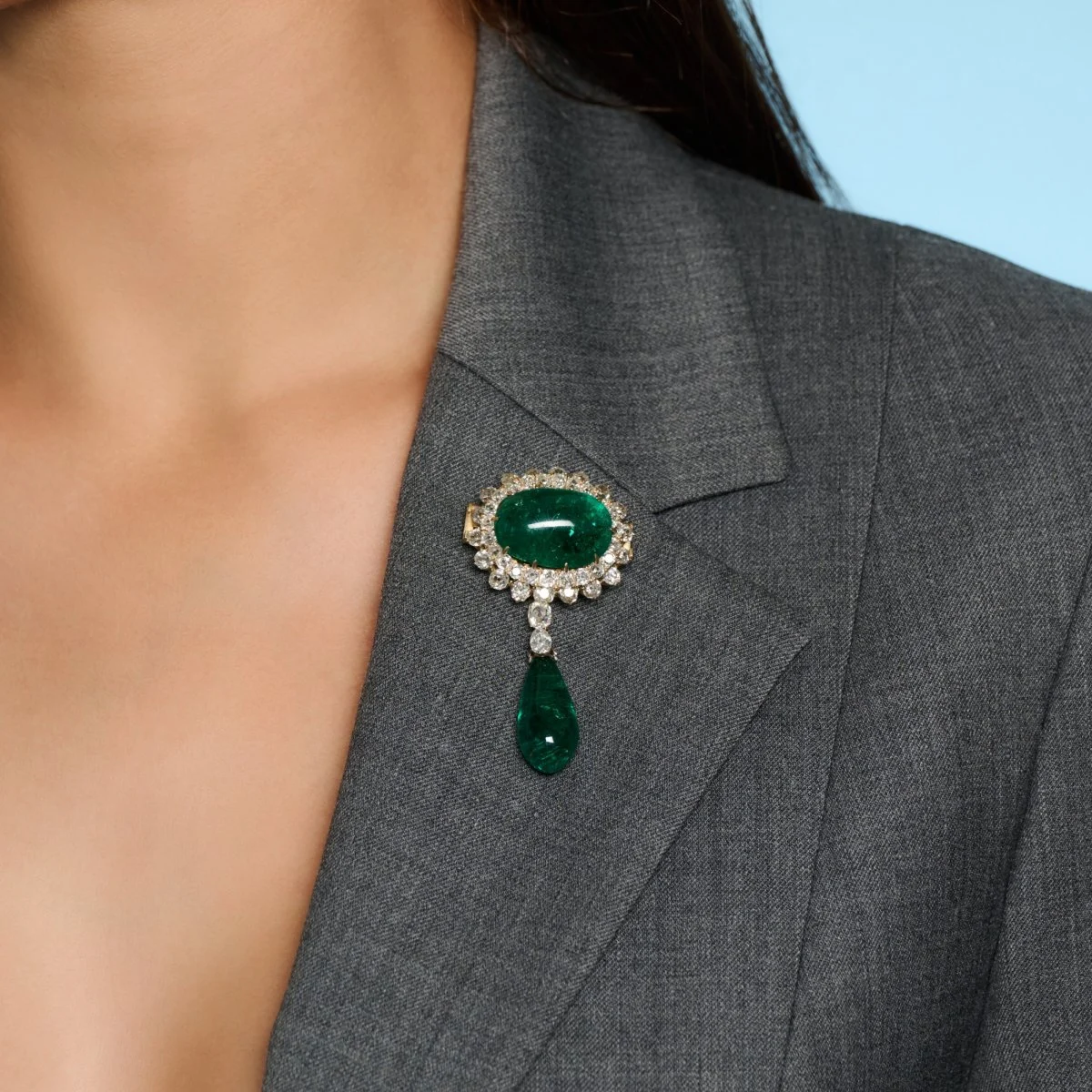
Reverse and profile view of Queen Amélie’s adaptable emerald brooch.
Sotheby’s assigned the brooch an identical auction estimate of 70,000 to 100,000 Swiss francs ($86,000 to $122,000 USD), positioning it as an equal counterpart to the royal bangle.
Queen Alexandrine’s Art Deco Masterpiece
The third piece in the lineup belonged to Queen Alexandrine of Denmark, who was born Duchess of Mecklenburg-Schwerin on Christmas Eve in 1879. She was the daughter of Grand Duke Friedrich Franz II and Grand Duchess Anastasia Mikhailovna of Russia.
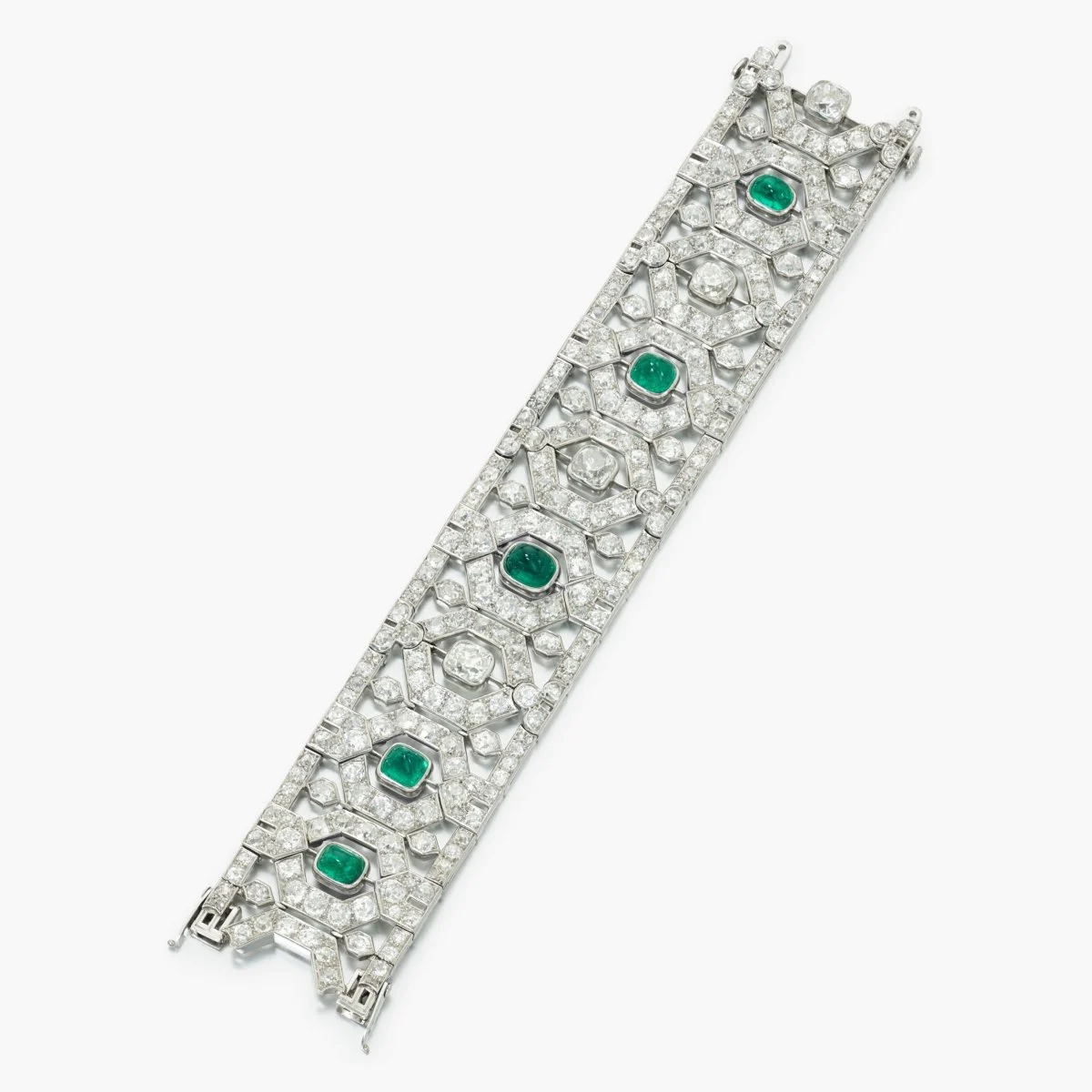
Art Deco sugarloaf emerald and diamond bracelet.
Following her 1898 marriage to Prince Christian of Denmark, the couple ascended the throne in 1912 as King Christian X and Queen Alexandrine. Though Alexandrine kept a relatively reserved jewelry collection, she acquired an exceptional Art Deco diamond and emerald bracelet later in life.
Jewelry historians believe the bracelet was either a silver wedding anniversary gift from King Christian X in 1923 or a present for her fiftieth birthday in 1929. The piece showcases vivid sugarloaf cabochon emeralds set within geometric links of old mine-cut diamonds.
The jewel was “a relatively late and uncharacteristically lavish addition to her jewellery collection.”
The bracelet passed down through Alexandrine’s second son, Hereditary Prince Knud, to his daughter, Princess Elisabeth. Elisabeth wore the family jewel publicly for decades, including the 2012 Ruby Jubilee banquet celebrating Queen Margrethe II.
Following Elisabeth’s passing in 2018, her family auctioned the bracelet through Bruun Rasmussen in Denmark in 2022. That sale produced a winning hammer price of 700,000 DKK (approximately $106,000 USD), doubling expectations.
For the Geneva sale, Sotheby’s established an estimate of 50,000 to 80,000 Swiss francs ($61,000 to $98,000 USD). Because the Danish royal house previously bought back Queen Alexandrine’s sapphire tiara from Elisabeth’s estate, royal watchers are watching closely to see if Copenhagen steps in once again.
Myth vs. Reality: Do Royal Jewels Ever Leave the Family?
A widespread misconception assumes that royal gems remain locked indefinitely inside sovereign vaults or national trust funds. In reality, private personal property follows entirely separate legal rules.
- Crown Regalia vs. Personal Estates: Official state crowns belong to the nation, but personal gifts and private purchases remain the private property of individual monarchs.
- Exile and Dispersal: When dynasties fall, dethroned royals rely on their jewelry to finance their lives in exile.
- Inheritance Taxes and Division: Junior branches of royal families frequently sell historic assets at auction to settle estates among multiple heirs.
Overview: The Royal Emerald Jewels at Auction
| Jewel & Provenance | Key Specifications & Estimate |
|---|---|
| Antique Emerald Bangle Queen Amélie of Portugal |
27.38 ct cabochon emerald; old mine-cut diamonds; detachable center. Estimate: $86,000–$122,000 USD (70,000–100,000 CHF) |
| Colombian Emerald Brooch Queen Amélie of Portugal |
Cabochon Colombian emerald; double diamond border; pearl-necklace clasp adaptation. Estimate: $86,000–$122,000 USD (70,000–100,000 CHF) |
| Art Deco Emerald Bracelet Queen Alexandrine of Denmark |
Sugarloaf cabochon emeralds; old mine-cut diamond links; ca. 1920s royal gift. Estimate: $61,000–$98,000 USD (50,000–80,000 CHF) |
✨ Rare royal jewels like these continue to draw aggressive bidding from global institutions, private collectors, and reigning dynasties looking to recover lost pieces of their family heritage.
📱 High-profile lots with documented royal provenance consistently outperform general antique jewelry values on the international auction market.
💬 Will the Danish royal family step in to bring Alexandrine’s bracelet back home, or will an anonymous bidder walk away with the prize?
👇 Drop your thoughts in the comments below: which of these three historic emeralds would you add to your private collection?
 1
 2
 3
 4
