
Written Off as Catastrophic Cinema Flops: How Six Maligned 1990s Films Defied Humiliation at the Box Office to Become Definitive Modern Cult Classics


Some of cinema’s most revered masterworks were treated as unmitigated financial disasters during their original theatrical runs. Six celebrated titles from the 1990s completely collapsed at the box office upon release, only to achieve redemption and massive commercial turnarounds through home video rentals, DVD sales, and television broadcast schedules.
For British film fans who now regard these works as essential viewing, their initial rejection remains staggering. Audiences simply bypassed them in multiplexes, leaving studios facing multimillion-pound deficits before physical media quietly revolutionised their fortunes.
The secondary rental market provided a lifeline that theatrical distributors could not match.

Hocus Pocus, released in cinemas in 1993.
Hocus Pocus: The Seasonal Misfire That Conquered Autumn
Now regarded as mandatory Halloween viewing across the UK and beyond, Hocus Pocus failed spectacularly to recover its $28 million production budget when it premiered in 1993. Studio executives undermined the supernatural comedy by releasing it during the sweltering heat of mid-summer rather than autumn, baffling prospective filmgoers.
Starring Bette Midler, Sarah Jessica Parker, and Kathy Najimy as resurrected Salem witches, the picture seemed destined for obscurity until annual television airings and VHS cassettes found a dedicated audience of young viewers.
Decades of word-of-mouth momentum elevated the feature into the ranks of defining 90s cult classics. The persistent demand eventually prompted Disney to finance a sequel, releasing Hocus Pocus 2 in 2022 to capitalize on thirty years of built-up nostalgia.

Dazed and Confused, the 1993 coming-of-age comedy.
Dazed and Confused: The Plotless Gamble Marketers Could Not Sell
Richard Linklater’s high-school chronicle Dazed and Confused scraped together just $8.4 million against a modest $6.4 million budget upon its 1993 release. Its episodic, rambling structure bewildered studio publicists, who struggled to pitch a teen feature devoid of traditional conflicts or set pieces.
Featuring early breakthrough performances from Matthew McConaughey, Ben Affleck, and Jason London, the film only found its stride on tape. The authentic period soundtrack and evocative snapshot of 1970s adolescence resonated deeply with viewers watching in their living rooms.
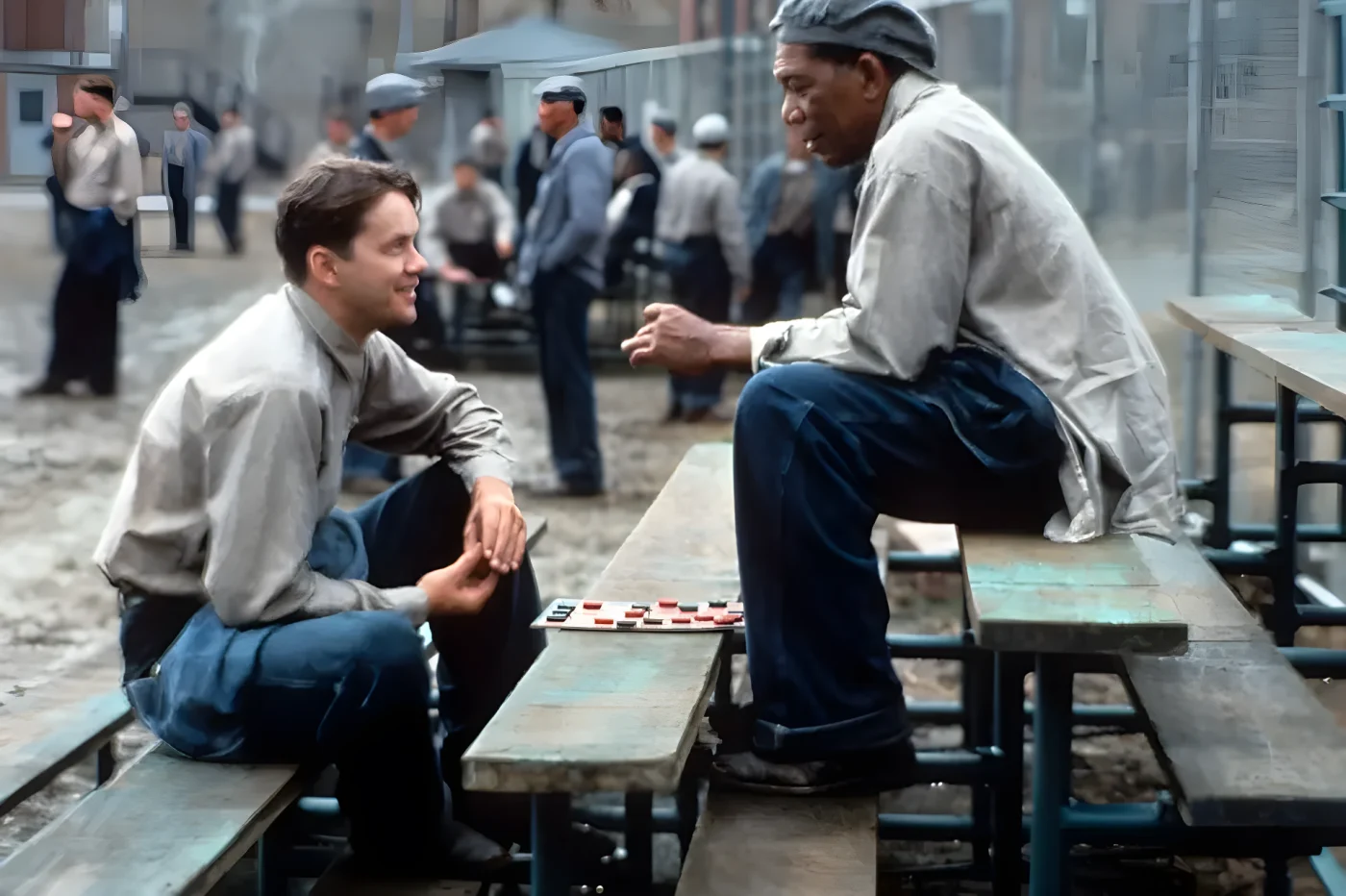
The Shawshank Redemption, released in 1994.
The Shawshank Redemption: From Empty Auditoriums to Britain’s Favourite
In 2015, British moviegoers officially voted The Shawshank Redemption as Britain’s favourite film. Yet back in 1994, Frank Darabont’s prison drama barely mustered $28.9 million against its $25 million expenditure, failing to draw general cinemagoers despite earning seven Academy Award nominations.
The film suffered from an unwieldy title, a gruelling two-and-a-half-hour runtime, and fierce theatrical competition from concurrent blockbusters such as Forrest Gump and Pulp Fiction.
The drama was saved entirely by tape counters. Anchored by Tim Robbins and Morgan Freeman, the heartfelt story spread rapidly through word-of-mouth, surging to become the single most rented home video title of 1995.

Showgirls, directed by Paul Verhoeven in 1995.
Showgirls: Critical Scorn Turned Lucrative Camp Phenomenon
Director Paul Verhoeven’s NC-17 melodrama Showgirls endured a brutal theatrical run in 1995, falling $7 million short of its hefty $45 million production spend. Mainstream critics savaged the release for its explicit nudity and abrasive narrative, leaving star Elizabeth Berkley at the centre of an intense media backlash.
Alongside co-stars Kyle MacLachlan and Gina Gershon, the film experienced an astonishing commercial revival through midnight screenings and video stores in the late 1990s and 2000s. It generated over $100 million in United States home media sales alone, finishing as one of studio MGM’s most profitable home-entertainment catalogue assets.

Fight Club, David Fincher’s 1999 psychological drama.
Fight Club: The David Fincher Nihilism Multiplexes Feared
With an exceptional ensemble featuring Brad Pitt, Edward Norton, and Helena Bonham Carter, David Fincher’s 1999 psychological satire Fight Club appeared primed for commercial dominance. Instead, it stalled out, returning a dismal $37 million against a substantial $63 million production budget.
Multiplex audiences resisted its aggressive tone and provocative social themes. The cinematic rebellion was instead ignited in lounge rooms through the explosive growth of the DVD format.
How the Home Video Revolution Rewrote Box Office History
- Packaging innovation: Elaborate DVD special features and director commentaries gave films like Fight Club an educational prestige that cinema screens could not convey.
- Affordable repeated viewing: British rental counters and high-street retailers allowed audiences to take risks on quirky pictures without the cost of high cinema ticket admissions.
- Organic community growth: Sleeper hits bypassed high-pressure opening-weekend marketing, finding audiences who shared tapes among colleagues and friends.
The feature sold over $6 million worth of copies within its opening decade, ranking as one of 20th Century Fox’s highest-performing home-media assets and generating more than $55 million from rentals.

Office Space, Mike Judge’s 1999 workplace comedy.
Office Space: The Corporate Satire Saved by Cable
Mike Judge’s mundane workplace comedy Office Space arrived quietly in 1999, bringing in just $12 million against a $10 million budget. Audiences expecting broad slapstick were indifferent to its deadpan skewering of cubicle culture and corporate bureaucracy.
Featuring Ron Livingston, Jennifer Aniston, and Gary Cole as the passive-aggressive manager Bill Lumbergh, the comedy failed to ignite cinema tills. Its path to immortality came via the high-street video rental rack and heavy rotation on cable network Comedy Central, where workers saw their daily frustrations reflected with sharp comedic accuracy.
💡 The unexpected second life of these features highlights how initial cinema metrics often fail to judge artistic or cultural endurance.
🔍 In an era now driven by algorithmic streaming platforms, obscure gems risk disappearing beneath endless content libraries without the physical rental shops that rescued these masterworks.
📌 The longevity of these once-maligned productions demonstrates that authentic viewer passion frequently outlasts disastrous opening weekends.
👇 Which of these misunderstood nineties gems did you first discover on VHS or DVD? Share your memories in the comments below.
Source: www.hellomagazine.com
 1
 2
 3
 4