
A Custom mRNA Jab Just Slashed Skin Cancer Recurrence by 42% in Late-Stage Trials—and Regulators Could Clear It by Next Year

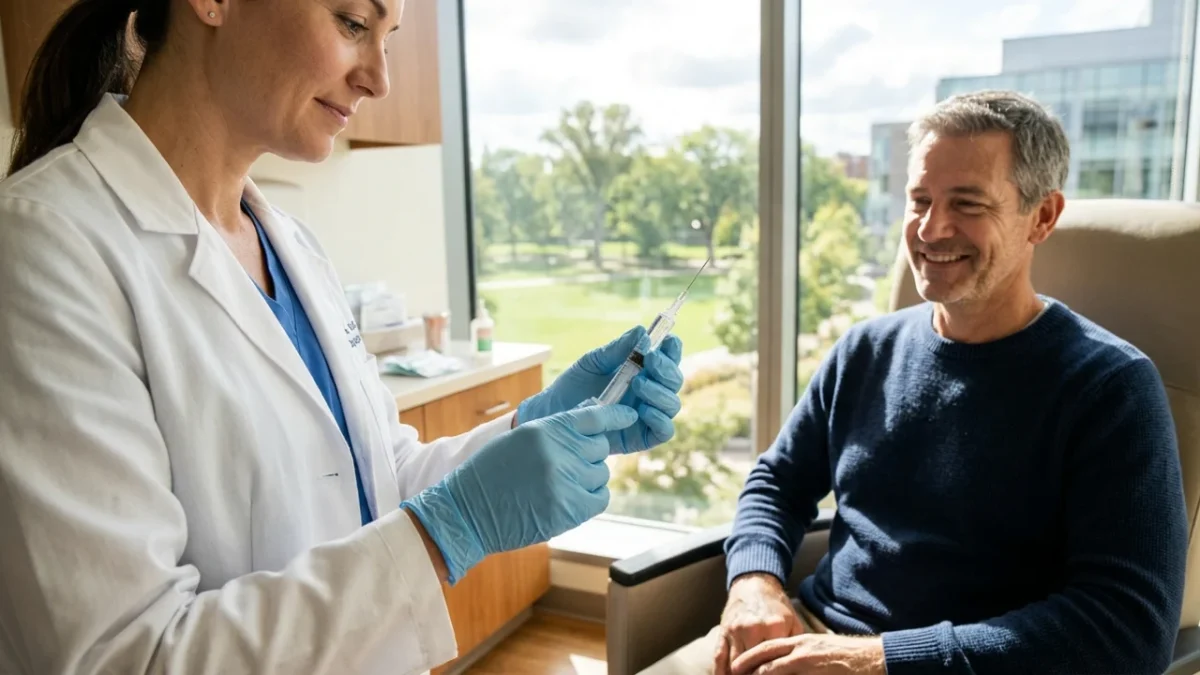
A breakthrough personalised mRNA jab administered alongside standard immunotherapy has slashed the risk of melanoma returning or causing death by 42% in a landmark Phase 3 clinical study. By genetically training a patient’s own immune defences to identify and eliminate lingering microscopic tumours, the therapy marks the most compelling evidence yet that customised oncology treatments can stop aggressive skin cancer from staging a deadly comeback.
The extensive trial evaluated more than 1,100 post-surgical patients diagnosed with high-risk melanoma. According to the medical results released jointly by pharmaceutical developers Merck and Moderna, pairing the experimental vaccine with the immunotherapy drug pembrolizumab—marketed as Keytruda—reduced the risk of cancer spreading across the body by 38% over a two-year evaluation period.
For individuals facing a disease that often returns aggressively after surgery, the findings represent a major turning point.
How Custom Genetic Blueprints Retrain the Immune System
Unlike standard preventive vaccines, the experimental mRNA vaccine, known as intismeran autogene, is not a mass-produced, one-size-fits-all injection. Each dose is custom-engineered using genetic data extracted directly from the patient’s surgically excised tumour.
The mRNA acts as a biological instruction manual, directing the patient’s cells to manufacture tumour-specific mutated proteins called neoantigens. Once exposed to these targets, the immune system learns to hunt down remaining rogue cancer cells hiding elsewhere in the body.
The primary outcomes from the multi-centre melanoma vaccine trial demonstrated significant clinical gains:
- 82% recurrence-free survival: Patients receiving the vaccine and immunotherapy combination achieved an 82% recurrence-free rate at two years, compared to 70% among those treated with Keytruda alone.
- 38% drop in distant spread: The risk of the melanoma metastasising to distant organs fell by more than a third over the 24-month monitoring window.
- Mild side-effect profile: Investigators confirmed that adverse reactions remained manageable and mild throughout the treatment regimen.
Real-World Relief for High-Risk Patients
For trial participants who faced worsening prognoses, the therapy has provided uninterrupted daily life. Ted Komenda, a 56-year-old paint sales professional from Cape Cod whose skin cancer recurred and escalated two years ago, received 17 doses of the personalised vaccine.
Komenda has since shown no sign of recurrence, maintaining his routine without debilitating interventions. He highlighted that receiving targeted injections allowed him to remain at work rather than enduring extensive cycles of traditional chemotherapy or reconstructive operations.
For the roughly 110,000 Americans diagnosed with invasive skin cancer each year, avoiding post-operative relapse remains the critical barrier to long-term survival.
Manufacturing Costs and the Regulatory Horizon
Despite the high efficacy, navigating commercial production and affordability remains a substantial challenge. Merck has declined to publish an estimated retail figure for the personalised injection, though existing immunotherapy alone comes with a steep price tag; Keytruda currently lists for approximately $12,000 per dose.
Merck and Moderna have confirmed plans to submit their complete Phase 3 data package to the US Food and Drug Administration (FDA) to pursue regulatory clearance, which could arrive late next year.
The Expanding Frontier of mRNA Oncology
Encouraged by the skin cancer results, researchers are actively testing similar personalised formulations against several other difficult-to-treat solid malignancies, including tumours of the lung, bladder, and kidney.
Early-stage trials targeting pancreatic cancer have yielded remarkable preliminary findings, with roughly half of a 16-patient cohort remaining alive seven years into post-treatment monitoring. However, clinical obstacles remain; a separate BioNTech trial evaluating an mRNA candidate against head and neck cancers recently proved ineffective.
Oncology researchers emphasise that identifying an expanded panel of mutated surface proteins will determine whether custom vaccines can succeed across a wider spectrum of human tumours.
💡 The rapid convergence of genomic sequencing and mRNA manufacturing is steadily shifting cancer therapy from broad-spectrum drugs to precision weapons tailored to an individual tumour’s genetic signature.
🔍 While independent oncologists caution that extended five-year survival metrics are necessary to confirm permanent cures, regulatory submissions over the coming year will test whether healthcare systems can accommodate the logistical complexity of bespoke medicine.
📌 As clinical reviews proceed through global health watchdogs and the FDA, millions of patients will be watching closely to see if personalised immunotherapies reach clinics on schedule.
👇 Do you believe personalised genetic vaccines will replace traditional oncology treatments within the decade? Share your perspective in the comments below.
 1
 2
 3
 4