
Clocks Fall Back on 1 November Across America as the Battle Over the Sunshine Protection Act Hits a Critical Standstill in Washington

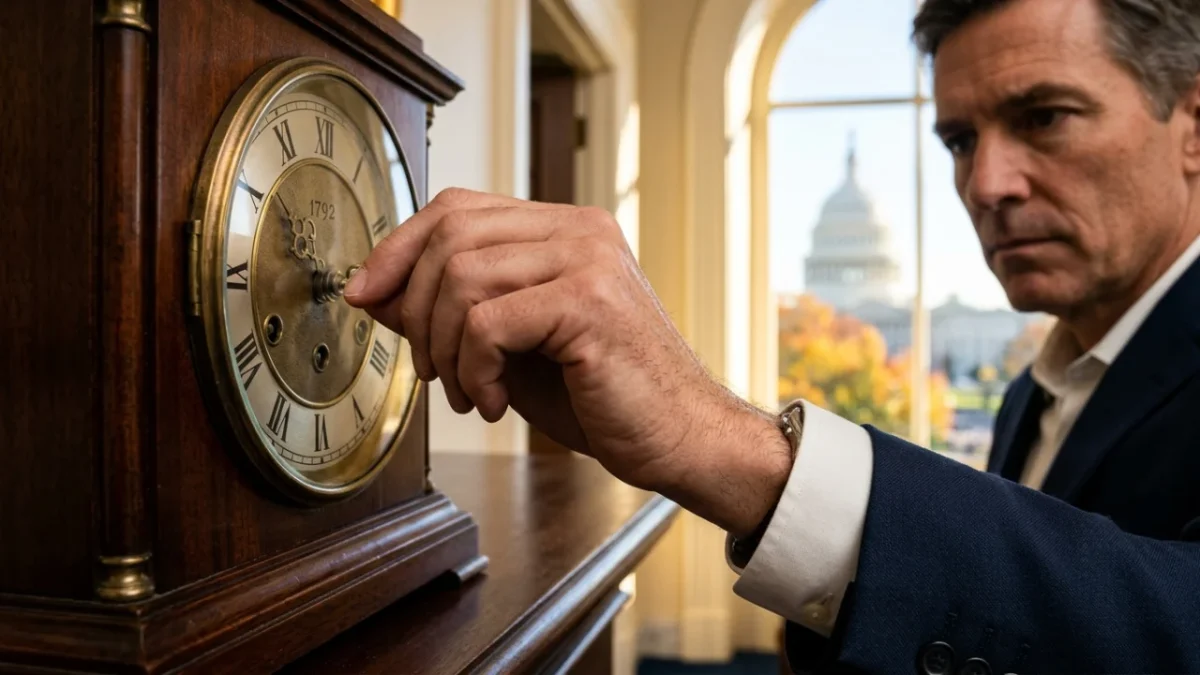
The nationwide shift for daylight saving time arrives at 2 a.m. on Sunday, 1 November, when millions of Americans will set their clocks back one hour to resume standard time, securing an extra hour of sleep whilst federal legislation to freeze the clock permanently remains deadlocked on Capitol Hill.
Every state except Hawaii and the vast majority of Arizona will observe the autumn ritual, rolling back the hour hand and exchanging evening brightness for earlier dawn illumination. Beyond resetting bedside timepieces, safety agencies also urge households to utilise the morning changeover to replace the batteries in their smoke detectors.
Yet behind the routine clock adjustment lies an escalating national dispute over whether the United States should abandon the twice-yearly disruption altogether.
The Sunshine Protection Act: Why Capitol Hill Stalled Permanent Time
The legislative vehicle attempting to halt the clock changes, known as the Sunshine Protection Act, secured decisive momentum when the U.S. House of Representatives passed the bill on 14 July with the endorsement of President Donald Trump. However, hopes of averting another seasonal rollback hit a formidable wall in the upper chamber.
Senate Majority Leader John Thune dampened expectations during an interview on 5 October, conceding that “there’s no clear path forward” for legislation seeking to make daylight saving time permanent before the nation falls back. The declaration effectively confirmed that Americans will continue the biannual custom for the foreseeable future.
Frustration over federal inertia has prompted widespread rebellion across statehouses, with nineteen states enacting individual measures to adopt permanent daylight saving time if Congress authorises the transition:
- East and Mid-Atlantic: Delaware, Maine, South Carolina, and Florida.
- South and Gulf Coast: Alabama, Georgia, Louisiana, Mississippi, and Tennessee.
- Midwest and Central Plains: Minnesota, Oklahoma, and Texas.
- West and Mountain Region: Colorado, Idaho, Montana, Oregon, Utah, Washington, and Wyoming.
In Delaware, for instance, former State Senator David McBride sponsored Senate Bill 73, which passed the Senate 17–4 and cleared the House 35–5 before receiving the signature of Governor John Carney. Yet that measure cannot take effect until Pennsylvania, New Jersey, and Maryland adopt identical legislation and the U.S. Secretary of Transportation grants formal approval.
The Medical Debate: Why Doctors Warn Against Constant Evening Light
While extended evening sunshine enjoys broad popular appeal, sleep and circadian scientists view the concept of permanent daylight saving time with intense scepticism. Medical researchers largely agree that shifting schedules twice annually destabilises the human biological clock, but they argue that making standard time permanent—rather than daylight saving time—offers far superior health outcomes.
Standard time synchronises human biology with the natural progression of the sun, whereas permanent daylight saving time pushes morning sunrise deep into the winter day, forcing workers and children to commute during pitch darkness.
Childhood Sleep and Morning Safety Concerns
Pediatric specialists warn that permanent daylight hours in the late afternoon could severely compromise adolescent brain development and physical safety. Dr Ashley Anttila, a paediatrician at Nemours Wilmington Clinic, pointed out that the current scientific literature lacks exhaustive long-term studies to declare permanent daylight saving time entirely harmless.
“We don’t have quite enough information to be able to answer, you know, kind of very like blankly that it’s healthy or not healthy,” explained Dr Anttila. She emphasised that adolescents face particular vulnerabilities because biological rhythms naturally shift later during teenage years, while academic schedules demand early arrivals.
Teenagers already sleep significantly less after clock adjustments, which directly undermines memory retention, daily focus, and emotional regulation. Dark winter mornings also bring grave physical hazards to bus stops and pedestrian crossings.
The 1973 Precedent: A Cautionary American Experiment
The United States previously tested permanent daylight saving time over fifty years ago, yielding unintended, catastrophic consequences. Facing the 1973 OPEC oil embargo, Congress mandated year-round daylight saving time to curtail national energy consumption by prolonging evening daylight.
Public enthusiasm evaporated almost immediately. An analysis from the American Academy of Sleep Medicine discovered that the policy failed to conserve measurable energy while triggering an alarming surge in fatal traffic incidents involving school-aged children between January and April, attributed directly to prolonged morning darkness.
Although extended evening daylight produced a minor decline in evening motor vehicle collisions, public outcry compelled Congress to repeal the experiment after just one year, reinstating the seasonal rollback.
Preparing for the Next Transition
First introduced in the United States during the First World War to maximise natural fuel efficiency, the seasonal clock system will remain the governing law across most jurisdictions. Following the 1 November rollback, the reprieve will last until early spring.
Clocks will move forward once again at 2 a.m. on Sunday, 14 March 2027, depriving Americans of one hour of sleep as daylight saving time returns.
💡 Prioritising sleep hygiene over the upcoming transition weekend can significantly soften the metabolic shock of falling back, helping the body readjust gradually before Monday morning routines resume.
🔍 As discussions resurface across state legislatures, the debate between darker winter mornings and lighter summer evenings remains one of the country’s most personal, contentious legislative battles.
👇 Do you prefer permanent daylight saving time, permanent standard time, or keeping the twice-yearly switch? Share your perspective in the comments below.
 1
 2
 3
 4