
Hundreds of Crows Swarming Your Backyard Trees? Why It Happens and the Real Meaning Behind the Sudden Noise

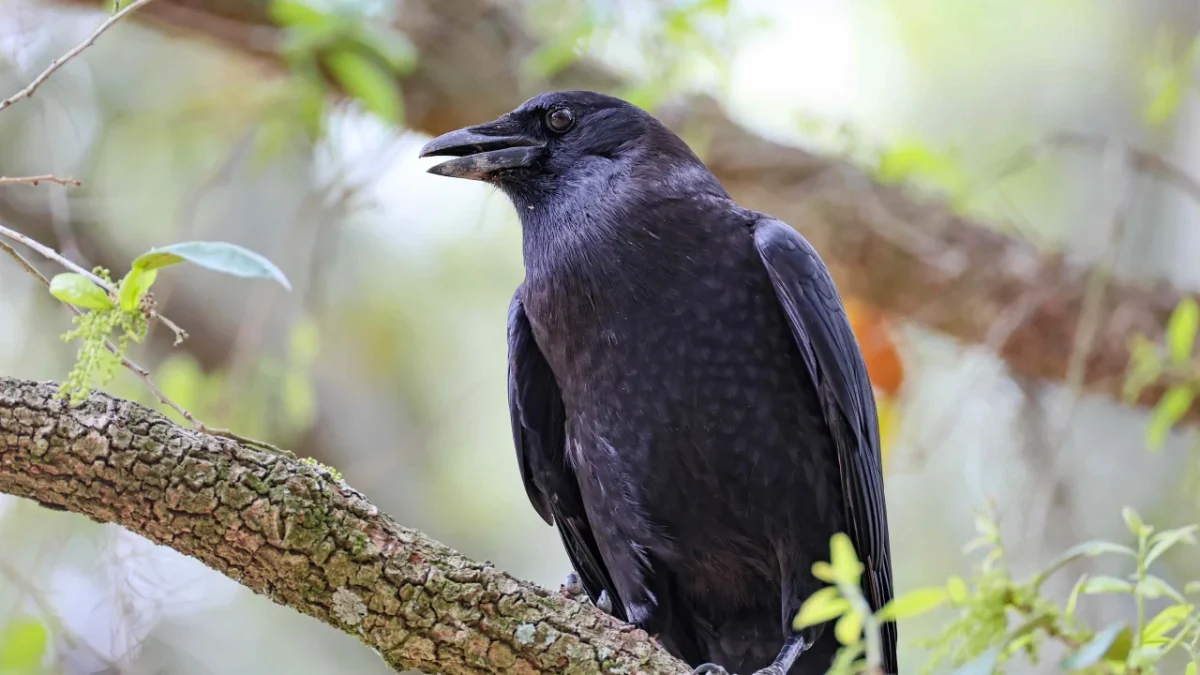
Seeing dozens or even hundreds of crows suddenly descend on your neighborhood trees is startling, but it does not mean your property is in danger. These massive gatherings are standard, instinctive routines driven by three everyday survival needs: finding high-calorie food, congregating for communal nighttime sleep, or rallying the group to drive off a nearby predator.
While their loud, synchronized vocalizations might feel ominous, the behavior is an indicator of advanced avian intelligence rather than trouble. Crows in yard spaces are opportunistic foragers and social communicators following predictable seasonal patterns.
The Hidden Drivers Behind Massive Crow Gatherings
Crows rarely assemble in huge numbers without a clear biological incentive. Understanding their schedule and vocal cues explains precisely why they chose your trees.
1. An Easy, High-Calorie Food Source
One of the most straightforward explanations for a yard full of crows is an accessible meal. Crows maintain an omnivorous diet that includes insects, nuts, seeds, fruits, small animals, and carrion.
Residential properties often provide an effortless buffet. Unsecured trash cans, leftover pet food bowls, mature fruit or nut trees, vegetable patches, and overflowing bird feeders quickly draw scout birds.
Because crows possess keen memories and learn rapidly from their environment, a single bird discovering a reliable food supply will promptly attract others back to that exact spot.
2. Communal Nighttime Roosting
If a massive flock begins filling the canopy right around dusk, you are witnessing communal roosting. Large groups assemble in sheltered locations—often mature trees in parks or suburban neighborhoods—to spend the night together for safety and warmth.
These roosts become far more pronounced during fall and winter. Crows from miles away often travel long distances just to converge on a single roosting location before dispersing at sunrise.
A large gathering does not mean every bird lives nearby; crows frequently travel considerable distances to reach a communal roost before departing in the morning.
3. Mobbing Behavior and Threat Alarms
If crows gather abruptly during the middle of the day while calling aggressively and swooping around a single branch, they are engaged in mobbing. This coordinated defense strategy alerts the entire flock to an active threat.
Crows mob common predators, including hawks, owls, and roaming domestic cats. By surrounding the intruder and sounding loud alarms, they harass the predator until it leaves the area, protecting vulnerable nests and territory.
Myth vs. Reality: Backyard Crow Swarms
Popular folklore often portrays large flocks of dark birds as a bad omen or evidence of environmental damage. Field observations confirm their behavior is entirely practical.
| Common Misconception | Documented Reality |
|---|---|
| Hundreds of crows indicate an active infestation or hazard on your lot. | Crows frequently use yards as temporary transit stops or safe communal roosts before moving on at dawn. |
| A noisy, swooping flock is turning aggressive toward homeowners. | Loud, agitated circling is mobbing behavior aimed at driving away hidden predators like owls, hawks, or cats. |
| Crows gather strictly to destroy home gardens and property. | While they forage garden scraps, crows also serve as vital natural cleaners by eating agricultural pests and carrion. |
Steps to Make Your Property Less Appealing to Crows
If arriving flocks are making a mess or raiding your plants, you can encourage them to relocate without causing harm. It is critical to remember that crows are federally protected and play an essential ecological role by clearing dead matter and managing insects.
- Lock down garbage bins: Fit outdoor trash cans with tight, animal-proof lids to cut off easy scavenging.
- Remove outdoor food: Bring pet dishes inside immediately after feeding and clear fallen seeds under bird stations.
- Shield home crops: Place protective netting or light physical barriers over ripening garden vegetables and berries.
- Use moving visual deterrents: Shiny, reflective objects can deter birds initially, though their smart memories mean they eventually ignore stationary objects.
- Avoid intentional feeding: Offering scraps or bread conditions flocks to treat your yard as a dependable daily stop.
Crows play a role in the ecosystem by eating insects and scavenging carrion, helping clean up their surroundings. Avoid harming birds or disturbing active nests.
When Should You Contact Wildlife Officials?
In almost all situations, large crow assemblies are temporary and harmless natural events that resolve on their own. You do not need to intervene simply because the flock is large or vocal.
However, action is warranted if you spot visible physical distress across the flock. If you discover an injured bird, notice multiple dead birds on the ground, or observe obvious signs of widespread illness, reach out to your local wildlife agency for instructions.
Never attempt to touch or handle sick or dead wild birds directly. Outside of those rare health warnings, a crowded canopy is simply a window into the complex social life of native wildlife.
💬 Have you experienced a massive crow roost or mobbing event in your neighborhood? Let us know in the comments below!
✨ Crows are remarkably smart, and noticing their daily routines can completely change how you view your backyard canopy.
📱 Share this guide with fellow homeowners or bird watchers who wonder why their trees suddenly fill with black feathers at sunset.
👇 Tell us your best wildlife observation stories in the comments!
 1
 2
 3
 4
