
Ken Chenault Breaks Silence on American Leadership: Why Business Leaders Overvalue Raw Intellect Over Character

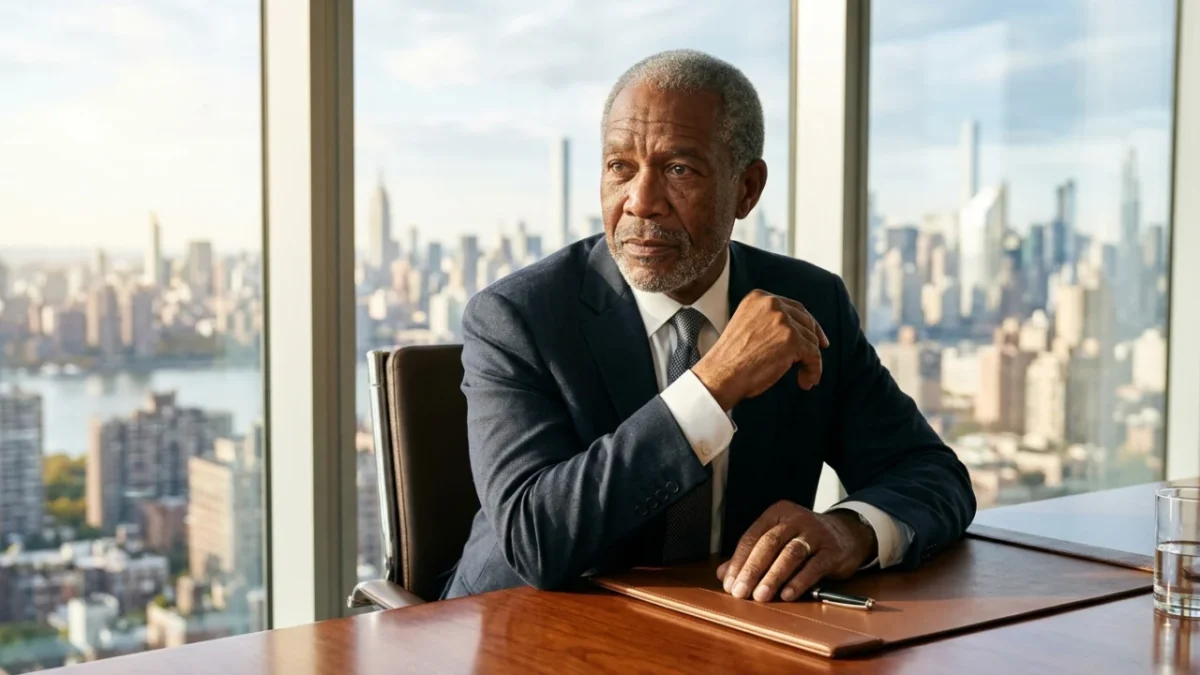
Former American Express chief executive Ken Chenault is delivering a sharp critique of modern corporate culture, warning that our society places dangerous emphasis on raw intellect while sidelining fundamental integrity. The celebrated executive details how executive suites routinely prioritize credentials over character when navigating high-stakes crises.
In his memoir, Equal to the Task, the long-time corporate leader reflects on a historic 37-year run at American Express, including 17 years at the helm as CEO prior to his retirement in early 2018. The release provides a rare, unvarnished look into the boardrooms that shape American commerce.
His central premise cuts directly against conventional executive hiring metrics, pointing out a systemic blind spot in how institutions groom future decision-makers.
The Blind Spot in Executive Suites: Character Over Credentials
Chenault argues that high-level management searches repeatedly reward the wrong traits. Organizations obsess over pedigree, balance-sheet maneuvers, and academic prestige while neglecting the baseline virtues that sustain companies through catastrophe.
“We don’t give equal billing to character and values,” Chenault explains, warning that society continues to “over-index on intelligence and success.”
That balance-of-power equation failed to safeguard multiple sectors during economic shocks. For Chenault, intellect without ethical grounding leaves institutions fragile when unexpected disaster strikes.
The lesson was forged in trial. Less than a year into his tenure as CEO, the September 11 terrorist attacks destroyed American Express headquarters at the World Financial Center across from the World Trade Center, tragically claiming the lives of eleven employees. Navigating that immediate human loss demanded decisive empathy rather than spreadsheet management.
From Long Island to the Fortune 500
Raised in Hempstead, New York, by a dentist father and dental assistant mother, Chenault grew up in a blue-collar Long Island enclave. His parents consistently instilled the conviction that he was fully capable of meeting any institutional standard.
That conviction sustained him as he moved through Bowdoin College in 1970, Harvard Law School, Bain Consulting, and ultimately American Express in 1981. Yet the upper echelons of corporate finance offered almost zero representation when he first stepped through the door.
“I hadn’t set out to be a pioneer but it was starkly clear that I was one.”
Chenault found himself operating without a single Black executive in senior management ahead of him. His response was to ground himself in rigorous performance while building a network of advocates who recognized his operational discipline.
The Boardroom Mentors Who Backed the Vision
A consistent thread throughout Chenault’s corporate ascent was the deliberate cultivation of seasoned sponsors across corporate America. Rather than rising in isolation, he earned the confidence of industry titans who recognized his steady temperament.
- Lou Gerstner, former president of American Express, who identified Chenault’s strategic talent early on.
- Harvey Golub, CEO from 1993 until 2001, whom Chenault eventually succeeded in the chief executive role.
- Prominent board allies including Warren Buffett, Vernon Jordan, and Henry Kissinger, who supported his elevation to the top corporate post.
Early exposure to high-level governance began even earlier. During his undergraduate years at Bowdoin, Chenault served in a small, select advisory group assembled by New York Governor Nelson Rockefeller to analyze national priorities.
Busting the Myth of the Lone Corporate Maverick
A prevalent myth in executive culture suggests that historic business leaders succeed purely through isolated individual brilliance and cutthroat competition. Chenault’s career trajectory dismantles that assumption entirely.
His path demonstrates that sustainable leadership depends on accountability to communities, building deep institutional alliances, and maintaining an anchor in core principles under intense scrutiny.
| Traditional Corporate Playbook | Chenault Executive Model |
|---|---|
| Prioritizes academic credentials and individual brilliance. | Demands equal weighting for personal character and baseline values. |
| Views executive ascension as an isolated, competitive climb. | Relies on deliberate multi-generational mentorship and institutional trust. |
| Manages operational crises strictly through financial modeling. | Leads high-stakes turnarounds through ethical clarity and employee empathy. |
By centering character alongside operational competence, Chenault establishes a pragmatic framework for leaders managing turbulent industries.
✨ True institutional resilience requires far more than technical expertise when the ground shifts beneath an organization.
💬 Chenault’s blunt critique challenges boardrooms to reconsider how they evaluate leadership potential before the next major crisis hits.
👇 What leadership qualities matter most to you during a crisis? Drop your thoughts in the comments below.
 1
 2
 3
 4
