
North Korea Just Turned Decades of Cold War Standoff Into an Overt Nuclear Challenge at the UN: Why South Korea Was Forced Into an Unplanned Confrontation in New York

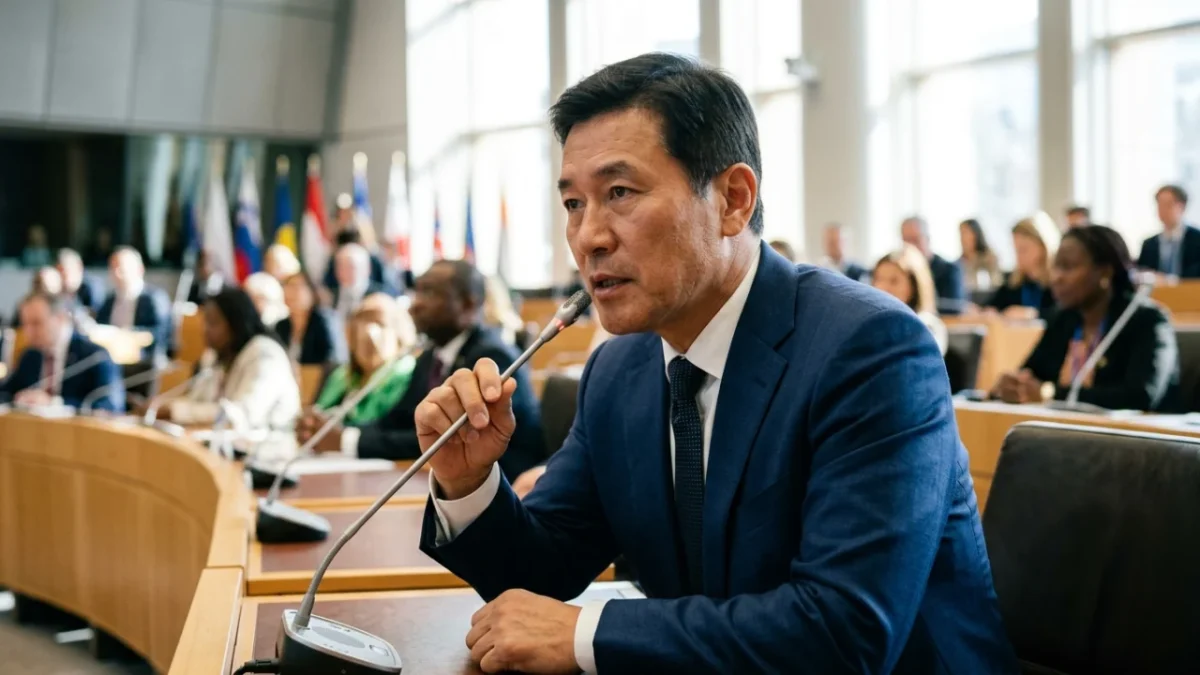
A volatile confrontation erupted inside the United Nations headquarters when North Korean diplomats openly challenged South Korea on whether Seoul intends to manufacture its own nuclear arsenal. The provocation forced South Korean officials into an unscheduled exercise of their right of reply, underscoring how dangerously volatile inter-Korean relations have become.
More than seven decades after the active fighting of the Korean War paused under an uneasy ceasefire, the ideological battleground has reignited across global chambers and heavily fortified frontiers.
The clash occurred during the 20th meeting of the UN General Assembly’s First Committee in New York, where Pyongyang’s delegation directly targeted the combined military posture of Seoul and Washington.
A Dramatic Showdown on the Floor of the United Nations
An official representing North Korea’s Permanent Mission to the UN took the floor to disavow interest in normalisation, asserting that Pyongyang has no intention or reason to engage with South Korea. The address quickly shifted into an aggressive condemnation of annual allied deterrence drills.
The North Korean envoy pointedly addressed Seoul’s leadership with an unvarnished rhetorical query: “What countermeasures are you going to take against a country that possesses nuclear weapons? Are you going to develop your own nuclear weapons, or attack North Korea with U.S. nuclear weapons?”
Pyongyang characterised allied military manoeuvres held in August as an overt rehearsal for nuclear war designed to practice strikes against the North, insisting that Seoul is the sole provocateur in the region.
The verbal barrage compelled the South Korean delegation to intervene immediately.
Exercising an unscheduled right of reply, South Korea’s representative rejected Pyongyang’s statements as unfounded sophistry. The diplomat stated plainly that joint defence exercises between Seoul and the United States exist purely to counter escalating aggression from the North, rather than instigate conflict.
South Korea also condemned North Korea for continually advancing its ballistic missile and nuclear programmes in direct defiance of binding UN Security Council resolutions.
Escalation Along the Demilitarised Zone
The diplomatic collision in New York reflects volatile conditions along the Military Demarcation Line separating the two nations.
Tensions on the peninsula have intensified following military incidents inside the Demilitarised Zone, including landmine explosions and fresh mine-laying operations by northern forces. Pyongyang has openly formalised this division, categorising South Korea as its “most hostile country” and repudiating historic reconciliation frameworks rooted in the aftermath of the Korean War.
While cutting ties with Seoul, North Korean leader Kim Jong Un has simultaneously reinforced strategic partnerships elsewhere. Kim recently travelled to China for his first foreign visit in a year, inaugurating a brand-new cross-border bridge to cement bilateral trade and logistical links.
The heightened friction has captured public attention far beyond diplomatic corridors, mirrored by surging domestic interest in modern military conflict narratives, where tactical combat video games have simultaneously dominated entertainment charts amidst the real-world standoff.
The Strategic Drivers Behind the Modern Korean Standoff
The renewed friction reveals a profound transformation in how both capitals manage deterrence, sovereign security, and international law.
- Nuclear Rhetoric as Diplomatic Leverage: Pyongyang continues to use its illicit arsenal to question the validity of conventional defences and attempt to fracture allied security guarantees.
- Hardened Borders: Fresh mine emplacement and defensive fortifications along the Demilitarised Zone signal an abandonment of past diplomatic roadmaps in favour of entrenched division.
- Multilateral Paralysis: South Korea continues to demand adherence to UN Security Council resolutions, even as regional diplomatic mechanisms face persistent gridlock.
Seoul maintains that its security framework with Washington remains defensive, urging Pyongyang to halt weapons development and return to substantive dialogue.
Yet with both sides exchanging sharp warnings across international podiums, the foundational tensions left unresolved since the 1953 armistice remain as acute as ever.
💡 The escalating rhetoric at the UN demonstrates that the frozen conflict on the Korean Peninsula can transition from passive deterrence to open hostility in an instant.
🔍 As allied defensive drills continue and border infrastructure hardens, diplomatic pathways toward permanent peace face unprecedented strain.
👇 Do you believe inter-Korean relations have reached a point of no return, or is renewed dialogue still viable? Share your perspective in the comments below.
 1
 2
 3
 4