
Over 120,000 Flock Safety Cameras Now Watch US Roads, but Wrongful Stops and Misuse Scandals Are Triggering a Massive National Backlash

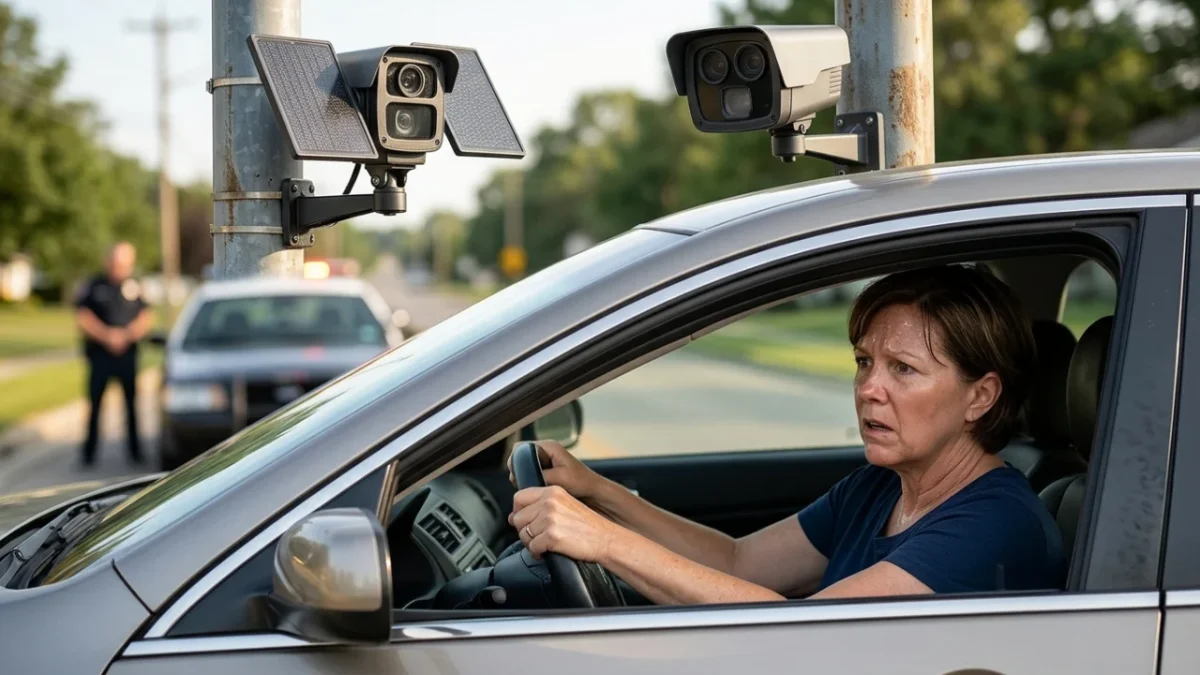
More than 120,000 Flock Safety cameras are operating across 49 states, scanning billions of vehicle movements, but a surge in wrongful traffic stops and unauthorized tracking scandals has thrust the automated surveillance giant into a national crisis. When Atlanta resident Alex Wittlin was stopped at gunpoint by police after an automated camera misidentified his car, the close call illustrated the razor-thin margin for error when algorithms dictate law enforcement stops.
The company’s rapid expansion has sparked pushback from community activists, municipal leaders, and bipartisan lawmakers demanding federal oversight. While police credit the solar-powered network with cracking urgent cases in record time, documented abuses and high-profile errors are forcing communities to question who truly controls the data.
Rapid Crime Solves Versus Terrifying Misidentifications
The core promise of automated license plate recognition, or ALPR technology, rests on speed. In Oak Brook, Illinois, police leveraged the network following a mall parking lot shooting to track and capture two suspects in just 15 minutes.
“Without the cameras, they couldn’t have done that.”
Yet that same speed can derail innocent lives when the software flags the wrong target. Wittlin was only released after officers manually verified his physical identification at the roadside, leaving him terrified and unable to find a route home free from automated camera coverage.
The misidentification issue highlights an alarming reality on American roads: when an automated camera misreads a single plate or misidentifies a vehicle profile, armed field responses quickly follow.
Bipartisan Senate Pressure and Data Abuse Cases
Federal lawmakers are taking direct aim at surveillance overreach. U.S. Senators Raphael Warnock and Katie Britt have launched a joint inquiry demanding the U.S. Department of Justice establish strict federal guardrails against law enforcement misuse.
Concerns over abuse are grounded in documented incidents. In Naperville, Illinois, police officer Oscar Maldonado was uncovered using the national camera system to illicitly stalk an ex-fiancée.
Privacy advocates also point to instances where plate data crossed state lines for controversial investigations. In one high-profile case, Columbus Police tracked a Texas woman across multiple state borders after she traveled out of state for an abortion, relying on a network that then numbered 83,000 devices.
In Atlanta, an internal police audit revealed that 0.07% of searches conducted by officers required administrative review for non-compliance, prompting Mayor Andre Dickens to propose permanent municipal legislation governing automated networks.
Flock Network Architecture and Security Overhauls
Founded in Atlanta, Flock Safety dominates the commercial plate-reader market alongside competitors Motorola Solutions and Axon Enterprises. The units operate 24/7 on solar power, capturing vehicle makes, license plates, physical traits like bumper dents, and precise time stamps.
Under growing public pressure, the company has rolled out structural system changes to curb unauthorized searches and limit long-term data liabilities.
| System Feature | Operational Policy |
|---|---|
| Data Retention Window | Reduced from 30 days down to a default 7-day storage limit |
| Search Verification | Mandatory entry of an active, valid case code for every query |
| National Camera Footprint | Surpasses 120,000 active devices operational across 49 states |
| Tampering Consequences | Immediate felony arrest and charges for destruction of property |
Myth vs. Reality: How License Plate Readers Actually Work
Misconceptions surrounding road surveillance are common, fueling clashes between digital privacy advocates and neighborhood patrols.
- Myth: Cameras store personal driving histories indefinitely in accessible police databases.
- Fact: Default retention policies hold footage for just seven days before automated deletion, unless specific clips are formally flagged for an ongoing investigation.
- Myth: Officers can casually browse camera feeds to look up plates out of curiosity.
- Fact: System updates mandate an active criminal case code before any search query processes, generating digital audit trails to prevent casual abuse.
“I think there is a gap between how people perceive they are being used and how they are actually being used.”
Grassroots Backlash: Contract Cuts and the ‘De-Flock’ Movement
Public resistance has moved beyond city council hearings into direct action. On social media platforms like TikTok and Instagram, campaigns titled “De-Flock America Day” encouraged civilians to disable or obscure roadside cameras.
Police departments have pushed back aggressively against the trend. East Dundee Police Sergeant John Haase warned that tampering with any operational ALPR brings an immediate arrest and felony charges for destruction of government property.
Even so, civic pushback is driving official cancellations. In Illinois, Elgin Community College dismantled six campus cameras and terminated its vendor contract following student protests, joining municipalities like Elgin that have paused or cancelled their contracts.
Public crowdsourcing sites like De-Flock.org have mapped over 4,301 cameras across Cook and Kane counties alone, reflecting an organized civilian effort to document every electronic eye along local streets.
💬 The rapid spread of automated surveillance is forcing a hard choice between instant crime-solving tools and basic constitutional privacy.
✨ As federal lawmakers prepare new guardrails, city halls across the country are re-evaluating whether automated cameras make neighborhoods genuinely safer.
📱 Have you noticed license plate readers appearing in your neighborhood? Drop your thoughts in the comments below and share your experience.
 1
 2
 3
 4
